Superpowers framework: TDD workflows for coding agents
Hermes Atlas's Superpowers framework targets the 80% SWEbench gap by enforcing spec validation before code generation in autonomous agents.

AI Industry Editor
Priya Nair is the AI Industry Editor at aiagentsnews.top, covering the companies, funding and policy shaping the agentic-AI market. She has spent over a decade reporting on enterprise technology and translates fast-moving research into clear, grounded industry analysis.
External Profile
Hermes Atlas's Superpowers framework targets the 80% SWEbench gap by enforcing spec validation before code generation in autonomous agents.
Bohay eliminates workflow fragmentation by assigning isolated git worktrees to specific tasks, preventing concurrent edit risks in multi-agent setups.
Prevent catastrophic financial leaks like the $12,450 refund loop. Learn how strict JSON schemas and semantic routing ensure reliable AI agent tool selection.
GPT5.6 returns tool names, not code. Learn why the client-owned function loop and strict schemas are non-negotiable for autonomous systems.
Learn how agent skills use a mandatory SKILL.md file to load procedural knowledge on demand, preventing context bloat in complex systems.
Learn how the Thought-Action-Observation loop powers 177,000+ tools, shifting agents from static text to modifying external system states safely.
Executable functions let models bypass training cutoffs to fetch live data, preventing hallucinations when users request current events or facts.
Devin AI creates pull requests in under 10 minutes by running inside a sealed virtual machine, keeping local environments clean.
The Artificial Analysis Coding Agent Index v1.1 reveals how an 83.4% TerminalBench score masks variance in token efficiency and tool use.
With over 1,000 distinct agent skills now available, the shift to modular JSON Schema packages ends ad-hoc prompting for engineers.
After 45 benchmarks, quality spread across five top agent frameworks was only 0.56 points, proving architectural fit drives real ROI.
Learn how LlamaIndex initializes agents in 5 lines to bridge private data silos and execute complex, multi-step reasoning tasks.
BenchLM.ai evaluates function calling across 24 agentic benchmarks to measure precision in tool invocation and terminal task execution for AI agents.
Static data causes deprecated advice. Learn the three missing layers preventing agent autonomy in modern development workflows today.
By 2027, AI agents will have moved from experimental status to full production across software engineering, finance, and healthcare.
Skip vague ambitions. Define 5-10 concrete examples to validate agent scope before writing orchestration logic or building an MVP.
Thrad.ai's team spent 45 minutes per lead before automation. See how multiagent systems fuse social signals to validate prospects faster.
JobHunter scores listings locally and pushes review cards to Telegram, requiring explicit user input before any application submission occurs.
Unchecked retries turn minor glitches into seven-figure liabilities. Learn why parallel agentic loops drain budgets faster than expected.
Ninety live runs prove 2024 data fails. See how an 11% token variance across nine frameworks impacts your 2026 production latency and costs.
Autonomous engineers show 8x to 12x gains, but only with governance. Learn why traceability matters for agentic software development cycles.
Gartner forecasts 40% of apps will use task agents by 2026. Learn the five dimensions to ensure your AI skills deliver reliable, structured output.
Outreach reports its predictive AI achieves 81 percent accuracy in deal predictions. See how automated signals replace manual data gathering for sales teams.
Learn why OpenHands SDK requires uv version 0.8.13 and matched packages to prevent runtime import failures in agent workflows.
Thinking Machines' native interaction models hit 0.40s latency, outpacing GPT-realtime2's 1.18s for concurrent audio and text streams.
Multi-agent systems with Claude Opus 4 outperform single-agent approaches by 90.2% on internal research evaluations.
Dissect five leading multiagent platforms, comparing how they manage state and tool execution for complex, sequential automation tasks.
LangGraph CLI 0.4.29 enables HTTPS locally via certfile params, closing the security gap between testing and production environments.
LangGraph deleted three weeks of agent memory with zero errors. Why state-management discipline, not heavier infrastructure, fixes silent checkpoint loss.
Grok 4.3 returns tool calls in single chunks, enabling atomic parsing. Learn how strict JSON schemas and local execution secure external data flows.
crewAI 1.14.6a1 adds a Skills Repository to decouple logic, addressing fragility in the 79% of businesses already deploying agents.
CrewAI 1.14.6a2 fixes state serialization for 54.7k-star repo, adding GPG verification and blocking environment variable leaks in tool execution.
crewAI 1.15.2 introduces inline skill definitions and unified declarative flow loading to simplify agent orchestration for engineering teams.
Analyze 64 commits proving autonomous agents work. Compare AutoGPT and BabyAGI frameworks for stable, cost-effective engineering deployment.
Search volume for AI coding agents surged 1,581% as tools shift from autocomplete to autonomous execution across entire repositories.
Learn how isolated context prevents data contamination when agents synthesize hundreds of websites into unified reports using LangChain.
Learn how true agents manage workflow execution and halt on failure, distinguishing them from single-turn LLMs that lack error correction.
LangChain's 2026 report cites quality as the top barrier. Separate reasoning from action layers to fix specific agent pipeline failures.
Standard benchmarks miss critical failures. This framework uses an internal LLM evaluator to audit multiturn conversations against safety policies and accuracy.
Output-only checks miss brittle logic. Use over 50 research-backed metrics to score discrete execution steps and catch planning failures early.
Teams burn 80% of cycles on error analysis. Datadog's new tools trace every prompt to turn production data into eval sets without context switching.
Learn how function calling uses structured JSON to anchor AI to real data, eliminating hallucinations through a strict four-step execution cycle.
Data shows single agents falter near 20,000 documents. Learn the ReAct pattern and memory thresholds for robust multi-agent architecture.
OpenHands hits 77% on SWEBench Verified using a stateless event-driven architecture. Learn how the append-only EventLog enables robust coding agents.
Claude Code's $20 monthly fee unlocks terminal-based agents, but the 132.3k-star ecosystem demands strict security oversight for production use.
LangChain offers 1000+ integrations to swap models without rewriting code. Its durable runtime ensures persistence and checkpointing for production agents.
Gaia's registry verifies 235 total skills through code execution runs. Learn how the G7 Trust Taxonomy grades capabilities from S to ungraded.
Explore the 10 progressive layers of AI skill construction, moving from basic prompts to reliable, resource-augmented business execution systems.
Learn how the four mandatory modules transform raw models into systems that manage state and execute logical flows without constant human intervention.
LangChain v1.0 removes AgentExecutor, enforcing LangGraph as the sole runtime. Python 3.10 is now required for typesafe streaming and structured outputs.
Gartner predicts 50% of GenAI deployments will need observability by 2028. Learn why structured metrics beat simple scores for RAG pipelines.
Learn how function calling converts natural language into structured JSON for 3 specific use cases: actions, knowledge, and capabilities.
Learn how a single agent analyzes job descriptions to output a JD Summary and list matching skills like LLM or Terraform in seconds.
AI coding agents now handle 1.05M token contexts, enabling full-repo refactors without retrieval augmentation or constant human intervention.
Discover why 211 million lines of code fail silently when async loops ignore await, forcing engineers to master the soul badge of agentic debugging.
Eleven frameworks now define the production environment for building autonomous systems. Forcing developers to choose between heavy orchestration...
Simon Willison's llmcodingagent 0.1a0 enables local file edits via explicit tool calls, contrasting with the 83.4% TerminalBench scores seen elsewhere.
Learn 21 design patterns to fix AI coding agents. While Codex CLI hits 83.4% on benchmarks, internal discipline prevents broken systems.
Aggregating 18,142 skills from 307 repositories, this project defines 357 canonical standards to solve AI agent fragmentation.
Compare seven key frameworks for composable agents. Learn how planning loops and memory retention differ in the 2026 landscape.
Evaluate four axes for agent orchestration as the 2026 engineering challenge. Compare state management and control flow across top frameworks.
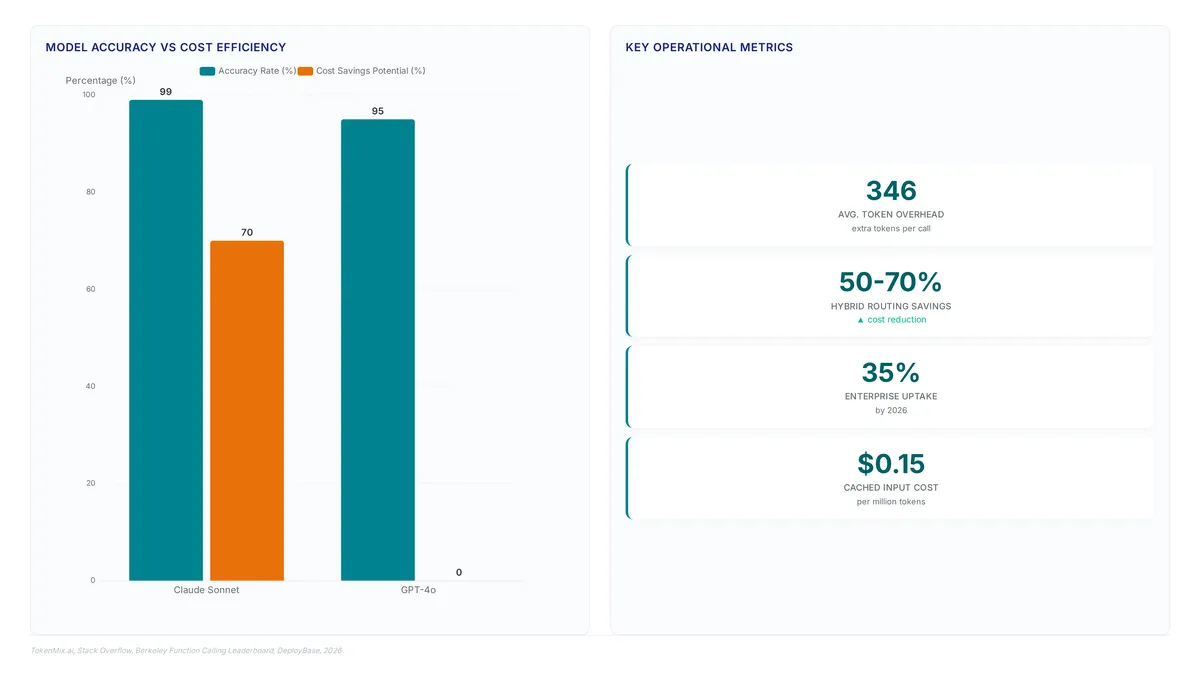
Function calling adds 346 tokens per call, inflating costs for high-volume agents. Learn how OpenAPI schemas and Gemini 3.5 Pro manage this overhead.
CrewAI version 1.15.1 separates autonomous crews from event-driven flows, offering engineers precise low-level control without LangChain dependencies.
Agentdex merges skills from four coding assistants into one offline catalog. It reads local files under your home directory with zero telemetry.
OpenHands reaches 78,800 GitHub stars by executing code in sandboxed Docker runtimes, keeping data local while demanding strong DevOps skills.
Learn how OpenCode's 160,000-star architecture separates Build and Plan agents to prevent rogue code while enabling parallel subagent execution.
OpenAI and Broadcom co-develop the Jalapeño chip to reduce single-supplier risk, while Groq secures $650M to validate custom inference momentum.
OpenAI's Jalapeño chip with Broadcom targets inference latency as firms reduce single-supplier risk in the high-end AI market.
Compare LangGraph's DAGs and CrewAI's roles across a dozen options. Learn how to debug stateful workflows and avoid unstructured autonomy pitfalls.
LangGraph holds 33,900 GitHub stars as engineers shift to stateful workflows. Compare top frameworks for production multiagent systems here.
Remogram Beta 0.1.9 adds idempotency keys to stop duplicate actions. Learn how the new opt-in policy handles the 30% of projects stalling on checks.
OpenHands cloud1.37.2 commit 7ed1c44 enforces hard deletes for sole requesters, removing soft-delete safety nets for enterprise data integrity.
Anthropic's suspension of foreign access proves model fragility. With $93B revenue projected, relying on closed APIs is a geopolitical gamble.
After six months of false confidence, I found native memory replaced my custom build. Use this one-minute test to verify true agent retrieval.
crewAI 1.14.7a2 surfaces raw LLM events for 2B workflows. I break down how new traces fix opaque conversational flow in production.
Frontend teams adopting AI agents could ship features five times quicker by 2027. Learn the architectural shifts needed for secure integration.
Poor agent use design drives costs to $2.26 per task. Learn why closed-loop feedback prevents silent failures in autonomous systems.
Silent failures cause 74% of rollbacks. Learn where agent loops diverge from reality in the trace and fix state mismatches before refunds fail.
Testing five models on an Intel i5 reveals 36 tokens per second is the ceiling for small LLMs due to 20 GB/s memory bandwidth limits.
A single infinite loop can generate a $400 bill. Learn why pay-per-token pricing fails autonomous agents and how to avoid financial traps.
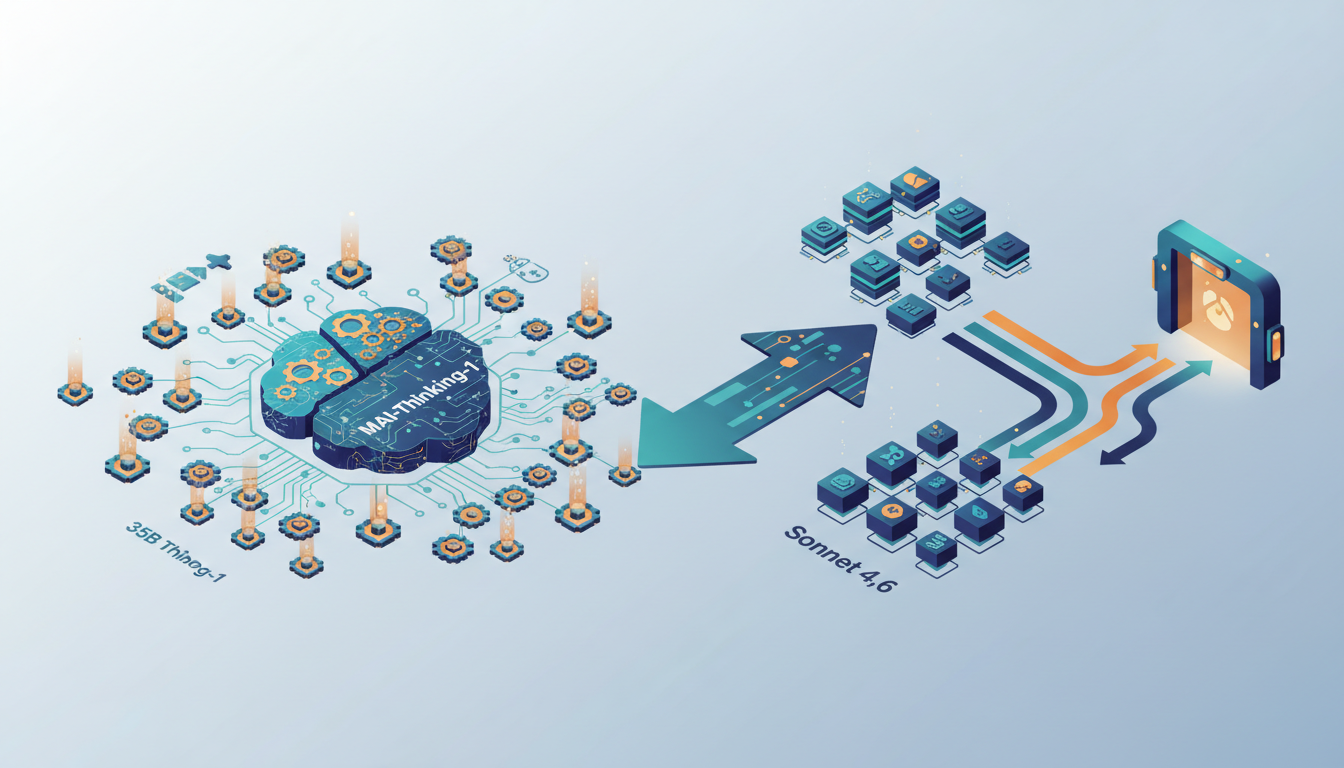
Microsoft's MAI-Thinking1 uses 35B active parameters within a 1T-parameter MoE to cut costs while handling 256K context windows for complex reasoning.
LangGraph SDK 0.4.2 patches a critical path encoding flaw in V3 stream transport, fixing thread ID errors for local simulations.
Anthropic reports an 80-fold revenue surge in 2026 as recursive self-improvement accelerates, raising urgent questions about frontier safety protocols.