AI agents: beyond simple chat by 2027
By 2027, AI agents will have moved from experimental status to full production across software engineering, finance, and healthcare. This transition marks a definitive end to passive chatbots, establishing a new standard where systems must actively execute tasks rather than merely answer questions. The line between the two is agency: an agent carries clear instructions, enforced guardrails, and external tools it may act with on a user's behalf. A system that cannot act is not an agent, however fluent its dialogue.
Two decisions follow from that definition and account for most of the cost. The first is orchestration: the Agents SDK absorbs the state management that the Responses API leaves to the developer. The second is model depth, where reasoning models buy reliability with latency. Both are settled by the cost of an error in the workflow, not by benchmark scores.
Defining the Modern AI Agent and Its Core Components
Defining AI Agents: Instructions, Guardrails, and Tool Access
An AI agent functions as a system equipped with specific instructions, enforced guardrails, and tool access to execute actions for a user. Passive chatbots simply retrieve information, yet this architecture allows interaction with external APIs, data state modification, and multi-step workflow completion. Three distinct elements form the foundation: a reasoning model, a set toolset, and an explicit policy layer. The model component frequently employs chain of thought reasoning to process complex logic before triggering external functions. Effective agents apply standard building blocks like APIs to perform distinct interactions, including communicating with other agents, sending money, or accessing the internet. Systems lacking these executable capabilities remain conversational interfaces rather than autonomous actors.
Granting execution rights introduces significant risk should the policy layer fail to constrain behavior. Increased tool accessibility expands the attack surface, necessitating rigorous input validation to prevent unintended actions. Builders must distinguish between simple query retrieval and actual state-changing operations when architecting solutions. Teams evaluating implementation strategies find that AI Agents News provides structured methodologies to navigate these architectural decisions safely. Agency defines the distinction: a system that cannot act is not an agent.
The Plan-Act-Observe-Revise Operational Loop in Practice
The Plan-Act-Observe-Revise loop defines the non-deterministic execution path separating agents from static prompt-response models. This architecture enables a system to autonomously evaluate progress and correct errors through four distinct stages rather than relying on single-shot generation. The mechanism begins when an agent formulates a strategy, executes a tool call, parses the output, and iteratively refines its approach until meeting goal criteria. Coding workflows demonstrate this iterative process clearly as systems autonomously write, run, and fix code based on error logs coding agents.
Operational fidelity relies on the model's ability to interpret feedback signals without human intervention. Implementing this cycle allows for flexible control flow where the system fixes breaks automatically rather than halting execution iterative loop. Unlimited revision cycles introduce latency spikes and potential token budget exhaustion if termination conditions lack strict definition. Builders must implement hard limits on iteration depth to prevent infinite loops during unexpected failure modes. This constraint forces a choice between thoroughness and cost, requiring precise configuration of the reasoning effort parameter.
Reasoning models like o1 differ fundamentally from standard LLMs. OpenAI launched the o1 reasoning model in late 2024, introducing chain of thought processing to validate hypotheses before generating final answers. Standard large language models predict tokens sequentially, whereas reasoning architectures perform internal monologues to test logic, notably improving accuracy on complex math and coding tasks. This architectural shift trades increased latency and compute cost for higher reliability, offering adjustable reasoning effort levers to balance speed against precision. Builders deploying agentic systems must distinguish between these modes, as prompt strategies effective for general-purpose models often degrade performance on reasoning variants. High-stakes workflows requiring multi-step validation benefit from o1, while conversational interfaces demanding low latency stay with standard models.
Architecting production systems requires careful model selection. Deploying gpt-5.6 for heavy lifting and gpt-5.6-terra for user interaction creates a balanced cost-performance profile. This hybrid approach mitigates the latency penalty of deep reasoning while retaining analytical power for difficult sub-tasks. Over-applying reasoning to simple queries wastes resources, yet under-using it on complex logic causes catastrophic failures. Developers should route requests dynamically, reserving deep chain of thought processes for tasks where error correction costs exceed inference expenses. Selective orchestration ensures efficient resource allocation without compromising the agent's ability to solve hard problems.
Architecting Agent Orchestration and Tool Integration
Orchestration Primitives: Agents, Handoffs, and Sessions
The Agents SDK removes the burden of manual state management by establishing four distinct primitives that replace custom loop logic. An Agent merges a reasoning model with specific instructions and an authorized toolset to execute discrete tasks. A Handoff shifts control between agents, dynamically swapping instructions and capabilities to address specialized sub-tasks without losing conversational context.
| Primitive | Function | Scope |
|---|---|---|
| Agent | Executes logic | Model + Tools + Policy |
| Handoff | Transfers control | Inter-agent routing |
| Guardrail | Filters input | Policy enforcement |
| Session | Maintains state | Conversation history |
A Guardrail enforces policy constraints by filtering unwanted inputs before they reach the model layer. The Session primitive maintains conversation history across runs, ensuring continuity in long-lived workflows. Unlike the Responses API, which requires developers to manually manage state and context switching, the SDK automates these transitions. This architecture supports multi-agent collaboration where distinct agents handle separate concerns like planning or report writing. The Agents SDK is a lightweight framework that handles agent loops, includes built-in guardrails, and introduces tracing to monitor workflows. Enterprise software is increasingly embedding agentic frameworks directly into platforms to manage these complex interactions.
Responses API Manual State vs Agents SDK Automation
Selecting between the Responses API and Agents SDK hinges on the need for explicit control over the agent loop versus automated orchestration. The Responses API delegates full responsibility for managing state and context to the developer, requiring manual construction of execution flows. In contrast, the Agents SDK encapsulates these mechanics, automatically handling handoffs and tool selection without custom loop logic.
| Feature | Responses API | Agents SDK |
|---|---|---|
| State Management | Manual tracking | Automatic via Session |
| Orchestration | Developer-set loops | Built-in primitives |
| Observability | Custom instrumentation | Native tracing |
| Complexity | High implementation cost | Low setup overhead |
Integrating Custom Function Calling and Built-in Tools
Tool integration demands a clear distinction between OpenAI-hosted execution and user-managed function calls. Built-in tools like web search or code interpreter run automatically on OpenAI's infrastructure, injecting results directly into the conversation context without developer intervention. Conversely, custom tools demand explicit function definitions where the model outputs a structured call that the user's backend must execute and return. This architectural split means built-ins handle execution on OpenAI's infrastructure, while custom functions enable proprietary logic but increase integration complexity.
| Feature | Built-in Tools | Custom Function Calling |
|---|---|---|
| Execution | OpenAI infrastructure | User's backend server |
| Setup | Enabled via flag | Requires schema definition |
| Latency | Optimized internal path | Network round-trip dependent |
| Scope | Fixed capability set | Unlimited domain logic |
Which of the two to reach for first is not a matter of taste; the toolset guidance is explicit. The rule of thumb is: "If the capability already exists as a built‑in tool, start there. Move to function calling with your own functions when you need custom logic." Custom function calling remains necessary only when specific business logic or external API access is required beyond the platform's native scope.
Defining Input and Output Guardrails for Agent Safety
Guardrails function as the mandatory policy layer that restricts model behavior to set safety boundaries. Developers implement these controls to prevent jailbreaking attempts and filter irrelevant user inputs before they reach the reasoning engine. This mechanism forms the third pillar of the core architecture triad, sitting alongside the model and toolset to enforce operational rules. Without strict input validation, agents remain vulnerable to prompt injection attacks that compromise system integrity.
Output constraints are equally critical when integrating agents into existing applications. Using structured outputs to constrain the model to a strict json schema ensures downstream systems receive predictable data formats. This approach mitigates the risk of rule-breaking content, such as hallucinated pricing or unauthorized commands, reaching the end user. While simple prompt instructions suffice for basic chatbots, production-grade systems require multi-step guardrail systems to handle complex threat vectors.
- Define explicit negative constraints in the system prompt to block known attack patterns.
- Implement schema validation on all tool responses to prevent malformed data propagation.
- Deploy a secondary verification step for high-stakes actions like financial transactions or code execution.
The operational cost of these safeguards is increased latency, a necessary trade-off for reliability in agentic workflows. Builders must balance the depth of validation against response time requirements, particularly when orchestrating multiple agents in parallel.
Production Checklist: Latency, Cost, and Rule-Breaking Content
Output validation layers prevent rule-breaking content, such as incorrect pricing data, from reaching end users through strict schema enforcement. Structured json outputs constrain the model to predefined formats, reducing the risk of hallucinated financial figures.
| Metric | Optimization Strategy | Trade-off |
|---|---|---|
| Latency | Use non-reasoning models | Lower accuracy on complex math |
| Cost | Limit reasoning effort | Reduced hypothesis refinement |
| Safety | Enforce json schemas | Rigid output structures |
Configuration logic should explicitly define tool access to prevent unauthorized function calls during execution loops.
The transition from demo to production systems demands rigorous monitoring of these core elements build-ai-agents. Failure to audit tool usage regularly allows minor prompt ineffectiveness to compound into significant operational drift.
Realizing Production Value Through Strategic Agent Deployment
Strategic Agent Deployment Frameworks for Production
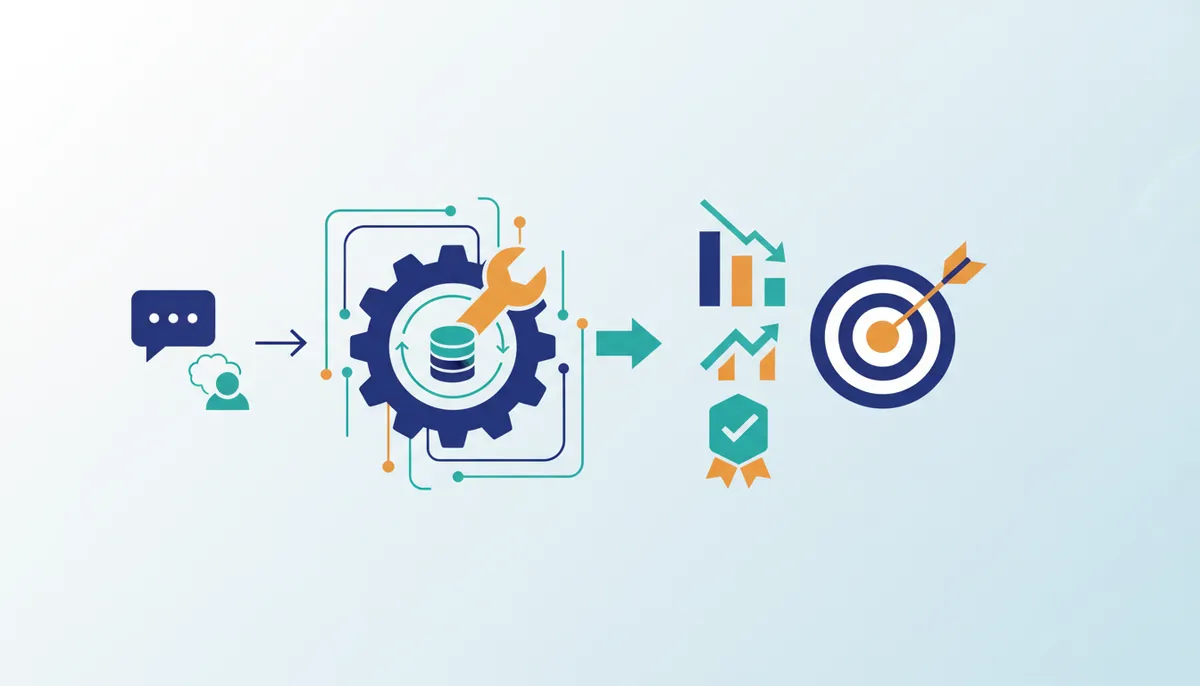
Moving from experimental status to full production deployment in 2027 requires distinguishing between simple conversational interfaces and deep system integrations. Builders must evaluate whether an agent acts as a standalone assistant or orchestrates complex workflows across multiple systems. The architectural choice often lies between the Responses API for granular control or the Agents SDK for rapid orchestration of multi-agent networks.
The transition from the "impressive demos" of 2024 to strong production systems indicates a shift toward replacing entire workflows rather than automating isolated tasks. A Support agent using the Responses API may suffice for single-turn suggestions with human oversight. However, a Customer service agent handling end-to-end resolution typically requires the Agents SDK to manage state across diverse tools. Healthcare operations and finance now deploy these systems broadly, past the pilot stage. The tension exists between the flexibility of custom logic and the overhead of maintaining complex orchestration layers.
A support agent built on the Responses API functions as a high-precision draft generator where human operators retain final approval authority. This configuration implements a strict "human-in-the-loop" validation step, ensuring that every suggestion is vetted before reaching the customer. While this approach sacrifices the speed of fully autonomous systems, it mitigates the risk of hallucinated policy statements in sensitive interactions.
Conversely, a frontend testing agent operates as a computer-using entity that executes UI validation workflows from a single user command. These agents navigate graphical interfaces to verify visual regressions and functional breakpoints autonomously. Unlike traditional script-based testing, this method adapts to minor DOM changes without requiring immediate code updates. However, the latency introduced by visual observation makes this unsuitable for sub-second CI/CD gates.
| Feature | Support Agent | Frontend Testing Agent |
|---|---|---|
| Primary Interface | Text/Conversational | Computer Control (GUI) |
| Orchestration | Human-in-the-loop | Autonomous Execution |
| Best Fit | High-stakes advice | Repetitive UI validation |
| Latency Profile | Medium (Human wait) | High (Visual rendering) |
Builders must recognize that multi-agent coordination often introduces unnecessary complexity when a single, well-constrained tool suffices. The true efficiency gain comes from matching the agent's autonomy level to the cost of error in that specific domain.
About
Priya Nair serves as AI Industry Editor at AI Agents News, where she tracks the business dynamics shaping autonomous systems. Her daily work analyzing product launches, funding rounds, and platform shifts for vendors like OpenAI and emerging coding agents directly informs this guide on building AI agents. Because she constantly evaluates how different frameworks handle orchestration and tool use, she is uniquely positioned to distill complex architectural concepts into actionable insights for engineers. This article reflects her rigorous approach to verifying capabilities against marketing claims, ensuring readers understand the practical realities of implementing guardrails and memory. At AI Agents News, the team focuses exclusively on providing neutral, technical coverage of the agent system. By connecting high-level industry moves to low-level implementation details, Nair helps software engineers and technical founders navigate the rapidly evolving environment of multi-agent systems without vendor bias or hype.
Conclusion
Scaling AI agents reveals that coordination overhead often outweighs the value of individual task completion. As networks expand, the operational cost shifts from token usage to managing failure modes where agents conflict or loop indefinitely. This friction demands a strategic pivot from maximizing autonomy to engineering controlled constraints that match model capability with task risk. You must prioritize latency budgets and guardrail enforcement before adding complexity, as unmanaged reasoning models will inflate costs without delivering proportional accuracy in real-time environments.
Deploy a single-agent prototype restricted to one external tool this week to validate your orchestration logic under load. This isolated test exposes policy gaps and latency bottlenecks that theoretical planning misses. Only after verifying stable behavior in this narrow scope should you consider multi-agent coordination or complex planning workflows. Rushing this validation invites unpredictable system failures that erode trust in the entire automation stack.
AI Agents News provides the specialized analysis needed to navigate these deployment challenges without relying on trial and error. Subscribe to our newsletter today to access deep dives on agent architecture and production readiness strategies that keep your systems reliable and cost-effective.
Frequently Asked Questions
A true agent requires instructions, guardrails, and tool access to act. Without these three specific components, the system remains a passive interface unable to execute tasks or modify state effectively.
The loop uses four stages to observe and revise actions autonomously. This iterative process allows the system to fix breaks automatically rather than halting, ensuring continuous workflow progress without human intervention.
Reasoning models are best for complex planning or math tasks requiring accuracy. They trade higher latency for reliability by testing hypotheses internally before generating a final, validated answer for the user.
Expanding tool access significantly widens the potential attack surface for errors. Rigorous input validation becomes mandatory to prevent unintended actions when the policy layer fails to constrain specific system behaviors properly.
Unlimited cycles can cause token budget exhaustion and latency spikes. Builders must set hard limits on iteration depth to balance thoroughness against the cost per million tokens often seen in heavy usage.
References