crewAI Skills: Modular Agent Architecture Explained
Millions of downloads in the last month alone confirm that crewAI's new Skills Repository has moved enterprise agent scaling from theory to practice. This pre-release (1.14.6a1) pivots the framework from experimental orchestration to hardened production infrastructure, ignoring the hype cycle where IDC claims 80% of apps will soon embed copilots. The update directly addresses the fragility plaguing the 79% of businesses already deploying agents by decoupling capability execution from core runtime logic.
The Skills Repository enables modular agent design without the bloat of legacy dependencies like LangChain: a capability is declared once in a central registry and injected into any crew at runtime. RuntimeState serialization now persists across every entity field, so a long-running flow survives the agent handoffs that previously corrupted shared state, while the idna bump closes the vulnerability that forced the patch. The new SDK and CLI are what operators actually touch, managing the 2 billion workflows executed on the platform over the past year.
This is structural maturation for a framework boasting 54.2k stars and 150 enterprise customers. By stripping away external heavy lifting and focusing on security patching and registry management, crewAIInc signals the end of fragile, monolithic agent scripts.
The Role of the Skills Repository in Modular Agent Architecture
CrewAI 1.14.6a1 introduces the Skills Repository as a central registry for reusable agent capabilities, arriving after 139 commits merged into the main branch. This decoupling allows operators to define distinct skills once and reference them across multiple agents, eliminating code duplication. The result is a flatter, composable architecture where capabilities inject dynamically rather than relying on a single manager agent within a hierarchical process. Local cache and CLI tools accompany the integration.
Modularity demands coordination. Developers must maintain version compatibility between the repository and the SDK. Complexity spikes when managing shared skills across distributed teams, potentially causing configuration drift without strict governance. The registry structure mandates explicit declarations of inputs and outputs to prevent silent failures common in loosely coupled systems. Role-based collaboration patterns stay predictable even as available skills scale because of this rigidity. Ad-hoc scripting loses flexibility since every new capability requires registration. Stability increases, but the ability to rapidly prototype unstructured agent behaviors decreases without updating the central manifest.
Sandboxed Execution and Its Latency Cost
Isolated environments prevent agent code from compromising the host runtime. Integration with sandboxing tools including e2b and Daytona enforces strict boundary controls. Untrusted Python logic executes securely to generate categorized release notes without risking underlying infrastructure. Flexible injection separates modular functions from the core orchestration engine. Isolating code paths mitigates risks associated with dependency vulnerabilities or malicious payload execution. Developers building creative workflows benefit from this containment when validating complex scripts.
Latency degrades real-time agent performance when excessive sandboxing occurs. Rapid iteration conflicts with strict isolation requirements. Computational costs rise when spinning up fresh containers for every skill invocation. The framework supports over 150 enterprise customers, yet this constraint remains measurable. Operators balancing security posture against throughput requirements must configure RuntimeState serialization carefully for high-volume workloads.
Market forces drive this necessity. IDC expects AI copilots embedded in nearly 80% of enterprise workplace applications by 2027. Saturation increases the attack surface. Independent, lightweight frameworks become necessary for maintaining secure operations. AI Agents News recommends validating sandbox configurations before deploying skills to production crews. The Skills Repository supports over 27 million downloads while enforcing these structural guards. Version 1.14.6a1 hardens RuntimeState serialization across entity fields to support this scale.
Internal Mechanics of RuntimeState Serialization and Security Patching
How Serialization Across Entity Fields Stops Graph Corruption
Hardening RuntimeState serialization against graph corruption requires modifying how entity fields persist state to prevent data loss during agent handoffs. CrewAI 1.14.6a1 implements this by serializing the entire RuntimeState object across all entity fields, directly addressing the state management overhead that plagues complex graph-based systems. Unlike frameworks where state persistence often requires manual checkpointing, this update automates stability for long-running Crews and Flows.
Graph-based architectures frequently suffer from corruption when asynchronous agent actions overwrite shared memory segments. The new serialization mechanism locks the declarative structure during writes, ensuring that role definitions and backstories remain consistent even under high concurrency. This approach contrasts with competitors like LangGraph, which improved state persistence in version 0.4 but still rely on external checkpoint managers for complex cycles.
| Feature | Graph-Based Systems | Hardened RuntimeState |
|---|---|---|
| Consistency | Manual checkpointing required | Automatic field locking |
| Overhead | High memory usage | Optimized serialization |
| Failure Mode | Race conditions on state | Atomic updates only |
Operators migrating from rigid graph implementations to this model observe a reduction in codebase size, significantly improving maintainability. The trade-off is increased CPU usage during the serialization window, which may introduce latency in high-frequency trading agents. Network architects must weigh this stability gain against the slight performance penalty when designing orchestration logic for latency-sensitive environments.
Resolving idna 3.15 Security Vulnerabilities in Agent Workflows
Bumping idna to 3.15 patches the specific vulnerability GHSA-65pc-fj4g-8rjx to prevent domain spoofing in agent workflows. This update blocks homograph attacks where malicious actors register lookalike domains to intercept data during tool execution. The fix also removes stray {" "} JSX expressions that previously broke rendering in dashboard interfaces. Operators must apply this patch because unpatched dependencies allow arbitrary code execution if an agent processes a crafted URL. The release addresses recent CVEs in gitpython and aiohttp to ensure secure runtime environments.
| Vulnerability Type | Trigger Mechanism | Mitigation Strategy |
|---|---|---|
| Homograph Attack | Malicious Unicode domain | idna 3.15 validation |
| XSS Render Failure | Stray JSX expressions | Template sanitization |
| Dependency RCE | Unpatched gitpython | Version pinning |
AI Agents News recommends pinning versions immediately upon release rather than waiting for scheduled maintenance windows. Failure to update leaves the Skills Repository open to supply-chain poisoning via compromised domain redirects.
Integrating the Skills Repository via SDK and CLI
SDK and CLI Architecture for Skills Repository Integration
Separating skill definitions from the core orchestration engine allows the SDK to dynamically load functions while the CLI manages versioned artifacts in the local cache. This architecture couples a central registry with a local cache, CLI, and SDK to inject modular capabilities into Crews. Operators integrate these components by declaring skills in the registry, which the framework resolves at runtime.
| Component | Function | Interaction Point |
|---|---|---|
| Registry | Central skill index | SDK resolution |
| Cache | Local artifact storage | CLI updates |
| SDK | Runtime injection | Agent execution |
| CLI | Version management | Developer workflow |
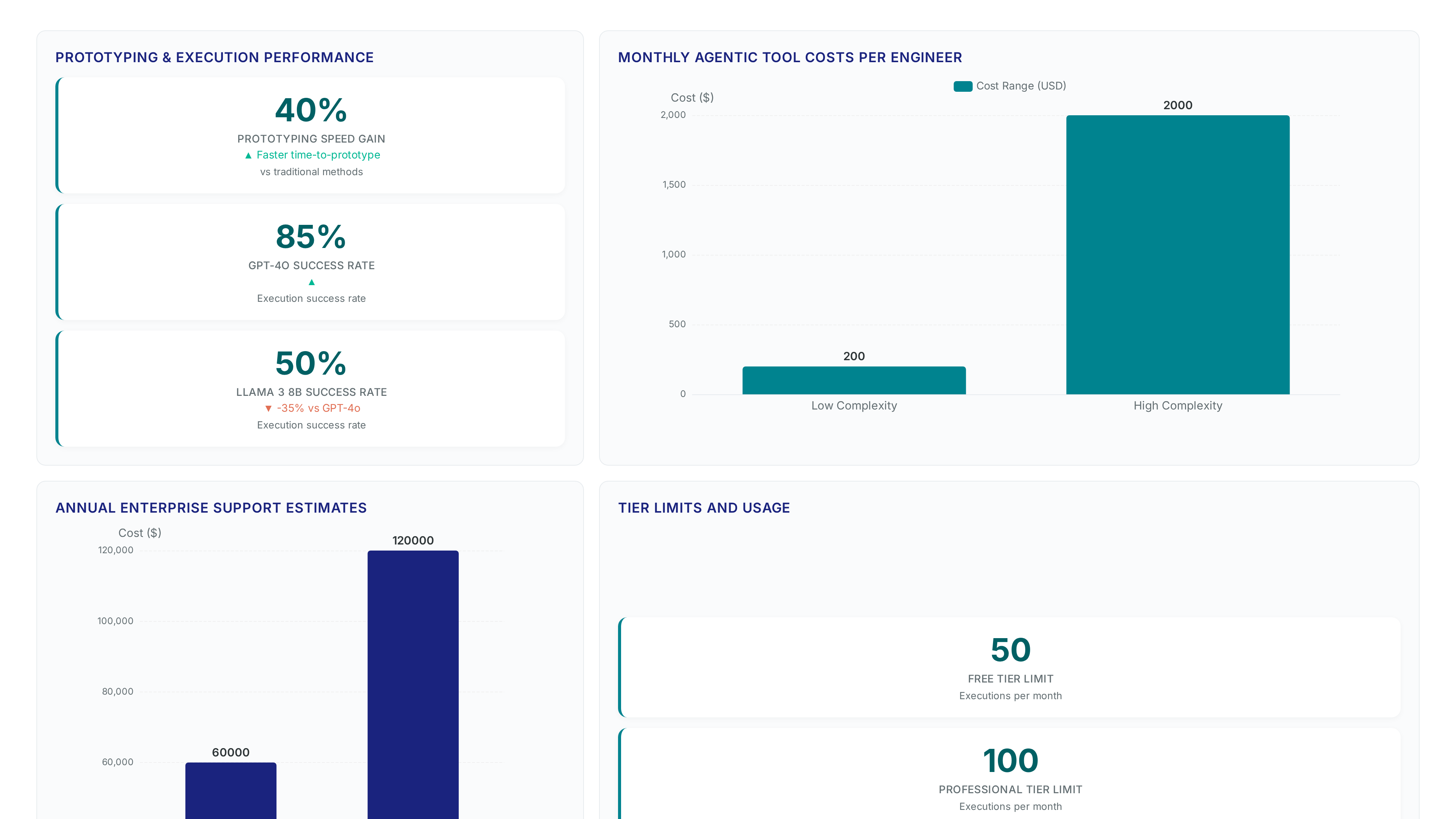
API expenses create friction for enterprise adoption. Agentic tools can run developers between $200 and $2,000 per engineer monthly depending on task complexity. The modular design mitigates some overhead by containerizing tasks, though security challenges persist upstream of the framework choice itself source. Large-scale deployments must also account for custom pricing models estimated between $60,000 and $120,000 annually for full enterprise support tiers.
Configuration complexity increases alongside this modularity. Operators must maintain strict version control within the cache to prevent dependency conflicts during RuntimeState serialization. Failure to synchronize the registry and cache layers risks injecting stale skill definitions into active Flows, potentially corrupting agent decision paths.
Executing Categorized Release Notes via CLI and SDK Workflows
Fetching categorized release notes directly from the registry bypasses manual changelog parsing when developers invoke the new CLI. This command-line interface retrieves the latest feature set and security patches, such as the idna update, ensuring local environments match the central index. Operators managing multi-agent workflows for code generation benefit from immediate access to validated skills without scanning commit histories. The SDK mirrors this capability by resolving skill dependencies at runtime, pulling only necessary modules into the agent's execution context.
| Workflow Type | Command/Method | Primary Utility |
|---|---|---|
| CLI Fetch | crewai skills pull |
Updates local cache |
| SDK Resolve | SkillRegistry.get |
Flexible injection |
| Version Check | crewai --version |
Audit compliance |
Isolating skill logic from core orchestration reduces the overhead associated with state management in complex graphs. Relying on remote registries introduces a dependency on network availability during agent initialization. Teams must cache critical skills locally to prevent execution failures during outages. AI Agents News recommends validating skill signatures before deployment to maintain supply chain integrity.
About
Priya Nair, AI Industry Editor at AI Agents News, brings a sharp, business-focused lens to the technical evolution of frameworks like crewAI. While her daily coverage centers on product launches and funding moves for platforms such as Devin and Claude Code, understanding the underlying infrastructure is critical for analyzing market shifts. This pre-release of crewAI 1.14.6a1 represents more than just code updates; it signals the rapid maturation of the multi-agent system that vendors are racing to monetize. Nair's expertise lies in connecting these granular technical milestones, like the 139 commits since the last release, to broader industry trends. By tracking how open-source frameworks scale to support 54.2k stars, she provides engineers and leaders with the context needed to evaluate tool stability and adoption potential. Her reporting ensures that technical audiences understand not just what changed in the repository, but why these iterative improvements matter for the commercial viability of autonomous agent systems.
Conclusion
Scaling agent orchestration reveals a critical fragility: network-dependent skill resolution creates single points of failure that centralized registries cannot guarantee during peak load. While modular logic isolates state management, the operational cost shifts from code maintenance to latency management and cache coherence across distributed nodes. Organizations must treat skill availability as a distinct infrastructure tier rather than a simple package dependency.
The same pattern runs through the rest of the release. Hardened RuntimeState serialization removes manual checkpointing but costs CPU inside the serialization window; the idna 3.15 bump closes a spoofing path only if versions are pinned rather than left to drift; sandboxing contains untrusted code but adds container startup latency. Every gain in this pre-release is paid for in operational discipline, and that discipline is the actual distance between an experimental crew and a production one.
Frequently Asked Questions
It lets operators define distinct skills once for reuse. This approach supports the platform's 2 billion workflows executed over the past year by decoupling capability execution from core runtime logic effectively.
It prevents data loss and graph corruption during transfers. This update is vital since 79% of businesses deploying agents currently face fragility issues plaguing their autonomous operational systems today.
It enables modular design without legacy dependency bloat. The framework now supports over 27 million downloads while enforcing structural guards that replace monolithic agent scripts with secure, isolated operations.
Rapid iteration conflicts with strict isolation requirements causing latency. Despite this, the system handles massive scale, evidenced by millions of downloads in the last month alone for this pre-release version.
It prevents silent failures common in loosely coupled systems. Explicit input and output contracts keep role-based collaboration predictable as the available skills scale.