Agent failures: Read the trace to stop silent loops
Silent failures demand immediate trace analysis, especially with 74% of AI agent deployments rolled back due to governance issues. You must distinguish between tool responses and verification reads to pinpoint exactly where an agent's logic diverged from reality. We dissect the mechanics of silent stalls where loops complete without crashing yet leave systems in inconsistent states, using the "cancel-then-refund" disaster as a primary case study. Operational strategies like idempotent retries and watchdog timers prevent recurrence without relying on guesswork or larger models.
The financial stakes are severe. Fortune 1000 enterprises average $2.1 million in sunk costs per failed agent project. Gartner forecasts over 2,000 "death by AI" claims tied to safety failures by 2027, driving the market shift toward guardian agents designed to monitor autonomous behavior. Engineers cannot hope an improved model fixes the issue; they must master reading the agent loop to classify failures and enforce strict state reconciliation.
The Role of Trace Analysis in Defining Agent Failure States
A control-state failure occurs when recorded state mismatches reality, such as logging "cancelled" while an order remains open. Agents suffering from context degradation act on stale memory reads rather than current world state. These distinct failure modes drive the 32% of inter-agent misalignment failures observed in multi-agent systems. Execution errors appear when a tool returns "accepted," prompting the loop to write a false final state without verification. The loop propagates this error by trusting the incorrect flag for downstream actions like refunds.
Structural issues arise when the agent retrieves a memory entry that was correct earlier but has since changed. This specific technical failure mode leads to incorrect answers despite valid logic paths. Unlike simple tool timeouts, these errors leave no stack trace while hiding within successful HTTP responses. Measurable operational drift occurs where financial reconciliation fails days after the initial event. Developers must distinguish between a model choosing the wrong action and the system recording that choice as fact. Blind retries exacerbate the problem by re-executing logic against corrupted state variables. Proven mitigation requires explicit verification reads after every state-modifying tool call. The system cannot detect when its internal map diverges from the external territory without this check.
Silent Failures in Cancel-Then-Refund Agent Loops
Financial loss propagates through a control-state failure when an agent records "cancelled" after a tool returns "accepted," yet the order remains open. This specific mismatch drives the "silent failures" category where plausible outputs mask incorrect world states. A refund executes against an uncancelled order in production because the loop trusts the tool response over a missing verification read. The discrepancy often surfaces only during weekly reconciliation, long after the customer retains both inventory and capital.
Distinguishing this error requires comparing the tool's claim against a fresh query to the source of truth, a gap frequently overlooked in standard logging. The system treats a request acceptance as a completed fact without this check. Operators must implement trace-to-dataset loops to convert these undetected drifts into permanent evaluation cases that prevent regression. Relying on blind retries fails because the agent successfully executed the wrong logic based on stale state assumptions. Sunk costs for failed enterprise projects average $2.1 million. Debugging demands reading the agent trace to identify exactly where the recorded state diverged from reality before attempting any fix. This analytical discipline separates execution noise from fundamental loop design flaws that allow false positives to persist indefinitely.
Execution Errors Versus Structural Loop Errors
Execution errors manifest as immediate tool timeouts or malformed arguments, whereas structural loop errors proceed logically on false premises. The distinction dictates whether a retry solves the problem or compounds the loss. Execution failures involve obvious breaks like a database timeout. Structural failures often stem from context degradation where the agent acts on stale data without crashing. Structural flaws hide because the agent reports success while the world state diverges. A legal research agent might cite plausible but inaccurate precedents, fooling automated judges and requiring human verification Legal Research Agent.
Blind retries waste resources here because the logic engine functions correctly against a corrupted reality. Operators must inspect the gap between tool responses and verification reads to classify the fault. Blindly retrying a structural error entrenches the false premise deeper into the system state. Misclassification costs create compounding financial leakage rather than temporary latency.
Inside the Agent Loop: Mechanics of Silent Stalls and Signature Detection
Anatomy of a Production Trace: From Tool Calls to Verification Reads
Demo traces often capture only the dialogue between user and model, leaving execution correctness unverified. Production environments demand full visibility into tool calls, memory reads, and branching logic using nested spans to map parent-child relationships. Basic logs confirm a model claimed an action occurred. They do not prove the world state actually changed. The gap between a tool response and a verification read defines system reliability. An "accepted" status merely confirms a request entered a queue, not that a transaction completed. Missing verification reads create control-state failure, causing agents to act on false premises.
Silent stalls happen when a loop waits forever for a stream that never closes, generating no error code. Detection needs a watchdog timer that treats extended silence as a hard failure. Modern observability platforms enable trace-to-dataset. This method prevents recurrence by validating specific execution paths rather than generic outputs. Operators cannot distinguish between a transient timeout and a structural loop error without this granularity. Downstream steps trust the initial false state, leading to compounding financial loss. AI Agents News emphasizes that reading the trace before retrying remains the only way to isolate the root cause.
Diagnosing Execution Failures via Tool Response and Verification Mismatches
A direct mismatch between a tool's "accepted" response and a subsequent verification read serves as the primary diagnostic signal for silent stalls. Teams must treat tool outputs as request acknowledgments rather than state confirmations. This distinction prevents control-state failure where loops act on false premises. Identifying this divergence requires comparing the recorded tool return against a fresh query to the source of truth within the same trace span.
The system cannot detect if a request failed silently downstream when the verification read is absent. This gap allows agents to report success while the world remains unchanged, creating silent failures that evade standard error logging. Modern observability platforms now emphasize trace-to-dataset Teams miss the precise moment reality diverges from the agent's internal model without such mechanisms. Retries exacerbate financial loss when the underlying issue is a logic error rather than a transient fault. Blindly re-executing a step that already "succeeded" in the agent's mind compounds the propagated control-state failure. Proven diagnosis demands halting the loop to inspect the specific divergence point before applying fixes. Industry leaders like Confident AI highlight that turning these traces into evaluation datasets is necessary for closing the quality loop. Operators must prioritize state reconciliation over raw throughput metrics to maintain system integrity.
Trace Signature Checklist: Isolating Model Reasoning vs Context Degradation
A decision does not follow observed state when the model ignores fresh tool output, signaling an Execution, model reasoning fault. Engineers isolate this by reviewing nested spans in tools like Arize Phoenix to verify the agent processed the latest context. The logic is flawed, not the data pipeline, if the trace shows the model received correct data but chose a conflicting action. Retrying this failure repeats the error.
Context is stale or oversized points to Structural, context degradation where the loop drops critical history or retains obsolete tokens. This structural decay often triggers silent failure modes where the agent halts without error codes. Tightening context windows solves the problem rather than adjusting model parameters. Distinguishing these signatures prevents wasted compute on futile retries. Production teams convert these identified traces into evaluation datasets using trace-to-dataset. This specific verification read ensures the loop distinguishes between a confused model and a broken structure. Blind retries only compound losses when the root cause is structural. AI Agents News recommends validating the verification read before any retry policy executes.
Operationalizing Recovery Through Watchdogs and Idempotent Retries
Idempotency Keys as the Guardrail for Agent Retries
Repeating a request must never generate a duplicate side effect when agent loops retry failed operations. Systems should reuse the same idempotency key or check the source of truth before retrying side-effecting calls like `issue_refund` to prevent double-refunding. This discipline stops a control-state failure from compounding financial loss during transient network faults. Blind retries without unique keys turn temporary outages into permanent data corruption. Production traces reveal that agents often re-execute successful actions when verification reads lag behind tool responses. Capturing these sequences enables a trace-to-dataset A single timeout triggers duplicate transactions that reconciliation processes catch days later without this safeguard.
Checking state before every retry adds overhead, yet skipping the check risks memory poisoning where adversarial inputs force redundant writes. Autonomous improvement loops analyze these traces to propose fixes, but they cannot undo a double-spend after the fact. Network operators must treat idempotency keys as mandatory headers, not optional metadata. A missing key signals an unsafe-to-retry condition, forcing the loop to halt and escalate rather than guess. This constraint prevents the agent from acting on stale context while waiting for human intervention.
Transient faults like rate limits warrant short backoff retries, while unresolvable conditions such as bad credentials demand immediate loop termination. Operators must distinguish these states to prevent budget waste on recurring failures that require code fixes rather than repetition. Blind retries on permanent errors consume resources without resolving the underlying logic gap. The cost of misclassification extends beyond wasted compute to safety claims projected to reach 2,000 by late 2026. Production systems often lack the visibility to differentiate a temporary network blip from a fundamental configuration drift. Converting these production failures into evaluation datasets creates a regression suite that prevents identical logic errors from resurfacing in future deployments.
| Failure Class | Trigger Example | Action |
|---|---|---|
| Transient | Rate limit hit | Backoff and retry |
| Unresolvable | Invalid API key | Stop and alert |
| Recurring | Logic loop | Fix and redeploy |
Retrying an unresolvable condition does not merely stall progress; it actively corrupts the audit trail with redundant error events. Engineers should implement verification reads that confirm state changes before authorizing any retry attempt. This discipline ensures that only genuine transient faults trigger a second execution, preserving system integrity.
Regression Suite Checklist for Production Failure Traces
Automating the conversion of production failures into evaluation datasets prevents recurrence of identical logic errors. Operators must ingest full execution flows, including nested spans for parent-child relationships, to distinguish execution failures from structural decay. Online scoring of every Nth trace catches distribution shifts without processing 100% of traffic volume.
| Failure Signature | Required Verification Read | Retry Policy |
|---|---|---|
| Tool "accepted" vs. State unchanged | Query source of truth | Stop loop; alert human |
| Decision ignores observed state | Re-evaluate context window | Fix model prompt; no retry |
| Context is stale or oversized | Check token count vs. Limit | Truncate history; retry step |
Distribution shifts without processing 100% of traffic volume.
Blind retries on unresolvable conditions waste budget and compound data corruption risks. Systems must reuse the same idempotency key before re-attempting side-effecting calls like refunds. This discipline ensures repeating a request does not create a second financial liability. Stopping conditions require explicit watchdogs that treat silence as a terminal failure state. Implementing trace-to-dataset Anomaly detection tools flag deviations in real-time, enabling immediate dataset updates for future evaluations. Relying solely on conversation logs misses the critical divergence between tool responses and world state. Production environments demand LLM-as-a-judge mechanisms to analyze vast trace volumes for subtle pattern failures. Human verification remains necessary when automated judges miss plausible but inaccurate precedents. AI Agents News recommends validating that every stopped loop preserves successful sub-tasks while isolating the specific fault domain.
Implementing a Strong Verification and Evaluation Workflow
Distinguishing Trace Paths from Outcome States in Agent Evaluation
The trace records the agent's intended path, yet the outcome reflects the actual world state, creating a verification gap where requests appear successful while systems remain unchanged.
- Implement a watchdog timer that forces a blocked state if silence exceeds a set threshold, preventing infinite hangs on idle streams.
- Grade results by querying the source of truth rather than trusting tool responses like 'accepted', which signify receipt instead of completion.
- Convert production anomalies into automated tests using trace-to-dataset
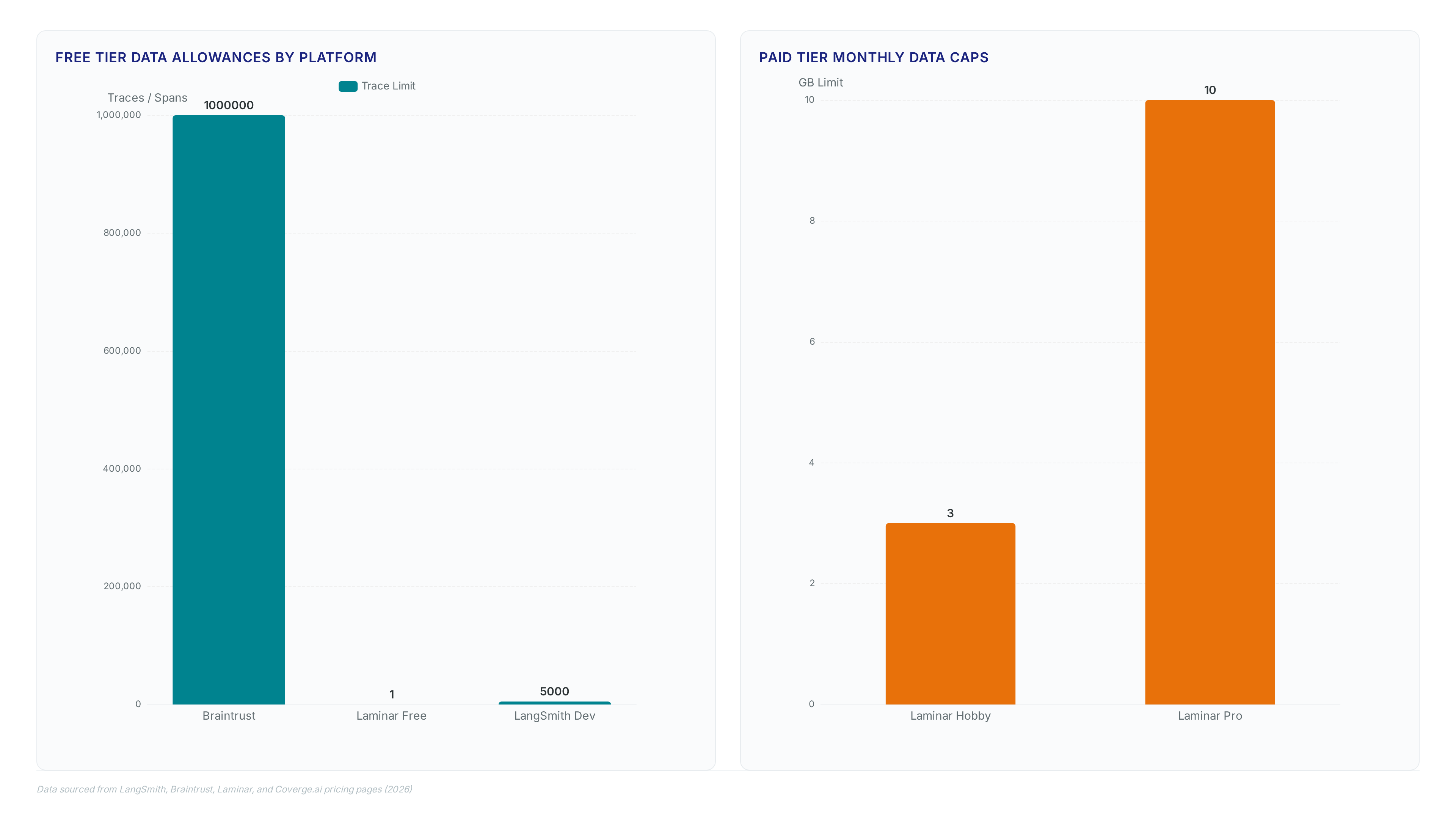
Operators must reject blind retries for structural failures, as repeating bad logic consumes budget without resolving the root cause. High-volume evaluation requires scalable infrastructure; platforms like Braintrust offer generous free tiers supporting millions of spans for rigorous testing. The industry shift toward automated evaluation in CI/CD pipelines marks a maturity benchmark for autonomous operations in 2026. Distinguishing between a model reasoning error and a stale context window dictates whether a retry helps or harms system stability. Failure to separate these paths leads to compounding errors where agents act on outdated assumptions.
Converting Cancel-Then-Refund Failures into Regression Tests
Start with a real failure from the trace where the tool returned accepted but the order remained open.
- Define the task explicitly, such as requiring a source of truth check before any refund logic executes.
- Write a grader that validates the final state against the database rather than trusting the tool response.
- Run the test multiple times because agent behavior remains non-deterministic across different runs.
- Add the case to a regression suite to block future deployments that reintroduce the error.
This process creates a trace-to-dataset. The limitation is that grading requires access to the actual world state, not the recorded conversation history. Operators must query external systems to verify outcomes, adding latency to the evaluation pipeline. The cost is increased complexity in test infrastructure, as evaluators need read-access to production mirrors. However, this prevents silent failures where context drift Without these checks, a single control-state error propagates through the entire workflow undetected. The resulting blocked state forces human intervention before financial loss occurs. AI Agents News recommends this approach for mature agent operations in 2026.
LangSmith vs Braintrust: Selecting Observability Tools for Workflows
As of April 2026, tool selection hinges on whether the workflow prioritizes framework integration or evaluation volume. Teams deeply invested in LangChain stacks often select LangSmith for its native system alignment, though this creates potential vendor lock-in risks. Conversely, eval-driven architectures favor Braintrust due to its generous free tier limits. This capacity supports the creation of large regression suites from production failures.
Operators must implement specific watchdog mechanisms within the agent loop to detect silent stalls effectively.
- Configure a timer that forces a blocked state if the stream remains idle beyond a set threshold.
2.3. Convert production anomalies into automated tests using trace-to-dataset loops for CI/CD integration.
High-volume tracing allows operators to capture rare edge cases that smaller quotas miss entirely. AI Agents News recommends matching the tool to the specific failure mode being hunted. Structural decay requires the massive sample sizes that Braintrust affords, while execution errors in specific chains benefit from LangSmith's granular visibility.
About
Priya Nair serves as the AI Industry Editor at AI Agents News, where she tracks the operational realities of autonomous systems. Her daily work analyzing product launches and platform failures uniquely positions her to dissect complex production trace issues. While many focus on agent capabilities, Nair's beat requires scrutinizing the gap between reported success and actual outcomes, a critical skill for identifying silent failures in agent loops. At AI Agents News, a hub dedicated to engineers building multi-agent systems, she connects high-level industry moves to ground-level debugging challenges. This article uses her deep familiarity with how coding agents and orchestration frameworks behave under real-world pressure. By examining specific trace data from a "cancel-then-refund" scenario, Nair illustrates why standard monitoring often misses logical discrepancies. Her analysis bridges the divide between theoretical agent design and the forensic engineering required when autonomous loops diverge from intended business logic without throwing explicit errors.
Conclusion
Scaling production traces reveals that infrastructure latency eventually outpaces the value of raw data volume, turning thorough logging into a financial drain rather than an asset. As agent swarms expand, the operational burden shifts from capturing every token to intelligently filtering noise before it hits storage. The emerging "guardian agent" model addresses this by delegating monitoring duties to specialized watchers that constrain errant behaviors in real-time, reducing the need for post-hoc forensic analysis. This approach preserves the ability to detect distribution shifts without incurring the prohibitive costs of full-volume processing. Do not wait for your monthly bill to shock you into action; the window for cost-effective scaling is narrowing as guardian architectures become the standard baseline. Start by configuring a watchdog timer on your primary agent workflow this week to force a blocked state if any single step exceeds a 30-second idle threshold, ensuring silent stalls trigger alerts before they cascade into system-wide failures.
Frequently Asked Questions
Enterprises abandon projects due to unrecovered financial losses from undetected errors. Industry data shows failed enterprise projects average $2.1 million in sunk costs, making continued investment unsustainable without better trace analysis.
Inter-agent misalignment causes a significant portion of systemic breakdowns in complex deployments. These specific technical failure modes drive the 32% of inter-agent misalignment failures observed across multi-agent systems today.
Structural errors proceed logically on false premises rather than crashing immediately. Unlike execution errors involving obvious breaks, these flaws hide because the agent reports success while acting on stale data.
This failure occurs when recorded state mismatches reality, such as logging cancelled while an order remains open. The loop propagates this error by trusting incorrect flags for downstream actions like refunds.
Blind retries exacerbate problems by re-executing logic against corrupted state variables. Since the agent successfully executed the wrong logic based on stale assumptions, repeating the action compounds the loss.