AI coding agents need live data to work
AI coding agents plan multi-step tasks and execute code without hand-holding, yet they fail without live data. These systems have evolved from simple autocomplete features into full workflow engines that research, test, and document. However, raw intelligence from models like Claude Opus 4.8 or GPT-5.6 Sol cannot compensate for the lack of real-time context.
The differentiator is not the model but the tool stack you connect it to. Claude Code leans on architectural reasoning, Codex on fast scaffolding, OpenClaw on custom workflows, and Hermes Agent on scheduled automation, yet all four hit the same three walls: no live knowledge access, no persistent memory across sessions, and no output generation beyond raw code. What follows is what each wall costs and which connection closes it.
The Role of AI Coding Agents in Modern Development Workflows
Defining AI Coding Agents and Persistent Memory Gaps
An AI coding agent operates as an autonomous workflow engine executing multi-step development tasks instead of merely completing code snippets. These systems coordinate tool use and function calling to research, test, and document software, yet they fundamentally lack state retention across execution boundaries. This specific failure mode is known as persistent memory loss, where agents forget team decisions, chosen architectures, and the sources between sessions. Without external intervention, a coding agent reverts to its initial training data for every new interaction, ignoring prior architectural constraints or approved library versions. Developers must re-contextualize the entire project scope repeatedly, increasing token consumption and error rates during complex workflows. Standard agent loops do not natively support long-term semantic storage of project-specific context, creating this technical gap.
Builders can integrate LiveDocs to provide shared memory via file storage, URL resources, and semantic retrieval. This architecture allows the agent to query historical team decisions and maintain consistency with established design patterns over time. Unlike transient context windows that flush after a session ends, shared memory enables the agent to act as a continuous participant in the development lifecycle. Relying solely on the model's internal weights results in outdated advice as frameworks deprecate and APIs evolve rapidly. A dedicated memory layer ensures the agent references current documentation and adheres to previously validated structural choices.
Solving Live Knowledge Gaps with AI Search and Web Fetch
Static training data causes agents to recommend deprecated APIs once frameworks evolve. An isolated coding agent operates on obsolete snapshots, suggesting removed functions or outdated syntax that fails modern linting standards. This context forgetting creates a reliability gap where generated code compiles but contradicts current library behaviors. Binding agents to AI Search via the POST /v2/chat endpoint and Web Fetch using POST /v2/web/extract provides a technical remedy. These interfaces allow real-time retrieval of documentation, ensuring the agent validates logic against live specifications rather than frozen weights. When an agent queries a framework changelog during execution, it bypasses the latency of model retraining. Connecting to live endpoints transforms the agent from a static autocomplete engine into a flexible research node capable of verifying method signatures before writing. This architecture shifts the burden of truth from the model's memory to the live web, enabling access to real-time documentation and best practices.
Terminal-First Workflows Versus AI-Native IDEs
Terminal-first agents use existing shell environments to execute code without heavy GUI overhead. These terminal-based agents operate within the developer's current context, minimizing resource consumption while maintaining full access to local tooling. AI-native IDEs embed large language models directly into the interface, offering tight integration but requiring dedicated runtime subscriptions. Execution isolation defines the fundamental distinction; terminal agents often rely on the host system's permissions, whereas native IDEs frequently mandate isolated sandboxes on virtual machines for every instance. This architectural divergence creates tension between workflow continuity and security enforcement. Developers prioritizing rapid iteration within established dotfile configurations may prefer the former, while teams needing strict process separation require the latter. Neither interface retrieves live documentation on its own; both depend on connectivity to AI Search or Web Fetch.
Operational costs extend beyond licensing fees. Terminal workflows risk contaminating the local environment with unverified dependencies if sandboxing is not manually configured. Builders must evaluate whether their security posture demands the overhead of managed sandboxes or if host-level controls suffice for their threat model.
Claude Code Versus Codex and OpenClaw Versus Hermes Performance Characteristics
Claude Code Reasoning and Codex Speed Profiles
Claude Code thrives on structural integrity, using Claude Opus 4.8 and Claude Sonnet 4.6 to manage deep context where token velocity matters less than correctness. Multi-step debugging sessions benefit from this deliberate pacing because the model retains architectural nuance that quicker systems discard. Codex takes the opposite path by deploying GPT-5.6 Sol for rapid scaffolding across diverse language ecosystems. Low-latency boilerplate generation is the priority here rather than complex logical deduction. Reasoning depth supports complex code tasks while speed-focused models handle quick generation.
| Feature | Claude Code Profile | Codex Profile |
|---|---|---|
| Primary Model | Claude Opus 4.8 | GPT-5.6 Sol |
| Core Strength | Architectural reasoning | Fast scaffolding |
| Best Use Case | Complex debugging | Boilerplate generation |
| Benchmark Score | 88.6% (SWE-bench Verified) | 83.4% (Terminal-Bench) |
Data indicates that while Codex leads Terminal-Bench at 83.4%, Claude Code achieves 88.6% on SWE-bench Verified, highlighting the divergence in evaluation metrics. High-speed generation does not equate to high-accuracy problem solving in constrained environments. Context window management creates a bottleneck; rapid generators require external APIs for research and verification to maintain continuity in extended sessions. SWE-bench Verified and Terminal-Bench provide standardized metrics to measure these specific performance deltas objectively. Selecting an agent requires matching the model's intrinsic profile to the workflow's latency versus accuracy requirements.
Selecting OpenClaw Workflows Versus Hermes Automation
Choose OpenClaw when engineering teams require custom workflows extending beyond standard code generation into proprietary tool integration. This framework serves groups building unique automation pipelines where tool integration depth outweighs the need for immediate, out-of-the-box task execution. Deploy Hermes Agent for pure automation tasks like scheduled batch processing or multi-step job sequences demanding reliable streaming support without custom orchestration logic. The decision matrix below clarifies the operational boundary between these two distinct approaches to agent deployment in 2026.
| Dimension | OpenClaw Strategy | Hermes Automation |
|---|---|---|
| Primary Use Case | Custom workflow construction | Scheduled task execution |
| Integration Depth | Deep, extensible tool hooks | Standard protocol access |
| Best Fit | Teams with unique stack needs | Teams needing reliable batching |
OpenClaw provides the flexible skeleton necessary for novel interactions, whereas Hermes offers a hardened runtime for repetitive, set jobs. Increasing workflow flexibility in OpenClaw requires a thorough tool layer including search and memory, while Hermes focuses on purpose-built automation with standard protocol access. Teams choosing the wrong layer for their maturity level risk either drowning in unused extensibility or hitting hard ceilings on customization. Map existing toolchain complexity before selecting an orchestration strategy.
Claude Opus 4.8 Premium Costs Versus Haiku 4.5 Efficiency
Select Claude Haiku 4.5 for high-frequency, low-complexity tokens to minimize operational spend on simple refactors. Through Felo OpenAPI, engineers route trivial syntax corrections to this lowest-cost tier while reserving Claude Opus 4.8 for deep architectural reasoning where error rates justify premium pricing.
| Dimension | Haiku 4.5 Strategy | Opus 4.8 Strategy |
|---|---|---|
| Primary Use | Simple tasks | Complex reasoning |
| Cost Tier | Lowest | Premium |
| Latency | Minimal | Higher |
| Best Fit | Boilerplate | Architecture |
Model selection functions as a flexible orchestration parameter, not a static configuration. A workflow that blindly defaults to GPT-5.6 Sol for every function call burns budget on tasks that require zero reasoning depth. Forcing Claude Sonnet 4.6 to parse simple JSON schemas introduces unnecessary latency without accuracy gains. Implementing this tiered approach helps balance performance against the hard constraint of token budgets.
The Necessary Tool Stack for Overcoming AI Agent Limitations
Defining the AI Agent Tool Stack Components
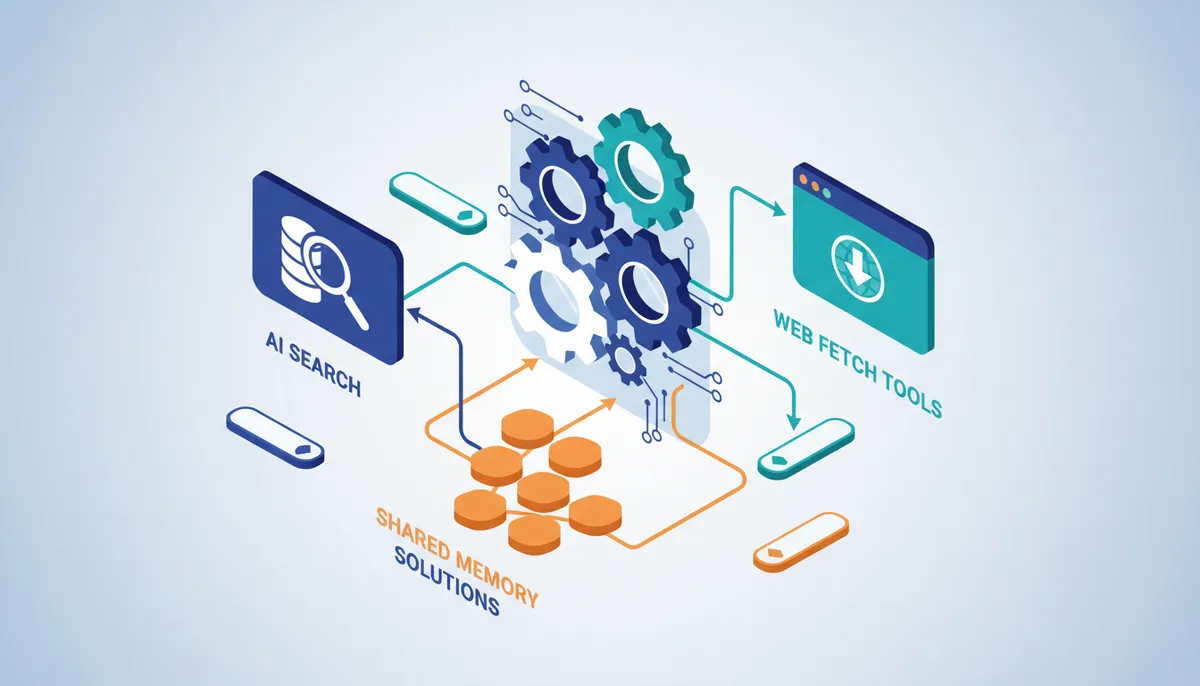
Static training data creates a hard ceiling for autonomous systems without external APIs to bridge the gap. Real-time documentation access and cross-session retention of architectural decisions demand specific integrations to function effectively. The foundation rests on AI Search for live queries alongside Web Fetch to parse current API references accurately. Social context flows in through X Search (POST /v2/x/tweet/search), while YouTube Subtitles via GET /v2/youtube/subtitling pulls technical nuances directly from video tutorials.
Code blocks represent only one fragment of the final deliverable. PPT API (POST /v2/ppts) generates slide decks, and Mindmap API (POST /v2/mindmap) maps out system structures visually. Landing Page API drafts web content, Image Generation produces visual assets, and LiveDocs provides the persistent memory layer through CRUD operations so agents recall team decisions.
| Component | Function | Endpoint / Method |
|---|---|---|
| AI Search | Real-time retrieval | POST /v2/chat |
| Web Fetch | Content extraction | POST /v2/web/extract |
| LiveDocs | Persistent memory | CRUD Operations |
| PPT API | Presentation output | POST /v2/ppts |
An agent cannot verify whether a library deprecation broke the suggested build without this tool stack.
What Live Retrieval Costs and Where It Breaks
The gap between an isolated agent and a connected one shows up on three axes.
| Capability | Static Agent | Connected Agent |
|---|---|---|
| Documentation Source | Training cutoff | Real-time web |
| API Accuracy | Degrades over time | Current version |
| Deprecation Awareness | None | Immediate |
Sole reliance on internal knowledge bases introduces a measurable risk of suggesting broken workflows. A connected agent validates every function call against the latest repository state before generation begins. Increased token consumption during the retrieval phase is the operational cost, yet this expense prevents hours of downstream debugging. Developers must configure the agent to prioritize fetched context over parametric memory when discrepancies arise. Current constraints take precedence over historical patterns in this hierarchy. Fetched content quality depends entirely on the target site's structure and availability, which remains a fixed limitation.
A code generator becomes a verified development partner through tool integration. Builders should implement strict validation logic where the agent cites sources for every recommendation. This approach mitigates silent failures caused by version mismatches. Recent benchmarks indicate the leading agent reaches a 77.85% overall score on end-to-end project development tasks. Model size matters less than the freshness of the ingested context.
Checklist for Persistent Memory and Output Generation
- Confirm the agent retains architectural decisions through LiveDocs instead of losing them between sessions, since teams discard weeks of deliberation when persistent file storage and semantic retrieval are missing.
- Confirm the output layer is wired in, since the PPT API, Mindmap API, Landing Page API and Image Generation are what turn a code answer into the deck, diagram or page the rest of the team can read.
- Confirm the stack covers both memory retention and output formats, because missing either one leaves the agent producing isolated snippets instead of cohesive project documentation.
OpenClaw shows what the memory layer unlocks: proactive personal agents with multi-channel messaging and skill plugins. AI Agents News recommends validating these capabilities before scaling agent deployments across engineering teams.
Implementing Automated Workflows with Felo OpenAPI Integration
Felo OpenAPI Connection Workflow and Agent Setup
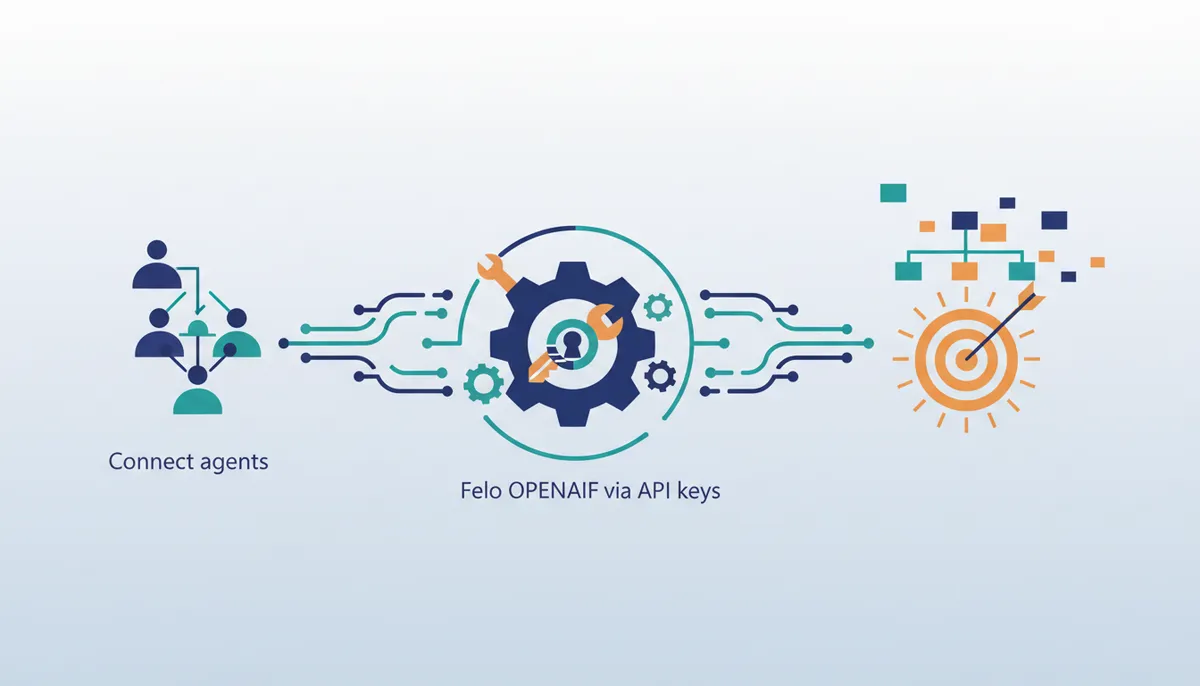
Connecting an AI agent to a full tool layer begins with an API key. Each of Claude Code, Codex, OpenClaw, and Hermes Agent ships its own setup guide, and the sequence is the same across them: configure the environment, verify tokens, and test the link before any real work begins. This configuration grants access to AI Search and Web Fetch, capabilities missing from base models entirely. Operators must configure the endpoint and test the connection against a live query to ensure stability. Real-time context from Felo OpenAPI fixes the data freshness issue but introduces a new variable: external network latency. Every tool call waits on a remote procedure, creating a performance cost builders cannot ignore. Teams balance the need for fresh data against the speed of synchronous calls during code generation. Agent reliability now hinges on the stability of the connected tool stack rather than just the language model underneath.
Validating Code Review Workflows with Live Documentation
Validate Code Review With Live Documentation by confirming the agent chains AI Search before Web Fetch calls. This sequence ensures the model retrieves broad framework updates prior to extracting specific API signatures from web pages. Agents working from training data face risks as frameworks change and APIs deprecate; without live search, they may provide outdated advice. Retrieval speed conflicts with accuracy; prioritizing deep context fetching can delay feedback loops during active development sprints. Agents risk approving code that conflicts with current library versions without live validation, introducing runtime errors that static analysis misses.
| Validation Step | Required Tool | Outcome |
|---|---|---|
| Framework Check | AI Search | Identifies latest substantial version |
| Signature Verify | Web Fetch | Confirms argument types |
| Final Output | Code Review | Flags deprecated usage |
Available setup guides for Codex and Claude Code detail the necessary configuration steps. External endpoint availability limits this approach; if the documentation host is unreachable, the review halts. Builders should account for network instability when designing these workflows. Testing this chain against known deprecated functions helps measure false-negative rates before production deployment.
About
Priya Nair serves as AI Industry Editor at AI Agents News, where she tracks product launches and platform shifts across the autonomous agent environment. Her daily work involves rigorously verifying claims and analyzing market moves for tools like Claude Code and OpenAI Codex, making her uniquely qualified to dissect the current crop of AI coding agents. By constantly evaluating how these systems handle orchestration, tool use, and multi-step debugging, Priya brings a fact-based perspective to comparing frameworks and models. This article connects her ongoing coverage of vendor capabilities to practical decision-making for engineers. At AI Agents News, the team focuses on providing neutral, technical comparisons rather than vendor hype. Readers rely on this independent analysis to understand which agent stacks fit their specific architectural needs without commercial bias. The comparison offered here stems directly from Priya's commitment to grounding every assessment in primary sources and observable performance data, ensuring builders receive accurate, actionable intelligence on the evolving agent system.
Conclusion
The three walls named at the start do not fall to a better model. Live knowledge closes with retrieval, AI Search for the current framework version and Web Fetch for the signature underneath it. Persistent memory closes with a store like LiveDocs that outlives the session, so architectural decisions stop being re-explained every morning. Output generation closes with the APIs that turn a code answer into a deck or a diagram. None of the three removes the ordering constraint: search before fetch, or the agent verifies a signature against a page it has not established as current.
What this costs is not compute time but the engineering hours spent debugging runtime errors caused by outdated library assumptions. Benchmark scores are measured on isolated tasks and say nothing about dependency drift, which is why agent output stays a hypothesis until live context confirms it.
Frequently Asked Questions
The model is only one layer: without live knowledge it reasons over a training snapshot, and without persistent memory it forgets the team's architectural decisions the moment the session ends. The ceiling shows up in measurement too, with the leading agent reaching a 77.85% overall score on end-to-end project development tasks.
You must integrate shared memory solutions like LiveDocs to store team decisions and architecture choices. Without this layer, agents revert to initial training data, causing them to ignore prior constraints repeatedly.
Chain AI Search before Web Fetch, so the agent establishes the current framework version first and only then extracts exact argument types from the documentation page. Order is the whole trick: fetching a signature first leaves the agent verifying against a page it never confirmed was current.
Presentations, diagrams and landing pages, none of which a raw code agent produces, so the deliverable stops at a snippet nobody outside the repository can read. The PPT and Mindmap APIs cover the first two, which is why memory retention and output format count as one requirement rather than two.
Terminal agents use existing shell environments to minimize resource overhead during execution. Conversely, AI-native IDEs often mandate isolated sandboxes on virtual machines, creating tension between workflow continuity and security enforcement.
References