Agent frameworks compared: LangGraph vs CrewAI
Ten open-source frameworks now compete to define the composable AI agent, proving the shift from chatbots to autonomous execution is real. LangGraph and CrewAI mark the two ends of that shift: LangGraph makes every state transition an explicit node and edge you define, while CrewAI hands over ready-made role templates and hides most of the wiring. AutoGen sits between them, coordinating agents through API-driven chat. We also examine when to deploy full agentic systems versus simpler RAG implementations to optimize latency.
The core architecture of these systems blends planning, long-term memory, and iterative execution into a single loop. Unlike basic prompts, these frameworks allow software to interact with the real world without constant human supervision. A 2026 analysis by Firecrawl identifies key players including Google ADK, Dify, and the OpenAI Agents SDK alongside established tools like Semantic Kernel and Haystack. This explosion of open-source alternatives offers developers control over logic while avoiding vendor lock-in.
Operationalizing these agents demands reliable tool integration and secure deployment strategies. We compare specialized agentic systems designed for coding and finance against general-purpose runtimes. The discussion includes emerging standards like the Model Context Protocol for connecting to data sources without custom wrappers. By understanding these technical distinctions, teams can build systems that adapt to results rather than following static paths.
The Core Architecture of Composable AI Agents
Defining the Composable AI Agent Loop
An AI agent functions as a composable system wrapping a loop around a language model so it decides, acts, evaluates, and adapts. Static models lack this fluidity. The agent maintains context across multiple steps to stop objective drift during complex operations. Reasoning comes from the LLM, tools handle execution, and memory ensures retention, often boosted by retrieval augmentation and standardized context protocols. These integrations permit connections to data sources and real-world actions needed for autonomy.
| Component | Function |
|---|---|
| Planning | Breaks goals into sub-tasks |
| Memory | Retains context across steps |
| Tools | Executes external API calls |
Adding autonomy lets systems split massive goals into tiny sub-tasks, spanning basic automation to full independence. This capability determines if a project needs a full agentic loop or a simpler retrieval pipeline.
Applying Planning and Memory in Agent Workflows
Forgetting objectives during complex ops is a substantial hurdle. Effective workflows solve context maintenance issues by persisting state across iterative loops. The standard architecture relies on three parts: the LLM for reasoning, tools for execution, and memory for retention. Specific protocols let agents link to external sources dynamically without custom wrappers for every tool, enabling web browsing or database queries. Frameworks now bake these components in as standard features. Seven specific frameworks were identified as the primary options that "matter" for production use in the 2026 environment: LangGraph (v0.2+), Claude Agent SDK, CrewAI, AutoGen/AG2, Semantic Kernel, LlamaIndex agents, and Pydantic AI. Grasping these memory and planning constraints is necessary for deployment.
Agentic Workflows vs RAG Implementations
Choosing between agentic workflows and simpler RAG implementations optimizes cost and latency. Simple RAG implementations act as stateless retrieval pipelines, fetching context to answer a single query without changing the overall workflow state. Agentic workflows use layered abstractions to manage conversational agents that decompose complex goals into executable sub-tasks autonomously. This architectural split dictates strategy: static knowledge retrieval suits RAG, while multi-step orchestration demands an agent framework. Introducing autonomous planning increases system complexity and potential failure modes notably, so the split is not stylistic: retrieval alone answers a single query, while branching, multi-step work is what justifies an agent framework.
Comparing Orchestration Engines and Autonomous Runtimes
Graph-Based Orchestration vs Pre-Built Autonomous Runtimes
LangGraph uses a graph-based approach to orchestrate complex state transitions where nodes represent specific logic steps. This architectural pattern contrasts sharply with autonomous runtimes like Auto-GPT, which decompose high-level goals into executable task lists without explicit graph definitions. Developers choosing between LangGraph and AutoGen must weigh the need for granular state control against the convenience of asynchronous collaboration. While LangGraph excels in managing memory for complex RAG pipelines, AutoGen prioritizes multi-agent chatter to solve coding problems dynamically.
| Feature | Graph Orchestration | Autonomous Runtime |
|---|---|---|
| Control Model | Explicit node/edge definition | Implicit goal decomposition |
| State Management | Centralized graph context | Distributed task memory |
| Primary Use Case | Complex RAG, deterministic flows | Open-ended exploration, coding |
| Setup Complexity | High (requires schema) | Low (prompt-driven) |
A 2026 analysis compared ten open-source agent frameworks, highlighting that modular options suit custom logic while runtimes favor rapid deployment. The mechanical distinction lies in execution: graph systems enforce a topology, whereas autonomous agents rely on iterative planning loops that may drift without strict constraints. Builders requiring predictable latency should avoid fully autonomous models for critical paths.
Executing Self-Correcting Loops in Multi-Agent Coding Workflows
Advanced architectures replace single generalists with specialized teams to fix agent context loss during iterative development. This structure explains how multi-agent systems maintain coherence by isolating distinct logical roles rather than forcing one model to switch personas constantly. Frameworks supporting complex multi-agent workflows like LangGraph and CrewAI excel here by managing state transitions between these specialized nodes.
However, relying on stochastic LLM outputs for every loop iteration introduces latency risks and potential infinite retry cycles. Hybrid approaches like the BESSER Agentic Framework mitigate this by combining probabilistic generation with state machine reliability for critical logic paths. Without such guards, the self-correcting mechanism becomes a resource leak.
Developers should prioritize frameworks offering pre-built components that abstract loop management while retaining visibility into individual agent states. This balance allows for strong error recovery without sacrificing system stability. AI Agents News recommends testing loop depth limits before production deployment.
Asynchronous Collaboration in AutoGen Versus Minimalist Python Routing in SmolAgents
AutoGen enables asynchronous multi-agent collaboration where distinct agents chat via APIs to solve complex problems. This architecture relies on layered abstractions to manage conversational state across distributed nodes, a pattern distinct from single-agent runtimes. In contrast, SmolAgents functions as a lightweight SDK that routes logic directly through Python code rather than serializing interactions into bulky JSON structures. This design choice significantly reduces abstraction overhead for developers who require strict typing and minimal latency in their execution paths. Teams prioritizing autonomous code generation often select AutoGen for its strong multi-agent systems capabilities, whereas those building embedded frontend tools may prefer the directness of Python routing.
| Feature | AutoGen Approach | SmolAgents Approach |
|---|---|---|
| Primary Mechanism | API-based agent chat | Direct Python routing |
| Abstraction Layer | Layered abstractions | Minimalist SDK |
| Data Format | JSON-heavy serialization | Native Python objects |
| Best Fit | Autonomous code generation | Low-latency embedded logic |
The critical trade-off involves orchestration complexity versus runtime efficiency. While AutoGen provides powerful tools for building conversational AI agents that operate with high autonomy, the serialization cost of JSON can introduce measurable latency in tight loops. Conversely, bypassing JSON for native Python execution in SmolAgents simplifies the stack but requires the developer to manually implement the collision resolution logic that layered abstractions handle automatically. Builders must decide if their bottleneck is coordination complexity or serialization overhead.
Operationalizing Agents Through Tool Integration and Secure Deployment
Defining Tool-Dependent Agent Architectures
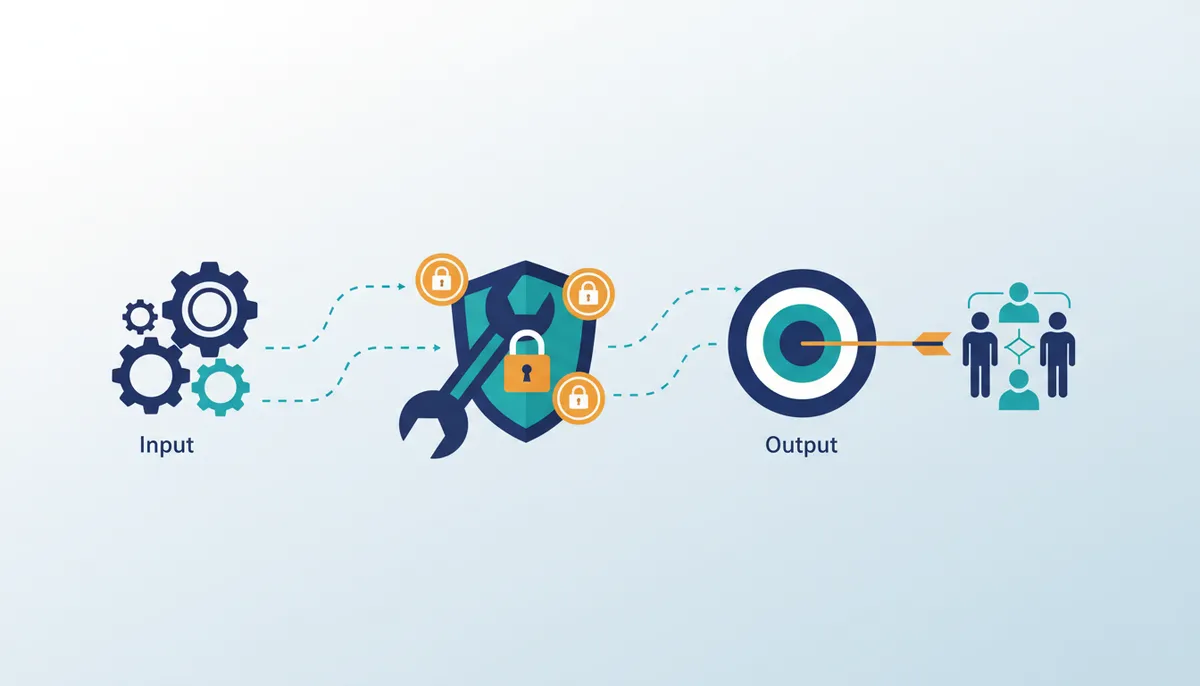
Conditional logic drives tool-dependent agent architectures when workflow steps refuse hard-coding and demand adaptation to failing API responses. Static RAG systems optimize for predictable retrieval, yet these flexible orchestration loops plan actions, execute tools, and retain context through iterative cycles. Planning, memory, and tool execution form the technical anatomy of such an agent, often using the Model Context Protocol (MCP) to standardize connections to external data sources without custom wrappers. This distinction classifies them as thorough toolkits designed for autonomous, goal-directed behavior rather than simple prompt completion.
Adopting this architecture introduces significant overhead, including complex memory management and error handling that increases both latency and operational cost. Maintaining context across multiple steps prevents the agent from forgetting its objective during complex operations, representing the primary technical hurdle. Builders must weigh the necessity of branching logic against the stability costs of autonomous runtimes before committing to an agent-based design pattern.
Deploying Specialized Agents in Finance and Healthcare
Finance is where specialized agentic systems moved past chatbots first, because market work means acting on live data rather than answering questions about it. FinRL applies reinforcement learning to trading strategies, and OpenBB Terminal runs autonomous data analysis. Conditional tool use replaces static paths in both cases, since the next step depends on what the previous API call returned.
Healthcare inverts the priority. Agents such as HIA parse medical reports and produce health insights, so the design question is not how far autonomy can stretch but how tightly it must be bounded. Strict guardrails keep the agent inside verified parameters and stop it from inventing detail while reading sensitive records.
Mitigating Context Loss and Latency in Long-Running Sessions
Long sessions fail in a specific way: the agent keeps running while the original objective quietly slips out of its working context. Frameworks like LangGraph offer strong state tracking, yet the latency cost of maintaining long-term session history grows non-linearly with each tool call.
The agent framework environment has shifted from experimental adoption to strict production viability, evidenced by data derived from 18+ real-world deployments confirming that success now hinges on managing temporal limits rather than just maximizing autonomy. Deep reasoning depth conflicts with session stability; fully autonomous systems capable of breaking down massive goals into tiny sub-tasks must carefully manage the loop of decision, action, and adaptation to avoid losing track of the original goal. Success rates drop after 35 minutes of human-agent interaction due to rising complexity in some benchmarks, highlighting the need for explicit termination conditions or human-in-the-loop checkpoints before the agent reaches this threshold.
Selecting frameworks designed for asynchronous multi-agent collaboration or graph-based orchestration helps manage state more effectively than a single long-running process for workflows requiring sustained interaction.
Constructing Multi-Agent Systems with CrewAI and AutoGen
CrewAI Low-Code Templates Versus AutoGen API Chat Orchestration
Choice of orchestration engine dictates whether a team relies on pre-configured templates or asynchronous message passing. CrewAI accelerates deployment by offering ready-made templates that abstract complex logic into a low-code experience. This approach minimizes boilerplate, allowing engineers to instantiate agent teams rapidly without defining every interaction rule manually. Microsoft AutoGen uses layered abstractions to manage conversational agents that solve problems through API-driven chat. Such architecture supports granular control over state and memory, necessary for complex, non-linear workflows where static templates fail.
Flexibility competes with speed here; template rigidity can hinder custom error handling in flexible environments. Builders requiring strict validation must weigh the convenience of templates against the overhead of defining explicit conversation patterns.
- Define the agent roles and specific goals for the task.
- Select the orchestration mode: template-based for speed or API-chat for autonomy.
- Configure the execution loop to handle tool calls and memory retention.
- Deploy the system and monitor latency during multi-step reasoning.
This structural choice dictates long-term maintainability as agent tasks evolve beyond initial scope.
Implementing Self-Correcting Code Loops with Lead, Programmer, and Reviewer Agents
Distinct roles assigned to a Lead Agent, Programmer Agent, and Reviewer Agent within an AutoGen group chat create self-correcting loops. This architecture replaces linear execution with a cyclic feedback mechanism where the Reviewer validates code before final acceptance. The Lead Agent defines strict requirements, ensuring the Programmer Agent generates code that aligns with initial specifications rather than drifting during iteration. If the Reviewer identifies bugs, the system routes error messages back to the Programmer for immediate revision without human intervention.
- Initialize the group chat manager with specific roles for requirement definition, code generation, and error detection.
- Configure the termination condition to trigger only when the Reviewer Agent confirms zero syntax or logic errors.
- Enable asynchronous message passing so agents can negotiate fixes without blocking the main execution thread.
- Deploy the workflow using layered abstractions to manage conversation state across multiple correction cycles.
Developers opting for quicker deployment might choose CrewAI templates, yet this specific loop demands the granular conversational control that only AutoGen provides. Increased configuration complexity is the limitation; engineers must explicitly define stop sequences to prevent infinite correction loops where the Programmer cannot satisfy the Reviewer. This pattern demonstrates how autonomy and collaboration replace static pipelines with flexible, self-healing software construction processes. Production systems using this method must monitor token consumption closely, as recursive debugging can rapidly escalate costs if the error surface remains large.
Balancing LLM Unpredictability with State Machine Reliability in Hybrid Flows
Purely generative loops often fail to converge when logic requires strict determinism rather than creative exploration. The BESSER Agentic Framework merges the non-deterministic nature of LLMs with the predictability of state machines. This hybrid architecture enforces deterministic flows for critical logic paths while retaining generative capabilities for conversational interfaces. Builders construct these systems by defining rigid state transitions that the LLM cannot bypass, effectively sandboxing autonomy within verified boundaries.
- Define explicit state nodes representing valid workflow stages.
- Map LLM output tokens to specific state transitions only.
- Reject any generative output that does not match a valid edge.
Microsoft AutoGen excels at layered abstractions for conversation, yet it lacks native state enforcement for critical operations without external guards. Increased orchestration complexity is the constraint, as engineers must manually define every permissible path rather than relying on emergent behavior. This constraint prevents catastrophic failures in production environments where undefined actions carry high risk. AI Agents News recommends this pattern for financial or infrastructure workflows where auditability supersedes flexibility.
About
Priya Nair serves as the AI Industry Editor at AI Agents News, where she tracks the business dynamics behind autonomous systems and coding agents. Her daily work analyzing product launches and platform strategies for tools like Devin and Claude Code provides the perfect vantage point for this technical deep dive. While her beat often covers market moves, this guide uses her rigorous verification standards to dissect the architecture of open-source frameworks like LangGraph and AutoGen. By connecting high-level industry trends to ground-level engineering realities, Nair helps builders distinguish between hype and functional utility. Her role at AI Agents News, a hub dedicated to technical founders and engineers, ensures this analysis remains neutral and grounded in actual capability rather than vendor marketing. This article reflects her commitment to providing clear, actionable intelligence on when to deploy complex agentic workflows versus simpler RAG implementations, directly supporting the community's need for accurate, build-ready information.
Conclusion
The framework you pick decides how much of the agent loop stays visible. LangGraph makes state explicit through nodes and edges and charges for it in schema work upfront. CrewAI hides that wiring behind role templates and gets a team running fast. AutoGen coordinates through API-driven chat, which suits open-ended coding work and pays for it in JSON serialization and unpredictable loop depth.
None of them removes the underlying limit: success rates fall after thirty-five minutes of interaction, and unbounded autonomy turns into drift long before a human notices. That is why the hybrid pattern matters, with rigid state transitions the model cannot bypass on any path that touches money or infrastructure, and explicit termination conditions everywhere else. Keep the conversational layer flexible, keep the execution engine bounded, and the choice between templates and graphs becomes a question of how much control the workflow needs rather than which tool is in fashion.
Frequently Asked Questions
Success rates drop significantly after 35 minutes of human-agent interaction due to rising errors. You must design shorter task cycles or implement strict checkpointing to prevent objective drift during these extended operational windows.
Ten open-source frameworks were compared in a 2026 analysis to identify top performers. This broad comparison helps developers avoid vendor lock-in by selecting composable tools that offer full control over logic and data.
Seven specific frameworks were identified as primary options that matter for production use. Teams should prioritize these validated systems like LangGraph or CrewAI to ensure stability rather than experimenting with unproven experimental libraries.
LangGraph is specified as being at version 0.2 or higher in production environments. Using this specific release ensures you have the necessary graph-based orchestration features required for managing complex state transitions effectively.
RAG fits when a stateless retrieval pipeline answers the query in one pass. Reach for an agent framework only when the work decomposes into sub-tasks and branches on tool results, since autonomous planning adds complexity and failure modes.
References