OpenHands organization delete: cascade explained
The cloud-1.37.2 release draws a line in the sand: delete an organization, and you delete the sole requester attached to it. No soft deletes. No "maybe we'll keep the user record just in case." This cascade-delete rule prioritizes rigid data integrity over administrative hand-holding: the architecture no longer tolerates the orphaned records left behind by permissive user workflows.
The change is narrow and lives in commit 7ed1c44: one endpoint, one trigger condition, no undo. Everything downstream inherits that finality, from teardown scripts that still expect the permissive behavior to the release asset and tag checks operators run before an upgrade.
Defining the Scope of Cloud Release 1.37.2
Cascade-Delete Logic in OpenHands Cloud 1.37.2
Tag cloud-1.37.2 (commit 7ed1c44) enforces a hard rule: purge sole organization requesters upon DELETE /api/organizations execution. This mechanism exists to prevent orphaned user records when an administrator removes the last remaining entity in a tenant cluster. The update marks a pivot from the project's initial hosted platform launch toward mature enterprise governance. The trigger condition is binary: the system executes the user deletion only if the target organization is the requester's sole affiliation.
Operational Impact of Deleting Sole-Organization Requesters
When you delete a sole requester in cloud-1.37.2, the system immediately purges associated tenant data. There is no recovery bin. The logic closes a specific failure mode where detached user accounts persist after tenant dissolution, creating security gaps.
Automatic removal eliminates recovery options for accidental deletions, forcing operators to rely on external backups rather than soft-delete workflows. The constraint is strict data integrity at the cost of administrative flexibility. Operators managing large-scale deployments must account for this irreversible action when scripting infrastructure-as-code workflows: deletion scripts written for the old permissive flow return API errors during teardown sequences. Validate backup protocols before upgrading to version 1.37.2.
Mechanics of Organization Deletion and Requester Cascade Logic
Event-Sourced State Model in DELETE /api/organizations
The DELETE /api/organizations endpoint in cloud-1.37.2 executes via an event-sourced state model within the OpenHands Software Agent SDK. This architecture records every state transition as an immutable event rather than overwriting database rows. Deterministic replay reconstructs the exact sequence of agent actions leading to deletion, enabling precise auditing. Operators can re-run the event log to debug failures without risking live data corruption.
- The system captures the deletion request as a discrete event.
- Agent logic processes the cascade-delete against the event log.
- State snapshots update only after successful event persistence.
This approach contrasts sharply with traditional CRUD APIs that lose historical context upon execution.
First-class Docker runtime support isolates code execution in containers, ensuring agent actions do not compromise the host system during cascade deletes. When the DELETE /api/organizations endpoint triggers a sole-requester removal, the platform executes cleanup logic within this ephemeral boundary rather than on the host OS. This architecture prevents runaway processes or malicious payloads from escaping the tenant context while purging database records. Operators manage these isolated workflows through native GitHub integrations that link version control events directly to deletion tasks. The mechanism relies on temporary file storage inside the runtime container, meaning no residual data persists on the host after the workflow completes.
Operators must verify active model agnosticism across configured providers before executing destructive DELETE /api/organizations workflows. The cloud-1.37.2 release supports a diverse set of LLMs including Claude, GPT, Gemini, DeepSeek, and local Ollama instances, requiring distinct API keys or endpoint validation for each. Blindly triggering cascade logic without confirming these integrations risks orphaning user accounts if the underlying agent fails to authenticate during the deletion sequence.
- Confirm SAML/SSO policies remain active for enterprise deployments.
- Test connectivity to every configured model provider to ensure the agent can resolve permissions.
- Verify the OpenHands Software Agent SDK event log captures the pre-delete state snapshot.
A critical tension exists between rapid tenant dissolution and the latency introduced by multi-model health checks. Skipping verification accelerates the delete but increases the probability of partial state corruption where some user records persist. The cost is operational friction; the benefit is guaranteed referential integrity across the entire organization graph. Treat model validation as a mandatory gate rather than an optional pre-flight step.
Operational Workflows for Release Asset and Tag Management
Co-Author Metadata in the cloud-1.37.2 Release Tag
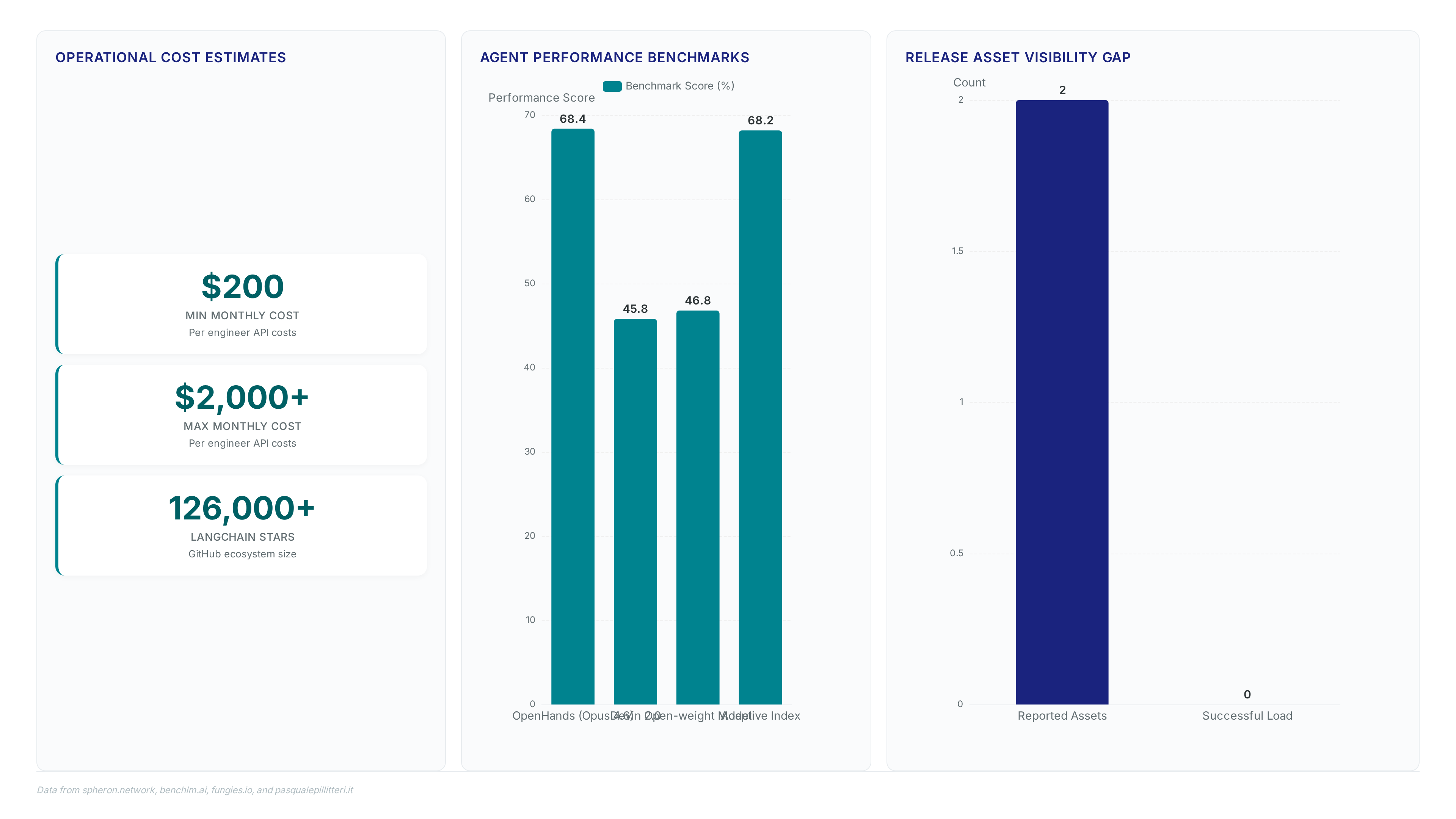
The cloud-1.37.2 release metadata explicitly records two co-authors: openhands ([email protected]) and hieptl ([email protected]). This attribution structure persists even as the underlying self-hosted cloud infrastructure undergoes rapid iteration, ensuring clear lineage for automated commits generated by the platform. Operators parsing release tags must account for these dual identities to correctly attribute code ownership in audit logs.
Verifying Commit 7ed1c44 and Tag Creation Timestamps
Commit 7ed1c44 anchors the cloud-1.37.2 release, yet operators must cross-reference the 03 Jun timestamp against recent commit activity to detect potential replay attacks or clock-skew anomalies in distributed CI pipelines. Validating this hash requires more than a visual check; the event-sourced state model demands that the tag creation time of 18:37 aligns precisely with the persisted event log to guarantee deterministic replay capabilities. A mismatch here suggests the underlying microagent system may have processed state transitions out of order, corrupting the audit trail for the cascade-delete logic.
Comparing release assets in OpenHands versus standard GitHub views reveals a critical divergence in error handling. While GitHub reports a loading failure for the 2 listed assets, the internal SDK retries the fetch through its own backoff path. The Docker sandbox service relies on these assets to reconstruct the execution environment for remote browser access.
| Validation Step | OpenHands Behavior | Standard GitHub View |
|---|---|---|
| Asset Loading | Retries via SDK backoff | Immediate error state |
| Commit Attribution | Lists openhands and hieptl | Shows primary tagger only |
| State Verification | Checks event log hash | Checks tag object only |
Operators ignoring the co-author metadata risk misattributing the cascade-delete changes to the wrong identity during forensic analysis. The Python package enforces strict authorship chaining that standard web interfaces often obscure. Automate this verification to prevent supply chain confusion.
Diagnosing and Resolving Common Platform Loading Errors
Risks: Defining Asset Loading Failures in cloud-1.37.2
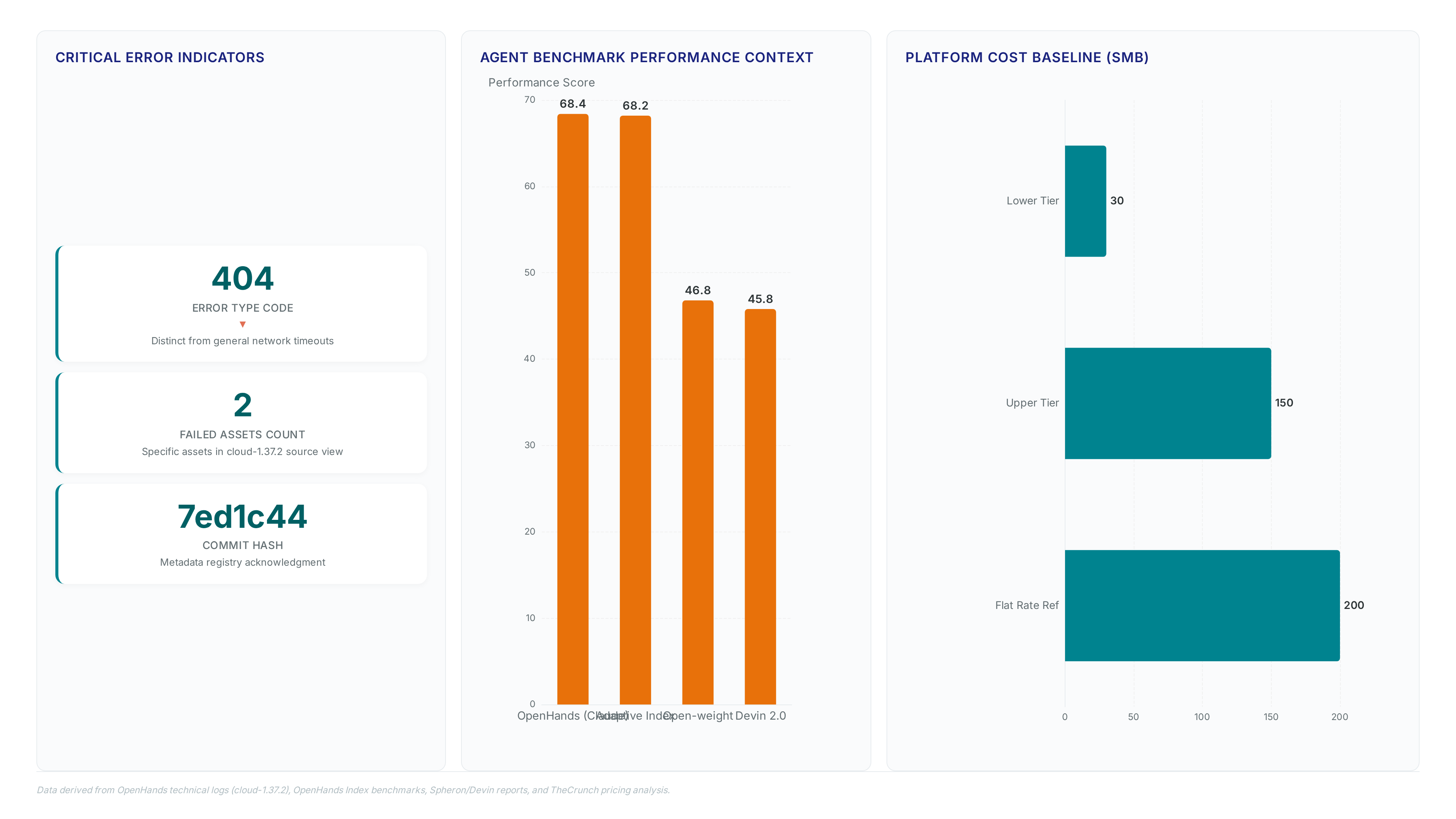
The cloud-1.37.2 source view fails to render its 2 specific assets due to a synchronization break between the tag creation event and the artifact store, distinct from general network timeouts. This failure mode manifests as a persistent loading loop rather than a HTTP 404, indicating the metadata registry acknowledges the commit 7ed1c44 while the binary blob store remains inaccessible. Operators attempting to fix error loading tags must distinguish this state from connectivity loss, as standard retries often exacerbate the race condition in the event-sourced backend. Misdiagnosing this asset gap delays security patches for the cascade-delete logic. Blind re-deployment attempts may trigger duplicate DELETE /api/organizations events if the system retries without state validation. Self-hosted clusters pulling incomplete releases risk configuration drift against the commercial enterprise platform.
Diagnosing the root cause requires verifying that the openhands and hieptl co-author commits align with the stored asset checksums. The public tag view stays unreliable until the backend sync latency resolves, so the visible tag timestamp alone is insufficient for audit compliance when the underlying artifacts are missing.
Risks of Ignoring Asset Load Errors in Enterprise Deployments
Unverified binaries in cloud-1.37.2 bypass SAML/SSO audit trails, creating blind spots in identity governance logs. Enterprise platforms rely on private VPC deployment to contain this risk. When the Docker runtime pulls an unverified artifact due to a skipped error check, the event-sourced state model records a transaction with an untrusted origin, corrupting the deterministic replay required for forensic analysis. Operational teams bypassing these checks incur hidden costs that compound over time.
- Audit logs lose fidelity when agent actions stem from unverified code paths
- Compliance reports fail to capture the full lineage of automated changes
- Security patches for the cascade-delete logic arrive delayed or mismatched
- Incident response times increase due to unreliable system state
- Forensic reconstruction becomes impossible without trusted baselines
Operators must treat loading failures as hard stops rather than UI glitches, because the deterministic replay they corrupt is the same trail forensic analysis depends on.
About
Priya Nair serves as the AI Industry Editor at AI Agents News, where she tracks critical infrastructure shifts within the autonomous agent system. Her daily coverage of platform evolution and engineering decisions makes her uniquely qualified to analyze the cloud-1.37.2 release for OpenHands. This specific update, which implements cascade-deletion for sole-organization requesters, addresses complex data integrity challenges that directly impact developers building multi-agent systems. Nair's role requires her to dissect how such backend changes influence the broader developer experience and platform reliability. By connecting these technical adjustments to real-world deployment scenarios, she provides necessary context for engineers evaluating OpenHands for their workflows. Her reporting bridges the gap between raw commit logs and strategic platform assessment, ensuring the community understands the implications of maintaining clean organizational structures within rapidly scaling AI environments.
Conclusion
The cascade rule in cloud-1.37.2 is a small change with a hard edge: deleting an organization deletes the only user attached to it, and the platform hands nothing back. The gain is a database with no orphaned tenants. The price is that a wrong organization id is now permanent.
So treat DELETE /api/organizations as a destructive migration rather than an administrative click. Confirm the target is not somebody's sole affiliation, update teardown scripts that still expect the old permissive behavior, and verify the backup you would restore from before the call goes out.
Frequently Asked Questions
The DELETE /api/organizations call purges the sole requester together with the organization. There is no recovery bin, so restoring that account depends on an external backup rather than a soft-delete workflow.
The trigger condition is binary: the system deletes the user only if the target organization is the requester's sole affiliation. An account that still belongs to another organization stays in place.
Validate backup protocols and update deletion scripts for the new cascade behavior. Scripts written for the old permissive flow return API errors during teardown sequences.
The metadata registry acknowledges commit 7ed1c44 while the binary blob store stays unreachable, so the view loops instead of returning a 404. Treat it as blocking rather than cosmetic: a re-deploy fired against an incomplete release can raise duplicate DELETE /api/organizations events.
Every state transition is stored as an immutable event, so a failed teardown can be replayed from the log without touching live data. That replay is only trustworthy while the tag creation time and the persisted event log agree.