Multiagent frameworks: skip chat history headaches
Building agents from scratch demands managing chat history and system integrations that multi-agent frameworks handle automatically. These platforms replace fragile custom code with pre-packaged tools for memory, knowledge bases, and LLM selection. Modern architecture combines large language models, tools, and prompts to execute complex workflows, and the frameworks differ mainly in how much of that state they hold for you. We dissect the operational mechanics of Agno, LangGraph, CrewAI, and LangFlow, comparing their approaches to state management and tool execution. The discussion moves beyond theory to identify concrete automation patterns used in production environments.
Real-world applications range from the Replit Agent editing code in an IDE to Anthropic's Computer Use navigating screens via mouse clicks. Unlike basic scripts, these systems perform hundreds of sequential steps, such as comparing restaurants or ordering products autonomously. By using established frameworks like LangGraph or OpenAI Swarm, developers avoid the heavy lift of building user-agent chat history management from the ground up.
The Role of Multi-Agent Frameworks in Modern AI Architecture
An AI agent functions as an LLM-powered assistant assigned specific tasks and tools to accomplish those tasks. This definition separates modern systems from simple code libraries by demanding four operational capabilities: perception, reasoning, action, and memory management. Frameworks now supply pre-built technical modules for these domains. Development shifts from linear chains to thorough platforms handling the entire lifecycle of agent operations.
Architecture relies on the LLM acting as the central brain for natural language understanding. Tools direct autonomous task performance alongside this core. AgentMemory and AgentStorage components enable the system to retain state across long interaction windows. Such retention proves necessary for complex workflows like senior co-pilot collaboration or automated computer use. Built-in memory eliminates the need to implement custom mechanisms for tracking chat history and personalized conversations. Users access long-term previous prompts without extra engineering work.
Integrating these capabilities involves managing user-agent chat history and system integrations. Pre-packaged tools allow developers to add specific documents, such as JSON, PDFs, or websites, as knowledge bases. Basic assistants handle single-turn queries efficiently. True agentic systems require orchestration of perception inputs and reasoning loops to manage multi-step dependencies. Enterprises deploying these architectures gain most where the framework already owns knowledge and memory management, since that is precisely the layer teams would otherwise rebuild by hand before reaching production.
Orchestrating Complex Workflows with Multi-Agent Frameworks and Graph Structures
Explicit graph-based structures replace linear chains to manage non-linear dependencies in complex automation. Modern orchestration relies on this topology to coordinate multiple agents where a single LLM-powered assistant cannot resolve interdependent tasks alone. Graph architectures allow flexible routing based on real-time tool outputs and state changes. Sequential execution cannot match this flexibility.
The industry movement toward multi-agent orchestration addresses workflows requiring explicit state management rather than simple prompt-response loops. Frameworks using graph-based workflows enable agents to branch, merge, and loop without losing context. This approach supports team-based orchestration. Distinct agents with set roles collaborate to solve problems single entities cannot. A restaurant reservation system might deploy one agent to compare venues while another handles voice calls. They coordinate through a shared graph state.
Developers can now prompt systems to run, edit, build, and deploy full-stack web apps in minutes using tools like Windsurf. These systems support technologies including Astro, Vite, Next.js, and Supabase. Automation covers the entire software development lifecycle. The shift toward production-ready multi-agent systems emphasizes competency maps and evaluation metrics over experimental prototypes. Technology evolves from single LLMs to agentic AI systems. Focus moves from simple generation to autonomous task performance using tools and memory.
Validating Agent Architecture: Necessary Components from Vector Databases to Reasoning Tools
A functional AI agent requires an LLM, tools, and prompts to execute complex tasks effectively. This triad forms the operational baseline for systems that move beyond simple chat interfaces into autonomous action. Builders should ensure their architecture includes distinct layers for perception, reasoning, action, and memory management to handle non-linear workflows. These capabilities allow agents to perceive input, process data via algorithms or LLMs, retrieve external data, and initiate workflows.
The following configuration demonstrates the necessary components for a strong agent definition, integrating hybrid search and specific toolsets:
| Component | Function | Implementation Example |
|---|---|---|
| Model | Central reasoning brain | OpenAI o1-mini |
| Knowledge | External data retrieval | PgVector hybrid search |
| Tools | Action execution | Websearch, Reasoning |
Modern frameworks provide pre-built modules for these primary functions, which is what cuts the engineering burden of state retention and input handling and makes deployment on cloud services like Amazon Web Services (AWS) a configuration step rather than a project.
Builders should verify that their chosen agentic AI frameworks support custom tool integration. Systems must allow making API calls, running database queries, or sending emails. Rigid, predefined actions limit potential utility. Flexibility remains key for reliable applications.
Inside the Leading Multi-Agent Frameworks and Their Operational Mechanics
Agno and LangGraph: Distinct Operational Mechanics for Agent Perception
Session-based contexts drive perception in Agno, while LangGraph relies on explicit graph structures to maintain state control. Agno, previously known as Phidata, transforms LLMs into functional agents by wrapping model interactions inside a unified session layer that manages both local and cloud history. This design simplifies memory management by treating the full conversation thread as a single persistent object available to tools like YFinanceTools or DuckDuckGo. Setting a boolean flag enables step-by-step reasoning, forcing the agent to plan before taking action.
LangGraph takes a different path for complex workflows by modeling logic as a directed graph where nodes act as functions and edges define control flow. Cyclic state machines replace linear chains under this approach, supporting the broader industry shift toward multi-agent orchestration. Agno shines during rapid prototyping with pre-built components for perception, reasoning, action, and memory management, yet LangGraph grants granular visibility into every state transition.
The operational cost is clear: Agno simplifies development via session wrappers, whereas LangGraph supplies the explicit graph structures necessary for complex, cyclic workflows. Framework selection demands a choice between automated session tracking convenience and the precision found in manual graph definition.
Deploying Agno Agents with AWS Support and Local Session Tracking
GitHub serves as a direct deployment target, or teams can connect an AWS account for cloud-native execution. This flexibility lets organizations shift agents from local setups to scalable infrastructure without rewriting core logic.
Built-in memory features remove the burden of building custom systems to track chat history and personalize conversations. Operators watch specific metrics like active sessions, total API calls, and token consumption to keep costs in check. These agents maintain persistent memory unlike static scripts, requiring careful oversight to avoid context window overflow.
Automatic session persistence offers convenience but introduces latency when reading large history files from disk on every turn. Rich historical context must be balanced against response time needs, often leading teams to prune older messages. Rigid graph structures suit some frameworks, yet this method prefers a session-based state that adapts to changing inputs, which is why production deployments here stand or fall on the metrics above rather than on graph correctness.
Matching Agno, CrewAI, and LangFlow to Development Needs
Leading frameworks have condensed into a few substantial players, each optimizing for distinct orchestration styles. Agno (formerly Phidata) works best when teams require immediate access to pre-packaged tools like YFinanceTools without defining complex states. Its architecture wraps model interactions in session-based contexts, lowering complexity for standard LLM providers like OpenAI and Anthropic.
CrewAI targets structured team hierarchies where role assignment drives flow, while LangFlow provides a visual interface for prototyping logic chains. Code-first approaches offer flexibility, whereas no-code accelerators provide speed, creating a distinct tension. The competitive environment splits between frameworks offering "high-level abstractions" for ease of use and those delivering "low-level APIs" for granular workflow control.
Identifying framework proficiency as a critical engineering skill demonstrates that architectural familiarity now outweighs raw model knowledge. Visual builders can obscure underlying reasoning loops, making latency spike debugging difficult in production environments. Engineers must weigh drag-and-drop configuration speed against the long-term maintainability of explicit Pythonic control. Choosing the right framework depends on balancing direct tool access needs with required workflow orchestration complexity.
Enterprise Automation Patterns Using Multi-Agent Systems
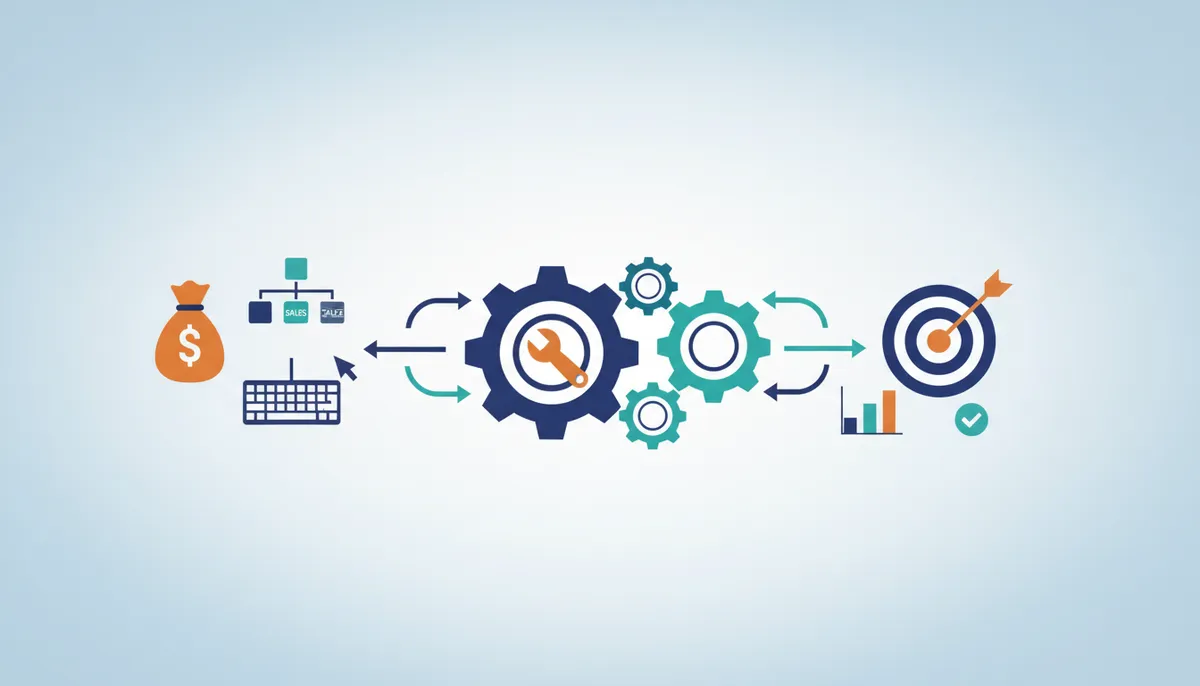
Agentic AI systems combine large language models (LLMs), tools, and prompts to execute complex enterprise workflows. These architectures transition from single-model experiments to production multi-agent systems that manage autonomous coordination across business units. Operationally, deployed agents handle repetitive operations like travel expense management and call classification by delegating subtasks to specialized siblings. A multi-agent framework provides the necessary scaffolding for session-based state management and type safety, ensuring the overall workflow remains auditable during execution.
| Capability | Single Agent Limit | Multi-Agent Solution |
|---|---|---|
| Scope | Narrow task focus | Distributed responsibility |
| State | Volatile context window | Persistent shared memory |
| Safety | Hard to audit | Telemetry and middleware support |
Managing complexity stands as the primary constraint for builders. Coordinating multiple agents requires explicit graph-based structures rather than linear chains. Enterprises must weigh the benefit of complex reasoning against the need for strong orchestration. Builders should select frameworks that offer middleware support to monitor these interactions without rewriting core logic.
Real-World Patterns: Call Analytics, Marketplace Listening, and Expense Automation
Video call analysis extracts sentiment, intent, and satisfaction levels to refine customer targeting strategies. This application relies on the LLM acting as the central brain for interpreting unstructured audio-visual inputs within an agent structure. The mechanism parses tone and semantic content simultaneously, requiring systems to balance depth of analysis against response time requirements to maintain conversational flow.
Marketplace listening extends monitoring across diverse app channels to aggregate customer sentiment signals. These systems apply graph-based workflows to manage explicit orchestration between agents tracking different platforms. Complex, non-linear interaction patterns emerge from this setup, demanding careful definition of interaction logic.
Travel and expense management automates reporting, tracking, and approval sequences without human intervention. Emerging production multi-agent systems now adhere to set security protocols during these financial transactions to mitigate risk. The architecture delegates receipt validation and policy checks to specialized sub-agents, reducing manual audit burdens. Handling anomalous expense claims that fall outside standard policy parameters requires set evaluation metrics.
| Pattern | Primary Agent Role | Key Constraint |
|---|---|---|
| Call Analytics | Sentiment Interpreter | Audio-Visual Processing |
| Marketplace Listening | Channel Aggregator | Context Switching |
| Expense Automation | Policy Enforcer | Anomaly Detection |
Framework Selection Checklist: LLM Choice, Knowledge Bases, and Custom Tools
Select frameworks that offer flexibility in model selection to avoid vendor lock-in. Many platforms claim broad compatibility, yet leading frameworks like LangChain and CrewAI distinguish themselves by supporting diverse providers like OpenAI, Anthropic, or local deployments via Ollama. The cost of ignoring this flexibility is measurable when rate limits hit or pricing tiers shift unexpectedly.
Persistent state management distinguishes production-ready systems from prototypes. Native built-in memory modules eliminate the engineering overhead of constructing vector stores for chat history and context retention. Frameworks like Microsoft Agent Framework specifically address gaps in state management found in simpler abstractions.
| Capability | Requirement | Risk if Missing |
| Model Flexibility | Supports diverse LLM providers | Vendor lock-in |
| Knowledge Ingestion | Accepts JSON, PDF, web sources | Static context window |
| Tool Integration | Enables custom external calls | Limited action scope |
Finally, evaluate the mechanism for custom tools integration. Strong frameworks enable direct connections to external systems for executing payments or web searches. This capability transforms a passive chatbot into an active participant in business workflows. Consequently, implementing strict permission schemas is necessary to prevent unauthorized actions when integrating these tools. Validating these three pillars before committing to a deployment strategy ensures a solid foundation for enterprise automation.
Building and Deploying Strong AI Agents with Memory and Tools
Configuring AgentMemory and PgVector Hybrid Search
Persistent context retention across complex agent sessions requires configuring AgentMemory with PgVector hybrid search. This setup integrates a vector database directly into the agent definition, allowing the system to retrieve the historical data alongside semantic matches. Modern architectural definitions explicitly treat memory and tools as mandatory components rather than optional add-ons for autonomous task performance. State continuity disappears without this configuration, breaking multi-step reasoning loops.
Hybrid search combines keyword precision with vector similarity, reducing retrieval errors in large knowledge bases. Enabling full persistence increases database write latency, a problem that compounds during high-frequency tool calls. Frameworks providing these pre-built modules for perception, reasoning, action, and memory management simplify deployment but introduce dependency on external database availability. Operators must provision sufficient connection pools to prevent blocking during peak AgentStorage writes. The agent maintains long-term context while accessing up-to-date external information sources through this configuration.
Integrating Custom Tools like Websearch and Marketplace
Extending an agent's LLM beyond static training data happens by integrating Websearch and Marketplace tools. Builders define these functions within the agent configuration to enable real-time data retrieval and transactional capabilities. The framework mechanism allows the model to select and execute external APIs based on prompt requirements, effectively bridging the gap between reasoning and action mechanisms for agents to select and use external tools. Unrestricted tool access introduces significant safety risks because agents may execute unintended operations or enter infinite loops if output parsing fails. Strict schema validation for all tool arguments before execution becomes necessary.
Operational latency increases with each additional tool call, creating a cost between information freshness and response time. Engineers must monitor token consumption closely since complex reasoning loops can escalate costs rapidly. Mastering this orchestration layer stands as a top in-demand skill for AI engineering. The resulting system transforms a static chatbot into a flexible worker capable of executing multi-step workflows. AI Agents News recommends validating tool outputs against expected schemas to prevent downstream errors.
Mitigating High Latency and Safety Issues in Production
Processing time for prompts can hinder user experience in real-time services when reasoning loops exceed acceptable thresholds. The architectural cost of adding middleware is measurable latency, yet this constraint is mandatory for secure task performance. Simple abstractions offer speed but often lack the type safety required to prevent catastrophic failures in production environments. Ethical and security concerns exist for enterprise production use, particularly when agents autonomously access external systems without human oversight. Higher safety guarantees inherently increase processing overhead, requiring builders to balance strictness against responsiveness. Builders must configure AgentStorage and AgentKnowledge with hybrid search to minimize retrieval delays while maintaining audit trails. This tension between immediate responsiveness and rigorous safety validation defines the operational boundary for scalable AI automation.
About
Priya Nair serves as AI Industry Editor at AI Agents News, where she tracks the rapidly evolving environment of autonomous systems and the frameworks that power them. Her daily work involves rigorous analysis of product launches, platform shifts, and funding moves surrounding key players like Devin, Claude Code, and multi-agent orchestration tools. This constant immersion in market dynamics uniquely positions her to evaluate the multi-agent frameworks discussed in this article. By monitoring how engineering teams actually deploy these systems for complex workflows, Priya distinguishes genuine architectural advances from marketing hype. Her reporting at AI Agents News focuses on providing software engineers and technical founders with neutral, fact-based comparisons necessary for selecting the right infrastructure. Whether examining tool-use capabilities or coordination mechanisms, her insights stem from a commitment to verifying claims against primary sources. This ensures builders receive a clear, trustworthy read on which frameworks truly deliver on the promise of scalable, agentic reasoning.
Conclusion
Frameworks earn their place by owning the plumbing you would otherwise write yourself: chat history, session state, knowledge ingestion, and tool wiring. What they do not remove is the choice of orchestration style. Agno wraps everything in a session and gets a prototype moving fastest, LangGraph makes every state transition explicit and visible, CrewAI organizes work around fixed roles, and LangFlow trades Pythonic control for a visual canvas.
The bill arrives as latency and oversight. Every mandatory middleware check, every additional tool call, and every large history read on the way to an answer costs response time, so higher safety guarantees always surface as processing overhead. Teams that decide early which of the two they can afford, and that validate tool arguments against expected schemas before agents touch external systems, get the flexible worker without the unmanaged risk.
Frequently Asked Questions
A functional agent requires four distinct capabilities: perception, reasoning, action, and memory. Modern frameworks supply these pre-built modules so developers avoid engineering custom state tracking for long interaction windows.
Graph structures replace linear chains to manage non-linear dependencies and enable flexible routing. This topology allows agents to branch or merge based on real-time outputs without losing context during complex tasks.
Frameworks eliminate the heavy lift of building user-agent chat history management from scratch. They provide pre-packaged tools for memory and knowledge bases, accelerating the path to production for agentic assistants.
Yes, agents can navigate screens by moving cursors and clicking buttons autonomously. Systems like Computer Use perform hundreds of sequential steps, mimicking human actions within an integrated development environment.
Agentic systems combine large language models, tools, and prompts to execute complex workflows. This triad forms the operational baseline that separates true agents from simple code libraries or basic chat interfaces.
References