Tool interfaces beat static training cutoffs
Tool definitions, not bigger models, are what let an LLM act on data newer than its own weights. A name, a description, and a typed argument schema are the whole contract, and getting that text wrong is the main reason agents emit calls the executor cannot run.
Strip away external capabilities, and an LLM is just a text predictor. It will hallucinate current weather or botch complex arithmetic because its knowledge ends at the training cutoff. Integrating specific tool definitions changes the game. It turns passive models into active agents that query external APIs and retrieve live information.
Text-based invocation mechanisms let models request this data through structured prompts instead of guessing. We will look at how auto-formatting function descriptions ensures LLMs correctly interpret API interfaces like GitHub or Spotify. Finally, we cover Python decorator integration to simplify creating custom tools with clear objectives. This stops the model from relying on outdated knowledge and ensures every action has a defined, callable outcome.
The Role of Executable Functions in Extending LLM Capabilities
AI Tools as Objective-Driven Functions for LLMs
An AI tool is a callable unit pushing an LLM past static training data limits. The agent framework runs the code; the tool remains a strict interface definition containing a name, description, and parameter schema. Language models predict text completions based on history. Their internal knowledge stops at the training cutoff. Ask such a model for current weather, and it will likely hallucinate random values rather than retrieve facts. External functions become necessary here.
Common implementations include Web Search for real-time information, Image Generation for visual synthesis, and API Interface connections to various services. A functional tool requires a textual description, a callable action, and typed arguments to ensure valid input. Precise descriptions in the system prompt are critical for the model to recognize when to invoke these functions. Give an Agent the right tools and describe them clearly, and you dramatically increase what an AI can accomplish.
| Tool Type | Primary Function |
|---|---|
| Web Search | Fetches live internet data |
| Retrieval | Accesses external knowledge bases |
| API Interface | Executes actions on third-party platforms |
The trend is clear: we are moving from simple prompt responses to systems coordinating multiple agents to perform complex tasks autonomously. But beware. Providing too many tools without proper namespacing confuses the model regarding which function to select. Builders must balance capability breadth with description clarity to prevent invocation errors. This architectural separation ensures the LLM focuses on reasoning while the agent handles deterministic execution.
Deploying Web Search and API Interfaces for Real-Time Data
Web Search and API Interface tools convert static language models into flexible agents by fetching external data. These interfaces allow systems to bypass training cutoffs, preventing hallucinations when users request current events or specific database states. Without such mechanisms, an LLM might invent weather conditions rather than querying a live meteorological service.
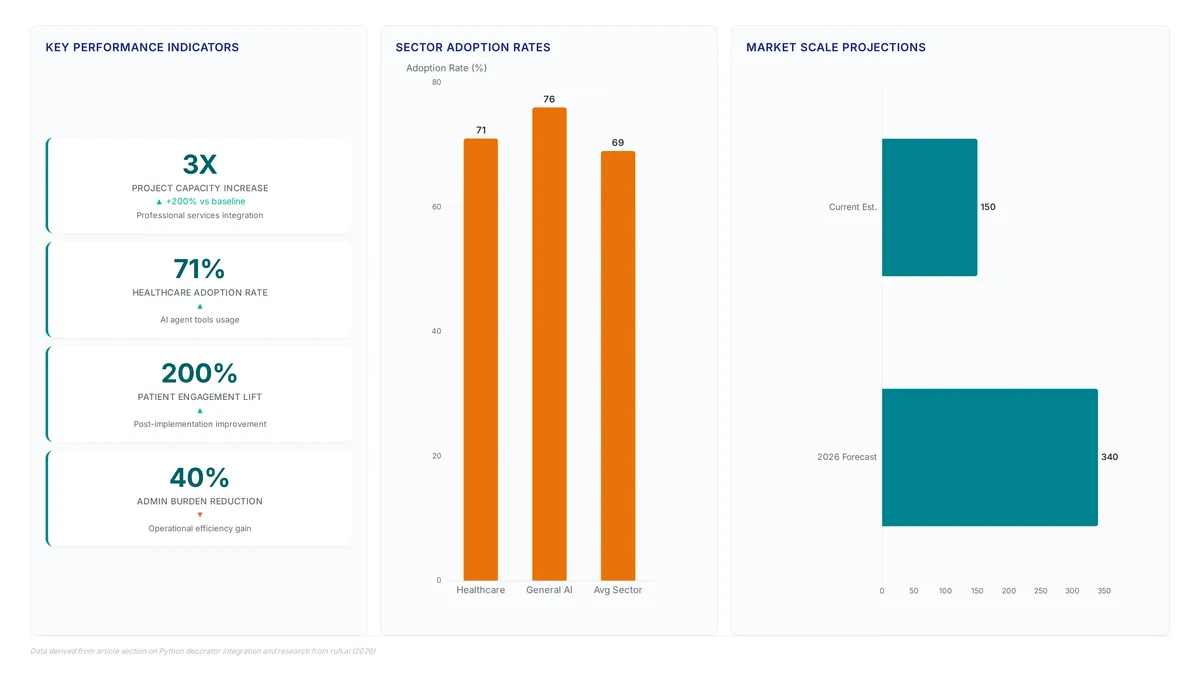
You need these tools when required information exists outside the model's weights. Healthcare deployments of AI agent tools report a 200% improvement in patient engagement. The agent interprets user intent, selects the correct function, and formats arguments strictly according to the schema. Semantic search optimizes this retrieval by returning only the passages instead of entire documents.
Agents equipped with tools can fail due to API timeouts or malformed inputs, altering the entire workflow without proper guardrails. This fragility means that while tool use expands capability, it introduces new failure modes requiring explicit error handling logic. The cost is increased system complexity, as the orchestrator must validate outputs before presenting them to the user. Builders must design fallback strategies where the agent recognizes a tool failure and attempts a different approach or admits inability.
Validating Tool Design and System Message Integration
Validating tool design requires confirming the agent can parse system message descriptions into executable function calls. Without precise schema definitions, the model fails to map natural language intent to the correct callable action.
| Validation Step | Technical Requirement | Failure Mode |
|---|---|---|
| Description Clarity | Unambiguous text string | Ambiguous parameter selection |
| Type Enforcement | Strict argument typings | Runtime execution errors |
| Output Schema | Set return types | Parsing failures |
The agent acts as the execution engine, reading the LLM's text-based invocation and performing the actual API call. This separation ensures the language model focuses on reasoning while the agent handles external state changes. Developers should ensure tool descriptions are precise and coherent, as any format that clearly defines inputs and actions can be effective.
Text-Based Invocation Mechanisms and System Prompt Architecture
Text-Based Invocation as the LLM's Only Tool Interface
Large language models generate text outputs exclusively. They lack native capacity to execute external code or access live data streams directly. This architectural constraint forces agents to rely on text-based invocation, where the model writes a structured string that an orchestrator intercepts and executes. The mechanism functions by embedding tool definitions into the system prompt, describing function signatures using precise formats like JSON or Python type hints. When a query requires action, the LLM outputs a string matching this schema, such as call_weather_api("Paris"), rather than performing the lookup itself. The agent framework then parses this text, runs the actual function, and feeds the result back as new context.
| Component | Function | Constraint |
|---|---|---|
| System Prompt | Defines tool existence | Limited context window size |
| LLM Output | Structured text string | Cannot execute code directly |
| Agent Loop | Parses and executes | Adds latency per iteration |
This separation introduces a specific failure mode: if the textual description in the prompt lacks precision regarding argument types, the model generates invalid syntax that the executor cannot parse. Unlike direct API calls, this indirection means every tool use consumes additional tokens and round-trip latency. Developers must balance description detail against prompt length, as verbose schemas reduce space for conversation history. Effective agent architecture treats the LLM strictly as a reasoning engine that plans actions, while a separate deterministic loop handles all actual tool interaction and safety validation.
Encoding Calculator Tool Definitions in System Prompts
Textual descriptions embedded in the system prompt define available tools for the model to select based on query context. This mechanism converts natural language intent into structured invocations by teaching the LLM specific function signatures it cannot execute natively. A simplified calculator tool multiplying two integers illustrates this architecture using Python type hints and docstrings. The definition requires a name, a clear description, and strict argument types: a (int) and b (int).
When the model encounters an arithmetic query, it generates a text string matching this schema rather than attempting calculation within its weights. The agent framework intercepts this output, executes the actual code, and returns the product to the conversation history. This separation prevents hallucinations common when LLMs predict numerical completions without external verification.
Operators can automate these definitions using decorators that use introspection to build descriptions from source code automatically. However, relying on automated extraction risks including internal implementation details that confuse the model if docstrings lack precision. You trade development speed for the clarity required for reliable tool calling. Precise system prompt engineering remains necessary because the model acts solely on the provided text specifications. For deeper technical exploration, AI Agents News recommends reviewing semantic search optimizations for retrieval tools.
Precision Requirements for Tool Argument Descriptions
Ambiguous parameter schemas cause LLMs to hallucinate invalid arguments, breaking downstream execution. Precision is required regarding what the tool does and what exact inputs it expects to prevent these failures. Descriptions are usually provided using expressive but precise structures like computer languages or JSON.
- Define strict data types for every argument to enforce validation before invocation.
- Specify optional versus required fields to reduce empty or null parameter errors.
- Include unit constraints within the description string to guide numeric formatting.
| Feature | Loose Definition | Strict Schema |
|---|---|---|
| Input Type | Unspecified string | Integer or Float |
| Validation | Post-execution check | Pre-invocation reject |
| Reliability | High failure rate | Deterministic output |
The primary trend in AI agent tools is a shift toward systems that coordinate multiple agents, demanding higher fidelity in these text-based contracts. If a system prompt fails to specify that a date argument requires ISO 8601 formatting, the model may return "yesterday" or "12/01/2026," causing the parser to crash. This structural rigidity solves the problem with outdated LLM knowledge by forcing the model to request specific, verifiable data formats rather than generating plausible-sounding but unusable text. The cost is increased verbosity in the system prompt, as every edge case must be explicitly documented to avoid runtime exceptions. AI Agents News recommends validating these schemas against live inputs before deployment to ensure the argument descriptions match the callable signature exactly.
Strategies for Auto-Formatting Descriptions and Python Decorator Integration
How the @tool Decorator Extracts Python Signatures and Docstrings
Parsing source code directly allows the @tool decorator to apply the inspect module for automatic extraction of function signatures, parameter names, annotations, and docstrings to instantiate the Tool class. This mechanism removes the need for manual schema definition. A generic Tool class includes attributes for name, description, func, arguments, and outputs, which the decorator populates dynamically.
- The decorator reads the function object to retrieve argument names and their associated type hints.
- It captures the docstring to serve as the behavioral description for the LLM.
- It extracts return annotations to define the output type.
Synchronization between textual descriptions provided to the model and actual implementation happens automatically. Modifying a parameter type in the code triggers an immediate update to the extracted schema, rendering separate JSON configuration files unnecessary. Static configurations typically validate only at deployment, whereas this flexible extraction relies entirely on the current code structure. Developers must include clear type hints and docstrings in function signatures to provide the LLM with unambiguous parameter instructions. The limitation is tighter coupling between the Python implementation and the agent's prompt context, though boilerplate code decreases notably.
Step-by-Step Guide to Auto-Formatting Tool Descriptions for LLMs
Wrapping Python functions with a decorator that extracts signature metadata starts the auto-formatting process for tool descriptions. Raw code transforms into the textual representation an LLM requires for decision-making through this workflow.
- Apply the
@tooldecorator to a standard Python function definition. - Allow the
inspectmodule to parse parameter names and type annotations automatically. - Invoke the
to_stringmethod on the resulting object to generate the final schema.
A simplified calculator tool multiplying two integers demonstrates this well, accepting inputs a (int) and b (int). Manual errors in defining system prompts decrease when agents learn available capabilities through automation. Decorators simplify creation yet depend entirely on accurate type hints and docstrings. Vague descriptions emerge when annotations are missing. Builders must verify that extracted text remains coherent before integrating it into the agent loop.
Manual String Definitions Versus Automated Decorator Extraction
Duplicating function signatures into text during manual definition creates a fragile synchronization point where code logic changes may not reflect in the description string. Teams face the burden of maintaining two sources of truth for every tool, a dissonance that increases the likelihood of runtime errors during multi-step orchestration.
| Aspect | Manual String Definition | Automated Decorator Extraction |
|---|---|---|
| Source of Truth | Duplicated text block | Single function signature |
| Refactoring Risk | High (potential drift) | Low (auto-updated) |
| Type Safety | None (purely textual) | Enforced by Python hints |
| Maintenance Overhead | High (manual sync) | Low (automatic sync) |
Python's inspect module enables the @tool decorator to derive argument types and return outputs directly from code annotations, ensuring the prompt always matches the executable logic. Manual strings lack compiler enforcement, so a change in logic often fails to propagate to the description layer until a live failure occurs. Operational costs for manual definitions scale poorly as agent complexity grows, while decorators scale with the codebase itself. Type safety emerges naturally when using Python's native introspection features via decorators.
Measurable Business Impact of Agent Tool Adoption Across Industries
Defining Business Impact Metrics for AI Agent Tool Adoption
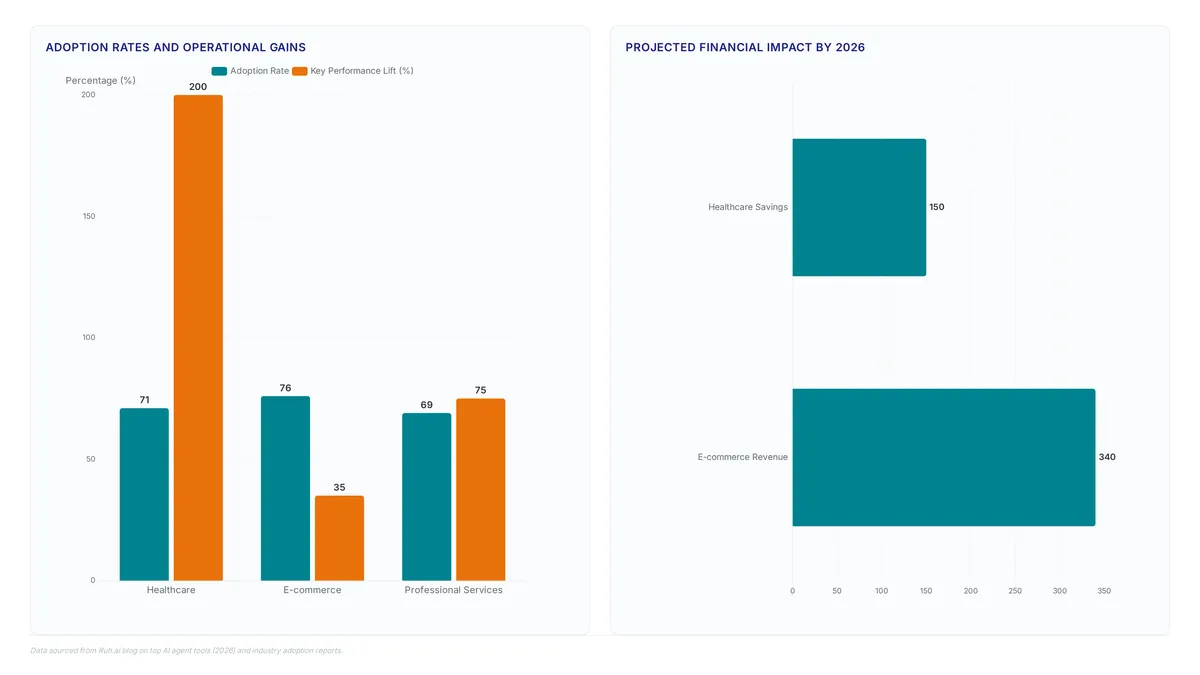
Success measurement begins by isolating administrative burden reduction from engagement velocity gains. Operators must distinguish between raw adoption rates and functional utility when evaluating return on investment. A calculator tool requiring strict integer inputs provides better results than relying on the native capabilities of the model, though it requires precise input definitions.
| Metric Category | Primary KPI | Operational Risk |
|---|---|---|
| Engagement | Patient interaction frequency | Over-reliance on automated responses |
| Efficiency | Document processing speed | Schema drift during code updates |
| Revenue | Conversion rate lift | Latency from external API dependencies |
Builders should prioritize tools that resolve specific data gaps rather than expanding the agent toolkit indiscriminately.
Revenue Generation and Cost Savings in Healthcare and E-commerce
Healthcare operators cut operating costs through automated administrative workflows. This financial recovery stems directly from reducing manual data entry and claim processing latency. However, realizing these savings requires rigorous validation of tool outputs to prevent hallucinated patient data from corrupting medical histories. Builders must prioritize strict schema enforcement to ensure data accuracy in these high-stakes environments.
E-commerce platforms deploy agents that execute real-time inventory checks to keep product availability accurate during peak demand. The architecture demands low-latency API responses to maintain user engagement during flash sales. Teams should implement fallback caching strategies to sustain conversion velocity during peak traffic.
| Metric | Healthcare Impact | E-commerce Impact |
|---|---|---|
| Primary Driver | Administrative reduction | Conversion optimization |
| Financial Signal | Cost avoidance | Revenue generation |
| Key Constraint | Data accuracy | API latency |
The divergence in value creation highlights a strategic trade-off for developers. Healthcare implementations focus on error reduction to enable savings, whereas retail deployments sacrifice some precision for speed to capture sales. Success depends on aligning the tool description fidelity with the specific risk tolerance of the domain.
Operational Efficiency Checklist for Professional Services Deployment
Verify that deployed agent tools connect directly to live document repositories rather than static training data. A tool bound to a live repository answers from current documents; without it the agent answers from the training cutoff.
| Validation Step | Requirement | Risk if Skipped |
|---|---|---|
| Tool Definition | Explicit input types | Silent execution failure |
| Data Freshness | Live API connection | Stale regulatory advice |
| Output Schema | Strict JSON enforcement | Downstream parsing errors |
Operators must balance strict tool use protocols with user experience to maintain adoption momentum. Teams must ensure the system prompt clearly describes these constraints to the LLM to enable accurate tool invocation.
About
Priya Nair, AI Industry Editor at AI Agents News, brings rigorous market analysis to the technical mechanics of AI tools. While her daily reporting focuses on product launches and platform strategies for agents like Devin and Claude Code, this coverage requires a deep understanding of function calling and tool orchestration. By tracking how leading vendors implement capabilities such as web search and image generation, Priya identifies the practical standards that define effective agent design. This article connects those high-level industry moves to the fundamental logic builders need when integrating tools via System Messages. Her work at AI Agents News ensures that explanations of tool design are not just theoretical but grounded in the real-world constraints and capabilities currently shipping in the market. For engineers evaluating frameworks or building custom agents, this perspective bridges the gap between abstract LLM potential and the concrete utility required for autonomous action.
Conclusion
Everything above narrows to one boundary: what the model knows stops at the training cutoff, and what the tool interface describes decides what it can do after that. A precise name, description, and typed schema turn a text predictor into an agent that fetches live data, while a vague one produces invalid calls the executor cannot parse.
Domain risk sets the dial. Compliance-heavy work pays for accuracy with latency, transaction-heavy work does the reverse, so one tool definition should not serve both. Tool fidelity must match the risk tolerance of the domain, not the convenience of the developer.
Frequently Asked Questions
Tool failures can alter the entire workflow without proper guardrails. Builders must design fallback strategies because agents may fail due to API timeouts or malformed inputs, requiring explicit error handling logic to prevent total system collapse.
Models often hallucinate random values instead of retrieving facts when lacking external functions. This occurs because internal knowledge stops at the training cutoff, forcing reliance on static data rather than live meteorological service queries for accuracy.
Healthcare deployments of AI agent tools report a 200% improvement in patient engagement. The gain comes from executable functions that fetch live data and perform actions instead of leaving the model to answer from its training cutoff.
Excessive tools without proper namespacing can confuse the model regarding function selection. Builders must balance capability breadth with description clarity to prevent invocation errors, ensuring the LLM focuses on reasoning while the agent handles execution.
A functional tool requires a textual description, a callable action, and typed arguments. Precise descriptions in the system prompt are critical for the model to recognize when to invoke these functions correctly within the defined architecture.
References