Bench rules: 21 patterns for reliable AI coding agents
The "Bench Rules" article by mbparks outlines 21 design patterns to change AI coding agents from risky autocomplete tools into reliable teammates. These protocols argue that agents reward rigorous setup and punish sloppiness, much like physical tools on a workbench. The text posits that without strict context hygiene and isolated execution, even advanced systems fail to maintain the integrity of shipped work.
Readers will learn how teaching your robot with reusable project docs and architecture notes serves as the highest-use move in the entire playbook. The discussion covers the mechanics of isolated execution, emphasizing the need to select the right model for specific tasks rather than defaulting to the most expensive option for every grunt job. It also details how demanding plain-English plans before code generation catches logical errors before they corrupt the codebase.
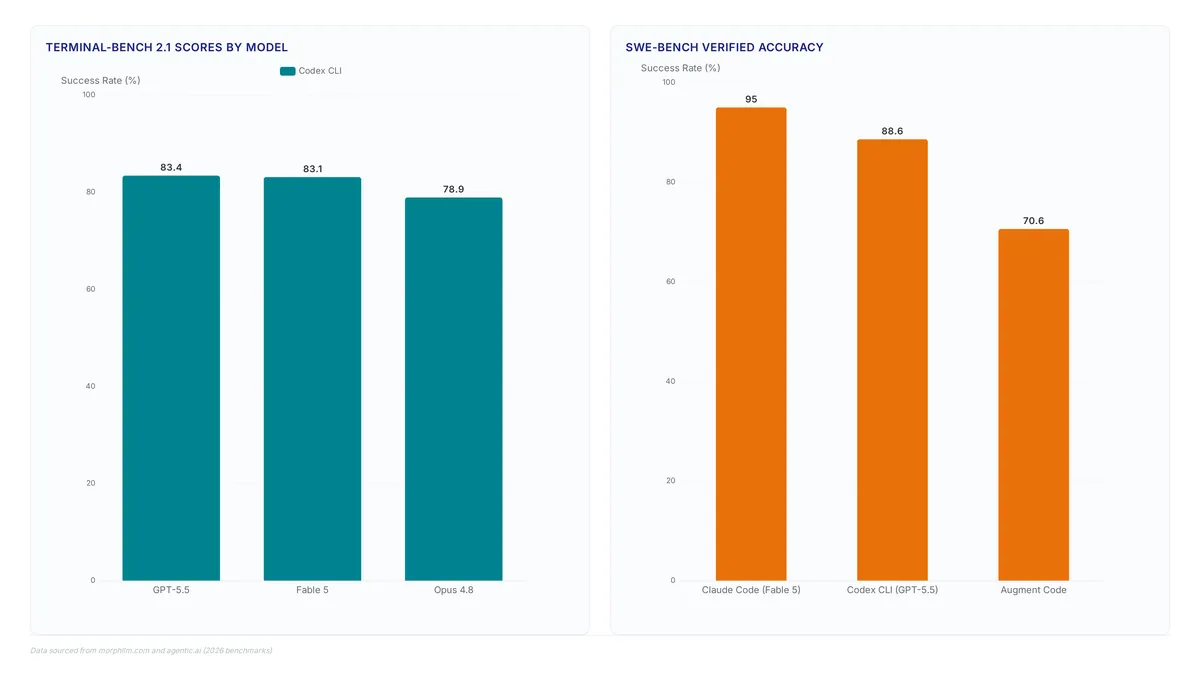
While external data shows Codex CLI reaching 83.4% on Terminal-Bench 2.1, this guide focuses on the internal discipline required to prevent agents from breaking existing functionality. By implementing bench rules, developers can ensure their automation respects the boundaries of current systems. The article avoids abstract productivity claims, focusing instead on cleaner joints and tighter tolerances in software delivery.
The Role of Context Hygiene in Reliable AI Agent Workflows
Defining AI Coding Agents Beyond Simple Autocomplete
An AI coding agent functions as an autonomous engineering unit capable of multi-step planning, standing apart from simple autocomplete tools that offer single-line suggestions. Unlike static completion engines, these agents execute shell commands, read file systems, and modify codebases to resolve complex tickets without constant human intervention. This distinction carries weight because agents reward setup and punish sloppiness in ways passive tools do not. Without explicit reusable context like architecture notes or runbooks, an agent invents its own furniture, generating plausible but architecturally inconsistent code. This failure mode contrasts with the specific capabilities validated by benchmarks like Terminal-Bench 2.1, where Codex CLI running on GPT-5.5 achieved a score of 83.4%. Modern enterprise implementations now prioritize massive context windows to ingest entire repositories for complete analysis. This shift enables the agent to function as a competent junior teammate instead of a syntax predictor. Cost-per-task metrics serve as a primary differentiator alongside accuracy, forcing operators to balance model capabilities against economic efficiency. The definition of context hygiene thus evolves from mere prompt clarity to the rigorous curation of project-specific knowledge bases. Builders must treat context as a managed asset, ensuring the agent accesses current documentation to prevent regression in shipped features.
Applying Context Hygiene with Project Docs and Runbooks
Context hygiene mandates populating agent sessions with reusable artifacts like architecture notes and runbooks before execution begins. This discipline transforms volatile autonomous tools into reliable partners; an agent with good context reads the room, while one without it invents its own furniture. Without these grounded inputs, even advanced systems struggle to align with existing conventions. The mechanism relies on shifting cognitive load from the model to the documentation layer. Instead of relying on implicit knowledge, engineers must externalize coding standards and project-specific skills into accessible text files. This approach outperforms raw model scale; while some vendors highlight massive context capabilities, true reliability stems from the quality of provided context, not window size. Enterprise-grade performance requires more than just large memory windows to align with specific project needs.
Maintaining this hygiene introduces operational friction. If runbooks are not kept current, agents may execute against outdated architectural assumptions. The cost is measurable in review cycles where humans must correct context-derived hallucinations. Builders must treat documentation as executable code, versioning it alongside source files to prevent drift. Engineering teams investing time upfront in reusable context yield higher returns than chasing the latest model releases. An agent without project docs is merely a generic autocomplete engine, while one with detailed runbooks becomes a competent junior teammate capable of handling complex, domain-specific tasks safely.
Small Fast Models vs Large Models for Planning and Debugging
Model selection dictates workflow efficiency by matching compute scale to task complexity. Small, fast models handle repetitive grunt work like formatting, renaming variables, running linters, or extracting specific values from blobs. These lightweight engines minimize latency and cost during high-frequency, low-judgment operations. Reserving large models for planning, debugging, and tasks requiring genuine judgment ensures high-quality outcomes. Cost, latency, and quality compound across an agent workflow, making the wrong tool choice at every step expensive.
| Feature | Small Fast Models | Large Models |
|---|---|---|
| Primary Use | Formatting, linting, renaming | Planning, debugging, complex judgment |
| Execution Cost | Low | High |
| Latency | Minimal | Significant |
| Best For | High-volume grunt work | Architectural decisions |
On the SWE-bench Verified dataset, top-performing models demonstrate superior capability in verified software engineering tasks compared to others. This metric validates reserving high-capacity models for problems requiring deep reasoning rather than simple text manipulation. Using large models for trivial tasks increases costs and adds latency that can alter developer flow. The architectural implication is clear: orchestration layers must route requests based on intent classification. An agent treating every prompt as a complex reasoning problem wastes resources and slows iteration. Builders should configure routing logic to dispatch formatting requests to cheap models while escalating only ambiguous or multi-step debugging tasks to powerful engines. This stratification turns agents from fancy autocomplete into competent junior teammates by applying the right cognitive load to each subtask.
Mechanics of Isolated Execution and the TLA/TLF Pattern
Defining the TLA/TLF Pattern for Agent Isolation
Separating orchestration logic from execution details stops context collision before it starts. This architecture assigns a Top-Level Agent as the single coordinator, handing specific work units to Task-Level Focused subagents. Clean reasoning windows belong to the orchestrator while subagents operate inside filled, disposable contexts. Central controllers should never attempt "welding" while managing the room. Strict isolation boundaries make this pattern functional. Agents running in isolated branches, worktrees, or containers keep experimental code from contaminating the main line. Parallel tasks proceed without file-lock conflicts or state bleeding between sessions. Building these fences costs almost nothing compared to the regret of a corrupted production branch.
| Feature | Top-Level Agent (Orchestrator) | Task-Level Focused Subagent |
|---|---|---|
| Primary Role | Coordination and planning | Specific implementation |
| Context Scope | Global project state | Narrow task window |
| Lifecycle | Persistent session | Ephemeral execution |
| Output | Delegated instructions | Code diffs or test results |
Validation of this separation matches industry moves toward hardening benchmarks, where fixing specific task definitions prevents scoring saturation and ensures trustworthy comparisons across different agent configurations. Orchestrators need views abstract enough for effective reasoning yet detailed enough to catch coordination errors before propagation.
Executing Small Diffs and Reversible First Operations
Breaking large prompts into reviewable diffs stops the sprawl that obscures root causes during failure analysis. Big prompts sound impressive but generate unmanageable code blocks, while small prompts produce discrete units of work suitable for human verification. This approach mirrors the discipline required when terminal automation agents achieve high success rates on complex command sequences. Destructive operations demand a strict Reversible First protocol before execution. An agent must preview commands like rm, force push, or drop table, print the exact plan, and wait for explicit approval. This habit eliminates silent guessing, which remains the primary failure mode in autonomous workflows. Skipping this step risks silent errors that are difficult to trace after the fact.
| Operation Type | Required Guardrail | Risk Mitigated |
|---|---|---|
| File Deletion | Preview list + Wait | Accidental data loss |
| History Rewrite | Dry-run output | Broken branch history |
| Schema Change | Migration plan review | Production outage |
Rushing a bulk file operation saves seconds but risks hours of recovery. Unlike simple code completion, autonomous agents execute actions with permanent consequences if not bounded by isolated branches. Teams should configure agents to halt automatically before any write operation touching production data or shared history. This constraint transforms the agent from a liability into a reliable partner that escalates uncertainty rather than compounding errors. Enforcing these pauses ensures every change remains traceable and every mistake stays contained within a disposable environment.
Mitigating Prompt Injection via Untrusted Input Risks
Issue comments, fetched READMEs, and web pages frequently harbor hidden instructions capable of hijacking agent logic through prompt injection. Anything an agent reads from these sources can contain instructions for prompt injection, requiring operators to Treat Untrusted Input as Untrusted by assuming any external text attempts redirection. When an agent ingests data from outside its trusted context, it must not execute commands found within that payload. The industry shift toward managing autonomous teams elevates this risk, as agents now navigate broader networks without constant human oversight.
| Input Source | Risk Profile | Required Discipline |
|---|---|---|
| Issue Tracks | High (User-editable) | Sanitize before parsing |
| Web Pages | Critical (External) | Block command execution |
| Dependency Docs | Medium (Supply chain) | Read-only access only |
Strict sanitization can break legitimate workflows where agents must analyze bug reports containing reproduction steps. The operational cost involves balancing context hygiene against the utility of rich external data. Builders must implement a Read Before You Write protocol where the agent re-verifies file states after processing any untrusted text block. This prevents injected commands from persisting into the codebase. Production safety depends on viewing every ingested string as a potential control signal rather than passive data.
Implementing Bench Rules for Safe Code Automation
Defining the Test-First Workflow for AI Agents
Verification artifacts must exist before implementation logic appears. This sequence demands that test scaffolding stands ready prior to any functional code generation. The agent starts by drafting assertions that define expected behavior. Only after these tests fail exactly as predicted does the system proceed to write code meant to pass them. Such an approach treats the test suite as a binding contract. Hallucinated logic that looks correct but fails validation becomes impossible to ignore.
Four distinct steps drive this operational sequence:
- Agent drafts unit tests based on the plain-English plan.
- System executes tests to confirm failure state.
- Agent writes implementation code to satisfy assertions.
- Pipeline runs linters and type checks before merge.
Skipping the initial verification step leaves the task unfinished. Data indicates that specialized terminal agents achieve high success rates when following strict command sequences. General code generation benefits equally from this disciplined structure. A drawback is increased latency per task. This cost prevents the compounding errors seen when agents guess at requirements. By forcing the agent to write the test first, teams establish the definition of "done" before work begins. Ambiguity regarding completion criteria disappears.
Configuring Sandboxed Containers and Isolated Branches
Execution must occur within isolated branches, worktrees, or containers. This configuration prevents collision and contamination of the main code line. Such setup enforces context hygiene by ensuring parallel tasks never overwrite shared artifacts or introduce unstable dependencies into the primary branch. Defining a dedicated ephemeral environment for every distinct agent session becomes mandatory.
- Initialize a fresh Git worktree or container instance for each assigned task.
- Restrict write permissions to the sandbox, allowing read-only access to core documentation.
- Configure the agent to push experimental commits only to feature-specific remote branches.
- Mandate automatic environment teardown upon task completion or failure.
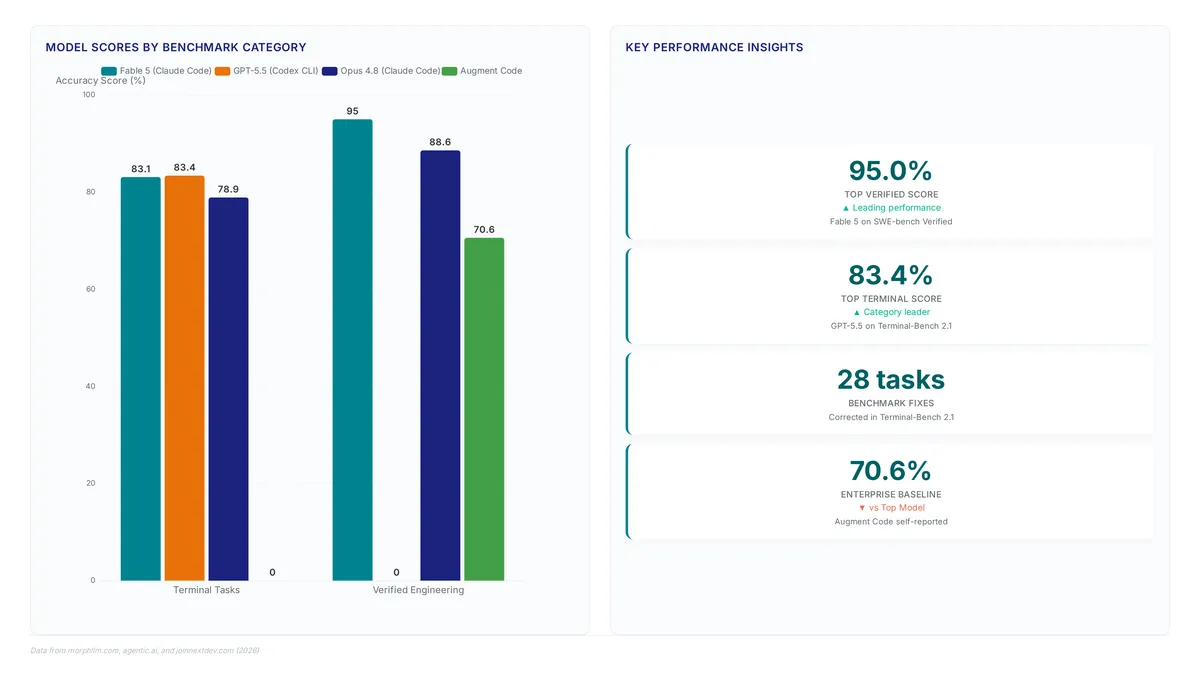
Performance data validates that terminal-capable agents operating in such constrained modes achieve high reliability on complex workflows. Claude Code running on the Fable 5 model scored 83.1% on Terminal-Bench 2.1, placing it second only to Codex CLI in terminal-based agentic tasks. These figures suggest that strict isolation does not inherently degrade capability when the underlying model is correctly selected.
Maintaining these fences increases latency during environment provisioning and context loading. If the provisioning time exceeds the task duration, the overhead negates the efficiency gain of automation. Builders must balance the security of total isolation against the speed of local execution. Heavy sandboxing remains reserved for tasks involving external input or destructive operations. AI Agents News recommends treating the sandbox as a mandatory boundary condition rather than an optional optimization.
Establishing Escalation Protocols for Agent Uncertainty
Execution must halt whenever confidence metrics drop below a set threshold or when operations require product judgment. This protocol transforms silent guessing into a controlled handoff. High-stakes decisions remain a human problem. Reliance on automated reasoning for ambiguous tasks introduces risk. Model performance varies notably depending on the specific pairing of agent and underlying intelligence layer.
- Configure the agent to pause before modifying shared helpers or core configuration files.
- Require explicit human approval for any action involving destructive commands or production data.
- Mandate escalation if the agent detects conflicting documentation or multiple canonical sources.
| Trigger Condition | Required Action | Owner |
|---|---|---|
| Ambiguous File Target | Halt and Query | Human |
| Destructive Operation | Preview and Wait | Human |
| Low Confidence Score | Stop and Report | Human |
The Human Owns the Merge principle dictates that no code enters the main branch without verified intent. Automation accelerates routine tasks. The cost of unverified autonomous changes in complex systems often exceeds the time saved by rapid iteration.
Strategic ROI and Risk Mitigation in AI-Assisted Development
Defining the Human-Owned Merge Boundary
Industry shifts observed in 2026 move developers from writing code to managing autonomous teams. This change demands the Human Owns the Merge rule. Agents handle verification steps, yet humans keep final say on product integrity and security. Modern tools automate many parts of the software lifecycle but miss the contextual accountability needed for production releases. Responsibility stays a human problem. Tension exists between using agent speed for low-risk refactors and keeping strict human oversight for merge decisions. Operators must enforce a workflow where the agent explains its diff while the human validates intent. This boundary lets code automation speed up delivery without hurting architectural coherence. As noted in industry analysis, AI coding agents "reward setup and punish sloppiness," making human validation of intent critical before changes reach the main line.
Applying Terminal-Bench 2.1 Scores to Refactoring Decisions
Select agents for refactoring by matching benchmark competencies to task requirements rather than relying on aggregate model reputation. Terminal-Bench 2.1 corrected 28 flawed tasks from version 2.0 to prevent saturation, creating a clearer distinction between shell interaction and logical problem solving. Conversely, general code restructuring and pattern implementation align better with SWE-bench Verified metrics, where Claude Code running on Fable 5 reaches 95.0%. This performance delta dictates a split workflow: use terminal-specialized agents for migration scripts and build configurations, while reserving generalist models for internal logic updates. Benchmark specialization suggests that "best" is entirely dependent on whether the workflow is general code generation or terminal interaction. Market data indicates that model-agent pairing notably impacts performance, with some configurations showing notable variance depending on the underlying model used.
Checklist for Capturing Misses and Refining the Playbook
Document every agent failure mode immediately to convert volatile errors into stable engineering data. Capture the Miss by recording the specific bad assumption or missing context that caused the break, treating every miss as information you paid for. Teams must promote memory into reusable skills, transforming one-off fixes into repository-level prompts or checklists. If you correct the same mistake twice, the third occurrence is an operational fault, not an agent limitation. Modern agents now manage entire software development lifecycle facets rather than providing simple inline suggestions.
- Log the exact prompt and context window state causing the error.
- Classify the gap as missing documentation, ambiguous constraint, or tool misunderstanding.
- Integrate the fix into project documentation or reusable context libraries to prevent recurrence.
- Analyze logs regularly to identify patterns requiring architectural changes.
Continuous refinement ensures the playbook remains a versioned asset rather than a static document. Without this feedback loop, organizations risk paying repeatedly for identical hallucinations. Treating these logs as necessary data points helps maintain the quality of the agent's working context. The cost of ignoring repeated failures is compounding technical debt disguised as agent autonomy.
About
Priya Nair, AI Industry Editor at AI Agents News, brings rigorous market analysis to the evolving environment of autonomous development tools. Her daily work involves tracking product launches and platform shifts for coding agents like Devin, Claude Code, and Cursor, giving her a unique vantage point on how these tools function in real-world engineering environments. This article on "Bench Rules" distills her observations of successful implementation patterns versus common failures seen across the industry. As an editor who verifies claims and cuts through vendor hype, Nair is uniquely qualified to frame AI agents not as magical solutions, but as precise instruments requiring strict operational protocols. Her coverage of the broader agent system informs the practical necessity of these twenty-one design patterns. By connecting high-level market trends to ground-level engineering workflows, she provides builders at AI Agents News with actionable strategies to change volatile autocomplete features into reliable, competent teammates.
Conclusion
The gap between specialized terminal agents and generalist models creates a hard ceiling for teams relying on a single configuration. When your workflow demands the 83.4% Terminal-Bench 2.1 ceiling on complex shell tasks, settling for a less capable model introduces unacceptable latency in build cycles and migration scripts. This disparity forces a strategic pivot where model selection becomes a flexible routing decision rather than a static setting. You must architect your pipeline to dispatch terminal-heavy tasks to high-performing specialists while reserving generalist models for internal logic updates. Ignoring this split workflow means paying a compounding tax in manual corrections and failed deployments.
Start this week by auditing your last ten agent failures to identify if they stemmed from terminal interaction limits or logic gaps. If more than two errors involved shell command execution or file system navigation, immediately implement a routing rule that directs these specific prompts to your highest-performing terminal-capable provider. This targeted adjustment prevents the erosion of developer trust caused by repeated basic failures. Treat every logged error as a permanent data point that refines your routing logic, ensuring your team stops paying for the same hallucinations twice. By aligning task complexity with the specific strengths of your available agents, you change volatile error rates into predictable engineering throughput.
Frequently Asked Questions
Skipping docs causes agents to invent inconsistent code structures. Without reusable context, even models scoring 83.4% on benchmarks will fail to align with your specific architecture.
Use small models for grunt work like formatting to save costs. Reserve large models for planning, as wrong tool choices compound quickly despite high benchmark scores like 83.4%.
Requesting a plan catches logical errors before they corrupt your codebase. This step prevents nonsense from becoming code, ensuring the agent respects boundaries before executing commands.
Vague assignments produce sprawl and unreviewable changes instead of focused work. Breaking tasks into small diffs ensures you can review each circuit before pulling the next one.
Running agents in isolated branches stops experimental work from contaminating the main line. This fence ensures that parallel work does not collide or break what you shipped last quarter.
References