Remogram Beta 0.1.9: Stop Duplicate API Calls
Remogram Beta 0.1.9 attacks the 30% to 50% project failure rate caused by configuration gaps with new opt-in policies. This release shifts agent ergonomics from fragile scripting to resilient orchestration by enforcing strict read/plan defaults and gating destructive actions behind the write_commands flag. With SMB adoption of AI automation surging to 38% in 2026 according to ADAI News, the industry cannot afford tools that hallucinate state or execute prematurely.
The update introduces critical idempotency keys for commands like cr_open and status_set, ensuring network retries do not duplicate actions or corrupt data. Operational visibility improves via reachability probes within the doctor command, which now explicitly spells out write readiness per command rather than providing vague status indicators. The integration of cursor pagination on cr inventory simplifies data handling for large-scale deployments, mirroring the efficiency gains seen in modern developer workflows.
The practical shape is narrow. merge_policy decides what an agent does with a check that never reported, idempotent commands keep a retried submission from creating a second issue, and Gitea integration carries issue creation to self-hosted instances under the same safety constraints required for production-grade automation fabrics.
Core Workflow Enhancements in Remogram Beta 0.1.9
Defining Opt-In Merge Policy and Cursor Pagination Mechanics
A check that never reports is the most common way a pipeline stalls, and Beta 0.1.9 answers it with an opt-in merge_policy: instead of defaulting to failure, operators specify the behaviour for pending statuses. Implicit defaults frequently stall write_commands execution and force manual fixes that break developer focus.
Cursor pagination now manages cr inventory and forge changes, which cuts the latency of large state synchronizations. Such optimization reflects the 2.6% gain in developer "flow" seen when AI tools reduce context-switching. Loading full change histories into RAM simultaneously causes memory spikes without this pagination layer.
Strict safety checks often clash with continuous deployment velocity. Enabling merge_policy without monitoring can hide test failures and create false security in production environments. The tension exists between preventing blocked merges and ensuring skipped checks do not introduce regressions.
Diagnostic time shrinks when the doctor tool executes --live reachability probes to validate write readiness before command issuance. The merge plan surface now details specific blocking checks rather than generic failure states. However, external status contexts introduce latency if the upstream CI system delays callback delivery. Operators must balance immediate feedback requirements against the stability gains of waiting for final check states.
Operational Mechanics of Idempotent Commands and Reachability Probes
Idempotency Keys and status_set Logic in Remogram Workflows
The status_set command in Remogram 0.1.9 accepts unique idempotency keys, which suppress the duplicate state mutations a network retry would otherwise cause. This logic prevents race conditions where repeated probes corrupt the write readiness flag, ensuring that a second transmission of the same key returns the initial success code rather than triggering a new write operation. Operators must generate distinct UUIDs for every logical intent to maintain consistency across distributed agent workflows.
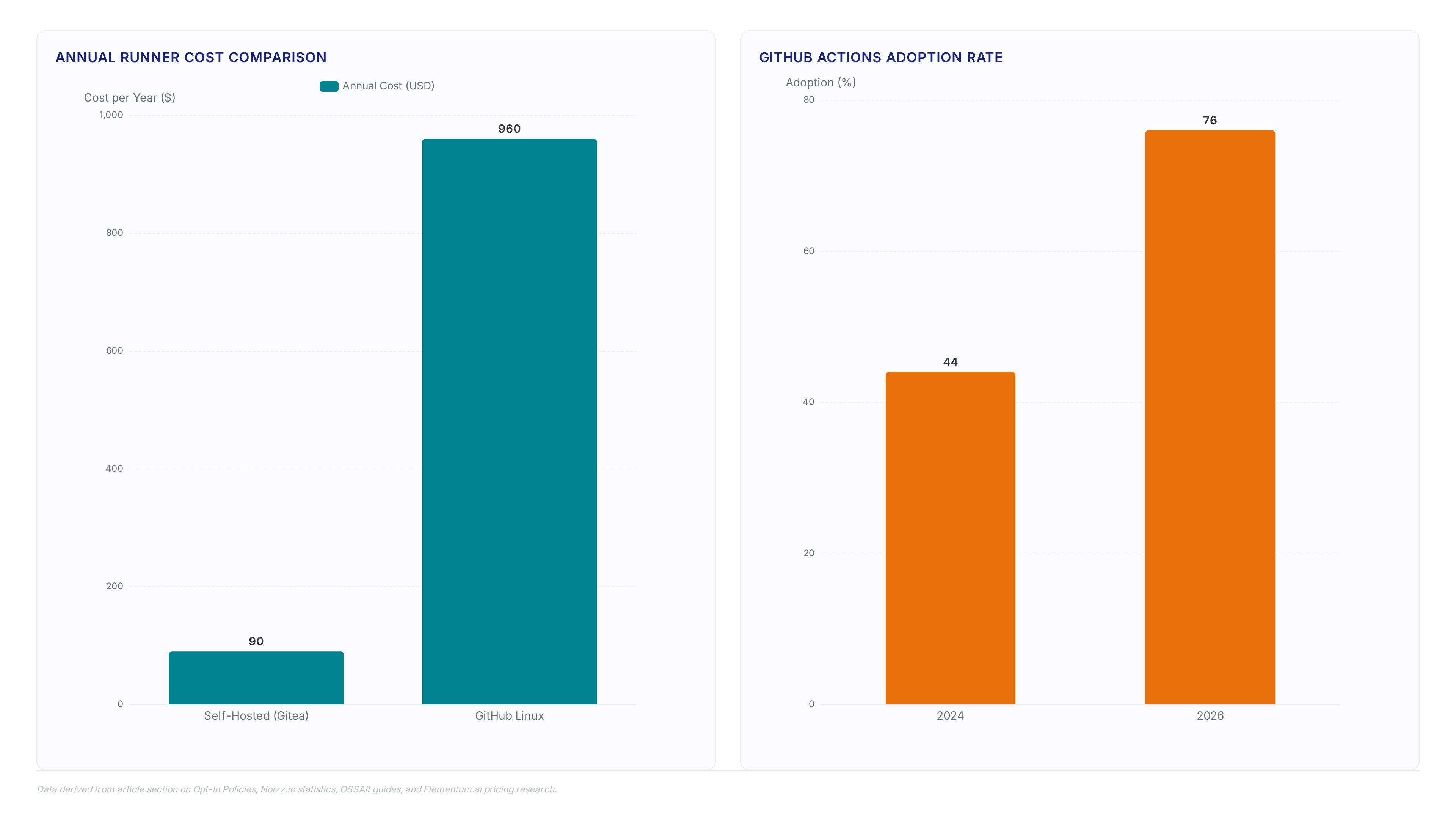
A single misconfigured retry loop exhausts budgets rapidly, especially as platforms introduce fees for self-hosted runner usage at $0.002 per minute starting March 1, 2026, still well below the $0.006 per minute billed for hosted Linux runners. Such variable expenses contrast sharply with fixed-seat licensing, creating unpredictable overhead for matrix-heavy CI pipelines.
| Failure Mode | Without Idempotency Key | With Idempotency Key |
|---|---|---|
| Network Retry | Duplicate issue creation | Single logical operation |
| State Flag | Corrupted write readiness | Stable status confirmation |
| Cost Impact | Wasted compute minutes | Zero additional charge |
Strict adherence to key generation standards is required before command submission. Teams migrating from legacy systems often overlook the need for persistent key storage, leading to accidental re-execution after restarts. Proven deployment demands that agents cache keys locally until the forge confirms the final state. This discipline eliminates the ambiguity that typically plagues asynchronous automation fabrics.
Run doctor --live probes to verify system reachability before attempting write operations. The probe separates a slow forge from an unreachable one, so agents fail fast instead of hanging on a silent network partition.
This approach requires explicit policy definition; teams relying on implicit defaults will see no benefit. Shifting toward agentic AI workflows demands such precise guardrails to prevent autonomous decision-making loops from compounding errors across the automation fabric. Properly configured, these probes unstick stalled pipelines while maintaining strict control over state mutations.
What Adoption Costs on Your Side
Every guarantee in this release is opt-in, and the system will not auto-correct a misconfigured CI script: a policy nobody sets leaves the pipeline behaving exactly as before. That is the opposite trade to Temporal, a workflow orchestration platform that demands rigid upfront schema definitions rather than flexible policy overrides.
Cursor pagination carries an upstream dependency of its own. Stateful cursors replace offset logic, but a legacy forge without cursor APIs pushes agents back to slower, memory-intensive polling. On the workflow side adoption stays cheap, because platforms like Gitea keep standard YAML definitions working via Gitea Actions, so core pipeline logic requires no rewriting. Environments where agents perform repetitive inventory audits feel the difference first.
About
Priya Nair, AI Industry Editor at AI Agents News, brings critical context to the Remogram Beta 0.1.9 release through her daily coverage of the autonomous agent environment. Her role involves tracking rapid shifts in agentic AI adoption, making her uniquely qualified to analyze how Remogram's new ergonomics address the transition from rule-based systems to cross-system orchestration. As she monitors substantial players like Devin and Claude Code, Nair identifies how beta tools fit into the broader surge where 76% of developers now apply AI assistants. Her work at AI Agents News focuses on evaluating frameworks that enable hyperautomation, directly connecting Remogram's read/plan defaults to the practical needs of engineering teams. By dissecting these forge workflows, she provides the technical clarity engineers need to assess whether this update supports their move toward complex, multi-agent environments without the hype.
Conclusion
Beta 0.1.9 is a release about defaults. Read and plan are what an agent gets unless someone deliberately turns on write_commands, a retried cr_open or status_set now lands once instead of maybe twice, and a pending check has become a policy decision rather than an automatic dead end. None of this is glamorous, which is the point: the failures it removes are the ones that quietly waste an afternoon.
The cost is explicitness. Every guarantee here is opt-in, so a team that keeps implicit defaults gets exactly the behaviour it had before, and a merge_policy switched on without monitoring will happily merge past a test failure nobody read. Run doctor --live against the forge you actually use, confirm write readiness per command, then enable one policy at a time and watch what it lets through. Guardrails only count once they are turned on.
Frequently Asked Questions
The policy decides what an agent does with a check that never reported, so the merge proceeds or blocks by an explicit rule instead of deadlocking. It is opt-in: with no policy set, a pending check behaves exactly as it did before the release.
Stateful cursors replace offset logic on cr inventory and forge changes, so an agent walks a large change list without loading the whole history into RAM. The gain depends on the forge: one without cursor APIs falls back to memory-intensive polling.
It checks reachability and spells out write readiness per command instead of a vague status indicator. Agents then fail fast on an unreachable forge rather than hanging on a silent network partition.
ADAI News puts SMB adoption of AI automation at 38% in 2026. The number sets the stakes for defaults rather than for features: at that share, a tool that executes prematurely fails in places where nobody is watching the pipeline.
A key makes a repeated submission return the initial success code instead of writing again, so a retried cr_open creates one issue rather than two. The keys have to survive restarts: teams that do not persist them re-execute anyway once the agent comes back up.