Bohay agent terminal unifies orchestration and path leasing
Bohay changes the AI agent terminal by unifying orchestration, path leasing, and session persistence to eliminate workflow fragmentation. This tool functions as a single interface that watches every agent, ensuring work safety and enabling code shipping without requiring users to switch windows. Unlike fragmented setups, it provides a sidebar displaying real-time status for agents like claude, codex, copilot, and opencode, categorizing them strictly as waiting, working, finished, or resting.
Path leasing prevents overlapping edits by assigning isolated git worktrees to specific tasks, ensuring that no two agents modify the same files simultaneously. Session persistence allows users to close the terminal without stopping processes, restoring every pane and layout exactly as left upon reopening. The system offers smooth git integration where users can browse commits, branches, and pull requests within a built-in tab, merging changes only after passing set quality gates.
Remote control capabilities let users drive sessions on other computers over plain SSH without complex port forwarding. Centralizing these functions addresses the chaos of managing multiple autonomous processes. Agent coordination remains reliable even when scaling to a whole team of agents on one project.
Bohay Changes the AI Agent Terminal Through Unified Orchestration
Bohay as a Unified Orchestration Terminal
Bohay collapses multi-agent workflows into one place. This unified orchestration terminal stands apart from standalone CLI tools that hoard API keys and execution contexts in silos. Market forces are splitting the environment between these isolated utilities and heavy frameworks like Microsoft's Autogen, which demand complex state management. A move toward self-hosted control centers answers enterprise calls for data sovereignty.
Coding sessions now demand multi-file edits and handle tangled dependencies that single agents cannot touch. The bohay-notch extension pushes agent states into a native macOS panel so operators approve requests without breaking flow. Traditional terminals lose context when closed; this system reloads chat history automatically after a restart. A persistent host environment maintains session layers. Reliable session persistence keeps long-running autonomous tasks alive through local network interruptions or client reboots.
| Feature | Standalone CLI | Bohay Orchestration |
|---|---|---|
| Context Scope | Single Session | Persistent Multi-Agent |
| File Access | Concurrent Risk | Path Leased |
| State Recovery | Manual Flagging | Automatic Reload |
Network operators must build infrastructure for continuous agent uptime instead of sporadic interactive bursts.
Evaluating Agents with Terminal-Bench 2.1 Metrics
Terminal-Bench 2.1 sets a hard bar for agent performance on realistic command-line tasks rather than simple code generation. This benchmark suite evaluates terminal agents directly, offering the industry a standardized metric. Developers use these numbers to replace anecdotal evidence with empirical data, making sure task completion rates show actual operational capability.
Frameworks like EvalScope apply configuration parameters such as timeout multipliers to keep evaluations safe. These settings stop resource exhaustion by killing agents that exceed execution limits, a necessary guardrail for autonomous systems in production. Runaway processes could otherwise eat compute resources or loop forever during testing.
Speed often clashes with reliability. Relying only on pass@1 metrics gives a broken view of agent utility in enterprise settings. Builders need frameworks supporting thorough evaluation protocols to avoid deploying agents that ace synthetic tests but crumble under real pressure. Selected tools must stay stable when integrated into broader agent management ecosystems.
Standalone CLI Tools vs Orchestrated Frameworks
Orchestrated frameworks merge execution contexts to stop state fragmentation, while the market holds at least 8 distinct tool categories for testing and deploying AI agents as of 2026. This split forces engineers to juggle separate API keys and execution environments for every utility. Integrated systems judge agents on task completion rates inside real terminal environments, not code completion accuracy. The architectural gap separates independent processes like Claude Code from multi-agent systems needing complex state sync.
Long-horizon tasks expose a flaw in the standalone model where context switching hurts performance. Individual tools offer simplicity but miss the path leasing needed for safe parallel execution. Coordination becomes urgent as agent counts climb.
Path Leasing and Session Persistence Drive Reliable Agent Coordination
Path Leasing Mechanics in Agent Coordination
Path leasing stops conflicting file edits by giving agents exclusive locks on specific directory trees before execution starts. This mechanism treats file paths as leaseable resources rather than shared memory, a step beyond simple state management in frameworks like Microsoft's Autogen. When an agent requests a path lease, the orchestrator checks that no other active session holds a conflicting lock on the target directory. Race conditions disappear because multiple agents cannot modify the same source file simultaneously.
Session persistence keeps execution context alive across terminal restarts without manual state reconstruction. Agents reload chat history and active leases automatically, maintaining continuity even if the host application closes unexpectedly. Standalone CLI tools manage execution contexts independently and often lose state upon termination, creating a sharp contrast with this architecture.
| Feature | Path Leasing | Simple State Management |
|---|---|---|
| Conflict Prevention | Exclusive locks on paths | Last-write-wins overwrite |
| Scope | Filesystem directories | Global memory store |
| Recovery | Automatic lease renewal | Manual context restoration |
Coordinated workflows demand explicit resource arbitration instead of mere message passing. Assigning each started task an isolated git worktree and its own pane keeps concurrent work from colliding in the first place.
Session Persistence for Agent State Restoration
Restoring exact execution states involves reloading chat history and file contexts automatically after interruptions. Agents treating terminals as ephemeral require manual re-initialization without this mechanism, wasting compute cycles on redundant setup steps. The session restore problem appears when standalone CLI tools lose their execution thread upon window closure, forcing users to re-paste context flags or re-run initialization scripts. Bohay solves this by persisting pane layouts and conversation logs locally, ensuring agents resume precisely where they left off without external state flags.
Enabling session resume requires the orchestrator to serialize active terminal states and reload them into the TUI upon restart. Recovering a multi-agent workflow often demands reconstructing the entire graph manually in frameworks relying on complex state management. The persistence layer maintains a continuous execution context, allowing agents to retain knowledge of previous commands and file modifications.
The system ensures an agent only counts as "working" when actively performing tasks, preventing a starting CLI or user typing from being misidentified as busy. Localizing state helps builders avoid vendor lock-in while ensuring long-running tasks survive local reboots. This architectural choice prioritizes reliability over the ephemeral nature of standard shell sessions.
Validating Path Lease Configuration and Timeouts
Configuring timeout multipliers prevents infinite loops when agents stall on complex terminal tasks. Evaluation frameworks like EvalScope apply these parameters to manage execution limits during benchmarking, ensuring strong testing under varying load conditions. Autonomous processes consume resources indefinitely without such safeguards, a critical lesson from early deployments where agents failed to self-terminate.
Operators can tune system behaviors by observing how agents handle isolated worktrees and quality gates to avoid resource contention.
| Configuration | Risk if Too Low | Risk if Too High |
| Lease Duration | Task interruption mid-edit | Stale locks block others |
| Timeout Multiplier | False failure positives | Runaway process costs |
- Set path lease windows that grant exclusive access to specific directory trees and stop overlapping edits.
- Apply timeout multipliers to manage execution limits during benchmarking and varying load conditions.
- Monitor status sync events to ensure an agent is only counted as working when it is really active.
Strict safety gates conflict with agent autonomy; overly aggressive timeouts fracture long-running reasoning chains. Distinct categories for terminal-based agents are emerging as the market matures. Misconfigured limits manifest as inefficient resource usage rather than explicit errors.
Teams should validate configurations by running agents against variable load scenarios before production release. The session persistence layer must survive these timeout events without losing conversational history. Properly tuned settings keep agent coordination efficient without sacrificing the safety provided by rigid execution boundaries.
Deploying Bohay Enables Smooth Git Integration and Remote Control
Defining the Self-Hosted Agent Control Center Architecture
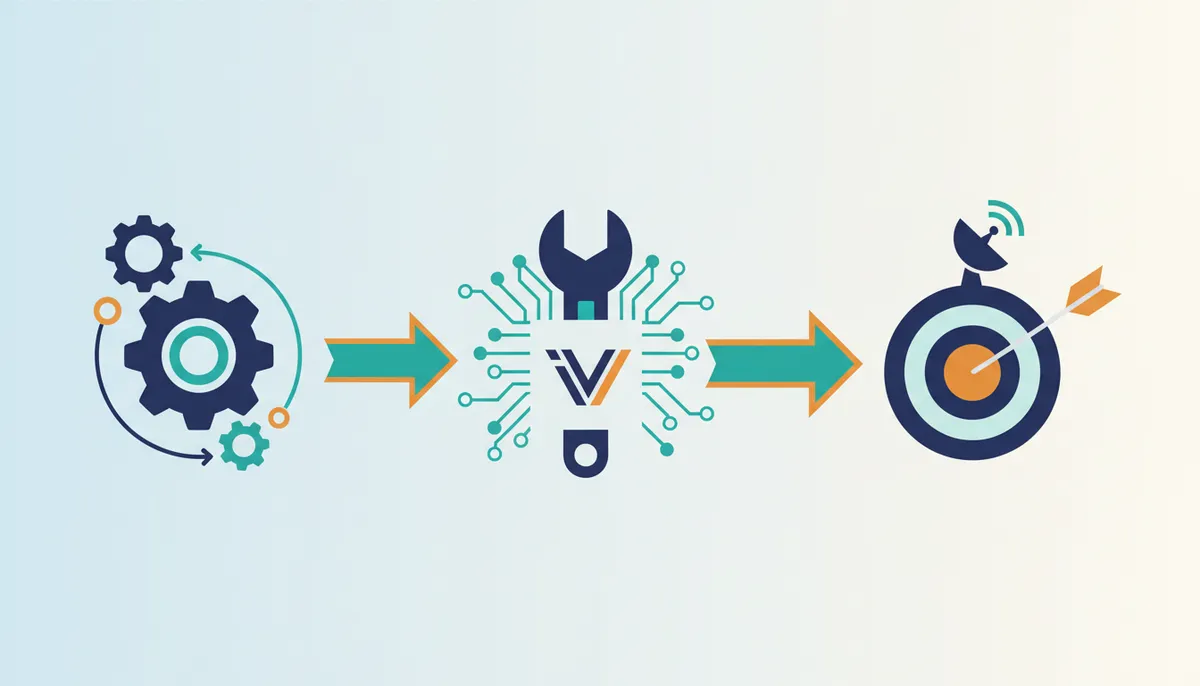
A self-hosted agent control center centralizes execution contexts and API key management, diverging from standalone CLI tools that isolate credentials per process. This architecture addresses enterprise requirements for data sovereignty by keeping orchestration logic within the corporate perimeter rather than relying on external SaaS layers. Unlike fragmented command-line interfaces, a unified terminal maintains persistent session states, ensuring agents resume exact operational contexts after restarts without manual flag re-entry. The market is currently bifurcating between these local control planes and cloud-dependent alternatives, with self-hosted solutions shifting primary costs from subscription fees to infrastructure and compute resources. Teams managing multiple concurrent agents benefit from path leasing mechanisms that prevent file access conflicts across isolated worktrees. Standalone tools suffice for individual experimentation. Collaborative projects require the audit trails and access controls inherent to centralized systems. Builders should adopt this model when project complexity demands strict separation of concerns between agent tasks and host system integrity.
Implementing Git Integration and Remote Control in Bohay
Tasks with dependencies go onto the orch board, and each started task lands in its own git worktree. Git work then stays inside the terminal: a built-in tab browses commits, branches, and pull requests, and a finished branch merges only after the set quality gate passes, through a dedicated worktree that leaves the user's checkout untouched. Remote session management operates over plain SSH, allowing operators to drive sessions on distant computers without manual port forwarding, so one self-hosted control center covers local and remote work alike.
Checklist for Validating Agent Task Completion and Safety Limits
Validate autonomous agents against task completion rates in real terminal environments rather than relying on simple code accuracy metrics. Operators must configure explicit timeout multipliers to prevent resource exhaustion when agents encounter infinite loops or hanging processes. Unlike benchmarks measuring static code generation, modern evaluation frameworks assess an agent's ability to navigate file systems and handle errors without intervention. A critical tension exists between agent autonomy and safety; without strict path leasing, concurrent agents may corrupt shared repositories. The cost of omitting these checks is measurable in corrupted branches and stalled pipelines. For builders selecting tools, the decision hinges on whether the platform enforces these constraints natively or requires custom scripting.
About
Priya Nair serves as AI Industry Editor at AI Agents News, where she tracks the business dynamics shaping autonomous coding tools. Her daily work involves rigorously analyzing product launches and platform shifts across the agent system, making her uniquely qualified to evaluate terminal-based monitoring solutions like bohay. As engineers increasingly deploy multiple agents simultaneously, the operational challenge shifts from execution to orchestration and visibility. Nair's coverage focuses on how tools simplify these workflows without adding friction. At AI Agents News, she examines how utilities that consolidate agent status, distinguishing between waiting, working, and resting states, directly impact developer productivity and safety. This article reflects her commitment to providing builders with clear, factual insights into the infrastructure required to manage complex, multi-agent systems effectively. By focusing on practical utility over hype, she helps technical leaders understand the evolving environment of agent supervision and workflow integration.
Conclusion
Scaling autonomous operations reveals that centralized orchestration creates a fragile dependency where a single control plane failure halts all coordinated tasks. The operational cost shifts from simple compute usage to the complexity of maintaining high-availability infrastructure for the coordination layer itself. While interoperability with retrieval pipelines enhances context, it simultaneously expands the attack surface for infinite loops if timeout multipliers are not rigorously set. Builders must recognize that relying solely on static code accuracy metrics ignores the critical need for agents to navigate live file systems without corrupting shared repositories through race conditions.
Organizations should mandate that any agent framework undergoes stress testing against Terminal-Bench standards before deployment to production environments. Do not adopt tools that lack native path leasing or require extensive custom scripting to enforce safety limits. The window for experimenting with unverified orchestration logic is closing as production stakes rise. Start this week by auditing your current agent configurations to ensure explicit timeout policies are active and that session state persists independently of the primary orchestration process. This immediate verification prevents resource exhaustion and ensures that your automation infrastructure remains resilient even when the central controller faces disruption. Prioritize platforms that embed these safety constraints natively rather than deferring them to external wrappers.
Frequently Asked Questions
Path leasing assigns isolated git worktrees to stop overlapping edits. This ensures zero conflicts while agents work, allowing your team to run multiple tasks simultaneously without file corruption risks.
Session persistence keeps all processes alive even after you close the terminal. You can reopen the interface later to find every pane and layout restored exactly where you left them.
You can drive sessions on other computers using plain SSH without port forwarding. This allows instant remote control from your laptop while maintaining the same responsive feel as local execution.
A set quality gate requires tests to pass before any task counts as done. Finished branches then merge through a dedicated worktree, ensuring your main checkout is never touched by errors.
The sidebar categorizes every agent as waiting, working, finished, or resting. This unified view lets you see real-time status for tools like Claude and Codex without switching windows.
References