Universal CLI: Modernize Cursor Agents Today
Composio's Universal CLI replaces complex MCP setups, enabling agents to execute over 20,000 tools across 1,000+ SaaS apps via managed OAuth.

Prevent catastrophic financial leaks like the $12,450 refund loop. Learn how strict JSON schemas and semantic routing ensure reliable AI agent tool selection.
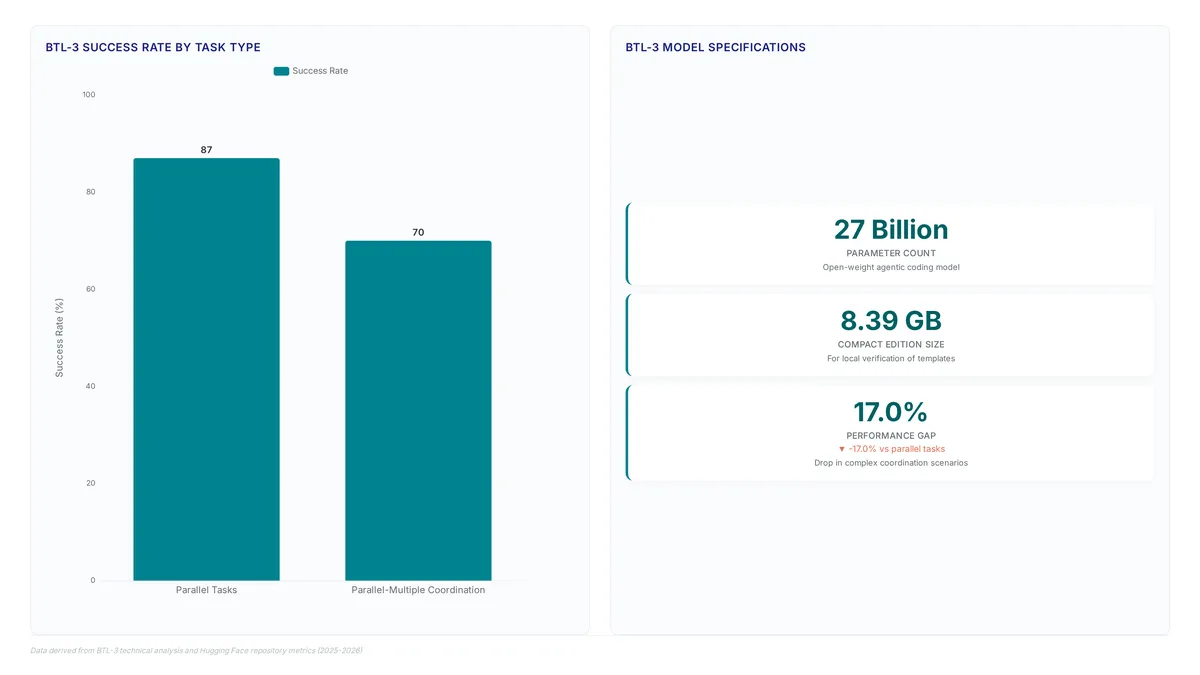
BTL3 retains 92.2% of full-model behaviors in an 8.39 GB footprint, offering a specialized architecture for efficient agentic coding and tool use.
GPT5.6 returns tool names, not code. Learn why the client-owned function loop and strict schemas are non-negotiable for autonomous systems.
Connect coding agents to 1000+ SaaS apps without token-heavy protocols. Learn how CLI tools enable reliable, local-first automation for Ollama.
Learn how the Thought-Action-Observation loop powers 177,000+ tools, shifting agents from static text to modifying external system states safely.
Executable functions let models bypass training cutoffs to fetch live data, preventing hallucinations when users request current events or facts.
OpenAI's Agents SDK defines exactly five tool categories. Learn how namespaces separate hosted execution from local runtime for better token efficiency.
Distinguish custom function tools from sandboxed Code Interpreter runtimes to prevent treating external connections as identical black boxes in agents.
BenchLM.ai evaluates function calling across 24 agentic benchmarks to measure precision in tool invocation and terminal task execution for AI agents.
You can build a production-ready Slack agent using Chat SDK and AI SDK without managing complex infrastructure.
Distinguish orchestration frameworks from tool registries across 10 resources. Learn why core logic matters more than prompt engineering for state persistence.
Connect OpenAI Agents SDK to OpenRouter MCP. This setup unlocks 13 tools while managing OAuth and token refresh cycles automatically.
Unchecked retries turn minor glitches into seven-figure liabilities. Learn why parallel agentic loops drain budgets faster than expected.
Agent requests often take 30 to 120 seconds, far exceeding the 50ms standard. Learn to build tool contracts that handle this nondeterministic latency safely.
Stop capability hallucination by grouping builtin and MCP tools into sets. This control layer ensures agents select only relevant functions before execution.
A $50M Series B validates autonomous agents. Learn to replace rigid scripts with declarative tool specs for safer, flexible orchestration.
Optimized frameworks slash redundant tool calls from 98% to 2%. Learn how structured schemas and event-driven resumption build reliable AI agents.
Learn how a runtime policy engine evaluates every proposed action to allow, deny, hold, or modify tool calls before execution.
With 170,000 GitHub stars, OpenCode grows fast. Learn why default tool settings allow unrestricted bash access and how to enforce approval.
Learn to build a CircumferenceTool in LangChain. This guide shows how custom tools replace token-based guessing with grounded, repeatable functions.
Learn how function calling converts vague intent into structured JSON requests, enabling agents to fetch external data instead of guessing.
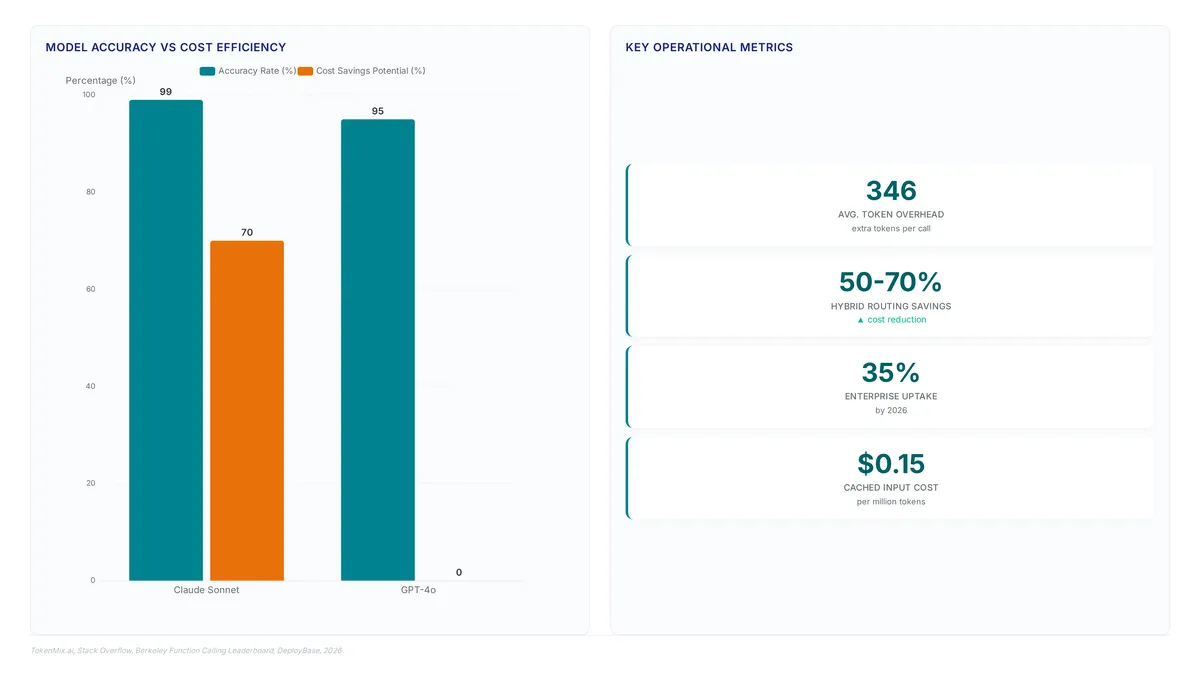
Function calling adds 346 extra tokens per API call. Learn how strict JSON schemas and namespaces reduce this hidden architectural cost for agents.
crewAI 1.14.7a1 adds native Snowflake Cortex integration and lazy loading to cut startup times. Learn how trained agents persist state across 54.7k stars.
CrewAI 1.14.6a2 fixes state serialization for 54.7k-star repo, adding GPG verification and blocking environment variable leaks in tool execution.
Build a Confluence MCP server using 62 tools and 23 triggers. This guide covers LlamaIndex integration, OAuth handling, and ReAct agent workflows.
Analysis of 18 deployments shows LangGraph leads production readiness. Learn how to prevent context loss and infinite loops in your agent systems.
LangChain's 2026 report cites quality as the top barrier. Separate reasoning from action layers to fix specific agent pipeline failures.
Learn how thousands of agents built across Amazon since 2025 prove static prompts fail. Discover framework-agnostic workflows to measure real task completion.
Move beyond static accuracy. Analyze multistep trajectories to catch critical failures where agents stall in continuous reasoning loops.
Build a functional research agent in 150 lines using strict TypeScript interfaces to prevent runtime errors and manage conversation history.
With 18 production deployments reported, this guide compares ten agentic frameworks to help engineers avoid brittle logic and state loss.
Learn how the tool use pattern lets agents bypass static data limits by executing external code and querying 177,000 tracked tools safely.
Simon Willison's llmcodingagent 0.1a0 enables local file edits via explicit tool calls, contrasting with the 83.4% TerminalBench scores seen elsewhere.
Function calling adds 346 tokens per call, inflating costs for high-volume agents. Learn how OpenAPI schemas and Gemini 3.5 Pro manage this overhead.
Most deployments stay narrow. With 78% planning adoption, teams must build true agents that handle failure, not just chatbots.
Connecting to 81 distinct MCP servers through a single endpoint solves the configuration sprawl plaguing Hermes Agent deployments.
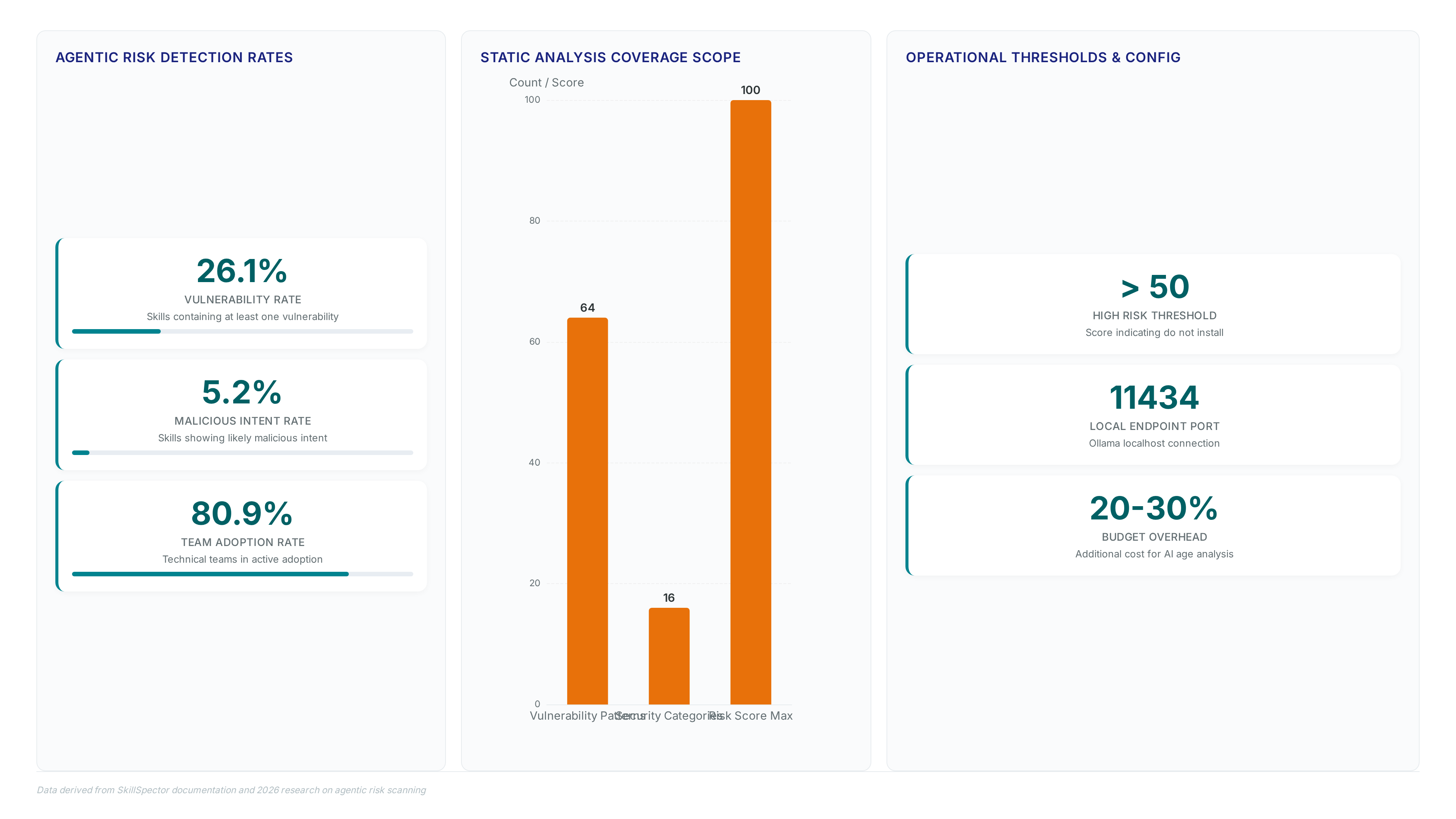
Executable scripts are 2.12x more likely to harbor vulnerabilities. I review how NVIDIA's SkillSpector uses dual-stage analysis to catch these threats.
Stop context pollution before it breaks your workflow. Delegation runtime isolates subtasks, reducing context window overhead by 80% while keeping control.
Codex now sees 20% nondeveloper adoption. We analyze the security gaps and governance needs as teams scale agent workflows beyond simple code.
Silent failures cause 74% of rollbacks. Learn where agent loops diverge from reality in the trace and fix state mismatches before refunds fail.