Tool call requests: cut redundancy from 98% to 2%
MLflow's tool-use guidance reports that optimized frameworks slashed redundant tool calls from 98% to just 2%. That is the raw math of structured definitions driving agent reliability. By late 2025, the landscape shifted: download patterns for AI agent tools pivoted hard, with action-enabling tools claiming the majority of use cases over passive information retrieval tools, per UK AISI data. This isn't just a trend; it's a mandate. Understanding the tool call request mechanism is now critical for developers building systems that query live APIs or execute code, not just regurgitate static knowledge. The line between the model as planner and the runtime as executor is the only boundary that matters for safety.
Clear input/output schemas are what stop parameter hallucination, and a trace of every call is the only way to tell a reasoning error by the model from a broken tool response. Long-running agents need durable checkpoints and event-driven resumption, because replaying a whole conversation to rebuild state fails as soon as the run outlives the session.
What Structured Tool Definitions Actually Buy
Tool Use as The Contract Between Model and Execution Environment
Tool use is a rigid interface definition. The language model emits structured requests; it does not execute logic. This architectural separation stops the non-deterministic reasoner from bypassing safety boundaries enforced by the deterministic runtime. Before triggering external functions, the execution environment validates every parameter against a schema. This transforms a static text generator into a flexible system capable of interacting with external systems.
| Component | Role | Constraint Type |
|---|---|---|
| Language Model | Planner and Requester | Non-deterministic reasoning |
| Execution Layer | Validator and Executor | Deterministic enforcement |
| Tool Definition | Interface Contract | Typed input/output schemas |
The data is unforgiving. Frameworks that hold to these contracts are where the redundancy collapse in the opening figure came from, and the gain reads as accuracy and speed. Production agents require durable checkpoints and event-driven resumption for long-running workflows rather than conversation replay. Defining tools demands the same rigor as API specification because ambiguous descriptions lead to hallucinated parameters.
From Function Calls to API Requests: Enabling Actions Beyond Training Data
Agents translate abstract reasoning into concrete external actions by emitting structured requests for local functions or remote HTTP endpoints. This mechanism shifts the model from a passive text generator to an active executor capable of manipulating real-world systems. By late 2025, analysis of 177,000 distinct tools confirmed that action-enabling utilities now dominate download patterns, surpassing passive information retrieval services. Unlike simple function calls that compute values within a sandbox, API requests allow agents to bypass static training cutoffs and access flexible data sources like weather feeds or CRM records.
| Feature | Local Function Call | External API Request |
|---|---|---|
| Execution Scope | Sandbox / Runtime | Remote Service |
| Latency | Low (Microseconds) | Variable (Network dependent) |
| Primary Use | Data formatting, Math | Live data, Workflows |
Strict schema validation becomes necessary because the non-deterministic model must generate parameters satisfying deterministic remote contracts. Tool definitions determine reliability, where clear input/output schemas and precise descriptions separate reliable tool calls from hallucinated ones. Builders must define input schemas with explicit types and constraints to prevent hallucinated parameters from triggering unintended side effects on external platforms. Optimized frameworks reduce redundant calls, yet the architectural cost remains the need for strong error handling when remote services return unexpected status codes. Production value now derives from reliable integration rather than raw reasoning power alone as the industry shifts toward action-enabling tools.
Preventing Hallucinated Parameters Through Input and Output Schema Validation
Strict input schemas prevent the model from inventing parameters that external APIs cannot accept. Because the language model acts as a non-deterministic reasoner, it frequently attempts to pass unstructured text or malformed types when constraints are absent from the tool definition. Validating every argument against a typed contract before execution stops these invalid requests from reaching the deterministic runtime. Underdefined tools produce underdefined behavior, making precise definitions critical for stability.
Debugging such failures requires more than reviewing final outputs; engineers must inspect the exact sequence of calls and returns. This level of observability allows builders to distinguish between a reasoning error by the model and a data format issue in the tool response. Optimized frameworks have reduced redundant calls notably, yet redefining a tool's description with explicit input/output schemas and usage guidance is often all it takes to move from broken to reliable agent behavior.
| Risk Factor | Consequence | Mitigation Strategy |
|---|---|---|
| Missing Type Checks | Invalid requests | Enforce JSON Schema validation |
| Ambiguous Descriptions | Hallucinated args | Define strict enumerations |
| No Error Schema | Model confusion | Return typed error messages |
Skipping schema validation creates a system where tool definitions fail to act as the contracts between the model and the execution environment. Builders must treat tool definitions as the interfaces, not suggestions, to maintain system stability. Redefining tools with explicit schemas provides the necessary safeguards for production systems.
Inside the Tool Calling Loop and Execution Patterns
The Thought-Action-Observation Loop Architecture
The Thought-Action-Observation loop functions as a controlled cycle where the model never holds raw access to external systems. This architecture enforces a strict boundary: the Large Language Model operates as a non-deterministic reasoner, while the execution environment serves as the deterministic executor. Within this framework, tools are invoked strictly as set functions through a controlled interface, preventing direct modification of underlying APIs or databases by the model itself. The agent iteratively takes steps, generating a thought process, selecting a tool, and parsing the returned observation until it self-determines the goal is complete.
This separation ensures that even if the model hallucinates a parameter, the execution layer validates the request against typed schemas before any action occurs. Latency emerges as the price of this safety mechanism. Every cycle requires a full round-trip inference pass, compounding delay in long chains. Builders must balance the depth of reasoning against the cost of repeated token consumption. Unlike monolithic function calls, this iterative pattern allows for flexible correction, yet it demands strong state management to maintain context across multiple turns. Reliability stems from the rigidity of the execution contract, not the fluidity of the model's intent.
Managing Sequential and Parallel Tool Execution Flows
Choosing between sequential and parallel flows determines whether an agent fails safely or cascades errors across independent systems. Sequential calls enforce strict ordering, making them ideal for dependent steps where the output of one tool defines the input for the next. This approach adds latency but simplifies tracing when multi-step problem solving requires rigorous validation at every stage. Conversely, parallel execution reduces total latency by invoking independent tools simultaneously, yet it introduces resolution complexity if outputs conflict or a subset fails mid-execution.
| Pattern | Latency | Risk Profile | Best Use Case |
|---|---|---|---|
| Sequential | Higher | Lower | Dependent steps, safety-critical workflows |
| Parallel | Lower | Higher | Independent operations, performance tasks |
| Conditional | Variable | Medium | Flexible workflows with optional branches |
The iterative process of solving complex queries often demands mixing these patterns dynamically based on real-time dependencies. Operators must implement detailed event tracing to catch hallucinated parameters before they propagate through the system. The agent continues its loop only until it self-determines the goal is complete, a boundary that requires clear success criteria to prevent infinite retry cycles. The entire operation remains bounded by specific permission sets and role-aware access controls that limit exposure during high-speed parallel execution. For most production deployments, defaulting to sequential logic with targeted parallel bursts offers the optimal balance of speed and observability. Implementing explicit failure thresholds helps prevent token exhaustion during partial outages while maintaining system stability.
- Default to sequential execution for dependent tasks
- Use parallel bursts for independent data retrieval
- Apply strict success criteria to stop loops
- Enforce role-aware access controls on all calls
- Set explicit failure thresholds to save tokens
Implementing Circuit Breakers and Tracing for Agent Reliability
Production reliability demands mechanisms that halt execution after consecutive failures to the same tool. This approach prevents runaway loops from exhausting tokens during partial outages. Without such guards, agents risk degrading user experience by repeating invalid parameter sets indefinitely. Builders must also implement event tracing to capture every tool invocation, parameter, and return value. Detailed traces allow engineers to distinguish between model hallucinations and genuine backend errors, a distinction impossible to make with standard logging alone.
- Define explicit input schemas to reject malformed requests before execution.
- Log the full Thought → Action → Observation cycle for every step.
- Trigger alerts when retry counts exceed set thresholds.
Redefining a tool's description with explicit usage guidance often resolves persistent hallucination issues without code changes. The execution environment must balance granular visibility against system performance. Future developments address legacy systems lacking APIs, expanding compatibility but increasing surface area for failure. OpenAI notes that computer-use models specifically target these non-API interfaces to broaden agent capabilities.
| Failure Mode | Detection Method | Mitigation Strategy |
|---|---|---|
| Hallucinated Parameters | Schema Validation | Reject and prompt retry |
| Runaway Loops | Call Count Limits | Circuit breaker activation |
| Upstream Outage | Consecutive Errors | Fallback response generation |
Prioritizing sequential tracing provides clearer visibility for safety-critical workflows despite higher latency. Parallel execution reduces time but complicates the isolation of specific failure points within a batch. Engineers should weigh the need for speed against the requirement for debuggable logs when designing these flows.
Optimizing Token Consumption and Reliability in Production Systems
Defining Tool-Layer Engineering as a First-Class Discipline
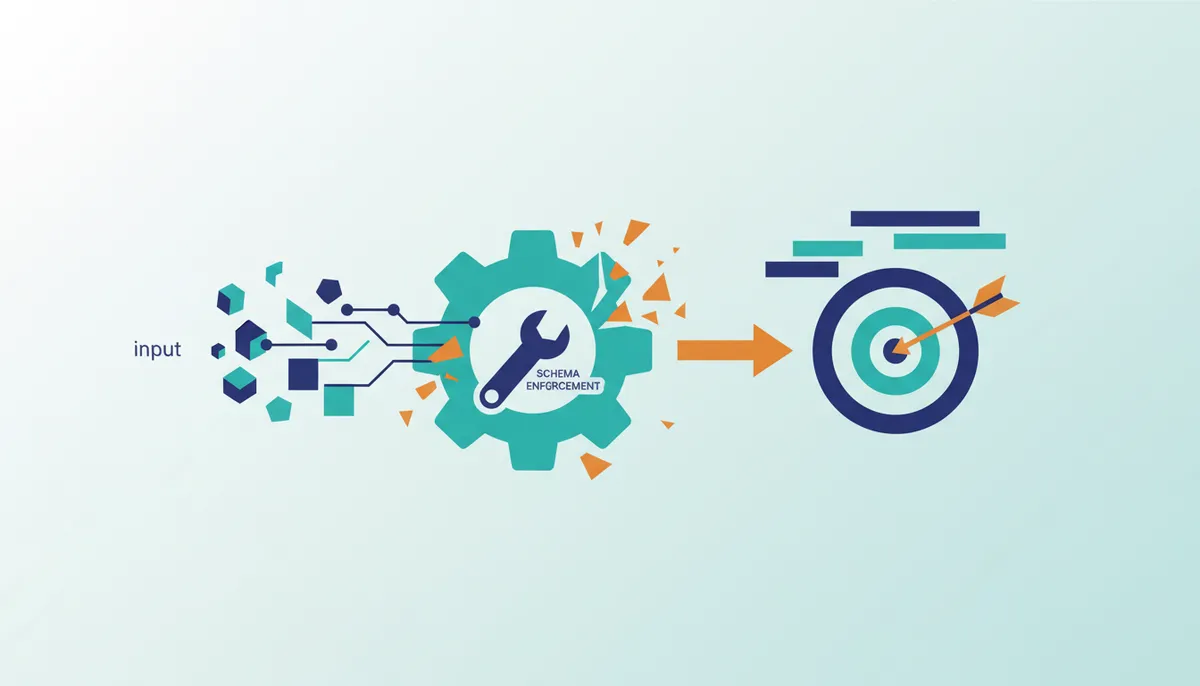
System stability hinges directly on schema clarity because precise input/output definitions separate reliable tool calls from hallucinated ones. Imprecise descriptions invite models to generate reasonable yet incorrect guesses that inflict damage at scale. These components function as interfaces enabling agents to interact with external systems rather than relying on static knowledge. Agents exhibit underdefined behavior without explicit usage guidance. A clear tension exists between rapid prototyping and production readiness since ambiguous contracts force models to disambiguate capabilities during execution.
Treating the tool layer as a first-class discipline transforms volatile reasoning into dependable action. This optimization targets the planning layer where agents often re-issue identical queries due to ambiguous context state rather than actual data gaps. Stricter orchestration logic prevents the model from cycling through known information. Parallel efforts in tool minimization apply an atomic, irreducible tool set to reduce token consumption. Overlapping tool scopes force the model to expend extra reasoning steps disambiguating which function fits the current step, an inefficiency resolved by crisper tool definitions. Developers should focus on redundancy suppression when facing high token usage caused by repetitive loops, whereas atomic tool set principles apply best when the initial toolset lacks clear boundaries.
Applying these frameworks requires rigorous auditing of production traces to identify repeated identical calls within a single run. If the same tool is called more than twice with identical parameters, the agent is likely stuck in a reasoning loop caused by ambiguous task state. Future development of computer-use models will further address legacy systems lacking APIs, expanding the surface area where such optimization becomes critical. A mediocre model with excellent tool contracts and full observability will outperform a top-tier model with poorly documented tools and no tracing.
Enterprise Workflows Enabled by Action-Oriented Agent Tools
Defining Action-Oriented Agents vs Passive Retrieval Tools
Action-oriented agents manipulate external systems directly by executing code, while passive tools simply retrieve static information. Passive systems remain restricted to pre-trained knowledge cutoffs, making them unable to handle flexible enterprise requirements without human intervention. Active agents apply API tools to pull sensor readings or database records, ensuring decisions rely on data that is minutes old rather than months old.
The execution loop defines the operational difference. A retrieval tool returns a document, yet an action-enabling agent performs specific tasks like writing files or sending emails within a single run. AI systems cannot handle real-time tasks or flexible information retrieval effectively without access to such tools. This capability introduces risk because tools can fail due to API timeouts or malformed inputs, requiring strong guardrails to prevent single failures from disrupting entire workflows.
Computer use and browser automation drive much of this shift, and they widen the risk surface from wrong text to wrong state changes in systems the agent can reach. Evaluation has to follow: what matters is whether the task completed, not how well the response reads.
Executing Multi-Step Workflows with Pause and Resume Capabilities
Production agents require durable checkpoints and event-driven resumption to let agents pause and resume over days or weeks. Such async operations allow systems to handle approval workflows or external event dependencies without maintaining active compute resources during idle wait times.
Real-world applications include agents that create complex text requiring sequential processing, using tools like search engines in a coordinated manner to achieve accuracy. These systems apply tools to execute code, query databases for fresh data, and write files to produce artifacts. AI systems remain restricted to pre-trained knowledge cutoffs rather than handling flexible information retrieval without access to such tools. The Model Context Protocol has emerged as a standardizing force, empowering LLM agents with the potential to access hundreds of tools to solve real-world tasks.
Durable state machines record only the necessary context variables instead of replaying entire interaction logs upon resumption. That design resolves the tension between keeping agents observable across long durations and the storage cost of saving full conversation history rather than compact state snapshots. This distinction ensures that long-running processes survive infrastructure restarts without losing logical progress.
About
Sofia Berg serves as Research Editor at AI Agents News, where she specializes in translating complex agentic research into actionable insights for engineers. Her deep focus on planning and tool-use research makes her uniquely qualified to dissect the mechanics of tool call requests. In her daily work analyzing benchmarks like SWE-bench and evaluating multi-agent frameworks, Berg constantly assesses how set input/output schemas prevent hallucinated parameters. This article connects directly to her rigorous evaluation of why tracing tool interactions is critical for debugging production agents. At AI Agents News, the team relies on this type of technical clarity to help builders distinguish between reliable function calling and redundant API loops. Her analysis avoids hype, focusing instead on the architectural durability required for long-running workflows. This approach aligns with AI Agents News' mission to provide neutral, fact-based guidance for those building autonomous systems.
Conclusion
Scaling agent architectures reveals that efficiency collapses when redundancy exceeds minimal thresholds, turning token consumption into an unsustainable operational burden. Teams often mistake initial accuracy gains for permanent stability, ignoring the compounding cost of unmonitored state changes in production environments. The shift toward action-enabling utilities demands a stricter focus on execution integrity rather than just response quality.
Organizations must mandate redundancy checks within their agent loops before deploying any workflow that modifies external systems. This is not merely an optimization step but a fundamental requirement for preventing unintended state corruption. I recommend implementing a hard cap on repetitive tool invocation patterns immediately, specifically for agents managing database writes or file operations. Waiting for performance degradation to trigger these safeguards invites unnecessary risk and resource waste.
Start by auditing your current agent logs this week to identify any single process generating more than two identical sequential tool requests. Isolate these patterns and apply conditional logic to halt execution after the first successful attempt. This immediate intervention stops the bleed of compute resources while establishing a baseline for more sophisticated state management strategies.
Frequently Asked Questions
Failures usually stem from a poorly designed tool layer lacking strict validation. Optimized frameworks have cut redundant tool calls from 98% to just 2%, proving that structured definitions drive agent reliability effectively.
Audit production traces for repeated identical calls inside a single run. If the same tool is called more than twice with identical parameters, the agent is stuck in a reasoning loop caused by ambiguous task state rather than by missing data, and crisper tool definitions fix that quicker than a larger model.
Action-enabling tools now represent the majority of use cases as agents shift toward executing live workflows. Retrieval returns a document, while an action tool writes files or sends email within the same run, which is why schemas and tracing stop being optional.
Tracing every tool invocation, its parameters, and its return value. Without that record, a hallucinated parameter and a genuine backend error look the same in the final output, and standard logging cannot separate them.
Clear input and output schemas act as rigid contracts that prevent models from generating invalid parameters. This approach ensures that the execution layer validates every request before triggering external functions or services.
References