Code data sovereignty: flexible models for devs
CodeGPT has secured over 2M+ installs by letting developers code with their own API keys. Proactive threat detection and custom rules drive measurable ROI while maintaining total visibility over the codebase.
The platform operates by thinking, planning, and building only after studying your specific codebase to map out solutions. Unlike black-box alternatives, the system offers total visibility, allowing teams to review every file read and edit suggestion before changes apply. This approach ensures that organizations retain ownership of their logic while using frontier technology from various providers.
The engineering toolkit addresses real-world challenges through MCP connections to external databases and live context tracking without hidden limits. Setting strict custom rules enforces consistent, standards-based code across complex projects. Swapping models for specific tasks, such as using Claude for reasoning or Gemini for long context, provides a strategic advantage over locked-in ecosystems.
Model Flexibility and the Two Shapes of Coding Agents
Why the Model Stays a Per-Task Choice
Task complexity dictates the inference engine. Developers swap models instantly, selecting specific tools for deep reasoning or long-context retrieval without migrating workflows. This architectural choice prevents vendor lock-in. The tool connects users instantly to models from OpenAI, Anthropic, or a lab that hasn't launched yet. Immediate access to frontier capabilities arrives alongside the freedom to switch providers as performance benchmarks shift.
Editor Assistants vs Repository-Level Agents in AI Coding
Editor assistants like GitHub Copilot function primarily within the IDE to generate functions and tests inline. This workflow contrasts sharply with repository-level agents such as Cursor or Claude Code, which possess the autonomy to analyze entire codebases, manage dependencies, and execute terminal commands. Passive suggestion gives way to active execution, where the tool acts as an independent operator rather than a text completer.
CodeGPT operates as a repository-level agent that thinks, plans, and then builds. The system studies the user's codebase to co-create a detailed plan before coding begins, ensuring it grasps the project's full scope and intent. Total visibility allows engineers to see the AI reading files, weighing options, and suggesting edits before any changes are applied.
| Feature | Editor Assistants | Repository-Level Agents |
|---|---|---|
| Scope | Inline function generation | Full codebase analysis |
| Action | Passive suggestion | Active execution |
| Context | Current file or selection | Entire repository structure |
| Dependencies | Manual management | Autonomous handling |
Dependency management is where the difference bites: the agent traverses the full directory tree to resolve symbols instead of guessing from the open buffer. The price of that reach is terminal access, so the guardrails have to exist before the delegation does. Builders verify the proposed blueprint the way they would review an architect drawing, checking that generated code follows existing project patterns rather than imposing generic ones.
Inside the Architecture of Proactive Threat Detection and Context Tracking
Defining Proactive Threat Neutralization in the Terminal
Proactive threat neutralization intercepts malicious patterns before command execution, distinguishing active defense from passive scanning. Unlike legacy linters that flag syntax errors post-hoc, the Terminal component analyzes intent during the planning phase. This sequential architecture allows the system to evaluate potential risks before any code touches the filesystem. If a pattern matches a known exploit vector or unsafe operation, the system neutralizes the action by halting the build pipeline.
This approach contrasts with reactive tools that rely on periodic audits. By integrating secure AI code generation directly into the workflow, developers receive immediate feedback on unsafe logic. The mechanism ensures that data sovereignty remains intact, as code analysis occurs locally before any external API calls.
| Feature | Passive Scanning | Proactive Neutralization |
|---|---|---|
| Timing | Post-execution or commit | Pre-execution planning |
| Action | Alert generation | Automatic halt |
| Scope | Syntax and style | Intent and impact |
Operators gain a critical advantage: the ability to enforce security policies without sacrificing the speed of autonomous agents. With full visibility, users can review every step, including reading files and weighing options, before anything changes.
Applying MCP Bridges to Connect APIs and Documentation
Connecting external systems requires the Model Context Protocol (MCP) to bridge live APIs and documentation directly into the agent's working memory. This architecture eliminates hidden context limits by streaming data sources on demand rather than loading entire repositories at once. Developers enable this by configuring MCP servers that link the agent to specific databases or internal wikis, ensuring the context window remains focused on immediate task requirements. Unlike static prompt engineering, this flexible linkage allows the assistant to retrieve real-time schema definitions or API specs exactly when the planning phase demands them.
The operational advantage lies in decoupling knowledge retrieval from model token limits. When an agent encounters an unfamiliar library, it queries the connected documentation bridge instead of guessing based on training data cutoffs. Teams can maintain a single source of truth for rules while the agent fetches current implementation details live.
| Feature | Static Context | MCP Bridge |
|---|---|---|
| Data Source | Training cutoff | Live API/Docs |
| Limit Type | Token cap | Network latency |
| Update Frequency | None (frozen) | Real-time |
| Sovereignty | Vendor managed | User controlled |
Retrieval speed battles context precision. Overly broad MCP connections may introduce noise that dilutes the agent's reasoning focus. Builders must curate bridge endpoints carefully to avoid overwhelming the planning logic with irrelevant schema details. While GitHub Copilot serves roughly 15 million developers with integrated system access, custom MCP configurations offer a distinct path for enterprises requiring strict data boundaries without sacrificing model flexibility. CodeGPT links to APIs, docs, and databases to serve as a bridge to any external system, allowing users to apply their own API keys and maintain full control over their data sovereignty.
Checklist for Enforcing Standards-Based Code via Rules
Organizations prevent non-compliant suggestions by configuring Rules that constrain generative output to internal style guides before token generation begins. This mechanism intercepts the planning phase, forcing the agent to validate proposed logic against predefined patterns rather than correcting syntax post-hoc. Builders must address the frequent mismatch between public model training data and private enterprise standards through explicit constraint injection.
- Define standards-based code policies using regex or natural language descriptors within the Rules configuration file.
- Select an optimal model based on task complexity, swapping instantly between deep reasoning and speed-optimized variants.
- Validate that API keys remain under user control, ensuring no intermediate proxy inspects proprietary logic.
- Audit context window usage live to confirm no hidden limits truncate critical file references during analysis.
Unlike static linters, rules bind the planning phase itself, so the Terminal stays inside the guardrails the team wrote rather than the ones the model inferred.
Bring Your Own Key in Practice
What Holding the Key Changes
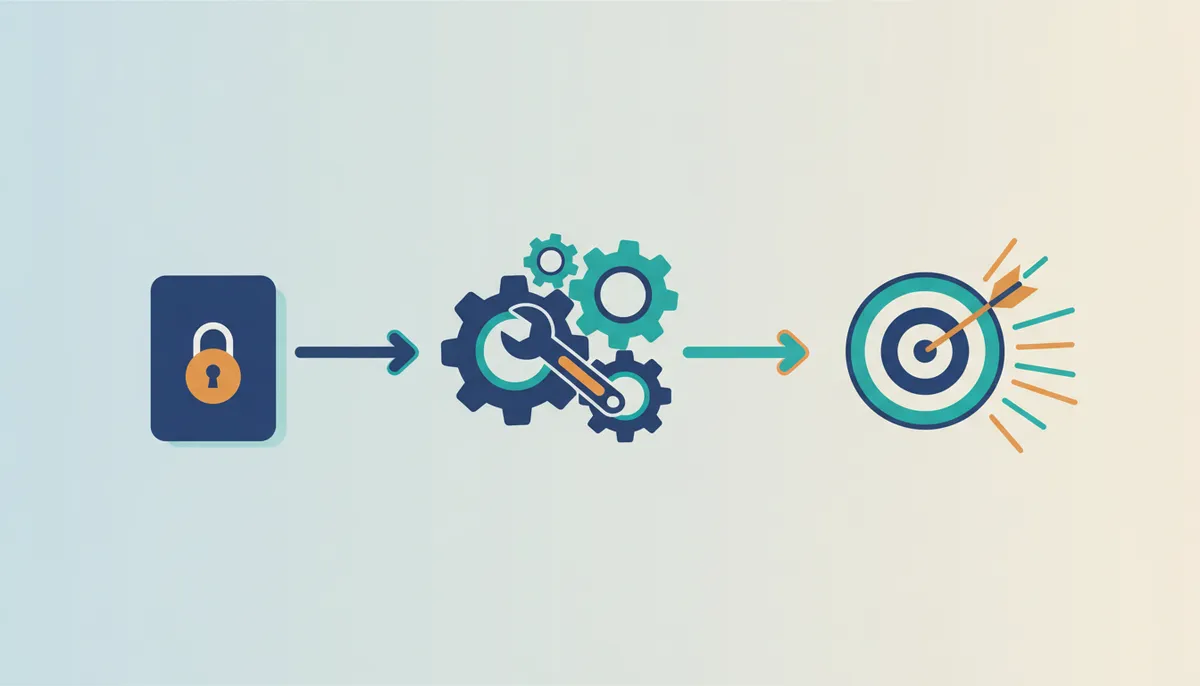
Code remains local unless the operator explicitly routes requests through personal API keys, a mandate defining data sovereignty in this architecture. This privacy-first architecture ensures enterprises retain full ownership of their intellectual property, preventing third-party vendors from accessing or metering sensitive logic. Standard cloud AI deployments send data traversing external servers by default, yet this model requires the user to supply credentials for providers like OpenAI or Anthropic. The vendor profits only by improving the software layer, not by reselling usage data or acting as an intermediary.
| Feature | Standard Cloud AI | Custom API Key Model |
|---|---|---|
| Data Control | Vendor manages storage | User retains ownership |
| Billing Basis | Per-token metering | Direct provider billing |
| Model Access | Fixed vendor list | Flexible, user-set |
Convenience clashes with compliance here. Managed services reduce setup friction but often introduce unverified data retention policies that violate strict enterprise governance. Organizations bypass potential data leakage paths inherent in shared tenancy environments by enforcing a bring-your-own-key workflow. This approach shifts the operational burden to the engineering team, which must now manage API key rotation, billing thresholds, and access controls directly with model providers. The coding assistant acts as a bridge to external systems, relying on the user's credentials to process code. For builders evaluating secure AI coding strategies, the distinction lies in who holds the cryptographic authority over the data stream.
Supplying personal keys grants access to frontier models but shifts billing visibility to the cloud provider's dashboard rather than the IDE. Enterprises often mandate this setup to prevent vendor lock-in while maintaining audit trails for all generated logic.
Strategic Plan Selection and Model Comparison for Development Teams
CodeGPT Free vs Pro Plan Feature Breakdown
Developers choosing between the Free Plan and Byok Pro tier face a hard cap at 30 monthly interactions before hitting usage limits. The Free Plan costs $0 and provides access to Agent and Planning mode alongside an Advance Auto-complete feature, sufficient for evaluating model flexibility with personal API keys. The Byok Pro tier costs $8 a month and lifts that ceiling, which is the entire content of the upgrade: experimental workflows stay free, production cadence does not. Teams integrating AI into daily terminal-first workflows often exceed the free tier's allowance within days of active use. Unlike per-seat licensing models charging $10/month found elsewhere, CodeGPT separates platform access from compute costs, meaning users pay only their chosen model provider for tokens. The decision to upgrade hinges on whether a team's context tracking needs exceed the monthly interaction threshold or require custom rule configurations unavailable in the base tier.
Personal API keys do not move that line. Both tiers permit identical model selection via external credentials, so what separates them is interaction volume rather than model access: the Free Plan serves functional prototyping, while high-frequency terminal-first workflows exhaust it. Teams then weigh the administrative overhead of managing multiple API keys against the predictability of a fixed monthly fee, since the token bill arrives from the provider either way.
Selecting between Claude for deep reasoning and Gemini for extended context windows dictates the architectural approach for complex agentic workflows. CodeGPT enables this model-agnostic orchestration, allowing engineers to route specific tasks to the most capable backend without vendor lock-in.
| Feature | Claude Integration | Gemini Integration |
|---|---|---|
| Primary Strength | Complex logical deduction | Large token context windows |
| Ideal Use Case | Refactoring legacy logic | Analyzing full repository scope |
| Workflow Mode | Agent and Planning mode | Advance Auto-complete feature |
Routing each task to the model that handles it best is the payoff; watching token consumption on two provider dashboards is the price.
About
Priya Nair, AI Industry Editor at AI Agents News, brings rigorous market analysis to the evaluation of tools like CodeGPT. Her daily work involves tracking product launches and platform shifts across the coding agent environment, from Devin to Cursor, ensuring builders receive verified, neutral insights rather than vendor hype. This specific coverage mandate makes her uniquely qualified to dissect CodeGPT's claim of "full AI access" and test how it holds up in enterprise settings. By focusing on factual capabilities, such as model flexibility and cost control via personal API keys, Priya connects high-level industry trends to the practical needs of software engineers. Her reporting at AI Agents News prioritizes understanding how these tools function within real-world development workflows, offering a clear, trustworthy read on whether such assistants deliver precision or just promises. This approach ensures readers can make informed decisions based on concrete data, not marketing fluff.
Conclusion
Bring your own key is the whole argument: the platform never holds the credential, so code stays on the machine until the operator sends it, and the model behind the assistant becomes a per-task choice rather than a vendor decision. The bill arrives in the same shape. Cost visibility moves to each provider's dashboard, and the operational burden of managing disparate API budgets across Claude and Gemini becomes a primary engineering overhead rather than a minor inconvenience. The real risk lies not in the $8 licensing fee but in the fragmentation that follows when every developer manages their own cloud spend without centralized guardrails.
The upgrade to Byok Pro answers exactly one question: whether agent loops exceed 30 interactions a month. It answers nothing about sovereignty, which the personal key already settled on the free tier. That split is the thing to keep straight when the invoice starts arriving from two directions at once.
Frequently Asked Questions
The Free Plan costs $0 while the Pro tier is $8 monthly. This upgrade removes the hard cap on interactions, allowing unlimited usage for teams needing continuous access to agent and planning modes.
Proactive threat neutralization analyzes intent during the planning phase and halts the build pipeline when a pattern matches a known exploit vector. Analysis happens locally before any external API call, so data sovereignty stays intact.
No, the architecture requires developers to supply their own API keys directly. This privacy-first approach ensures no intermediary holds credentials, keeping code ownership and audit trails entirely under user control.
Yes, engineers can instantly swap inference engines like Claude or Gemini based on task needs. This model flexibility prevents vendor lock-in and allows selection of specific strengths without migrating entire workflows.
It plans before it writes: the agent maps the project structure and proposes a change set, and every file read and edit suggestion stays visible for review before anything applies. An editor assistant offers nothing to review because it only completes the buffer in front of it.
References