Production-ready Agents: Enforcing Deterministic State
Seventy-seven percent of AI agent projects fail to reach production, leaving only a fraction of deployments operational according to recent 2026 data. Building a production-ready AI agent in 2026 requires wrapping a capable model in a reliable harness, enforcing strict write rules, and maintaining a human in the loop for irreversible actions. Pydantic AI supplies typed building blocks for a narrow remit, building your own runtime buys flow control at the price of one to two weeks of engineering, and running a capable model in a loop with minimal scaffolding buys neither. The deciding question is how much of the failure surface has to stay visible: tool safety inside a sandbox and evaluation loops that assert tool selection are what separate a demo from live business operations.
Most teams attempt to solve complex problems with minimal scaffolding, an approach Winder.AI identifies as having the least predictability and requiring constant monitoring. By shifting focus from rapid prototyping in minutes to engineering stable systems over weeks, organizations can avoid the pitfalls that cause the majority of agentic engagements to collapse before delivering value. The path forward involves discarding unnecessary dependencies in favor of focused, deliverable code that survives contact with real users.
Defining the Production-Ready AI Agent Architecture
Production AI Agent Architecture: Harness, Sandbox, and Context
A production AI agent operates as an autonomous program using an LLM reasoning engine to execute tools and manage state across turns. Experimental scripts lack the structured harness required to wrap the model in an observable, customizable loop. This component replaces fragile "Yolo mode" prototyping with deterministic control flows necessary for enterprise stability. Operational safety depends on a sandbox, an isolated environment where the agent executes tools like the gh CLI without risking downstream system failures. Information retrieval connects through context mechanisms that link the agent to necessary data.
Constrained Code Agents vs Open-Ended Markdown Steered Agents
Constrained code agents enforce deterministic behavior through explicit type definitions in frameworks like Pydantic AI. Developers define strict schemas for tool usage, ensuring the LLM operates within bounded parameters suitable for high-stakes workflows. This approach sacrifices flexibility for predictability, requiring engineers to architect every state transition manually. Conversely, open-ended agents apply markdown instructions within a harness to steer general-purpose models toward vague goals. Google's official open-source terminal agent supports an extended context window as of April 2026, enabling these systems to process massive instruction sets without code changes. Reduced control is the cost; markdown-steered agents may struggle with consistency when facing novel edge cases outside their training distribution. Builders must select based on task variability rather than hype. Fixed financial transactions demand the rigidity of code-set logic, whereas creative research benefits from the fluidity of markdown steering. The industry focus has shifted decisively from questioning "whether" to build agents to solving "how" to deploy them reliably, efficiently, and at scale. Consequently, architectural choices now prioritize deterministic orchestration using state machines, reserving expensive LLM inference for bounded decisions to reduce overall token consumption compared to unbounded prompting.
Where Agent Projects Break Before Production
Compounding errors across long tool chains cause the majority of deployment failures before systems reach live operations. Without a sandbox isolating execution, errant tool calls corrupt shared databases or trigger cascading API rate limits. Engineers often overlook how minor hallucinations in early reasoning steps compound into catastrophic action sequences later in the chain. The absence of deterministic flow control prevents reliable error recovery in open-ended architectures. Unlike constrained code agents, markdown-steered models lack explicit graph structures to enforce retry logic or state validation. This architectural gap means a single malformed tool output can derail an entire workflow without triggering a fallback mechanism. Insufficient state management leads to context pollution, where the agent loses track of completed subtasks or re-executes successful steps. Successful deployments address these gaps by implementing rigorous evaluation loops and typed state machines. The surviving 23% of projects distinguish themselves by replacing vague prompts with explicit state transitions and bounded execution environments. Builders must prioritize architectural constraints over raw model capability to achieve operational durability. The economic strategy recommended is to "start small with proven tools" to demonstrate value before scaling, indicating that immediate large-scale investment without validation leads to financial inefficiency.
Comparing Frameworks Against Custom Runtimes for Control
Yolo Mode Against Constrained Code Agents
Yolo mode runs a powerful LLM in a loop with minimal scaffolding, prioritizing range over predictability for vague goals. This approach functions as harness engineering, deliberately offloading execution burdens to the model to handle diverse, non-deterministic requests common in workplace automation. Operators sacrifice control, requiring close monitoring to manage the inherent uncertainty of open-ended markdown-steered agents.
Conversely, constrained code agents apply explicit structures to enforce determinism. Frameworks like Pydantic AI provide lightweight, typed building blocks where developers define state and tools programmatically. This method separates problems into smaller, verifiable chunks, making it ideal for use cases like chatbots that require strict adherence to policy. The cost is upfront effort; builders must implement their own evaluation loops and memory management rather than relying on implicit model behavior.
| Feature | Yolo Mode | Constrained Code |
|---|---|---|
| Primary Driver | Natural Language Prompts | Explicit Python Logic |
| Determinism | Low (Model-dependent) | High (Code-set) |
| Best Fit | Open exploration | Fixed workflows |
| Maintenance | Monitoring heavy | Development heavy |
Failure modes distinguish these paths sharply. Yolo mode drifts without guardrails, while coded agents fail visibly when inputs exceed set schemas. Builders choose between the flexibility of unstructured inference and the reliability of typed state machines. Production systems requiring auditability find the constrained approach remains the only viable path forward.
When to Use Pydantic AI for Fixed Remit Agents
Engineers deploy Pydantic AI for fixed remit agents where typed schemas enforce strict policy adherence. This approach suits narrow, high-stakes jobs where a little framework code keeps the agent honest against hallucination. Unlike the open-ended range of Yolo mode, this method prioritizes constraint over flexibility for deterministic outcomes. The agent tool landscape now spans over 300 distinct tools across functional domains, yet lightweight options remain necessary for specific use cases.
| Dimension | Pydantic AI | Build Your Own | Yolo Mode |
|---|---|---|---|
| Best For | Small projects | Production stability | Vague goals |
| Learning Curve | Hours | 1 to 2 weeks | Minutes |
| Control Level | Medium | High | Low |
| Overhead | Low | High | Minimal |
Pydantic AI lacks a native orchestration layer, requiring developers to manually add state and memory. This constraint forces explicit handling of conversation history rather than relying on implicit framework magic. Builders asking how to build an AI agent in 2026 must recognize that framework choice dictates operational burden.
Development speed conflicts with long-term maintainability. Selecting a framework for a refund agent avoids the upfront effort of a custom runtime but introduces dependency risks. AI Agents News recommends evaluating whether the learning curve of hours justifies the eventual maintenance cost. Structured input validation prevents costly errors that open loops cannot catch for fixed remits.
The Monitoring Tax of Open-Ended Loops
Open-ended loops fail because each tool call increases the probability of expensive failure modes requiring human intervention. Yolo mode suffers from this volatility, as its minimal harness lacks the deterministic flow control needed to arrest error propagation. Agents drift into invalid states without explicit graph structures that simple retry logic cannot resolve.
The build your own approach mitigates these risks by enforcing strict state transitions, though it demands 1 to 2 weeks of upfront engineering effort. Frameworks accelerate prototyping but introduce heavy dependencies that may become burdensome over time. Speed of initial deployment often inversely correlates with long-term operational stability in live environments. Teams choosing open-ended architectures accept that close monitoring becomes a permanent operational tax rather than a temporary phase. Loose loops lack predictable output schemas, preventing automated evaluation and forcing reliance on manual inspection for quality assurance. Architectural debt accumulates rapidly as task complexity scales beyond simple prompts.
Implementing Deterministic State and Tool Safety
Defining Deterministic Orchestration and Typed State
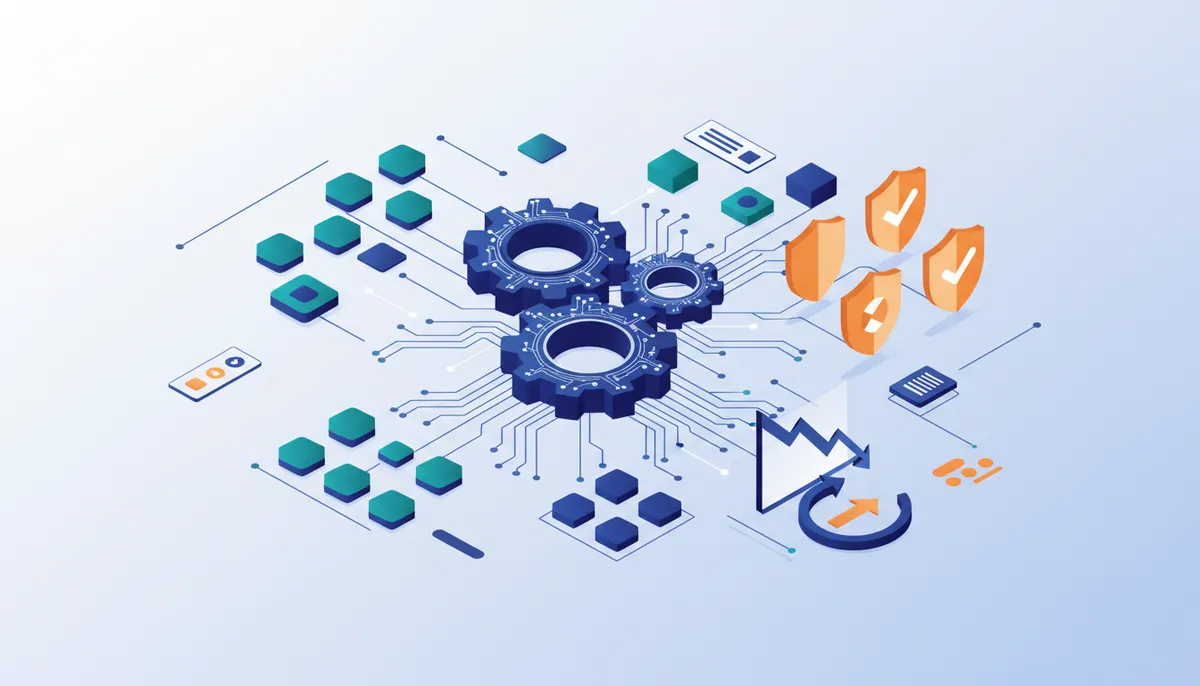
Deterministic orchestration replaces open-ended loops with explicit state machines to enforce predictable flow. This architecture reserves expensive LLM inference for bounded decisions, reducing overall token consumption compared to unbounded prompting. The industry has shifted toward a "Supervisor + Specialists" pattern, using state machines for flow control rather than relying on a single "giant prompt" to manage complex workflows. Wrapping the LLM in a strict harness validates every transition against a predefined graph. Unlike monolithic prompts, this approach isolates failures to specific nodes rather than corrupting the entire session. Organizations implementing these controls join the cohort that effectively runs agents in live environments, avoiding the high attrition rate seen in projects that fail to reach production.
Builders face a constraint between speed and control. No-code options allow rapid deployment, yet developer-centric frameworks prioritize integration depth and architectural flexibility. The economic strategy for 2026 recommends starting small with proven tools to demonstrate value before scaling. Immediate large-scale investment without validation often leads to financial inefficiency.
Implementing Sandbox Isolation and Schema-Checked Tools
Effective isolation requires a dedicated Sandbox where the agent executes tasks without risking collateral damage to production systems. This environment encapsulates tools like the gh CLI, ensuring that erroneous commands remain confined within strict boundaries rather than propagating failures across the network. Developers must connect these actionable utilities directly to the agent Context to maintain situational awareness during execution.
Schema validation acts as a primary defense against malformed tool calls. Enforcing typed inputs allows the system to reject invalid parameters before the model attempts execution, directly addressing issues where agents might otherwise get stuck. This approach shifts failure modes from runtime crashes to immediate, parseable errors that the harness can resolve deterministically.
Adding strict schemas increases the initial engineering burden required to define precise interfaces for every available function. Teams must balance this upfront cost against the stability gained when a malformed call fails at the interface instead of deep inside a chain. Production-ready systems distinguish themselves by executing multi-step actions with varying autonomy levels while maintaining strict perimeter controls.
Validation Checklist for Production-Ready Agent Loops
A loop is ready for production when each of the following holds, and unpredictable behavior usually traces back to the first item that does not.
- The language model matches the problem's complexity and privacy, with self-hosted models used where privacy or cost decides.
- A sandbox isolates execution, so tools like the gh CLI run without risking production systems.
- Every tool carries a typed schema, and invalid parameters are rejected before the model attempts execution.
- State transitions run through an explicit graph rather than one giant prompt, so a failure lands on a single node instead of the session.
- Evaluation loops assert correct tool selection and parameter formatting on a fixed subset of the problem space.
- Irreversible actions stop for a human instead of proceeding on the model's confidence.
Teams that build custom runtimes for production do it to keep this list short and observable rather than to inherit heavy third-party dependencies.
Establishing Evaluation Loops for Resilient Deployment
Defining Evaluation Scenarios: From Chat Assertions to Domain Benchmarks
Creating scenarios that match the breadth of real-world interactions stands as the steepest hurdle in agent development. Informal patterns like chatting directly with a model and asking it to persist learnings in the store yield quick feedback yet miss the statistical rigor needed for long-term reliance. This method also misses the failures that surface only once a workflow runs many steps deep. Builders must shift from open-ended interaction to structured domain benchmarks that validate specific capabilities under controlled constraints. A strong strategy runs regression tests on a fixed subset of the problem space to catch simple logic failures before they spread. The agent tool landscape now includes over 300 distinct tools categorized across functional domains, yet selecting the right validation metric matters more than tool count. Operators prioritize scenario definitions mirroring operational stakes rather than conversational fluency as the industry favors reliability over raw capability. Guardrails become necessary because sophisticated orchestration layers cannot guarantee consistent output quality without them. Skipping this step results in measurably degraded user trust and increased manual intervention rates.
Building Sandboxed Regression Tests for Long-Term Agent Reliability
Regression tests on a subset of the problem domain catch simple bugs before they compound into system-wide failures. This approach isolates specific tool use scenarios to verify deterministic behavior without risking live infrastructure. Constructing these tests requires defining a sandboxed environment where the agent interacts with mock APIs rather than production databases. Developers design evaluation loops that assert correct tool selection and parameter formatting for known inputs. Building benchmarks for specific domains becomes necessary to track performance degradation over time if an agent is relied upon long-term.
About
Sofia Berg, Research Editor at AI Agents News, bridges the gap between theoretical agentic research and practical engineering implementation. Her daily work involves rigorously analyzing multi-agent systems and evaluation benchmarks to distill actionable insights for builders, making her uniquely qualified to outline production strategies for 2026. While the article references Winder.AI's specific playbook for scoping engagements, Berg's expertise lies in translating such methodologies into neutral, fact-based guidance for the broader community. She connects the abstract concepts of sandboxed environments and evaluation loops to real-world reliability concerns faced by engineers deploying autonomous systems. At AI Agents News, Berg ensures that complex topics like tool use and orchestration are explained without hype, focusing strictly on what works in production. Her analysis helps technical founders and engineers navigate the evolving environment of AI agents by grounding decisions in verified data rather than vendor marketing, aligning with our mission to provide clear, credible news for the agent-building community.
Conclusion
Scaling agentic workflows exposes a harsh reality: compounding errors in long tool chains create a non-linear operational burden that rigid scripting cannot solve. While a majority of experimental projects fail to reach production, the surviving minority succeed by implementing typed state machines that enforce deterministic flow control. This architectural shift moves the industry from fragile, open-ended exploration to reliable infrastructure capable of handling real-world variance without constant human rescue. The cost of ignoring this transition is not merely technical debt but a fundamental inability to scale beyond trivial tasks.
Organizations must immediately abandon "Yolo mode" execution in favor of architectures that isolate tool failures before they corrupt entire transaction sequences. Start this week by auditing your current agent evaluation loops to ensure they specifically target error propagation paths rather than just validating final outputs. This targeted inspection reveals whether your system can recover from minor deviations or if it remains vulnerable to systemic collapse. Only by prioritizing rigid state transitions alongside autonomous decision-making can teams achieve the durability required for live deployment in critical sectors. The path forward demands a disciplined balance between flexibility and constraint, ensuring that human oversight remains focused on irreversible actions rather than routine error correction.
Frequently Asked Questions
Most projects fail due to compounding errors and poor state management. Only the surviving 23% distinguish themselves by implementing deterministic flow control rather than relying on vague prompts.
When the task varies more than a schema can predict, as in open-ended research. Google's open-source terminal agent shows the shape: an extended context window lets a markdown harness absorb large instruction sets without code changes, while fixed financial transactions still need code-set logic.
The system spans more than 20 different functional domains with over 300 distinct tools. Developers must carefully select frameworks to avoid the heavy maintenance burdens often caused by third-party dependencies.
Constrained code agents sacrifice flexibility to ensure deterministic behavior through strict schemas. This approach prevents the unpredictability found in open-ended agents that rely on markdown instructions for steering model actions.
Custom runtimes avoid the long-term maintenance burdens introduced by heavy third-party orchestration layers. Building only necessary parts ensures the system remains focused, deliverable, and stable for live business operations.
References