OpenHands picks MiniMaxM2.7 as default engine
With 78.1k GitHub stars, OpenHands confirms MiniMax-M2.7 as its new default engine in release cloud-1.32.2. This strategic pivot marks the platform's evolution from a simple coding assistant into a reliable, cloud-native AI agent capable of executing complex, multi-step development workflows without constant human intervention. By prioritizing the MiniMax architecture, the project signals a decisive move toward models that balance high-reasoning capabilities with the cost-efficiency required for autonomous operation.
The update, tagged by VascoSch92 on May 21, is a one-line change with a wide blast radius. The default is not a lock-in: the LiteLLM-based provider layer keeps every backend reachable, so an operator who wants GPT-5.1 Codex-Max, Claude Opus or a local model via Ollama overrides the model field and nothing in the agent logic changes. What the release does change is the failure surface. A hardcoded default means an unpinned deployment inherits a new inference engine on upgrade, and the shipped guardrails of MAX_ITERATIONS at 100 and LLM_NUM_RETRIES at 8 decide whether a task costs $0.50 or stalls a workflow for eight minutes before failure is declared.
OpenHands as a Cloud-Native AI Agent Platform
OpenHands is an open-source cloud-native AI agent platform launched in Spring 2024 as OpenDevin. The project rapidly accumulated 78.1k GitHub stars by June 2026, becoming the most-starred coding agent repository. This growth trajectory reflects a surge of over 186 contributors delivering more than 2,000 code contributions within six months. Financial backing totals $23.8M, anchored by an $18.8M Series A round led by Madrona in November 2025. The platform distinguishes itself through a LiteLLM-based provider layer that enables model agnosticism without altering agent logic.
Release tag cloud-1.32.2 (commit 1ada333) hardcodes MiniMax-M2.7 as the default inference engine for all agent tasks. Operators deploy this version using Docker containers or Kubernetes clusters to isolate runtime dependencies from host systems. The platform supports local execution or cloud hosting, contrasting with competitors like Devin that restrict users to single-tenant SaaS environments. Enterprise adoption focuses on security remediation, illustrated by JP Morgan Chase fixing over 2,000 vulnerabilities using the agent framework. Legacy integrations relying on the V0 API face immediate breakage since the endpoint is scheduled for removal on April 1, 2026.
| Feature | OpenHands (Local/Docker) | Proprietary SaaS Agents |
|---|---|---|
| Model Control | Full (via LiteLLM) | Vendor-Locked |
| Data Residency | On-Premises Possible | Cloud-Only |
| Cost Structure | Infrastructure Only | Per-Token + Subscription |
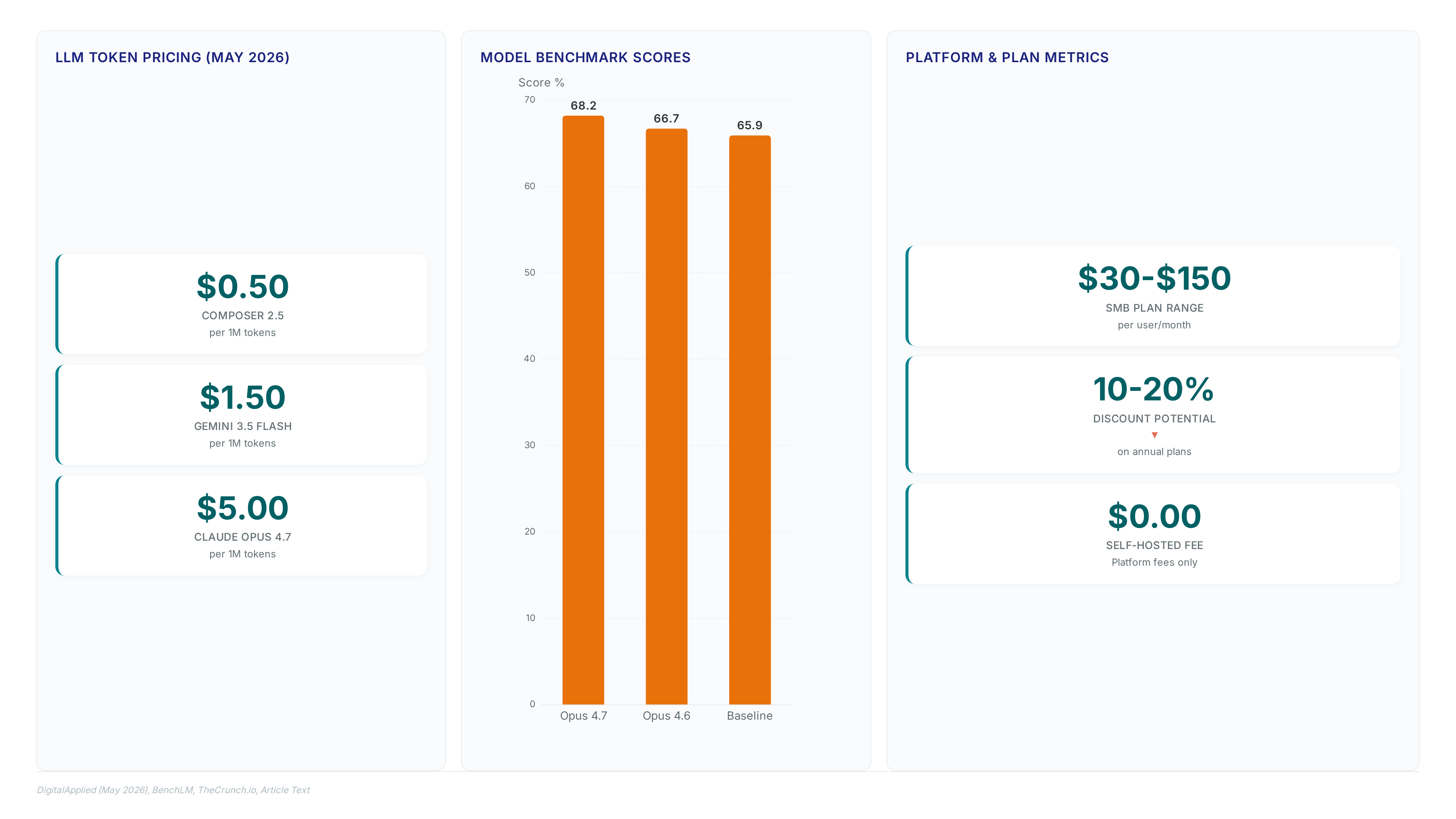
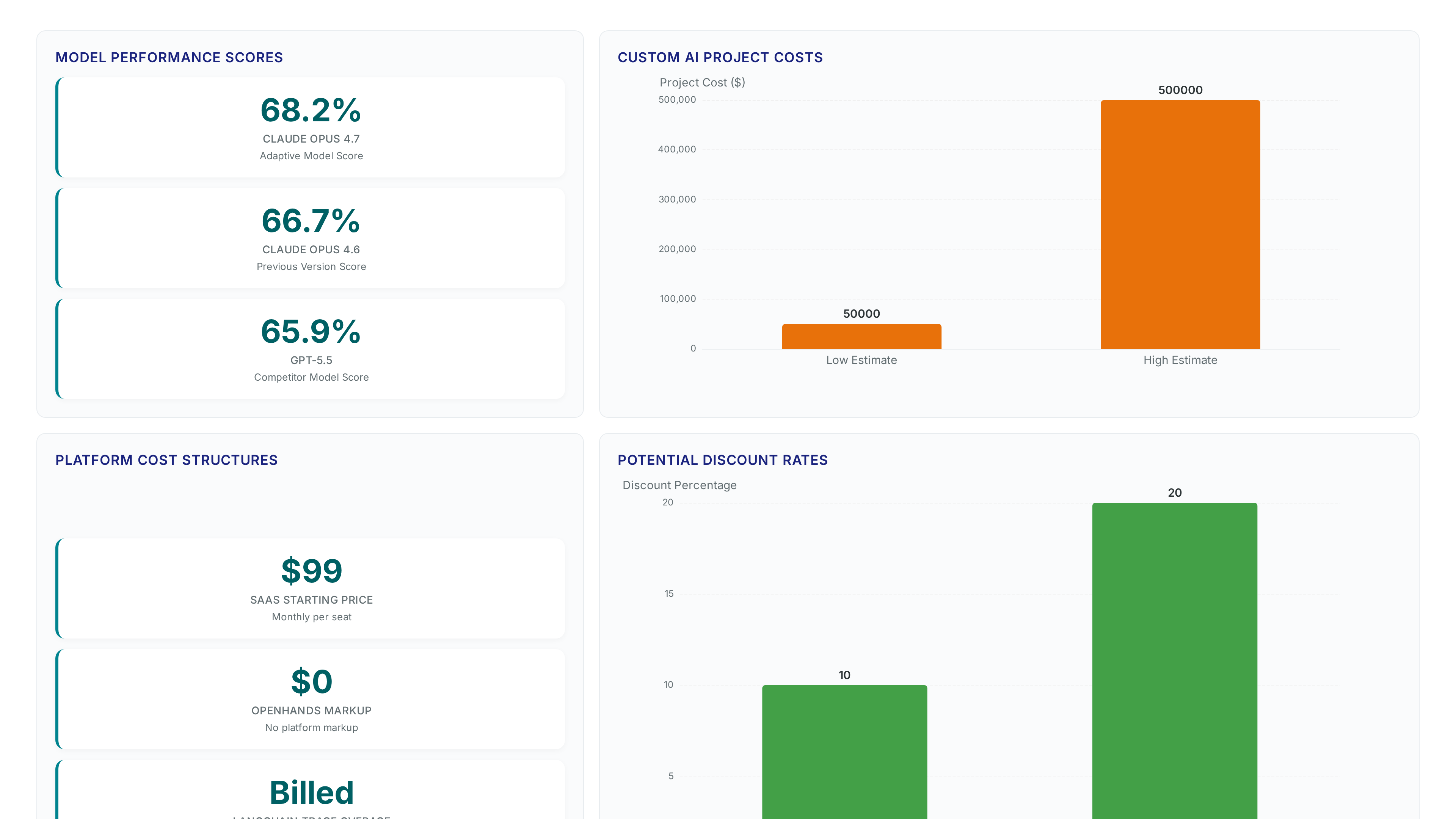
The operational trade-off is container orchestration complexity against full auditability of code generation trails, which is why the new default model belongs in a validation pass before mass rollout. OpenHands delivers a 53% SWE-bench Verified resolution rate, outperforming proprietary alternatives like Devin AI on standardized benchmarks. The cost efficiency gap widens when analyzing operational expenditures, with trivial tasks costing between $0.05 and $0.30 per run on frontier models. Complex engineering fixes typically range from $3.00 to $30 per task, offering substantial savings compared to per-seat licensing models used by competitors. In contrast, OpenHands enables deployment flexibility by running locally or on existing cloud infrastructure without vendor lock-in. Token pricing directly impacts total cost of ownership, with current benchmarks showing Opus 4.7 at $5/M tokens versus Gemini 3.5 Flash at $1.50/M tokens.
Why cloud-1.32.2 Ships MiniMax-M2.7 by Default
MiniMax-M2.7 Default Model Mechanism in cloud-1.32.2
Commit 1ada333 hardcodes MiniMax-M2.7 as the inference engine for release cloud-1.32.2, tagged by VascoSch92 on 21 May at 13:00. This mechanism functions through a LiteLLM-based provider layer that abstracts model endpoints, allowing the system to swap backends without altering the core agent logic. Operators can route requests to any supported LLM, including local models via Ollama, ensuring the default switch does not lock users into a single vendor. The change reduces latency for standard tasks but introduces a dependency on the MiniMax API availability, creating a single point of failure if fallback policies are not explicitly configured. Unlike cloud-only SaaS competitors, this architecture preserves local execution capabilities while optimizing the out-of-box experience.
- The default model change lowers the barrier to entry for new users.
- Existing deployments must pin versions to avoid unexpected behavior shifts.
- Cost monitoring becomes critical when scaling beyond proof-of-concept stages.
- Fallback mechanisms require manual configuration to ensure durability.
Operational Impact of MAX_ITERATIONS 100 and LLM_NUM_RETRIES 8
The default MAX_ITERATIONS ceiling of 100 combined with LLM_NUM_RETRIES set to 8 creates a bounded execution window that caps token burn for the new MiniMax-M2.7 model. This configuration prevents runaway costs during infinite loops but truncates complex debugging sessions before resolution if the agent enters a retry spiral. Operators observing trivial task costs can expect stable expenditure, yet multi-hour autonomous runs risk premature termination when hitting the iteration wall.
The interaction between retry logic and model latency introduces a specific tension in production environments. Setting LLM_RETRY_MAX_WAIT to 60 seconds alongside an aggressive retry count of 8 means a single flaky endpoint can stall an agent for eight minutes before failure is declared. This delay compounds across concurrent workflows, effectively reducing throughput despite the lower per-token cost of MiniMax-M2.7 compared to Opus 4.7 pricing tiers.
| Parameter | Default Value | Operational Consequence |
|---|---|---|
MAX_ITERATIONS |
100 | Hard cap on agent reasoning steps |
LLM_NUM_RETRIES |
8 | High tolerance for transient API errors |
LLM_RETRY_MAX_WAIT |
60s | Significant latency penalty on failures |
Teams processing over 100 million tokens monthly must tune these limits to avoid paying for stalled compute cycles. The BYOK model exposes raw API costs, making the difference between a $0.50 task and a $5.00 failure purely a function of configuration tuning. Reducing retries below 8 raises failure rates when transient API errors occur, while pushing MAX_ITERATIONS above 100 risks exponential cost growth if the agent enters a reasoning loop; most operators start from the defaults, tune against repository complexity, and validate the change in staging before production rollout.
Operationalizing AI Agents with Configurable Models
Implementing AI Agents via LiteLLM Provider Layer
Model switching survives the new default because the LiteLLM-based provider layer sits between the agent and every backend. This architecture routes inference requests to any backend, including local models via Ollama, without rewriting core agent logic. Operators gain immediate cost control by directing trivial tasks to cheaper endpoints while reserving premium tokens for complex reasoning. The mechanism functions by abstracting the API interface, allowing smooth transitions between Claude, GPT, and Gemini. However, relying on a single default creates a hidden dependency chain that risks outage propagation if the primary provider falters. Teams must configure explicit fallback policies to route traffic to secondary models during upstream failures. The OpenHands Index reveals significant performance variance across models, meaning a blind switch can degrade resolution rates on specific coding benchmarks for autonomous engineering tasks.
| Task Complexity | Recommended Model Tier | Latency Impact |
|---|---|---|
| Trivial Fixes | Low-Cost Local | Minimal |
| Complex Refactors | Frontier (e.g. Opus) | High |
| Security Scans | Mid-Range Specialist | Moderate |
Production teams should audit their provider_config so retry logic matches the latency profile of the new default: a misaligned timeout terminates the agent before it finishes its reasoning loop.
Managing Release Assets and Resolving Tagging Errors
Defining Release Asset Loading and Tagging Mechanics in cloud-1.32.2
Commit 1ada333 defines the cloud-1.32.2 release structure, yet the interface displays a generic failure message when asset metadata fails to parse.
- Confirm the build context against commit 1ada333 rather than against the rendered asset list.
- Recognize that the "Uh oh! " error indicates a client-side rendering issue rather than a missing binary, as the release explicitly contains 2 assets: clearing the browser cache and force-refreshing the page removes the stale asset metadata behind it.
- Validate the MiniMax-M2.7 default setting against your local configuration to prevent inference mismatches during agent initialization.
The critical implication for network engineers involves dependency verification; the global skills management features introduced in adjacent versions require explicit validation that the new default model supports all legacy hooks. Failure to audit this compatibility results in silent task failures where the agent accepts instructions but cannot execute standardized commands.
Overriding the Default Model in Legacy Workflows
Legacy workflows that must not move to the new engine need a manual override in config.toml.
- Locate the
[llm]section within your deployment manifest to access model parameters. - Set the
modelfield to your preferred identifier, such asclaude-3-5-sonnet, to bypass the new default. - Adjust
MAX_ITERATIONSif deeper reasoning chains are required beyond the standard limit. - Restart the agent service to apply the SDK settings schema changes effectively.
Verify that the chosen endpoint supports the required context window, and watch token consumption when deviating from the vendor-tested setup: a custom configuration bypasses the tuning applied to the standard release. LLM_NUM_RETRIES stays fixed at 8 across the model-agnostic architecture, whatever engine sits underneath.
About
Marcus Chen serves as Lead Agent Engineer at AI Agents News, where he specializes in evaluating the architecture and performance of autonomous coding platforms. His daily work involves rigorous testing of multi-agent orchestration and framework evolution, making him uniquely qualified to analyze OpenHands' latest release, cloud-1.32.2. As OpenHands transitions from its "OpenDevin" origins to become the most-starred open coding agent platform, understanding the strategic shift to the MiniMax-M2.7 default model is critical for engineers. Chen's experience shipping production systems allows him to dissect how this configuration change impacts tool use efficiency and function calling reliability. At AI Agents News, he bridges the gap between raw repository updates and practical engineering application, ensuring technical founders receive factual insights rather than hype. This update reflects the rapid iteration seen across the project's 186 contributors, a pace Chen tracks closely to inform the broader community about viable paths for building reliable agentic workflows.
Conclusion
A default model is a configuration decision that ships to everyone who did not pin a version. Commit 1ada333 makes MiniMax-M2.7 the engine an unpinned deployment inherits on upgrade, and the provider layer that makes this reversible only helps operators who wrote their overrides down.
Pin the release, declare the model explicitly in the [llm] section instead of inheriting it, and define the fallback chain before the primary endpoint is the thing that is down. Then read MAX_ITERATIONS and LLM_NUM_RETRIES as budget controls rather than defaults: audit the retry logs for runs that hit the iteration wall without closing a ticket, because those are the tasks paying full price for an unresolved result.
Frequently Asked Questions
Nothing errors. The deployment silently inherits MiniMax-M2.7 as its inference engine, because commit 1ada333 hardcodes the default instead of asking for one.
Yes. The LiteLLM-based provider layer routes inference to any backend, so setting the model field in the [llm] section of the deployment manifest bypasses the new default, and local models via Ollama remain available as fallbacks.
It caps how many reasoning steps a single task may consume, which bounds token burn when the agent enters a retry spiral. The same ceiling truncates a long debugging session before resolution, so the protection and the failure mode are one setting.
LLM_NUM_RETRIES is 8 and LLM_RETRY_MAX_WAIT is 60 seconds, so one flaky endpoint stalls the agent for the full span of both before failure is declared. Concurrent workflows multiply that stall into a throughput loss.
No. The release contains 2 assets, and the message is a client-side rendering failure over stale metadata that a cache clear and force-refresh resolve.