OpenHands Agents: Building Private Code Systems
OpenHands now commands 81.2k stars on GitHub, proving its dominance in AI-driven development. This article asserts that the platform has matured from an experimental repository into a critical modular architecture for building autonomous software agents. The sheer scale of this adoption is visible in the organization's 43 repositories, which collectively host a thriving system of tools for computer use and coding automation. While the main repository boasts 10.4k forks, the emergence of specialized projects like the software-agent-sdk with 908 stars indicates a shift toward structured, enterprise-grade agent construction. This growth is not merely about volume but reflects a community of nearly 500 contributors actively refining how machines interact with codebases.
That maturity shows up as a split rather than a single product: the main repository ships the full autonomous runtime, the software-agent-sdk exposes agent construction as a library, and agent-canvas handles the visual layer. A team can therefore adopt one component without running the whole platform, and pays for infrastructure and tokens instead of per-seat licenses.
The Role of OpenHands in Modern AI-Driven Development
OpenHands as an AI Software Engineer Platform
OpenHands functions as an autonomous AI software engineer capable of executing full development loops rather than simple code completion. This platform distinction matters because it shifts the operational model from assistant-based suggestions to agent-led task resolution within sandboxed environments. The core definition involves a system that plans, codes, tests, and deploys changes without constant human intervention. On standard evaluations like SWE-bench Verified, the framework resolves more than 53% of real-world issues when paired with capable models. This performance metric validates the shift toward autonomous agents that handle entire workflows instead of isolated syntax generation.
The system relies on an expanding community of contributors to maintain its open-source trajectory and modular integrity. Unlike proprietary assistants tied to specific large language models, this architecture supports model-agnostic deployment, preventing vendor lock-in for engineering teams.
| Feature | Traditional Assistant | OpenHands Agent |
|---|---|---|
| Execution Scope | Line completion | Full task loop |
| Deployment | Cloud-only | Self-hosted option |
| Model Access | Vendor locked | Agnostic |
A critical consideration remains the complexity of configuring secure sandbox environments. The platform supports deployment via Docker containers to ensure safety while enabling autonomous execution capabilities, and operators define their own boundaries for file access and network calls instead of accepting a fixed policy.
OpenHands Core Repositories Versus Modular SDKs
The main OpenHands repository delivers the full runtime environment for complex engineering tasks. In contrast, the software-agent-sdk provides a clean, modular interface specifically for building custom agents on OpenHands V1. This separation allows developers to import core logic without deploying the entire monolithic application.
| Component | Primary Language | Function |
|---|---|---|
| OpenHands | Python | Full autonomous runtime |
| software-agent-sdk | Python | Modular agent construction |
| agent-canvas | TypeScript | Visual workflow automation |
The strategic benefit lies in selecting the modular SDK for lightweight applications while reserving the full platform for thorough autonomous agents requiring full sandbox isolation. This architectural choice prevents resource bloat in production environments where only specific function calling or tool use is required.
The Agent Canvas and Its Deployment Boundaries
Embedding the Canvas in Docker, VMs, or OpenHands-Cloud
TypeScript powers the agent-canvas repository, a user interface layer that currently displays 199 stars and 89 forks under an MIT license. Operators apply this visual dashboard to track task execution progress and observe state transitions within active agents. Internal platforms often embed the underlying SDK directly, allowing external tools like Slack to trigger agent workflows without requiring a standalone IDE environment. This flexible design supports hybrid architectures where code executes inside Docker containers or on company-owned virtual machines. Organizations mandating strict data governance can deploy OpenHands-Cloud to keep all operations contained within private infrastructure boundaries. Separating the interface from the execution engine enables independent scaling, a necessary constraint for maintaining enterprise reliability. Custom automation workflows benefit notably from this isolation between user interaction layers and code execution environments.
Deploying Self-Hosted AI Agents with OpenHands CLI
OpenHands-CLI Binary and Agent Canvas Architecture
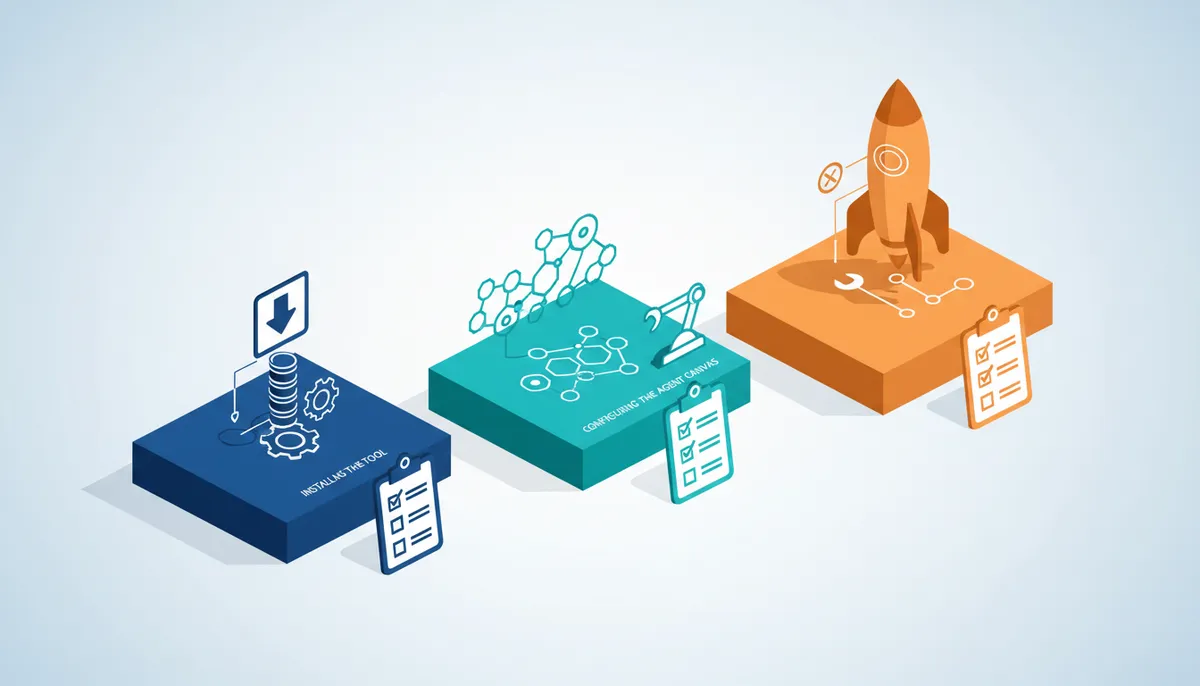
The OpenHands-CLI functions as a lightweight binary executable that initializes local agent runtimes without heavy container overhead. This Python-based tool serves as the primary entry point for engineers requiring direct terminal access to autonomous coding tasks. Deployment relies on linking this binary to the agent-canvas described above.
- Install the OpenHands-CLI binary to establish the execution environment.
- Configure the local instance to interface with the agent-canvas for visual workflow management.
- Initialize the software-agent-sdk within the canvas to define custom agent behaviors.
Operators using this architecture gain model agnosticism, allowing smooth switching between frontier models like Claude 4.5 and open-source alternatives without toolchain fragmentation. However, self-hosting introduces a maintenance burden where security patches for the underlying Docker runtime fall entirely on the infrastructure team. This trade-off ensures data sovereignty but requires rigorous internal update cycles to mitigate vulnerabilities in the sandboxed environment. The separation of the CLI binary from the canvas interface enables modular upgrades, yet version mismatching between the two components remains a frequent cause of connection failures during initial setup.
Building Modular Agents with software-agent-sdk
Engineers construct modular agents by importing the software-agent-sdk to define specific tool-use behaviors within OpenHands V1. This Python library provides the necessary abstraction layers for function calling without requiring deep knowledge of the underlying orchestration engine.
- Initialize the agent class using the SDK's base template to establish the execution context.
- Register custom tools via the decorator syntax to enable multi-agent coordination capabilities.
- Execute the agent loop through the local CLI binary to process tasks autonomously.
However, building custom agents introduces latency overhead compared to pre-configured binaries, as each modular component requires separate initialization cycles. This trade-off favors complex, multi-step engineering workflows over simple, single-shot code completions where speed is the only metric.
Strategic Advantages of OpenHands for Enterprise Automation
Defining the Bring-Your-Own-Key Infrastructure Model
Charging directly for infrastructure usage and LLM tokens separates agent execution costs from per-seat licensing structures. OpenHands ties expenses to actual resource consumption rather than adopting the fixed task allocation model seen in Devin or the per-seat approach of Copilot Workspace, which struggles with high-volume autonomous execution. Architectural flexibility allows teams to run agents in Docker containers or on VMs within company infrastructure, keeping code inside the corporate environment. This design shifts the operational burden to the customer, who must now manage cluster orchestration and token budgeting rather than relying on a managed service layer. Teams choosing this path gain granular control over data sovereignty but must invest in the necessary DevOps maturity to maintain uptime. Lower variable costs arrive in exchange for higher infrastructure management overhead, softened slightly by annual billing plans that frequently offer discounts between 10% and 20%. AI Agents News recommends this architecture for engineering teams that want to steer autonomous execution budgets directly and already run their own clusters.
Applying Spot Instances for 30-Minute Task Optimization
Aligning autonomous agent runtimes with spot instance billing increments helps organizations maximize efficiency. A typical task execution on self-hosted infrastructure averages around 30 minutes, allowing for precise cost calculations based on hourly rates. On H100 SXM5 hardware the two ends of that calculation are $0.80 per hour on spot instances and $4.21 per hour on demand, which is the whole economic argument in two numbers. This pricing structure fundamentally alters the feasibility threshold for high-volume autonomous workflows like PR reviews or vulnerability patches. Builders should choose self-hosted OpenHands cloud configurations when task volume renders per-seat licensing models prohibitively expensive compared to infrastructure-only costs. Managing potential preemption risks inherent to spot markets requires strong checkpointing mechanisms within the agent workflow.
About
Sofia Berg serves as Research Editor at AI Agents News, where she specializes in translating complex multi-agent research and benchmarking data into actionable insights for engineers. Her deep familiarity with evaluation frameworks like SWE-bench and the mechanics of autonomous coding agents makes her uniquely qualified to analyze the OpenHands platform. In her daily work, Berg rigorously assesses how agentic systems plan, execute tool use, and handle real-world software engineering tasks, directly aligning with OpenHands' core mission of AI-driven development. This article uses her expertise to provide a factual examination of the OpenHands GitHub organization, contextualizing its repository structure and community metrics without hype. By grounding the discussion in observable data and technical reality, Berg connects current open-source developments to the broader environment of autonomous agent frameworks. Readers gain a clear, unbiased understanding of the platform's status, supported by AI Agents News' commitment to accurate, builder-focused reporting on the tools shaping the future of software creation.
Conclusion
The modular split is what makes OpenHands adoptable in pieces: a team can import the SDK, run the CLI, or deploy the full sandboxed runtime, and take on only the operations it can actually support. That choice moves the primary variable from licensed seats to the cost of keeping GPU capacity and sandboxes running. Teams lacking reliable DevOps pipelines will find the complexity of managing spot instance preemption outweighs the potential savings against on-demand rates. This architecture favors organizations prepared to engineer durability into their agent workflows rather than those seeking immediate turnkey solutions.
Adopt self-hosted OpenHands deployments only if your team can implement automated checkpointing to handle hardware interruptions without data loss. For groups without established cluster management protocols, the risk of workflow failure exceeds the financial benefit of variable pricing. The transition requires a deliberate investment in orchestration logic before scaling to high-volume issue resolution.
Frequently Asked Questions
The main repository delivers the full runtime for end-to-end autonomous tasks, while the software-agent-sdk is a modular Python interface for building custom agents on OpenHands V1. Teams import the SDK when they want agent construction without deploying the entire application.
The axis changes rather than the price: OpenHands bills infrastructure and LLM tokens instead of seats. On H100 SXM5 the range runs from $0.80 per hour on spot instances to $4.21 per hour on demand, so the saving depends on whether the workflow survives preemption.
The platform executes full development loops rather than just suggesting isolated code completions. It resolves more than 53% of real-world GitHub issues when paired with strong models, validating its autonomous capabilities.
The split into separate repositories: the SDK ships on its own with 908 stars next to the 81.2k-star runtime, and nearly 500 contributors keep both moving. Momentum here means components a team can adopt one at a time rather than a single monolithic release.
The architecture supports model-agnostic deployment to prevent vendor lock-in for engineering teams. This approach allows organizations to avoid being tied to specific large language models while maintaining secure sandboxed environments.
References