Cursor acquisition by SpaceX shifts AI coding market
SpaceX's $60 billion acquisition of Cursor proves AI coding tools have shifted from niche utilities to geopolitical assets. This deal marks the definitive end of the open market for developer intelligence, consolidating autonomous agents under the control of defense-adjacent giants while global regulators scramble to impose order.
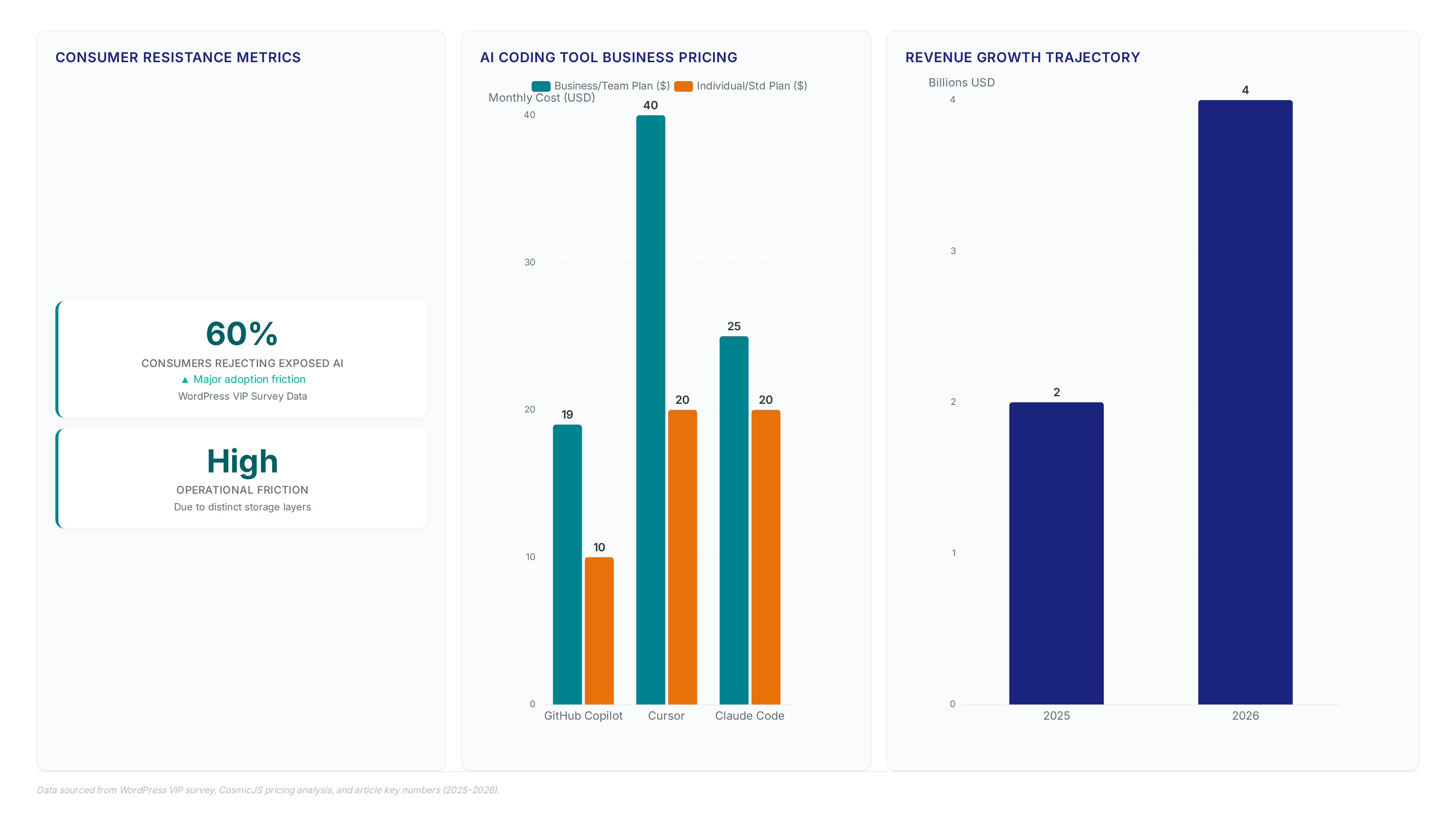
The math is unforgiving. This market consolidation forces a brutal recalibration of enterprise strategy, where access to open-weight models is increasingly dictated by export controls rather than technical merit. As SpaceX absorbs Anysphere, the remaining independent players face an existential squeeze. Claude Code and GitHub Copilot are already eroding Cursor's dominance, cutting its market share from 41% to 26% despite explosive revenue growth to $4 billion, according to CNBC and TechCrunch.
The G7's recent diplomatic pressure on export control disputes is directly impacting model availability. We are seeing this play out in real-time with the ongoing outage of Fable 5 and Mythos 5. Simultaneously, new pricing realities for enterprise AI are emerging as the industry pivots from simple autocomplete to fully autonomous reasoning engines that require space-grade infrastructure.
What the $60 Billion Cursor Acquisition Changes for Buyers
SpaceX $60 Billion All-Stock Acquisition of Anysphere
On June 16, SpaceX filed an SEC Form 8-K to formalize its all-stock acquisition of Anysphere at an implied equity value of $60 billion. The math behind the premium is stark: the deal values the Cursor platform at roughly 15 times its current annualized run rate. This multiple reflects a revenue trajectory that jumped from $1 million to over $4 billion in less than two years.
There is no cash exit here. Each existing share converts directly to SpaceX Class A common stock. This mechanism tightly couples the former startup's valuation to the aerospace giant's public market performance following its recent IPO. Regulatory approvals must clear before the deal officially closes in Q3 2026.
Analysts at AI Agents News note that vertical integration of development tools with infrastructure providers creates significant barriers to entry for new firms. The 15 times multiple sets a new benchmark for valuing vertical AI applications with proven enterprise traction. However, reliance on a single parent company's stock price introduces volatility not present in traditional cash exits. Operators must now assess vendor stability based on aerospace market dynamics alongside software delivery metrics.
Cursor Native IDE vs GitHub Copilot Extension Architecture
Architecture dictates capability. Cursor operates as a native VS Code fork with deep local indexing, contrasting sharply with GitHub Copilot's extension-based model. This divergence defines data access scope. Cursor's native integration allows direct traversal of the entire codebase for autonomous multi-file edits, whereas the Copilot extension relies on active document context and chat history. This depth supports complex refactoring tasks that extension boundaries typically restrict. Developers requiring full-project awareness favor the native approach for its ability to reason across file systems without manual context loading.
Pricing structures reflect these capability differences. The affordable Business tier targets organizations needing the advanced indexing found in Cursor Pro. Conversely, GitHub Copilot remains the mass-market standard at a modest monthly fee, using its ubiquity rather than depth. Enterprises must weigh the cost of the native IDE against the marginal utility of extension-limited autocomplete.
Model selection further separates the platforms. Teams debating open-weight versus proprietary models find Cursor supports flexible backend configurations, while Copilot locks users into Microsoft's proprietary stack. With 84% of developers now using AI tools, the choice often hinges on whether an organization prioritizes integration depth or system compatibility. The native fork demands a full IDE migration, a barrier some teams cannot clear despite the functional advantages.
AI coding tool pricing spans from GitHub Copilot's low-cost entry tier to Grok Build's high-priced premium outlier status. The broader market is projected to triple from $4.7 billion to $14.6 billion by 2033, driven by the shift toward autonomous agents. This expansion forces operators to choose between mass-market autocomplete and expensive, specialized reasoning engines. The cost disparity creates a segmentation risk where mid-tier firms cannot justify the premium for marginal gains over standard tools. Cursor occupies the critical middle ground, offering native IDE capabilities at a fraction of the enterprise cost. The implication for network architects is clear: budget allocation must align with the specific autonomous agent depth required, as paying for premium tiers without full-stack dependency needs yields diminishing returns. This stratification ensures that while basic assistance becomes ubiquitous, high-end reasoning remains a costly, niche utility.
Global AI Governance Mechanisms and Export Control Disputes Restricting Model Access
G7 AI Working Lunch Voluntary Commitments Scope
Leaders from OpenAI, Anthropic, and Google DeepMind sat beside G7 heads of state in Evian-les-Bains for a dedicated AI working lunch. This gathering marked a structural pivot from unilateral national policies to multilateral voluntary commitments, specifically targeting youth safety and frontier model risks. Sam Altman attended at the personal invitation of French President Macron, prioritizing the protection of children online from AI-generated content above other agenda items.
The resulting framework mirrors the 2023 White House accord but extends enforcement expectations across seven substantial economies rather than a single jurisdiction. Private sector buy-in is now a prerequisite for international tech policy given the attendance by these specific CEOs. The agreement notably omitted binding data center sustainability targets due to US concerns about constraining domestic infrastructure growth. Energy consumption remains an unregulated variable in the global AI supply chain because of this gap. Operators must now navigate a patchwork where safety pledges are global, but power constraints remain local. These voluntary pacts create a compliance gap for enterprises relying on cross-border model deployment. While model flexibility allows switching between providers like GPT-5.4 or Claude Opus 4.6, governance rules may soon fragment access based on geographic origin.
| Feature | GitHub Copilot Business | Cursor Business |
|---|---|---|
| Price Point | $19/seat | $40/seat |
| Governance | Established IP indemnity | Advanced RBAC/SSO |
| Track Record | High | Emerging |
Data indicates that enterprise features in newer platforms lack the long-term compliance history of incumbent tools. Treat these voluntary commitments as leading indicators for future mandatory export controls on specific model weights.
US Commerce Department Export Control Directive Impact on Fable 5
Claude Fable 5 and Mythos 5 remain globally offline on Day 6 of the US Commerce Department's export control directive, creating an immediate blockage for teams relying on frontier models within integrated development environments. The mechanism of failure is a hard stop at the API gateway, preventing any token generation regardless of the user's geographic location or enterprise licensing status. This outage persists because the directive automatically flags specific model weights as controlled dual-use technology, requiring a manual license review that has not yet occurred. Operational continuity fractures as organizations cannot simply switch providers without re-architecting their workflows.
Government Crackdowns Versus Capability Advancement Reality
Regulatory directives function as temporal friction rather than absolute barriers to model proliferation. Canadian PM Carney cited Fable 5 as evidence of over-reliance while confirming a "good flow of information" between Ottawa and Washington, yet this diplomatic coordination fails to address the fundamental leakage of weights. Wired argues that "dangerous" models are "coming no matter what," implying that export controls merely delay rather than prevent capability diffusion. Open-weight releases bypass API gateways entirely, rendering geographic IP blocks ineffective against local inference. The limitation of current governance is its focus on centralized providers while ignoring decentralized distribution.
| Deployment Mode | Cost Driver | Governance Risk |
|---|---|---|
| Commercial API | Token consumption | Vendor lock-in |
| Open-Weight Local | Compute infrastructure | Maintenance overhead |
Adopting pay-as-you-go AI services suits variable workloads, yet fixed-fee models remain preferable for predictable, high-volume agents. Microsoft's shift to bill customers per-use for new AI agent capabilities targets enterprises avoiding large upfront license upgrades. Local deployment of GLM-5.2 eliminates variable costs entirely, shifting the burden to internal hardware capacity planning. Operators exchange predictable licensing fees for the complexity of managing inference infrastructure. Reserve commercial APIs for burst capacity while migrating steady-state long-context workloads to local clusters.
Navigating Microsoft's Shift to Pay-As-You-Go AI Agent Pricing
Microsoft alters billing for the first time in two decades, shifting enterprises from fixed licenses to per-use charges for new AI agent capabilities. This consumption-based model targets organizations seeking automation without large upfront upgrades, yet it introduces unpredictable cost variance compared to traditional SaaS. Such variance makes long-term budgeting difficult when workload patterns fluctuate unexpectedly. Agent workloads follow erratic consumption curves that defy historical forecasting, unlike standard software subscriptions. Teams must evaluate whether to adopt pay-as-you-go services or retain fixed seats based on task predictability. Flexibility comes at the expense of financial certainty. Operators should implement strict token limits and monitoring before enabling broad agent access. A few unfocused model calls can deplete monthly budgets instantly without caps. Treat agent pricing as a variable infrastructure cost rather than a fixed software line item.
Overcoming Data Pipeline Bottlenecks and Consumer Resistance in AI Agent Deployments
Databricks Unified Database Approach to AI Bottlenecks
Consolidation and export policy decide which models a team may run; the data layer decides whether those models get usable context. Databricks eliminates the latency penalty of synchronizing separate operational and analytical databases for production AI agents. Maintaining distinct storage layers forces complex ETL pipelines that delay context availability when agents require real-time transactional data alongside historical analytics. By unifying these workloads, the platform allows agents to query a single source of truth without moving data between silos. This architectural shift directly addresses the infrastructure friction slowing enterprise transitions from proof-of-concept to full-scale deployment. Operators implementing this unified model must still navigate the computational demands of persistent agent sessions.
WordPress VIP survey data shows 60% of US consumers reject exposed AI messaging in brand communications, creating immediate adoption friction for enterprise agents. This resistance forces operators to engineer stealth layers that automate tasks without revealing the synthetic origin of the output. The technical mechanism involves masking agent-generated responses behind human-verified interfaces or generic API endpoints to preserve trust. However, hiding the toolchain introduces verification debt, where rapid code generation outpaces human review and creates latent security risks if not managed with automated testing agents.
- Configure output filters to strip synthetic markers from customer-facing logs before ingestion.
- Route high-sensitivity transactions through human-in-the-loop approval gates regardless of confidence scores.
- Deploy sandboxed execution environments to prevent unverified agent commands from reaching production systems.
The limitation is that sandboxed execution adds latency, potentially degrading the real-time performance users expect from modern applications. Enterprises must balance the brand safety gained by hiding AI against the operational drag of added safety checks. Ignoring this sentiment risk leads to user churn quicker than technical bottlenecks ever could.
Steps for Multinational AI Compliance Frameworks
Establishing multinational AI compliance requires unifying data pipelines under frameworks like Databricks to eliminate latency between operational and analytical stores.
- Unify Data Layers: Merge transactional and historical databases to prevent context starvation during long-running agent sessions, addressing the decades-old friction slowing production adoption.
- Audit Enterprise Governance: Select tools offering SAML/OIDC SSO and advanced RBAC controls.
- Enforce Sandboxed Execution: Mandate isolated runtime environments for all agent actions to prevent unauthorized system modifications during complex reasoning tasks.
Isolation costs latency, so the risk profile of each deployment decides how much of it a real-time loop can absorb. Verification debt builds up in the same place: code generation outpaces human review capacity, hidden vulnerabilities accumulate, and remediation costs land later in the lifecycle. Automated review agents are the cheapest way to close that gap before regulatory audits arrive.
About
Diego Alvarez serves as Developer Advocate at AI Agents News, where he specializes in hands-on build guides and rigorous benchmarking of coding agents. This specific expertise makes him uniquely qualified to analyze the monumental acquisition of Cursor by SpaceX, a deal that fundamentally reshapes the environment for autonomous development tools. His direct experience orchestrating multi-agent systems allows him to contextualize how this acquisition impacts the broader system of frameworks like CrewAI and LangGraph. By connecting high-level corporate strategy to the nitty-gritty realities of engineering workflows, Diego bridges the gap between industry-shaking news and actionable technical understanding for the software engineers who will ultimately build the future of AI-driven code.
Conclusion
Consolidation changed what a buyer is actually choosing. With Cursor inside SpaceX and Fable 5 held offline by an export directive no customer can appeal, model access now travels with corporate ownership and trade policy rather than with benchmark results. Cursor's own slide from 41% to 26% share while revenue grew to $4 billion shows how fast that ground moves. The second cost lands inside the pipeline: verification debt accumulates quicker than human review capacity can manage, and sandboxing alone does not clear it.
Answer consolidation with portability: keep a second, independently licensed model path validated in CI, and treat these tools as high-risk infrastructure rather than productivity boosters by Q3 2026. Do not wait for regulatory mandates to dictate your security posture. Instead, mandate automated review agents for every pull request before adopting higher-tier autonomous features. This specific architectural shift prevents the compounding remediation costs that plague teams who prioritize velocity over validation.
Start by auditing your current CI/CD pipeline this week to identify where human review bottlenecks exist against current generation rates. Implement a strict rule requiring automated semantic analysis for all AI-generated code blocks before they merge into the main branch. This immediate constraint ensures that your governance framework scales alongside your development velocity, securing the foundation ahead of full agent autonomy.
Frequently Asked Questions
SpaceX structured the deal as an all-stock transaction converting each existing share to SpaceX Class A common stock. Regulatory approvals must clear before the deal officially closes in Q3 2026.
Both models remain offline due to a US Commerce Department export control directive facing G7 diplomatic pressure. The directive flags specific model weights as controlled dual-use technology, and the manual license review it requires has not yet occurred.
Local deployment of GLM-5.2 eliminates variable token costs, shifting the burden to internal hardware capacity planning. Reserve commercial APIs for burst capacity and migrate steady-state long-context workloads to local clusters.
Despite revenue hitting $4 billion, Cursor's market share declined from 41% to 26% due to competition. Claude Code, GitHub Copilot, and Codex are intensifying pressure on the newly acquired platform.
Cursor Business costs $40 per user monthly while GitHub Copilot Business is priced at $19 per seat. Teams must weigh native IDE depth against extension-based ubiquity when selecting tools.