Agent tools: Why 53 functions beat raw model size
The API-Bank benchmark tests tool-use proficiency across exactly 53 distinct common tools. Breadth of tool access, not parameter count, is what that number measures, and the tools that decide an agent's utility sit on the backend: extractors that hand the model parsed markdown instead of raw HTML, and connectors that absorb OAuth handshakes before the prompt is ever built.
True autonomy demands more than a chat interface. An LLM agent is a modular system designed to think, remember, and act through four core components: the agent core, memory module, tools, and planning logic. While models handle ambiguity, the tools component dictates actual utility.
The Role of Specialized Tooling in Self-Hosted Agent Architectures
Defining Letta Integration and Haystack MCP Architecture
Letta integration operates as a backend orchestrator exposing self-hosted agents as OpenAI-compatible endpoints for direct user interface consumption. This architecture decouples agent logic from the presentation layer, enabling systems like Open WebUI to stream timestamped reasoning blocks without tight coupling to the orchestration engine. The design avoids routing every request through a central controller by using Haystack MCP to standardize tool exposure across diverse clients. Connectors, including Github and Notion extractors, function via OpenAPI specifications served through Hayhooks. Claude Code and Open WebUI access identical toolsets without requiring native Letta dependencies. Immediate propagation defines the structural advantage: every extra integration added to the backend becomes instantly available to all connected clients. Such a modular approach shifts the architectural pattern from monolithic single-model solutions toward distributed coordination where inference speed and component integration are paramount.
The framework supports complex integrations where authentication handling remains transparent on the backend. Content routing occurs for sources like Github, Notion, and Google services while staying invisible to the agent.
Applying Extract vs Excerpt Tools for Context Retrieval
Raw content returns directly via the extract tool, whereas excerpt routes data through a cheap long-context summarization LLM. This architectural split defines the definition of content extraction for self-hosted agents, determining whether an agent processes full fidelity text or a condensed summary. When an agent targets private Github issues or Notion URLs, the extract function retrieves the complete payload for deep analysis. Applying excerpt to Youtube transcripts allows the system to bypass verbose audio logs, returning only the semantic tokens. The content extraction layer acts as final routing logic, handling authentication transparently before the LLM ever sees the prompt. Direct extraction preserves nuance for code review but overwhelms context windows during broad searches. Unfinished drafts or private code repositories benefit from extract, while excerpt cuts through long videos with minimal content, asking the tool to provide a summary. Token consumption and latency in production environments depend directly on this selection. The choice between raw return and summarization dictates the agent's effective reasoning depth per dollar spent.
Vibe Coding Workflows: Cline and Claude Code vs Manual Tooling
Developers use natural language directives to drive code generation and tool assembly through vibe coding. Experiments with Cline and Claude Code demonstrate rapid scaffolding of integrations, such as syncing Zotero assets to SQLite without manual query logic. This approach contrasts sharply with traditional manual tooling, where every connector requires explicit implementation before an agent can apply it.
Development velocity creates tension with architectural stability. Vibe coding reduces the time to initial function, yet resulting agents remain bound by the tool implementation constraint, preventing fully flexible creation of novel software components during runtime. Builders must still manually engineer strong fallbacks and authentication flows because autonomous agents cannot yet independently resolve missing API specifications or complex OAuth handshakes. Self-hosted agent architectures therefore require a hybrid workflow: using generative aids for speed while retaining human oversight for critical backend integrations.
Internal Mechanics of Content Routing and Backend Connectors
Backend Routing for YouTube Transcripts and Private Repos
Silent handshakes occur behind the scenes when a search agent resolves content requests by routing URLs to specific backend extractors that handle authentication transparently. This mechanism acts as "the last mile of context," demanding a system that delivers parsed markdown to the agent instead of raw HTML or access errors. When a user provides a YouTube link, the system invokes the youtube-transcript-api to retrieve transcript data, falling back to Google's Data API if the primary method fails. Private GitHub repositories and Notion pages similarly require the backend to manage OAuth tokens and session headers before content reaches the large language model.
Complexity shifts to the infrastructure layer when integrations like pyzotero lack native search functions, forcing developers to sync internal SQLite databases to match URLs with assets. Missing token refresh logic within this architecture can abruptly terminate sessions. Reliability for content routing depends entirely on the strength of these silent backend handshakes rather than the model's reasoning capabilities. Debugging authentication failures remains opaque and time-consuming without rigorous observability across the chain from Letta to Open WebUI.
Deploying Zotero and Notion Connectors via Hayhooks
Hayhooks exposes backend integrations to clients like Open WebUI without Letta mediation. The Zotero connector uses pyzotero for library access, though the underlying API lacks native search functionality. Builders often sync an internal sqlite database with a mongodb query system to resolve this limitation, matching URLs and DOIs to existing assets for direct markdown retrieval. The Notion integration derives from Haystack's extractor, enabling agents to read private design documents while switching between coding environments.
External guides demonstrate combining search utilities with custom tools, while the Hayhooks model centralizes logic on the backend. Server-side complexity increases as a result; operators must manage authentication flows and database synchronization manually. Credential sprawl across multiple client configurations is prevented by this centralization. Builders gain a unified interface for diverse data sources, though they bear the burden of maintaining connector stability as upstream APIs evolve.
Implementing Secure Backend Integrations for Calendar and Knowledge Bases
Deployment Sequence: Serving Connectors to Clients
- Deploy Hayhooks to serve OpenAPI endpoints for specific connectors like Notion or GitHub.
- Configure MCP servers to expose these tools to the agent orchestration layer.
- Connect clients directly to the Hayhooks endpoint, bypassing intermediate proxy logic.

Simplifying client configuration comes at a price: the system runs on pre-set connectors rather than runtime generation. Builders gain immediate interoperability across the agent system but must maintain the underlying connector codebase manually.
Risks of Pre-Implemented Tool Dependencies in Agent Workflows
Autonomous agents cannot dynamically generate software components because tools must be implemented in advance by human developers. This architectural constraint forces engineering teams to manually code every integration, such as the complex OAuth 2 flows required for Google Calendar, before an agent can apply them. Research confirms this limitation prevents fully flexible tool creation, requiring explicit developer intervention for each new capability.
The reliance on pre-set functions introduces specific considerations for production systems:
- Authentication flows involve complex setups, such as OAuth 2, which can be tricky to configure initially.
- Functionality gaps appear when underlying APIs lack features, requiring custom database layers to bridge the difference.
- Fallback mechanisms are necessary when primary methods, like transcript APIs, fail to retrieve content.
| Dependency Type | Failure Mode | Mitigation Strategy |
|---|---|---|
| OAuth Providers | Complex initial setup | Careful configuration of credentials |
| API Schemas | Missing search functionality | Build custom database indexes |
| Network Rules | Primary API failure | Implement fallback to secondary APIs |
Current agent autonomy remains bounded by the breadth of the pre-written library. The system design emphasizes transparent handling of authentication and content routing on the backend rather than expecting agents to self-repair missing code.
Operational Risks and Observability Strategies for Production Agents
Defining Agent Observability Gaps Across LiteLLM and Hayhooks
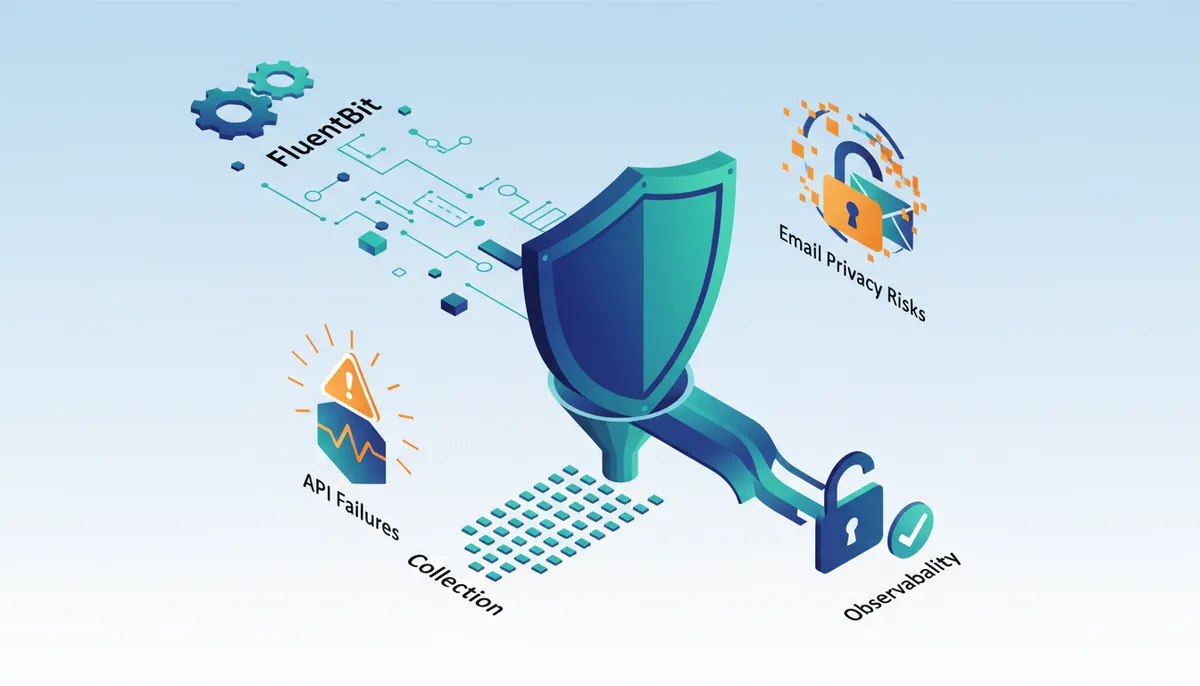
Separating internal logic faults from external API endpoint breakdowns stands as the toughest diagnostic challenge in distributed agent stacks. Developers often blame local code defects for latency spikes or null returns in LiteLLM or Hayhooks when upstream service degradation is the true culprit. Studies show that while tools turn Large Language Models into powerful agents, these implementations frequently lack the transparency needed to isolate such boundary conditions. Orchestration layers frequently swallow HTTP status codes, creating a uniform error surface that hides the root cause. A single request passing through Open WebUI alongside Letta crosses multiple network boundaries, each introducing distinct failure modes.
- Silent REST API timeouts mask upstream throttling events.
- Ambiguous error payloads arrive from Gemini or Anthropic services.
- Correlation IDs disappear across microservice boundaries.
Debugging sessions expand exponentially when engineers chase phantom bugs in application logic that are actually transient network partitions. Production readiness demands that every tool invocation emits traceable metadata. External model providers function as unreliable network dependencies rather than local function calls. Strict contract definitions on error outputs prevent the conflation of infrastructure noise with software defects.
Privacy Risks of Long-Lived Access Tokens in Production Agents
The same backend that hides an OAuth handshake from the agent also hides how much that token still opens. Access tokens retaining validity indefinitely allow historical data retrieval long after the initial authorization context expires, so a connector granted once to a private repository, a Notion workspace, or a Google Calendar keeps reading it. A system referencing private material without explicit prompting crosses a boundary from utility to violation. Research into complex task management indicates that orchestrating such sensitive data flows requires strict controller logic to prevent unauthorized model selection or data exposure. Hidden liabilities within this architecture often escape standard observability stacks.
- Persistent token validity enables retroactive data mining long after the task that needed it.
- Lack of refresh limits prevents automatic expiration of sensitive access scopes.
- Context leakage occurs when agents summarize private documents without user oversight.
Limiting token scope introduces a functional constraint: agents cannot answer queries about events outside the granted time window. Developers fixing API failures in agent tools struggle to determine if a null result stems from a permission error or genuine data absence. Default configurations for connectors that reach personal data must enforce short-lived tokens and explicit scope narrowing. Relying on standard OAuth flows without additional temporal constraints exposes systems to significant privacy risk, so extended historical access should require re-authentication rather than assuming perpetual read rights.
Standardizing Error Responses with RFC 7807 for Agent Tools
Adopting RFC 7807 eliminates ambiguity when distinguishing between local logic faults and remote API endpoint failures. The mechanism relies on structured type and detail fields to convey machine-readable failure contexts that raw HTTP status codes cannot provide. Strict schema enforcement across all tool definitions is required for implementation. Legacy integrations often lack native support for problem-detail objects, forcing developers to wrap responses manually.
- Hidden Cost: Uniform error surfaces increase mean-time-to-resolution by obscuring the failure domain.
- Operational Risk: Unstructured logs prevent automated alerting on specific upstream degradation patterns.
- Deployment Constraint: Instrumentation via fluentbit must parse JSON bodies before aggregation to HyperDX.
An agent receiving a 503 without a problem-detail payload cannot differentiate a transient network blip from a permanent capability gap. Unnecessary retry loops exhaust context windows as a result. Developers should prioritize standardized error schemas so observability pipelines capture the precise failure mode rather than a generic exception trace.
About
Sofia Berg, Research Editor at AI Agents News, specializes in translating complex multi-agent research and benchmarking data into actionable insights for engineering teams. Her daily work involves rigorously evaluating agentic frameworks and tool-use patterns, making her uniquely qualified to analyze the practical utility of LLM agent tools. In this article, Berg dissects the mechanics of building self-hosted agents, drawing directly from her ongoing assessment of open-source orchestration systems. Her expertise allows her to separate genuine architectural improvements from marketing hype, focusing on how specific integrations impact agent reliability and tool invocation. As AI Agents News continues to cover the evolving environment of autonomous systems, Berg's analysis provides the technical depth required by builders navigating framework selection and implementation strategies. This piece reflects our commitment to grounding discussions in empirical evidence rather than speculation, ensuring readers understand the real-world constraints and capabilities of current agent architectures.
Conclusion
Tool breadth, not model size, sets the ceiling on what a self-hosted agent can do, and the API-Bank benchmark is what turns that claim into a number. Everything else in this stack exists to keep those tools usable: Hayhooks exposing connectors over MCP and OpenAPI so one new integration reaches Claude Code and Open WebUI at once, the extract and excerpt split deciding whether the model receives a verbatim payload or a cheap summary, and backend extractors absorbing OAuth handshakes so the agent sees parsed markdown instead of an access error.
The same architecture draws the boundary. Tools must be implemented in advance by human developers, so autonomy stays bounded by the breadth of the pre-written library; vibe coding shortens the time to a first working connector but does not remove that requirement. Missing token refresh logic ends sessions quietly, and a tool that returns a bare 503 instead of a structured problem-detail object leaves an operator unable to tell a local fault from an upstream outage.
So count what your agent can actually call, and check which of those calls fail in a way you can act on. That count, not the parameter count of the model behind it, is the honest predictor of what the agent will finish.
Frequently Asked Questions
Human developers must currently implement all tool functions manually. Research confirms that tools require human creation rather than autonomous generation, meaning you cannot yet expect an agent to independently build new connectors for your specific backend systems.
This benchmark tests proficiency across exactly 53 distinct common tools. Using this metric helps you verify if a self-hosted agent possesses the necessary breadth of tool access to handle complex, multi-step tasks effectively in production environments.
Choose extract when you need full fidelity text for deep analysis. Unlike excerpt, which summarizes content to save tokens, extract retrieves complete payloads from private GitHub issues or Notion URLs to preserve critical nuance for your agent.
Every new integration added to the backend becomes instantly available to all clients. This immediate propagation means you do not need to reconfigure Claude Code or Open WebUI separately when expanding your agent's toolset capabilities.
Vibe coding workflows can scaffold integrations like syncing Zotero assets to SQLite. However, since tools generally require human implementation, you must still direct these AI assistants to write the specific query logic needed for your database.
References