Coding agents: stop confusing IDE helpers with real autonomy
Terminal-Bench 2.1 shows Codex on GPT-5.5 hitting 83.4%, yet most comparisons ignore the architectural gaps killing production performance.
Listicles love to lump editor assistants, autonomous agents, and orchestration layers into a single bucket. They shouldn't. These tools solve fundamentally different problems. Evaluating an IDE plugin against a repository-level agent like Claude Code or Cursor creates a false equivalence that obscures critical differences in context depth and autonomy ceilings. While SWE-bench Verified scores now exceed 80%, a February 2026 test revealed that scaffolding choices caused a 17-issue performance gap across identical models, proving infrastructure matters as much as the underlying intelligence.
The taxonomy that matters is not the vendor list but two axes: how far a tool runs before it needs a human, and how much of the business goal it can see. An inline helper and a system that manages sandboxed execution environments sit at opposite ends of both, which is why production-ready workflows start by placing your own lifecycle position on that map rather than on a leaderboard.
Defining the Shift from IDE Assistants to Autonomous Agents
Defining AI Coding Agents by Autonomy Ceiling and Context Depth
An AI coding agent finishes whole jobs without hand-holding, skipping the single-line hints typical of older tools. Traditional IDE helpers stick to inline edits, while these newer systems run terminal commands, shuffle files, and manage multi-step workflows alone. Two numbers define the gap: autonomy ceiling, tracking how far a tool runs before needing a human nudge, and context depth, determining if the system sees just local code or the full business goal driving the task.
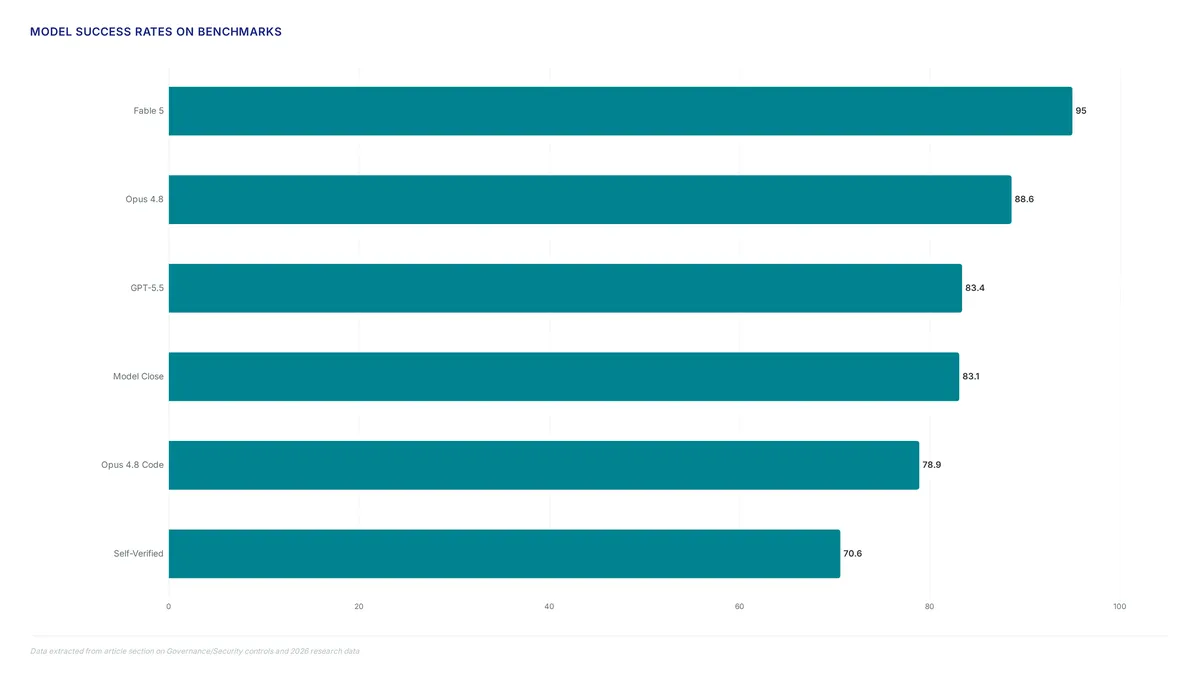
Architecture performs the actual labor, regardless of the specific model underneath. A February 2026 test revealed that three frameworks using the identical model still showed a score difference of 17 issues across 731 problems. Specific implementations prove this shift exists; Claude Code using the Fable 5 model follows closely with an 83.1% score on Terminal-Bench 2.1. This capability shifts the developer role from writer to reviewer across entire repositories.
Increased autonomy brings governance headaches that passive assistants never created. Tools like GitHub Copilot offer medium autonomy suitable for teams new to AI, whereas solutions like Codegen provide high autonomy with strict governance layers for production. Selecting a tool requires matching the autonomy ceiling to organizational readiness. Teams prioritizing deep reasoning often select Claude Code, while those needing IDE-native speed may prefer Cursor. The operational consequence is clear: the market has segmented into distinct deployment styles, including local IDE-attached agents, CLI-native agents, and cloud-hosted agents in sandboxes, reflecting the maturity of the 2026 environment.
Applying MCP and Agent Scaffolding in Production Workflows
Model Context Protocol (MCP) standardizes how agents access external tools, moving beyond simple code generation to verified execution. This protocol enables agent scaffolding to manage the handshake between language models and sandboxed environments, keeping autonomous actions inside defined safety boundaries. Performance data confirms that architecture dictates reliability as much as model size; benchmark results show significant variance based on the specific model version employed, such as Claude Code running on the Opus 4.8 model achieving an 88.6% score on SWE-bench Verified.
Consequently, production readiness depends on selecting a framework where the orchestration layer coordinates multiple agents and manages sandboxed execution environments. Teams must distinguish between IDE assistants that suggest code and autonomous systems capable of submitting merged pull requests without human intervention. Evaluating agents requires testing their ability to handle multi-step tasks autonomously while maintaining strict adherence to repository rules. For detailed comparisons of tool capabilities, review the autonomous execution metrics across leading platforms. Successful deployment means shifting focus from prompt engineering to infrastructure governance.
Comparing Codegen Governance Layers to Cursor's IDE-First Autonomy
Codegen enforces governance across the full pull request lifecycle, whereas Cursor prioritizes rapid, parallel code authoring within the IDE. This distinction separates tools built for enterprise compliance from those optimized for individual velocity. Codegen operates as an orchestration layer connecting task assignment to merged code, ensuring business intent aligns with technical execution. Conversely, Cursor functions as a high-autonomy assistant for developers seeking immediate file-level edits and refactors. Pricing models reflect these divergent targets; Cursor costs $16/month for individuals, while Codegen requires custom sales engagement for its governance features.
Market analysis now tracks $/task metrics, signaling a shift toward usage-based costing for specific coding outputs rather than flat subscriptions. Codegen agents operate with codebase awareness plus full business context from ClickUp, including task descriptions and specs. This integration allows the system to interpret the intent behind a feature request rather than merely satisfying syntax requirements. In contrast, Cursor limits its context to the codebase itself, operating primarily as an IDE-first tool for code authoring and editing. While Cursor excels at repository-level maneuvers with parallel agents, this architectural boundary means it focuses on file-aware editing rather than upstream business logic.
The industry is responding by expanding token limits to accommodate broader scopes. Recent evaluations highlight a trend toward massive context windows supporting enterprise-grade codebase analysis, with tools like Augment Code distinguishing themselves with a Context Engine capable of handling 200,000 tokens. Raw capacity does not equal semantic understanding. An agent processing large volumes of code still requires clear specifications to define success.
| Feature | Codegen | Cursor | GitHub Copilot |
|---|---|---|---|
| Primary Context | Business Specs + Code | Codebase Only | Open Files |
| Source Integration | ClickUp Native | IDE Local | GitHub Issues |
| Intent Awareness | High | Medium | Medium |
This distinction creates a tangible governance gap. Organizations adopting task-specific agents must recognize that architecture dictates output quality more than the underlying model. Teams ignoring the context layer risk deploying highly capable coders that systematically miss the mark on business goals. The limitation is often the inability to bridge the gap between technical implementation and product strategy without explicit orchestration.
Applying Autonomous Agents: Devin's Performance on Set Tasks
Cognition reports strong performance metrics for Devin on well-defined, repetitive engineering backlogs, establishing a high bar for tasks where specifications are rigid and the path to resolution is linear. The tool operates with very high autonomy, completing tasks through PR submission, and Cognition reports a 67% PR merge rate on well-defined tasks. However, the system is best suited for well-defined bug fixes and linear workflows rather than open-ended exploration, as Devin struggles with ambiguous or exploratory work requiring mid-execution judgment. The Devin 2.0 release added Interactive Planning to validate approaches before execution, addressing some limitations in complex scenario handling.
Enterprise teams evaluating the best AI agent for production must weigh task clarity against adaptability. Should you use Cursor or GitHub Copilot? Cursor offers deep repository context and high autonomy with parallel agents, while GitHub Copilot serves as a lower-friction entry point for teams new to agentic coding with medium autonomy. The following comparison highlights where high-autonomy agents fit relative to IDE-centric tools.
| Dimension | Devin | Cursor | GitHub Copilot |
|---|---|---|---|
| Primary Context | Task specs & PR history | Codebase files | Open files |
| Autonomy Level | Very high (full PR) | High (parallel agents) | Medium (inline) |
| Ideal Use Case | Set bug fixes | Complex refactoring | Daily completions |
| Merge Success | High (set tasks) | N/A | N/A |
The architectural trade-off is clear: maximizing autonomy on set paths often reduces flexibility in undefined territories. Teams must align agent selection with the predictability of their workload rather than raw capability alone. Developers prioritizing real-world cost efficiency should note that high-performance on narrow tasks does not guarantee value across a broad engineering charter. Production readiness requires matching the agent's constraint profile to the problem domain.
Pricing Risks: Cursor Credit Overspend and Claude Code Rate Limits
Financial exposure for AI coding agents stems from unpredictable consumption models rather than static licensing fees. Cursor shifted to a credit-based system where aggressive parallel agent usage can deplete an annual subscription in a single day. This billing volatility creates significant operational risk for teams relying on continuous integration loops without hard caps. Conversely, Claude Code imposes strict throughput ceilings regardless of spend. Heavy agentic usage running Opus models on Claude Code can cost $150 to $200 per month per developer, yet rate limits may apply even at premium tiers. This productivity ceiling forces engineering leads to choose between paying for unused capacity or accepting queuing delays during peak development windows.
The market is consolidating around a front-runner group where distinct pricing failures are emerging as primary selection criteria.
| Feature | Cursor | Claude Code |
|---|---|---|
| Primary Risk | Budget depletion | Throughput throttling |
| Cost Driver | Token consumption | Model tier access |
| Enterprise Limit | None (uncapped) | Hard rate limit |
| Predictability | Low | Medium |
Teams must evaluate whether unpredictable overages or capped throughput poses a greater threat to their specific delivery timelines. The governance gap in current pricing models means financial controls often lag behind technical deployment. Without external orchestration layers to monitor token burn rates in real-time, organizations face binary outcomes: halted workflows or budget shocks. AI Agents News recommends implementing proxy layers that enforce quota policies before requests reach the vendor API.
Architecting Production-Ready Agent Workflows
Defining Production Readiness via Autonomy Ceiling and Sandboxing
Shifting from inline suggestions to agents that handle entire tasks fundamentally changes the developer role from writer to reviewer. This transition demands that teams measure exactly how far a tool operates before requiring human intervention.
| Deployment Stage | Primary Constraint | Required Control |
|---|---|---|
| Experimental | Model hallucination | Manual review |
| Standardized | Cost drift | Credit billing limits |
| Production | Uncontained execution | Sandboxed execution |
High autonomy without isolation creates distinct risk profiles for enterprise systems. Individual developers might prioritize reasoning quality or IDE polish, yet engineering organizations evaluating production-grade infrastructure focus on governance controls. Maximizing agent independence while maintaining safety boundaries around code execution presents a real constraint. Without these architectural guardrails, the economic value of real-world autonomy can be impacted by error correction costs. Teams should evaluate orchestration layers based on their ability to coordinate multiple agents and manage execution environments effectively.
Integrating Business Context: From IDE Completions to Task-Aware Agents
Transitioning from IDE completions to task-aware agents requires shifting focus from local file awareness to repository-wide intent. Daily tools excel at individual velocity, yet they often lack the business context necessary for autonomous execution. Individual developers benefit from IDE-native agents that prioritize completion speed and immediate feedback loops. Teams standardizing on a single platform face a different constraint: bridging the gap between code syntax and organizational goals. GitHub Copilot is identified as the right starting point for teams new to agentic coding seeking low friction, using existing issue trackers to inject task specifications directly into the agent's context window.
Validating Agent Scaffolding: A Checklist for Consistency Across Frameworks
Teams must validate agent scaffolding because architectural variance creates significant performance deltas, independent of the underlying model. This performance gap persists even when frameworks apply identical large language models, proving that orchestration logic drives reliability more than raw token generation.
| Validation Check | Target Metric | Failure Signal |
|---|---|---|
| Context Scope | Repository-wide | Edits break unseen dependencies |
| Autonomy Ceiling | Multi-step pass | Loops on test failures |
| Cost Predictability | Fixed rate | Usage exceeds budget caps |
Operators should troubleshoot erratic behavior by isolating the framework's ability to manage state between tool calls rather than blaming the model. High-performing systems achieve high success rates on verified benchmarks by strictly adhering to execution paths that minimize hallucinated steps. Rigidity often limits flexibility; strict scaffolding may reject valid but non-standard solution paths that a human would accept. Windsurf is suggested for evaluation if Cursor's billing model is a concern at scale, offering comparable IDE-native capabilities. Selection criteria must prioritize the stability of the execution layer over the novelty of the chat interface. Deployment introduces hidden technical debt through inconsistent code generation patterns without rigorous testing of these structural constraints.
Implementing Governance and Security Controls
Defining Process-Isolated Sandboxing for AI Agent Execution
Process-isolated sandboxing restricts agent runtime to ephemeral containers, preventing unauthorized access to the host filesystem or network resources. This architectural boundary ensures that autonomous actions cannot corrupt the primary codebase or leak sensitive credentials during execution. Unlike standard local development where tools share user permissions, process isolation enforces strict resource limits and separate memory spaces for every task. Codegen implements this by spawning dedicated environments for each request, guaranteeing reproducible execution regardless of the host machine's state. Such containment is mandatory because modern agents possess the capability to handle entire tasks autonomously, moving well beyond single-line suggestions vellum.ai.
Binding Agent Execution to Tracked Business Specifications
Establishing AI agent compliance requires binding autonomous execution to explicit business specifications within a tracked workflow. Operators can resolve governance gaps by configuring the ClickUp integration, which allows non-technical stakeholders like product managers to assign tasks directly via comments. This setup creates a verifiable audit trail linking the initial requirement to the final merged pull request.
- Enable the Codegen application within the ClickUp workspace to synchronize task metadata.
- Define process-isolated sandbox policies that trigger automatically upon task assignment.
- Configure webhook listeners to map comment keywords to specific agent capabilities.
Verifying Compliance and Data Residency Before Production Access
Validate SOC 2 Type II certification status before enabling any autonomous agent to access production repositories. Enterprises must confirm these credentials through official audit reports rather than marketing claims to satisfy internal risk frameworks.
- Verify SOC 2 Type II compliance reports cover the specific data centers hosting agent execution.
- Confirm on-premises deployment options exist to keep sensitive code within corporate network boundaries.
- Implement cost tracking mechanisms that attribute token usage to specific projects or departments.
| Control Domain | Requirement | Verification Method |
|---|---|---|
| Compliance | SOC 2 Type II | Audit Report Review |
| Architecture | On-premises Option | Architecture Diagram |
| Governance | Cost Attribution | Analytics Dashboard |
Organizations evaluating real-world cost efficiency must weigh premium security postures against operational budgets. A common failure mode involves deploying cloud-native agents where data residency laws strictly forbid external processing. The operational tension lies between rapid iteration and strict audit trail requirements. High autonomy accelerates development but expands the attack surface if process isolation fails to contain rogue instructions effectively. Without verified controls, scaling agent usage introduces unquantified liability. AI Agents News recommends prioritizing verified infrastructure over raw speed metrics.
About
Marcus Chen, Lead Agent Engineer at AI Agents News, brings deep production-level experience in building and evaluating multi-agent systems to this analysis of AI coding agents. His daily work involves rigorously testing orchestration frameworks like LangGraph and AutoGen, giving him unique insight into why architectural distinctions matter more than feature lists. Unlike surface-level comparisons, Chen understands the critical differences between editor assistants, autonomous repository agents, and orchestration layers because he engineers these exact workflows. At AI Agents News, an independent hub for technical builders, he focuses on concrete capabilities over marketing hype. This article reflects his commitment to helping engineers navigate the complex environment of tools like Claude Code and Cursor by focusing on context depth and autonomy ceilings. His evaluation framework stems directly from real-world deployment challenges, ensuring readers get actionable data on what actually works in production environments rather than theoretical benchmarks.
Conclusion
Every comparison above lands on the same point: the scaffolding decides the outcome more than the model does. Three frameworks running an identical model still differed by 17 issues across 731 problems, which is why a leaderboard score says almost nothing about how a tool behaves inside your repository. Autonomy ceiling and context depth are the two numbers worth writing down before any vendor comparison starts.
Those same two numbers set the governance bill. An assistant that suggests a line needs no container; an agent that opens pull requests needs process isolation, SOC 2 Type II reports covering the data centers that host its execution, and cost tracking that attributes token usage to specific projects. Billing risk runs in both directions here, credit depletion on one side and hard rate limits on the other, so the pricing model belongs in the same decision as the security posture.
Start this week by placing every tool you already run on the autonomy and context axes, then checking whether the controls around it match that position. Where they do not match, the gap is not a model upgrade away.
Frequently Asked Questions
Codex on GPT-5.5 leads with an 83.4% score, while Claude Code follows at 83.1%. This narrow margin means teams should prioritize integration style over raw benchmark differences when selecting tools.
Both matter, but not equally. Claude Code running Opus 4.8 scores 88.6% on SWE-bench Verified, while three frameworks on an identical model differed by 17 issues across 731 problems, so the scaffolding moves the result as much as the model does.
Cursor costs $16 per month for individuals, while Codegen requires custom sales engagement for its governance features. The subscription line is rarely the deciding number: heavy agentic usage on Opus models through Claude Code runs $150 to $200 per month per developer.
Verified controls rather than vendor claims: SOC 2 Type II reports covering the data centers that host agent execution, an on-premises option where data residency rules demand it, and cost attribution per project. Process isolation into ephemeral containers is what keeps a rogue instruction away from the host filesystem.
When billing predictability is the constraint. Cursor's credit-based model lets aggressive parallel agent usage deplete an annual subscription in a single day, and Windsurf offers comparable IDE-native capabilities without that failure mode.
References