Agentic Applications: Fix Enterprise Agent Sprawl
Standalone AI agents fail enterprises because they act as isolated islands rather than solving multi-system business processes. The rise of the agentic application marks the necessary evolution from experimental chatbots to flexible enterprise systems that orchestrate specialized teams. By combining multiple AI agents with structured workflows, these systems resolve the chaos of hardcoded integration logic and unstructured data.
Agentic applications are architectures that use Large Language Models to stitch together deterministic microservices for non-deterministic problems. Against traditional static pipelines, the difference shows up as agent sprawl, which occurs when disconnected tools lack a central orchestrator. Two roles divide the work: conversational agents handle real-time dialogue, while background agents run asynchronous task execution.
This shift moves engineering focus from building single massive models to managing collaborative agent teams that adapt to human intent. DEV Community analysis confirms that true enterprise readiness requires moving beyond simple tool use to complex, multi-step coordination. These flexible systems handle the friction between rigid backend requirements and fluid user demands without relying on fragile error-handling loops.
Defining Agentic Applications as Flexible Enterprise Systems
Agentic Application Definition: Orchestrated Agents vs Agent Sprawl
An agentic application combines specialized AI agents with structured workflows to resolve non-deterministic enterprise intent. These systems enforce coordinated execution across backend databases and human approval gates instead of leaving each model to act alone. The architecture distinguishes between conversational agents for real-time dialogue and background agents that trigger asynchronously on system events like file uploads. Substantial platforms including Salesforce, ServiceNow, and Microsoft now embed these frameworks to replace rigid microservices with flexible, tool-augmented capabilities. This shift moves beyond simple prompting to tool augmentation, allowing agents to interact directly with external systems rather than operating in a vacuum.
| Agent Type | Operational Mode | Trigger Mechanism |
|---|---|---|
| Conversational | Active, chatty | Explicit user invocation |
| Background | Asynchronous, silent | System events, timers |
The critical limitation of unorchestrated deployments is the lack of observable state transitions between autonomous steps. Without a central orchestrational backbone, organizations face compounding latency and unpredictable failure modes when scaling from demos to production. Zapier Enterprise addressed similar governance gaps by expanding tiers specifically for auditable, coordinated swarms. Builders must prioritize explicit workflow definitions over emergent behavior to maintain system reliability.
The Plan, Act, Observe, Revise Loop Behind Agentic Applications
The technical definition of an AI agent in 2026 operates on a continuous Plan, Act, Observe, Revise loop capable of self-correction. This architecture replaces static microservice chains with flexible orchestration where the system evaluates tool outputs before committing to subsequent actions. Unlike the "impressive demos" characterizing the 2024 market status, modern implementations function as stable production systems handling long-running workflows.
Early traction concentrates specifically on repetitive, bounded, and knowledge-heavy workflows rather than open-ended creative tasks. Builders must engineer strong observation layers to capture intermediate reasoning states, enabling the revise phase to correct deviations without human intervention. The shift moves development focus from prompt engineering to building an operating system for autonomous decisions.
| Loop Stage | Function | Engineering Requirement |
|---|---|---|
| Plan | Decompose intent | Define tool schemas |
| Act | Execute tool call | Manage latency/timeouts |
| Observe | Parse output | Validate structured data |
| Revise | Self-correct path | Implement retry logic |
A critical limitation emerges as loop depth increases: error propagation compounds exponentially without strict governance boundaries. While 2024 prototypes showcased single-turn capabilities, current enterprise demands require multi-turn reliability where the revise mechanism prevents infinite retry storms. The operational burden shifts from writing business logic to defining failure modes and recovery strategies within the loop.
Standalone AI Agents vs Agentic Applications: Solving Integration Logic Gaps
A standalone AI agent functions as an isolated island, lacking the native capacity to traverse complex enterprise backend systems without explicit orchestration layers. While useful for single-turn tasks, these discrete units fail when business processes span multiple databases and require human approvals. The agentic application architecture resolves this integration logic gap by binding specialized agents to structured workflows that manage state across heterogeneous systems. Unlike the "agent sprawl" resulting from disconnected deployments, this model enforces tool augmentation to interact with external APIs rather than operating in a vacuum.
| Feature | Standalone Agent | Agentic Application |
|---|---|---|
| Scope | Single task execution | Multi-step workflow orchestration |
| Integration | Manual, point-to-point | Native backend integration |
| State | Ephemeral session | Persistent across human approvals |
| Failure Mode | Silent halt on error | Self-healing loop via orchestrator |
McKinsey's 2026 data indicates that technology functions lead adoption, yet success depends on moving beyond simple chat interfaces to deep system connectivity. A critical tension exists between agent autonomy and governance; without the structured constraints of an agentic application, autonomous actions risk violating security policies embedded in legacy microservices. Builders must recognize that deploying distinct agents without a unifying workflow engine merely distributes the integration burden rather than solving it. The operational consequence is clear: organizations attempting to scale standalone agents face exponential maintenance costs as interaction paths multiply. Only by embedding agents within a coordinated application fabric can engineering teams effectively handle unstructured intent while maintaining deterministic control over critical data paths.
Contrasting Deterministic Microservices with Agentic Architectures
Deterministic Microservices vs Agentic Orchestration Boundaries
Ledger transactions and payroll processing demand the static logic found in traditional microservices. Such deterministic systems hit an operational ceiling the moment unstructured intent or unpredictable API behaviors enter modern enterprise environments. Control flow defines the split: hardcoded paths govern legacy designs, while agentic orchestration treats APIs as semantic tools for flexible resolution.
Rigid workflow variations create a "combinatorial explosion" that cripples legacy designs. Runtime reasoning by an LLM orchestrator replaces the pre-set if/else blocks that encode them. That shift enables Unstructured-to-Structured Translation, where the system natively parses messy text and corrects payload errors through Autonomous "Self-Healing" Loops rather than failing on invalid date formats. Flexibility introduces a governance cost; entry now inherently includes expenses for compliance features that were less prominent in earlier tooling. Operators exchange static predictability for fluid reasoning capabilities.
| Feature | Deterministic Microservices | Agentic Orchestration |
|---|---|---|
| Control Flow | Hardcoded logic paths | Flexible runtime reasoning |
| Error Handling | Explicit exception blocks | Autonomous self-correction |
| Integration | Strict schema enforcement | Semantic tool registration |
Microservices function not as obsolete components but as the deterministic "tissue" invoked by an intelligent "brain." This hybrid model ensures that while the orchestrator handles ambiguity, the underlying ledger transactions remain immutable and auditable.
Defeating Combinatorial Explosion with Model Context Protocol
Rigid workflow definitions plague legacy architectures until microservices register as tools via the Model Context Protocol (MCP). Traditional setups supporting multiple execution paths for just ten microservices could theoretically result in 10,000 distinct workflow variations, creating an impossible maintenance burden for engineering teams. This combinatorial explosion forces developers to hardcode brittle if-else logic that fails when facing unstructured user intent.
Dependency on the LLM's ability to correctly select tools introduces risk, meaning poor tool descriptions can lead to execution errors even if the underlying API is functional. Operators must prioritize clear tool schemas over complex orchestration code to mitigate this risk. Specialized guidance exists on implementing strong tool registration patterns that maximize reliability while minimizing maintenance overhead for enterprises navigating this transition. The operational model now favors continuous planning and revision cycles over static execution chains.
Structured Payload Rigidity vs Unstructured Intent Translation
Operational ceilings stop traditional deterministic architectures from handling unstructured intent because they require perfectly structured payloads like strict JSON schemas or gRPC. Rigidity forces engineers to hardcode translation layers for every possible input variation, creating brittle integration points that fracture under unpredictable API behaviors. Agentic systems apply Unstructured-to-Structured Translation, allowing Large Language Models to natively interpret vague human requests and dynamically construct valid tool calls without pre-set parsing logic. This capability transforms APIs into semantic tools rather than fixed endpoints, effectively bridging the gap between messy human language and machine-readable formats.
Shifting trust from static validation to model reasoning involves a critical trade-off, which introduces new evaluation requirements for payload safety. Legacy systems guarantee format correctness through rigid schemas. They entirely fail when confronted with valid but unexpected data variations common in real-world enterprise scenarios. This limitation necessitates a hybrid approach where deterministic microservices handle high-compliance ledger transactions while agentic orchestrators manage the fluid front-end of user interaction. Evaluating agentic patterns is recommended where API unpredictability currently drives excessive error-handling complexity.
Orchestrating Specialized Agent Teams for Complex Workflows
Conversational vs Background Agents in Orchestration
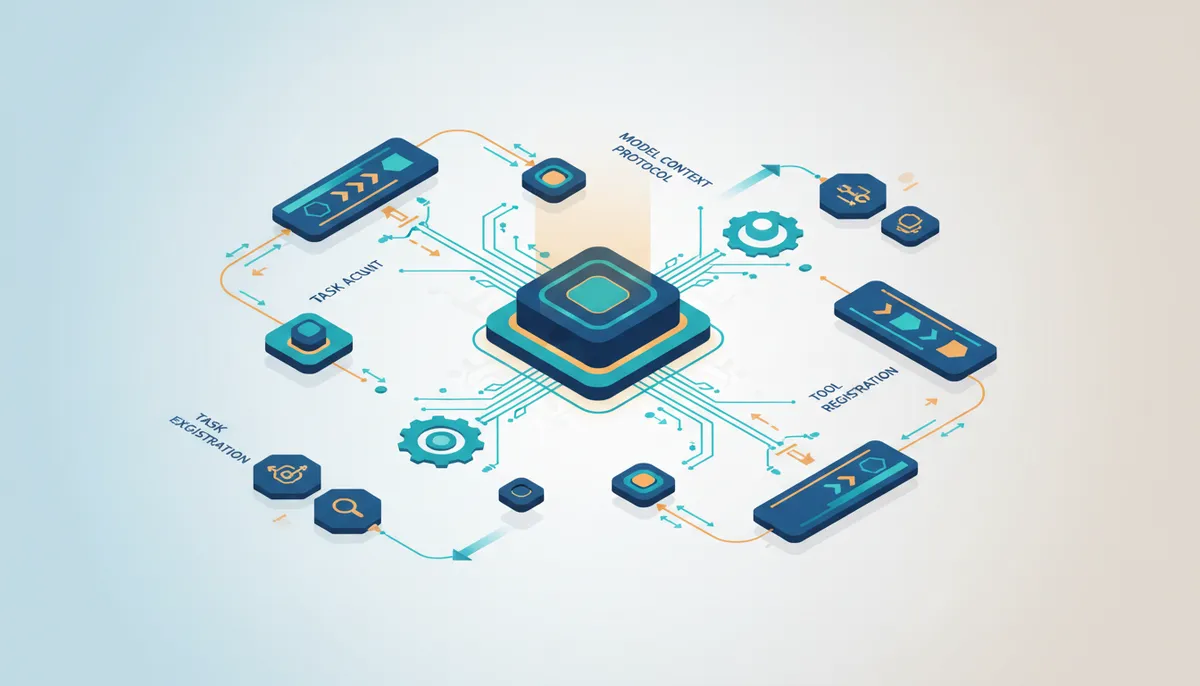
Conversational Agents act as synchronous interfaces built for low-latency dialogue with users. These units start only when a human explicitly calls them through chat inputs or voice commands, holding state only while the conversation lasts. A Sales Assistant Agent fits this pattern by pulling client history instantly to help a representative negotiate in real-time. Background Agents take a different path as asynchronous workers that run multi-step logic without anyone watching. System events like file uploads or cron schedules wake these agents; a Sales Consolidator Agent might parse regional data files and then sleep once the job finishes. This split shapes the orchestration plan because active loops need immediate response guarantees while silent tasks require strong queuing and retry logic.
| Feature | Conversational Agents | Background Agents |
|---|---|---|
| Mode | Active, Synchronous | Silent, Asynchronous |
| Trigger | User Invocation | System Event/Timer |
| Latency | Critical (ms range) | Tolerant (seconds/minutes) |
| State | Session-bound | Persistent/Transient |
Teams selecting an architecture face a choice between Code Orchestration for programmatic control or External Orchestration for visual workflow management. Code-based approaches use frameworks like the Agent Development Kit (ADK) to embed flow logic directly inside the application repository. External methods depend on designers like the Gemini Enterprise Agent Designer to coordinate business processes across disparate systems visually. This architectural split creates a specific tension: code-centric orchestration provides versionable precision but increases developer cognitive load, whereas external designers accelerate deployment but may obscure underlying execution details. Industry analysis confirms that separating these agent types allows enterprises to replace entire workflows rather than merely assisting with individual tasks. Effective systems route user intents to conversational handlers while offloading heavy data processing to silent background workers.
Triggering Background Agents via File Uploads and Timers
System events like bucket notifications or cron schedulers initiate silent Background Agents to parse unstructured data without human invocation. Unlike conversational interfaces requiring active dialogue, these asynchronous workers execute complex logic immediately upon file arrival, such as a Sales Consolidator Agent ingesting regional reports. This event-driven model transforms static storage into flexible processing hubs where file triggers replace manual polling loops.
Modern enterprise deployments increasingly rely on these long-running workflows to coordinate across multiple systems simultaneously while maintaining state here. The architecture supports sequential validation followed by parallel database updates, ensuring data integrity before downstream consumption. However, this shift introduces infrastructure overhead; automation platforms now expand enterprise tiers specifically to manage the coordination costs of these agent swarms versus single-threaded scripts.
| Trigger Type | Latency Profile | Typical Use Case |
|---|---|---|
| File Upload | Immediate | Data ingestion, format validation |
| Timer/Scheduler | Fixed Interval | Batch reconciliation, cleanup |
| API Webhook | Variable | External system sync |
Operators must distinguish between transient execution contexts and persistent memory requirements when designing these silent workers. A critical tension exists between rapid event response and the resource cost of keeping specialized models warm for sporadic triggers. While 57% of organizations now run agents in production, many underestimate the complexity of managing state across asynchronous boundaries. Builders should implement explicit timeout policies and dead-letter queues to handle parsing failures gracefully.
Builders must map each agent to its trigger mode during tool registration to prevent latency spikes or missed executions. Integrating platforms like ServiceNow requires distinguishing between interactive sessions and batch processing logic. Misidentifying a background task as conversational forces unnecessary wait states, while treating user commands as background jobs breaks the feedback loop.
The critical risk involves error handling in AI workflows where silent failures in background processes go unnoticed without proper alerting hooks. Unlike deterministic microservices, agentic systems require distinct monitoring for these divergent trigger paths. Developers should implement separate logging channels for explicit versus automatic invocations to maintain observability. This separation ensures that self-healing mechanisms activate correctly regardless of the entry point. Proper validation prevents resource contention when high-frequency system events compete with low-latency user requests.
Deploying Self-Healing Sales Pipelines in Production
Defining the Self-Healing Exception Loop in Sales Pipelines
Invalid payloads trigger the Sales Error Handler Agent to isolate formatting faults and request human correction rather than failing the entire transaction. This Exception Loop diverges from the standard Happy Path, where valid data moves directly into the database to refresh the Sales Visualizer dashboard. Traditional microservices often lack this durability, requiring explicit code for every potential error state like date mismatches or missing fields. Agentic systems instead apply Unstructured-to-Structured Translation to interpret error messages and attempt autonomous remediation before escalating to staff. The operational model relies on a continuous cycle of planning, acting, observing, and revising instead of single-prompt responses.
Implementing the Sales Consolidator Agent for File Upload Triggers
A storage bucket upload event triggers the Sales Consolidator background agent to parse regional files. This asynchronous wake-up mechanism replaces rigid polling schedules with event-driven orchestration, ensuring immediate processing upon data arrival. The complete implementation source code resides in the sales_data_agentic_app GitHub repository, providing a reference for developers aiming to fix agent sprawl in enterprise environments.
| Architecture Style | Workflow Logic | Error Handling |
|---|---|---|
| Deterministic Microservices | Hardcoded if/else blocks | Explicit exception classes |
| Agentic Application | Flexible tool selection | Autonomous retry loops |
Substantial platforms like Salesforce now embed similar agentic frameworks directly into core offerings, signaling a shift away from standalone builders. The architectural trade-off involves increased observability requirements; operators must monitor agent reasoning traces rather than simple exit codes. Engineers building an agentic sales pipeline must design for these fallback states explicitly. The system prioritizes continuity over strict determinism, allowing business operations to proceed despite intermittent data quality issues.
Registering microservices as Model Context Protocol (MCP) tools pays off only if the endpoints behave predictably. Developers must validate four criteria before exposing them to agentic orchestrators.
- Idempotency Verification: Ensure repeated tool calls with identical parameters produce consistent results without side effects.
- Schema Strictness: Define rigid input contracts to support Unstructured-to-Structured Translation without ambiguous parsing.
- Error Verbosity: Configure services to return descriptive failure messages enabling Autonomous "Self-Healing" Loops.
- Stateless Design: Isolate execution context so the Sales Consolidator or similar agents can retry safely.
Modern enterprise agents now operate as long-running workflows, coordinating across systems rather than executing single-turn requests. This shift demands tools that survive indefinite uptime cycles. A critical tension exists between tool granularity and orchestration overhead; exposing too many fine-grained functions confuses the LLM planner, while coarse tools reduce flexible adaptability. Neglecting this registration discipline forces the system back into rigid, brittle paths. AI Agents News recommends strict adherence to these validation steps to maintain system stability. The goal is flexible resolution, not hardcoded branching.
About
Diego Alvarez, Developer Advocate at AI Agents News, bridges the gap between theoretical agent capabilities and reliable enterprise deployment. His daily work involves rigorously testing frameworks like CrewAI, AutoGen, and LangGraph to expose where standalone agents fail in complex workflows. This hands-on experience directly informs the article's thesis: isolated AI agents create "agent sprawl," whereas true enterprise value lies in agentic applications that orchestrate multiple specialized agents across backend systems. Having built and broken countless multi-agent prototypes, Diego understands the critical need for structured error handling and deterministic logic over raw reasoning power. At AI Agents News, the team focuses on translating these engineering realities into actionable guidance for builders. By analyzing real-world failure modes and integration bottlenecks, Diego provides the technical clarity engineers need to move beyond novelty demos. His insights ensure readers can architect scalable systems that solve actual business problems rather than adding to the chaos of disconnected automation tools.
Conclusion
Scaling agentic applications breaks when orchestration overhead exceeds the value of flexible adaptability. While 57% of organizations now run agents in production, the operational cost shifts from model inference to the maintenance of chaotic tool definitions. The industry moves decisively from experimental pilots to full production in 2026, meaning systems designed with brittle, unverified endpoints will fail under sustained load. Engineers must stop treating tool registration as a mere connectivity task and start viewing it as a governance boundary. Without strict schema enforcement and idempotency checks, the promise of autonomous healing loops collapses into endless error cycles that require human intervention.
Organizations should mandate a freeze on exposing new microservices to agents until they pass the four validation criteria outlined previously. This discipline prevents the combinatorial explosion that turns flexible workflows into unmaintainable spaghetti code. The window for loose, experimental orchestration is closing as enterprise reliability becomes the primary metric for success. Start by auditing your current registry of MCP tools this week to identify any endpoints lacking rigid input contracts or descriptive error verbosity. Removing these weak links now prevents systemic instability later. For deeper guidance on building resilient architectures, consult the specialized resources and analysis available through AI Agents News.
Frequently Asked Questions
Isolated agents create disconnected islands that fail to solve multi-system processes. This lack of coordination causes agent sprawl across the organization rather than delivering unified business value.
Background agents execute asynchronous tasks triggered by system events like file uploads. They operate silently to handle complex work while conversational agents manage real-time user dialogue explicitly.
Early traction concentrates on repetitive, bounded, and knowledge-heavy workflows instead of open-ended creative tasks. These structured environments allow systems to stabilize before tackling non-deterministic creative challenges.
Development focus shifts from prompt engineering to building an operating system for autonomous decisions. Teams must engineer strong observation layers to capture reasoning states for effective self-correction loops.
These systems combine specialized agents with structured workflows to replace rigid hardcoded logic. They use large language models to stitch together deterministic microservices for non-deterministic problems effectively.
References