Agent OS stops style drift in AI code
Agent OS indexes your existing repository, extracts the conventions already in it, and pushes them into the generation context before a single token is sampled. Instead of hoping Claude Code or Cursor guess your team's style, the model works from your architecture rather than its generic training data, and the refactor loop that static analyzers open after the fact never starts.
Brian Casel built it to close the gap between raw AI capability and organizational consistency. The trade is an indexing pass up front against complex Python or React work that does not come back for a style pass.
Middleware That Indexes the Repo Before the Model Writes
Brian Casel engineered Agent OS as intelligent middleware that embeds codebase conventions directly into AI agents. It enforces spec-driven development principles before code generation occurs, bridging the gap between human intent and machine execution. Static analyzers flag errors post-factum. This middleware extracts patterns from existing repositories to prevent style mismatches at the source. The architecture discovers implicit rules, indexes them into a queryable knowledge base, and deploys standards contextually during task execution.
Builder Methods designed this layer to sit between the developer and the model, so generated output aligns with team-specific architectural patterns rather than generic training data. What lands in the Claude Code and Cursor context window is concrete: specific React hook usage, Python error handling strategies, and the rest of the implicit rules the indexer found. Treating specifications as the interface between intent and execution only works once the agent can see those local constraints, which is the gap this middleware fills.
Inside the Contextual Injection Engine and Pattern Extraction Mechanics
Pattern Recognition Algorithms for Semantic Standard Discovery
Pattern recognition algorithms scan repositories to extract explicit and implicit conventions before any code generation begins. The Discover Standards module analyzes naming strategies, architectural patterns, and error handling logic rather than relying on simple regex matching. This semantic understanding allows the system to distinguish when to apply camelCase versus PascalCase or SCREAMING_SNAKE_CASE based on local context. Unlike static linters that flag errors post-generation, this engine injects these rules into the agent's context window proactively.
The extraction process targets six specific dimensions of codebase style:
- File and function naming conventions
- Architectural composition patterns
- Domain-specific error strategies
- Testing fixture organization
- Documentation and comment density
- Import and dependency ordering
The limitation remains that deep semantic analysis requires an initial indexing phase, creating a delay before the first spec-driven request can be fulfilled. This latency trade-off ensures that subsequent contextual injection events remain token-efficient and highly relevant. Builders must weigh this upfront cost against the reduction in manual refactoring later in the workflow.
Deploying Standards via Intelligent Injection Engines
The intelligent injection engine determines applicable standards for specific tasks before code generation begins. This mechanism classifies the developer's intent, such as building a React component or writing a database migration, then retrieves the patterns from the indexed knowledge base. It weaves these constraints directly into the context window of agents like Cursor or Claude Code. This process ensures the AI specification includes mandatory architectural rules rather than generic advice. Evidence of this workflow appears in generated output where a UserProfile.jsx file automatically adheres to custom hook usage and CSS Modules styling without explicit prompting.
Engineers initiate Index Standards by constructing a searchable, version-controlled knowledge base categorized by technology stack and severity. This repository organizes engineering conventions into mandatory, recommended, and optional tiers, ensuring the injection engine retrieves only the constraints for a given task. Unlike static documentation, this structured approach allows agents to query domain-specific context efficiently. Larger context windows, such as the 1,000,000 token capacity found in specialized engines, benefit significantly from this targeted retrieval to avoid token exhaustion. However, maintaining strict temporal relevance across legacy and modern stacks introduces operational overhead that teams must balance against consistency gains.
The Deploy Standards capability then injects these verified patterns into agents like Cursor or Claude Code. While automation accelerates adoption, organizations supporting diverse technology stacks may face challenges in initially populating the knowledge base without clear governance.
Agent OS Against Cursor Rules and the Cost of Pre-Injection
The comparison that decides adoption is not Agent OS against linters but Agent OS against Cursor Rules, which apply constraints during generation yet lack the pre-computed semantic index that lets Agent OS anticipate architectural needs before the request is even classified.
| Feature | Agent OS | Cursor Rules | Traditional Linters |
|---|---|---|---|
| Injection Phase | Pre-generation | During generation | Post-generation |
| Pattern Source | Automatic discovery | Manual entry | Manual configuration |
| Correction Mode | Preventive | Guiding | Reactive |
| Context Scope | Full codebase index | Current file | File or directory |
Pre-generation injection is not free: it adds 200-500 tokens of overhead to the context window per request, trading raw speed on initial drafts for consistency. What it buys back is refactoring surface area, so review time goes to logic verification rather than syntax alignment.
Security Architecture and Context Window Impact Analysis
Local execution keeps source code on developer machines, eliminating external transmission risks. Agent OS runs entirely locally, ensuring no code is sent to external services during pattern extraction. This architecture contrasts sharply with cloud-dependent alternatives like Augment Code, which apply closed-source SaaS models for enterprise environments. While centralized processing enables specific benchmark performance, it introduces data sovereignty concerns that local-only designs inherently resolve.
That overhead accumulates across parallel agent executions, so teams must balance the depth of injected conventions against the context budget left for complex reasoning tasks.
| Feature | Agent OS | Cloud SaaS Agents |
|---|---|---|
| Data Location | Local Machine | Remote Server |
| Context Cost | 200-500 tokens | Variable |
| Model Access | Provider Agnostic | Proprietary Only |
Operators supporting heterogeneous toolchains benefit from this middleware approach. Local middleware offers a privacy-preserving path to spec-driven development without sacrificing multi-agent flexibility.
Deploying Standards with AI Agents Through Practical Integration
Agent OS Installation Prerequisites and Config Structure
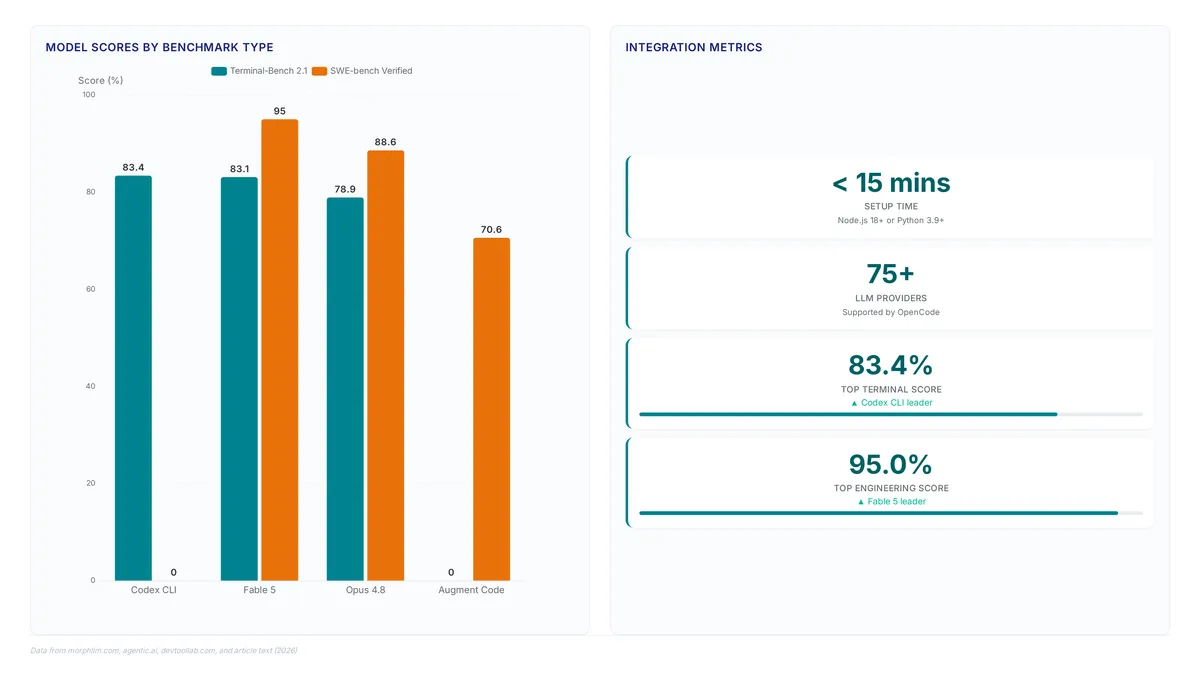
Getting Agent OS running takes less than 15 minutes on systems with Node.js 18+ or Python 3.9+. The installer requires an existing Git repository containing sufficient commit history for the pattern extraction engine to analyze structural conventions. Installation proceeds via npm, pip, or Homebrew depending on the operator's preferred package manager environment. Execution of the agent-os init command generates a .agent-os directory containing config.yml, standards/, hooks/, and cache/ subdirectories. This specific folder hierarchy isolates generated engineering standards from the primary application source code.
Automation scripts using @buildermethods/agent-os validate file compliance against extracted patterns before production deployment. Engineers configure npm scripts to execute agent-os validate-standards, ensuring every commit adheres to the organization's established architectural rules. This approach shifts enforcement from post-hoc code review to a pre-commit gate, preventing inconsistent AI output from entering the repository. A Node.js implementation can inspect changes since the last-commit, comparing new code against the indexed knowledge base to flag deviations immediately. This method supports the broader industry trend where agents are evaluated on handling entire workflows rather than providing inline suggestions, a shift documented in comparisons of AI coding agents.
Teams validating Agent OS integration should measure the shift from post-hoc correction to pre-generation consistency. Successful deployment manifests as a drastic reduction in review cycles, with reviewers spending less time on convention feedback and new developers ramping faster. This acceleration occurs because indexed standards replace vague onboarding documentation with actionable, context-aware constraints.
| Metric Area | Traditional Workflow | Agent OS Workflow |
|---|---|---|
| Onboarding Velocity | Months to proficiency | Weeks to proficiency |
| Review Focus | Style and convention | Logic and architecture |
| Consistency | Variable across devs | Enforced by system |
Operators must verify that discovered patterns actually reflect current architectural intent rather than legacy drift. Over-indexing on historical code can cement deprecated anti-patterns if the pattern extraction logic lacks temporal filtering. Teams should cross-reference extracted rules against manual specifications to prevent automating technical debt. Without such quantitative gates, organizations risk adopting agents that generate syntactically correct but architecturally divergent code. AI Agents News recommends auditing context window usage to ensure standards injection does not crowd out task-specific logic.
Evaluating Multi-Agent Support and Maintenance Overhead for Teams
Teams should adopt Agent OS when heterogeneous agent usage creates maintenance friction across Claude, Cursor, and Antigravity workflows, since Cursor Rules restricts pattern enforcement to a single IDE. Engineering groups pick those agents against standardized benchmarks like SWE-bench Verified and Terminal-Bench, where a score such as 83.4% on Terminal-Bench outweighs anecdotal claims. Those leaderboards rank the agents, not the middleware feeding them context, which is why multi-agent support rather than a benchmark number is the criterion that applies here.
Tool specificity clashes with operational breadth. Teams heavily invested in one IDE may find specialized rules sufficient, whereas mixed environments require the agnostic approach of Agent OS. The system is language-agnostic and framework-agnostic, suitable for Python data science teams, React frontend squads, and microservice architectures. Relying solely on IDE-native rules leads to fragmented standards as teams expand their AI coding agents toolkit. The industry shift toward spec-driven development addresses scenarios where code consistency directly impacts downstream deployment reliability. Organizations seeking to eliminate repetitive refactoring should evaluate whether their current stack supports the Model Context Protocol or remains siloed within proprietary boundaries.
About
Sofia Berg serves as Research Editor at AI Agents News, where she specializes in translating complex multi-agent research into actionable insights for engineers. Her deep expertise in evaluation frameworks and agentic benchmarks makes her uniquely qualified to analyze Agent OS, a system claiming to align AI-generated code with team standards. Unlike surface-level reviews, Berg's daily work involves rigorously dissecting orchestration layers and tool-use protocols to separate genuine utility from marketing hype. She connects the theoretical promises of Agent OS to practical engineering constraints by examining how it handles context injection and style conformance within real-world workflows. By grounding her analysis in concrete benchmark data and architectural limitations, Berg ensures readers understand not just what the system claims to do, but how it actually performs against existing coding agent solutions. Her assessment helps technical leaders decide if this middleware truly bridges the gap between autonomous generation and team-specific code quality requirements.
Conclusion
Scaling AI autonomy reveals that raw success rates on engineering tasks mean little if the underlying governance fails to distinguish between current intent and legacy drift. As agents move well beyond inline suggestions to manage full development workflows, the operational bottleneck shifts from code generation speed to the accuracy of the constraints guiding that generation. Relying solely on benchmark performance ignores the compounding cost of automating deprecated anti-patterns when pattern extraction lacks temporal filtering.
That makes the index itself the thing to govern: extracted rules have to be cross-referenced against manual architectural specifications, or the system cements technical debt under the guise of consistency, and the injected standards have to stay small enough not to crowd out task-specific logic. Only when discovered patterns reflect active architectural goals does the review focus move safely from style enforcement to logic and architecture.
Frequently Asked Questions
The system requires Node.js 18+ or Python 3.9+ to run locally. Installation completes in under 15 minutes on compatible systems, allowing teams to start enforcing standards quickly without complex configuration steps.
It injects standards into the model's context before generation, while a linter can only flag violations in code that already exists. The price is an initial indexing pass over the repository, so the first spec-driven request waits on the pattern extraction engine.
Teams compare agents on standardized benchmarks such as SWE-bench Verified and Terminal-Bench, where a score like 83.4% on Terminal-Bench carries more weight than anecdotal claims. Those numbers rank the agent doing the generating, not middleware like Agent OS that shapes its context.
It identifies naming conventions, architectural patterns, and error handling strategies, and the extraction covers six dimensions in all, down to testing fixture organization and import ordering. That semantic reading catches structural rules simple regex matching misses.
Yes, the system is language-agnostic and framework-agnostic by design. It effectively supports Python data science teams, React frontend squads, and microservice architectures spanning multiple tech stacks simultaneously.
References