Devin alternatives: why single-agent autonomy failed in 2025
Devin 1.0 failed 14 of 20 real-world tasks in early 2025 and succeeded on just three. That 15% success rate killed the dream of the solitary AI software engineer for enterprise work. Reliable results now demand spec-driven orchestration and mandatory human approval gates. Single-agent autonomy crumbles when context exceeds immediate token windows or architectural consistency matters. The industry is pivoting to terminal-first agents that keep developers in the loop, not out of it. Spec-driven coordination fixes the control deficit that left architects sidelined in early adopter teams.
We compare top Devin alternatives on pricing transparency, platform flexibility, and their ability to handle end-to-end tasks without hallucinating impossible paths. The decision matrix for engineering leaders in 2026 is simple: speed versus developer control. You cannot have both.
The Limitations of Single-Agent Autonomy in Enterprise Development
Devin's Single-Agent Autonomy Failure Modes
Early evaluations in early 2025 showed Devin's autonomous model succeeding in only single-digit to low-double-digit percent ranges on complex, end-to-end tasks. The architecture simply cannot sustain long-horizon planning. Benchmark runs expose this deficit: agents grind through long multi-turn loops to solve a single problem. While Cognition claimed a 13.86% resolution rate on SWE-bench, independent analysis of 20 real-world tasks revealed 14 failures. Single-agent autonomy collapses when context exceeds immediate token windows.
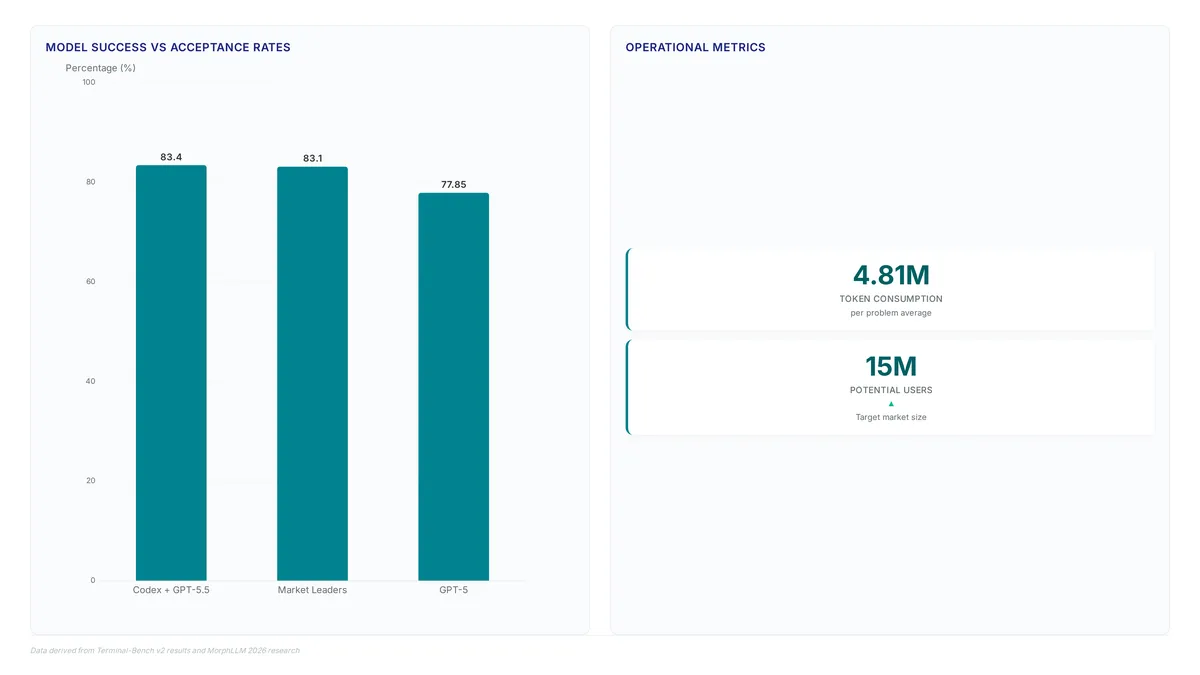
Devin 1.0 failed 14 out of 20 evaluated real-world tasks. Researchers documented these outcomes in January 2025, recording only three successes against 14 definitive failures and three inconclusive results. The culprit is brittle autonomous planning. Solving a single problem requires sustaining an extended chain of interaction turns, and such complex engineering workflows can consume millions of tokens, overwhelming single-agent architectures designed for shorter code generation bursts.
Here is the danger: the model proceeds with impossible tasks rather than escalating uncertainties to developers. Enterprise teams pay for this with significant rework costs when single-agent models make irreversible architectural errors during unsupervised execution. Orchestration layers must enforce developer sign-off on structural changes. There is no workaround for inherent planning failures.
Devin vs Modern Benchmarks: The Shift to End-to-End Project Development
Devin pioneered the autonomous agent concept but struggles with the sustained interaction counts required for end-to-end project development. Modern benchmarks like Terminal-Bench v2 demand accuracy across long multi-turn sessions, a complexity where early single-agent models frequently collapsed. In June 2026 testing, the leading configuration of Codex paired with GPT-5.5 achieved an 83.4% success rate, while Claude Code with Fable 5 scored 83.1%. These figures establish a new performance ceiling that prioritizes long-horizon planning over short-burst code generation.
This token intensity makes architectural oversight a financial imperative, not just a quality control measure. Teams cannot afford unchecked autonomy when a single failed run consumes resources equivalent to thousands of standard completions. The market is pivoting toward tools that enforce approval gates before token expenditure scales. Capability must balance with fiscal control.
Architectural Mechanics of Spec-Driven and Multi-Agent Orchestration
Three-Role Agent Architecture in Spec-Driven Workflows
Intent from Augment Code operates as a standalone macOS desktop workspace using a three-stage model: define the spec, approve the plan, and let agents work. This methodology replaces single-agent autonomy with a three-role agent architecture that separates planning, execution, and validation. The Coordinator agent generates a dependency-aware plan and distributes subtasks, while Specialist agents implement changes in parallel git worktrees to prevent merge conflicts. A Verifier agent then validates outputs against the living specification before integration occurs. No code merges without passing the verifier gate. This design directly addresses the control deficits observed in earlier autonomous models.
| Role | Function | Isolation Boundary |
|---|---|---|
| Coordinator | Plans and distributes work | Global spec context |
| Specialist | Executes implementation tasks | Parallel git worktree |
| Verifier | Validates outputs | Pre-integration sandbox |
Latency is the cost. Coordinating multiple agents across isolated environments increases total wall-clock time compared to a single model running in full-auto mode. But this overhead prevents the catastrophic context loss where an agent pursues an impossible task without escalation. Explicit approval between the planning and execution phases ensures architectural decisions remain with the human operator rather than drifting into unverified autonomy. Reliability replaces raw speed. That is the necessary exchange for enterprise-grade stability.
Parallel Execution in Isolated Docker Containers with Sculptor
Sculptor implements parallel agent execution by running multiple AI coding agents in isolated Docker containers to prevent filesystem conflicts. Developed by Imbue, this free platform enables concurrent task processing where each agent operates within a strictly bounded sandbox environment. The architecture uses Pairing Mode to maintain bidirectional synchronization between the agent's container and the local integrated development environment. Developers observe real-time changes while the system enforces container isolation boundaries that standard process threads cannot guarantee.
Real-world deployment of agents uses these Docker sandboxes to safely execute code and browse the web, mirroring the isolation requirements of production CI/CD environments. By decoupling the orchestration layer from the model, the platform treats the agent as a sum of model and orchestration capabilities. Network configuration must permit flexible container creation, a restriction some locked-down enterprise environments enforce by policy. Teams gain throughput without merge conflicts, yet they inherit the operational overhead of managing ephemeral container lifecycles. The bottleneck shifts from agent coordination to host resource availability. Local compute capacity must match the parallelism degree requested.
Local-First Control: OpenAI Codex CLI Approval Modes vs Cloud Sandboxes
OpenAI Codex CLI enforces local-first control by keeping source code on-machine while routing only prompts to remote models. This Rust-built, Apache-2.0 terminal agent offers three distinct approval modes: Suggest, Auto, and Full-auto. In Suggest mode, the agent requires explicit confirmation for every file edit or shell command, ensuring zero unsupervised changes. Auto mode allows autonomous reads and writes within the working directory but halts for permission on external network access. Full-auto mode executes most operations with minimal prompting, suitable for rapid iteration on well-understood codebases.
Cloud variants rely on isolated sandbox environments per task rather than local filesystem trust. These sandboxes apply Docker containers to safely execute code and browse the web, mirroring production CI/CD isolation requirements. Latency competes with security; local execution eliminates network round-trips for file I/O but demands strict host-level policy enforcement.
| Feature | Codex CLI (Local) | Cloud Sandbox |
|---|---|---|
| Execution | Host machine | Isolated Docker container |
| Data Residency | Local disk only | Ephemeral cloud storage |
| Approval | Terminal prompt (Suggest/Auto) | Pre-task spec validation |
| Integration | Manual git push | Automatic GitHub sync |
Builders must choose between the low-latency feedback loop of local agents and the guaranteed containment of cloud sandboxes. Teams prioritizing architectural safety should use the strict approval gates of local modes or the contained nature of cloud sandboxes, reserving full-auto configurations for scenarios where speed outweighs isolation needs.
Comparative Analysis of Top Devin Alternatives for Developer Control
Comparison: Intent's Three-Role Agent Architecture vs Single-Agent Models
Intent separates planning, execution, and validation into distinct Coordinator, Specialist, and Verifier roles, whereas Codex CLI and Kiro rely on a single agent loop. This structural divergence dictates control fidelity: multi-agent systems enforce cross-checks before code integration, while single-agent models execute sequentially within one context window. Codex CLI operates as a single agent with local codebase access and approval modes including auto, suggest, and full-auto, offering speed but lacking internal contradiction checks.
| Feature | Intent Architecture | Single-Agent Models (Codex CLI, Kiro) |
|---|---|---|
| Role Separation | Coordinator, Specialist, Verifier | Unified agent loop |
| Conflict Resolution | Pre-integration verification | Self-correction during execution |
| Context Scope | Semantic indexing across worktrees | Local repository focus |
| Failure Mode | Coordination latency | Hallucinated dependencies |
Autonomous agents on complex tasks run for many turns per problem, amplifying the cost of unverified actions in single-agent loops. However, the distinct separation of duties ensures outputs are validated before integration, addressing a frequent failure point when one model handles both design and implementation.
Executing Complex Workflows: Amazon Kiro's Phased Specs and Claude Code's Terminal Loop
Amazon Kiro enforces a rigid three-phase workflow converting prompts into requirements.md, design.md, and tasks.md files before execution begins. This structured approach contrasts sharply with Claude Code, which uses an iterative terminal-first loop for immediate code generation and file modification. Builders facing complex, multi-service refactoring should prioritize Kiro's phased validation to maintain architectural integrity across large codebases. Conversely, teams requiring rapid iteration on existing services may find Claude Code's direct terminal access more efficient despite higher risks of unverified changes.
| Feature | Amazon Kiro | Claude Code |
|---|---|---|
| Execution Model | Phased spec approval | Iterative terminal loop |
| Primary Output | Structured documentation | Direct code changes |
| Best Fit | Greenfield architecture | Legacy refactoring |
| Control Mechanism | Spec gates | Permission modes |
The critical distinction lies in failure recovery. Kiro halts at phase boundaries, allowing developers to correct design documentation before resources are consumed. Teams switching from Devin due to low task completion rates should evaluate whether their bottleneck is planning accuracy or execution speed. If the former, Kiro's constraints provide necessary guardrails; if the latter, the terminal agent offers superior throughput.
IDE Integration Trade-offs: Cursor's VS Code Fork vs Standalone Native Environments
Cursor Agent Mode operates within a VS Code fork, inheriting existing key bindings and extension ecosystems to minimize onboarding friction for developers already embedded in that environment. This deep integration allows immediate access to repository indexing and synchronous agent execution without configuring new toolchains. However, this reliance on a specific fork creates a vendor lock-in risk where workflow continuity depends entirely on the host editor's update cycle.
In contrast, Amazon Kiro functions as a standalone AI-native IDE built from Code-OSS, supporting Mac, Windows, and Linux while enforcing a distinct phase-by-phase approval workflow. This architectural separation ensures that spec-driven orchestration remains insulated from upstream VS Code marketplace changes or policy shifts. The trade-off for Cursor's smooth fit is potential workflow disruption if the fork diverges significantly from standard VS Code behavior during complex refactors. Standalone environments offer greater isolation but require teams to manage separate extension sets and configuration files. Teams prioritizing strict architectural oversight may find the context switching costs of standalone tools acceptable for the gained governance. Conversely, groups valuing rapid iteration often prefer the IDE-native approach despite the coupling. Developers should evaluate extension compatibility requirements before committing to either forked or native paths.
Implementing Controlled AI Workflows with Approval Gates and BYOA Models
Defining Spec-Driven Orchestration and BYOA Models
Spec-driven orchestration swaps open-ended delegation for a rigid cycle where agents draft specifications before touching code. This structure counters the Planning Fallacy that plagued early autonomous agents, which often delivered single-digit success rates on complex tasks. A coordinator agent generates a plan requiring explicit developer sign-off before specialist agents access isolated git worktrees. Separating planning from execution keeps high-level design intent under human control while allowing implementation to scale horizontally.
The Bring Your Own Agent (BYOA) model complements this workflow by decoupling the orchestration layer from the underlying large language model. Teams swap models within a unified interface to optimize for cost or specific benchmark performance. Organizations treat models as interchangeable commodities rather than locked-in dependencies.
Adopting spec-driven workflows introduces latency because every approval gate pauses the pipeline. Raw speed trades for architectural fidelity. Operators configure thresholds balancing safety against developer friction since constant interruption negates parallel execution benefits. Engineering teams must codify review policies directly into orchestration rules. These approval gates enforce consistency without becoming bottlenecks. Defining constraints upfront maintains oversight even as agent autonomy expands.
Configuring Approval Gates in Codex CLI and Intent
OpenAI Codex CLI provides three approval modes. Operators seeking strict control manually switch to Suggest Mode, mandating explicit approval for every single action the agent attempts. This configuration prevents unauthorized dependency installs or file deletions by forcing a human-in-the-loop review for each step. Increased latency occurs during complex refactoring tasks where sequential approvals interrupt flow.
Intent enforces a structural barrier between planning and execution through its three-role architecture. The Coordinator agent drafts a thorough plan that remains inert until the developer approves the strategy. Only after this gate opens do Specialist agents execute implementation tasks in parallel, isolated git worktrees. Architectural intent aligns with code generation before any file modifications occur. This rigorous workflow demands organizational commitment to a specification-first culture, which can slow initial adoption for teams accustomed to informal prompting.
Selection depends on whether the primary risk is unauthorized action or architectural drift. Codex CLI suits privacy-sensitive teams needing local execution with granular, action-level oversight. Intent better serves complex systems where maintaining synchronization between design intent and implementation is paramount. Teams further customize control by using the Bring Your Own Agent (BYOA) model to deploy various agents within Intent's orchestration layer. This flexibility allows organizations to balance autonomy with safety, avoiding the low task completion rates observed in earlier autonomous agents that lacked such gating mechanisms.
Matching Agent Control Models to Codebase Complexity
Aligning agent orchestration strategies with codebase interdependence prevents architectural drift. Complex, interdependent systems use Intent's spec-driven orchestration while privacy-focused workflows often rely on local execution tools. This method prevents the fragmentation seen when single agents attempt end-to-end project development without structural guardrails. Privacy-sensitive organizations often prefer Codex CLI or similar tools for local execution, ensuring source code remains on-premises while using cloud models for inference. Reduced collaborative visibility exists compared to centralized orchestration platforms.
Cost-sensitive teams direct parallel experiments to tools using container-isolated agents to test hypotheses without incurring platform-specific fees. Enterprises with specific compliance boundaries adopt platforms enforcing specification discipline while maintaining required isolation standards. Execution speed conflicts with architectural fidelity; rapid iteration often sacrifices the deep context indexing required for large-scale refactoring.
| Constraint | Recommended Model | Key Mechanism |
|---|---|---|
| High Interdependence | Intent | Living specifications |
| Data Sovereignty | Codex CLI | Local-first execution |
| Cost Optimization | Sculptor | Parallel containers |
| Regulatory Compliance | Kiro | GovCloud isolation |
High token consumption during complex reasoning tasks necessitates strict budget controls for long-horizon development. Operators evaluate whether their workflow benefits more from the orchestration layer decoupled from the underlying model or a tightly integrated single-agent loop. Auditing current repository complexity before selecting a control model helps prevent over-engineering simple tasks.
About
Marcus Chen serves as Lead Agent Engineer at AI Agents News, where he daily architects and evaluates production multi-agent systems. This hands-on experience makes him uniquely qualified to analyze Devin alternatives, as he constantly navigates the trade-offs between full autonomy and structured developer oversight in real-world deployments. His work involves rigorous testing of orchestration frameworks like LangGraph and AutoGen, directly mirroring the article's focus on control, cost, and task-completion rates. Unlike theoretical observers, Chen's role requires him to build evaluation harnesses that measure actual agent performance against complex engineering tasks, grounding his analysis in concrete data rather than marketing hype. At AI Agents News, an independent hub dedicated to technical deep dives for engineers, Chen uses his expertise in tool use and function calling to help technical leaders distinguish between viable coding agents and overpromising prototypes. His insights reflect the practical realities of integrating AI coding agents into existing software workflows, ensuring readers receive actionable, fact-based guidance for their infrastructure decisions.
Conclusion
Scaling AI coding agents reveals that raw benchmark success rates mask a deeper operational friction: the cost of maintaining architectural fidelity across long-horizon tasks. While recent data shows resolution rates reaching 83.4% on isolated benchmarks, these figures often collapse when agents face the messy interdependence of legacy enterprise codebases. The real challenge is no longer achieving task completion but managing the token expenditure required to maintain context without drifting from the original specification. Teams must stop treating agent selection as a generic capability upgrade and start matching control models to specific codebase constraints.
Organizations should mandate a repository complexity audit before deploying any autonomous workflow. If your system exhibits high interdependence, prioritize spec-driven orchestration over raw speed. For environments with strict data sovereignty needs, local-first execution remains the only viable path despite potential visibility trade-offs. Do not deploy parallel container experiments until you have set clear budget guards for token consumption.
Start this week by identifying one high-friction development workflow where context loss currently causes rework. Map this workflow against the constraint matrix to select a dedicated control model rather than relying on a general-purpose chat interface. This targeted alignment prevents the architectural drift that plagues unguided autonomy.
Frequently Asked Questions
Single-agent autonomy collapsed on 14 of 20 tasks due to poor long-horizon planning. This forces teams to adopt spec-driven orchestration, as the 13.86% resolution rate proves independent agents cannot handle complex enterprise context without strict oversight.
Costs split into two shapes: flat monthly seat plans aimed at individual developers, and enterprise platforms that add metered usage charges on top of a monthly base. Teams should price the metered component against expected token volume, since long-horizon runs consume it unevenly.
Complex engineering workflows can consume millions of tokens across a long chain of interaction turns. This massive context requirement overwhelms single architectures, necessitating a shift to multi-agent coordination that can distribute the cognitive load across specialized verifiers and coordinators effectively.
Without mandatory approval gates, agents proceed on impossible paths rather than escalating ambiguity. This control deficit causes architectural errors, making the 13.86% success rate unacceptable for production systems where human oversight is critical for maintaining stability.
New tools replace full autonomy with spec-driven coordination and mandatory human sign-offs. This structural change prevents the sideline effect architects faced, ensuring that critical decisions remain under human guidance while still leveraging AI for execution speed.
References