Agents Need Data Without Human Clicks at 3am
Autonomous agents stall at 3am because data access still demands human clicks for API keys or email verification. The reliance on scraping public pages and keyed APIs creates a fragile dependency where agents either break silently or wait indefinitely for intervention. Current free agentic AI tools often fail when encountering Cloudflare challenges or HTML changes that render scraping useless without error signals. Instead of forcing agents to navigate OAuth consent screens or manage rotating secrets, a network operator can use protocol-level trust. Overlay networks such as Pilot Protocol move that trust to the network layer: an agent joins once, then queries a directory of pre-authorized specialists with pilotctl instead of holding a secret per service.
The shift from per-service accounts to network-level identity allows agents to retrieve ground truth without human onboarding. By moving away from brittle container setups that rely on external secrets managers, developers can build systems where data access is inherent to the connection. This approach eliminates the need for agents to parse full markup pages or store sensitive tokens, ensuring they remain truly autonomous even when recovering from restarts or provisioning on new infrastructure.
The Limitations of Scraping and Keyed APIs for Autonomous Agents
Why Signup Walls and API Keys Block Autonomous Agents
Email verification steps and static API keys create bottlenecks that force autonomous agents to stall when they require live data. Standard authentication flows depend on OAuth consent screens and dashboard tokens built for interactive humans, not unattended processes running at 3am. An agent attempting to retrieve ground truth, such as the weather in Berlin, fails because it cannot solve CAPTCHA challenges or verify an email address without intervention. The system either halts execution waiting for a human click or resorts to scraping raw HTML. This fallback is fragile; sites frequently change their markup, causing parsers to break silently and return malformed data without error notifications.
Substantial tech entities are shifting toward complex workflows where deep research agents execute multi-step tasks, yet these systems remain blocked by per-service credential requirements. Frameworks like CrewAI define structured teams with specific roles, but the underlying data access layer often lacks the network-level trust required for true autonomy. Orchestrated crews cannot function independently during cold starts without pre-authorized access.
Security protocols assume human oversight, creating tension with the operational reality of agents running unattended. Traditional keyed APIs work for long-lived services with stable secrets, but they fail for ephemeral agents spun up on demand. Zero-signup data access resolves this by moving authentication to the network layer, allowing agents to query specialists directly via encrypted tunnels. This approach eliminates the need for per-service account creation, ensuring that autonomous agents can retrieve structured JSON payloads immediately upon joining the network.
Silent Failures When Scraping Human-Facing Pages
HTML structure changes without notice, causing scrapers to break silently while returning stale data instead of error notifications.
An autonomous agent requesting live information, such as the weather in Berlin, often encounters bot detection mechanisms like Cloudflare challenges that specifically target non-API access patterns. Keyed APIs return structured errors upon authentication failure, whereas scraping failures manifest as malformed data or outdated content that the agent processes as valid ground truth. Rate limiting and CAPTCHA blocks prevent the scraper from retrieving the updated page, yet the parsing logic remains unchanged, forcing the agent to operate on incorrect assumptions. Legal risks arise when agents extract data outside programmatic terms, creating liability for enterprise deployments.
| Failure Mode | Scraping Consequence | API Consequence |
|---|---|---|
| Data Staleness | Silent return of cached/old HTML | Explicit timeout or version error |
| Access Block | CAPTCHA or challenge page | 401 Unauthorized response |
| Output Format | Unstructured markup requiring parsing | Structured JSON payload |
Tools attempting to fetch real-time data by equipping agents with specialized fetching capabilities often still rely on underlying HTTP requests that trigger defensive measures. Scraping relies on the stability of a human-facing interface designed for visual consumption, not machine readability. When that interface shifts, the agent's logic fractures without raising an alert, leading to cascading errors in downstream decision-making processes.
Keyed API Friction During Agent Cold Start Phases
Standard API keys present immediate friction for on-demand agents lacking pre-existing secrets or human oversight. Sanctioned for stable systems, this model fails during cold starts because the agent cannot complete email verification or OAuth consent screens designed for interactive users. The architecture assumes a long-lived process capable of securing secrets in a vault, yet ephemeral agents spin up without access to these protected environment variables. The agent stalls indefinitely waiting for a human to click allow or rotates into using fragile scrapers that break silently when site structures change. Overlay networks establish trust at the network layer, whereas keyed APIs require per-service account creation that blocks autonomous initialization. Research indicates that while some platforms offer stateful memory for persistent connections, standard REST calls still demand manual credential provisioning that halts automation workflows. Agents either remain idle or degrade to parsing raw HTML, introducing significant latency and error rates before reaching operational stability. Dependency on human-in-the-loop onboarding fundamentally undermines the premise of fully autonomous operation.
How Overlay Networks Enable Network-Level Trust and Service Discovery
Pilot Protocol Overlay Mechanics and Virtual Addressing
Permanent virtual addresses allow data-serving agents to reach each other through encrypted, NAT-traversing tunnels without account signups. This architecture builds network-level trust by compressing authorization into one scriptable step: joining the network. Traditional models scatter authorization steps across dozens of services, forcing developers to juggle API keys and email verifications that halt unattended processes. The overlay requires none of that for directory access.
Specialist agents inside the system auto-approve incoming queries. They return structured JSON payloads instead of raw HTML that demands parsing. A directory agent answers plain English keywords to locate specific sources like weather feeds or crypto prices.
Cloudflare Agents enable stateful memory at the edge for persistent context, yet the Pilot Protocol targets the initial credential barrier directly. Dependency on volunteer-run specialist agents creates a specific constraint: if a data provider goes offline, the querying agent lacks a guaranteed SLA fallback. Flexible, multi-data workflows benefit most when cold-start speed outweighs the need for guaranteed uptime on every endpoint. Builders deploy this pattern when agent autonomy demands immediate access to diverse data types without human intervention for each new integration.
Querying the Directory Agent for Specialist Discovery
Keyword searches within the same session start the operational flow by asking the directory agent for a matching specialist. An initiating agent sends a list-agents request containing a term like "weather" and receives a hostname. Structured discovery replaces fragile scraping, letting the requester send a typed query directly to the specialist's virtual address. The specialist responds with structured JSON, removing the need to parse raw HTML or manage per-service credentials.
Manual account creation and secret rotation precede any data exchange in keyed API models. Strict SLAs demand those keyed APIs, but the overlay model enables immediate interaction for public data sources. The directory acts as a neutral broker, auto-approving queries without human intervention.
Dependency on registered specialists creates a hard limit; if no agent serves a specific dataset, the directory cannot fabricate an endpoint. Builders must verify that required data domains have active participants before relying on this architecture for production workloads.
Network-Level Trust Versus Keyed API Production Requirements
Strict SLAs and dedicated support make keyed APIs the correct choice for production integrations, whereas zero-signup overlays optimize for autonomous cold starts. Traditional integrations scatter authorization steps across N services, forcing developers to manage rotating secrets and email verifications that halt unattended processes. The Pilot Protocol consolidates trust at the network layer, allowing an agent to join once and immediately query a directory of pre-authorized specialists. This shift eliminates per-service account creation, replacing fragile HTML scraping with structured JSON replies delivered over encrypted tunnels.
Blockchain-based alternatives like Agent Zero AI apply open-source smart contracts on Ethereum BASE L2 to enable authentication-free API access. Decentralized methods often sacrifice the guaranteed uptime found in enterprise keyed arrangements. Immediate autonomy conflicts with long-term reliability; overlays remove onboarding friction but do not yet replace the legal and performance guarantees of paid data providers. Enterprises deploy overlay networks for flexible, multi-source data gathering where speed of deployment outweighs strict SLA requirements. Traditional keyed integrations remain necessary for core business functions demanding guaranteed availability.
Deploying Autonomous Agents Using Pilot Protocol and pilotctl
Installing Pilot Nodes via Curl Script
A single shell command downloads and runs the installer script without interactive prompts to bootstrap a Pilot Protocol node. This command establishes the local runtime environment required for agent-to-agent communication, bypassing the manual credential management typical of REST-based integrations. Frameworks such as CrewAI define static agent roles upfront, while this overlay network assigns permanent virtual addresses dynamically upon installation. The process creates a trusted identity at the network layer, allowing immediate participation in encrypted, NAT-traversing tunnels.
Users interact with the system via pilotctl to query the directory or message specialists directly once installed.
A plain-text reference model replaces traditional API documentation, reducing the cognitive load required to parse complex Swagger definitions. This approach eliminates the "cold start" friction where autonomous processes stall waiting for human verification. Removing the signup barrier enables agents to discover and apply services like Google's Gemini API counterparts through direct, pre-authorized handshakes. Trust becomes inherent to the connection rather than appended via API keys.
Querying Specialist Agents for Live Data
Plain English keywords replace hardcoded endpoints when operators query the directory agent for live metrics. Maintaining static lists of service URLs across flexible environments becomes unnecessary. The workflow begins by requesting a list of available specialists for a specific domain, such as weather or cryptocurrency prices.
- Send a discovery message to the directory using
pilotctlwith a search parameter like "weather". - Parse the returned hostname from the structured JSON reply to identify the target specialist.
- Transmit the actual data request directly to that hostname without additional authentication handshakes.
- Extract the final metric from the incoming JSON payload using standard command-line tools.
Machine-readable data arrives immediately, avoiding the HTML parsing errors common in scraping workflows. Interactions rely on the underlying network trust established during node installation rather than stateless REST calls requiring complex token refresh logic.
Auto-approval allows specialist agents to accept queries from any verified network participant instantly. Operators must validate data freshness independently because the network layer does not guarantee source latency. Traditional APIs might offer strict SLAs, but overlay networks prioritize availability and zero-config discovery over guaranteed response times. Exploratory agents needing diverse data sources benefit more than high-frequency trading systems requiring microsecond precision. Builders should treat these replies as authoritative but verify timestamps within the payload before executing critical actions.
Validating NAT Traversal and Auto-Approval
Verifying that directory queries return results without triggering authentication challenges confirms encrypted tunnel establishment. This validation step ensures the overlay network has successfully negotiated NAT traversal, allowing the node to bypass traditional signup walls that stall autonomous operations. CrewAI orchestrates roles within a known cluster, whereas this architecture relies on network-level handshakes to discover external specialists dynamically.
Validation reuses the same two calls: the directory search must come back as structured JSON hostnames rather than an HTML error page, and the direct query to that hostname must land without manual token insertion or OAuth redirection, which is what confirms auto-approval works.
Network access does not guarantee upstream specialist uptime, so validation must check for live data freshness rather than mere connectivity. Users confirm this zero-friction state by referencing the plain-text protocol specification to ensure their configuration matches the expected handshake sequence.
Strategic Advantages of Zero-Signup Data Access for Enterprise AI
Defining Zero-Signup Data Access via Overlay Networks
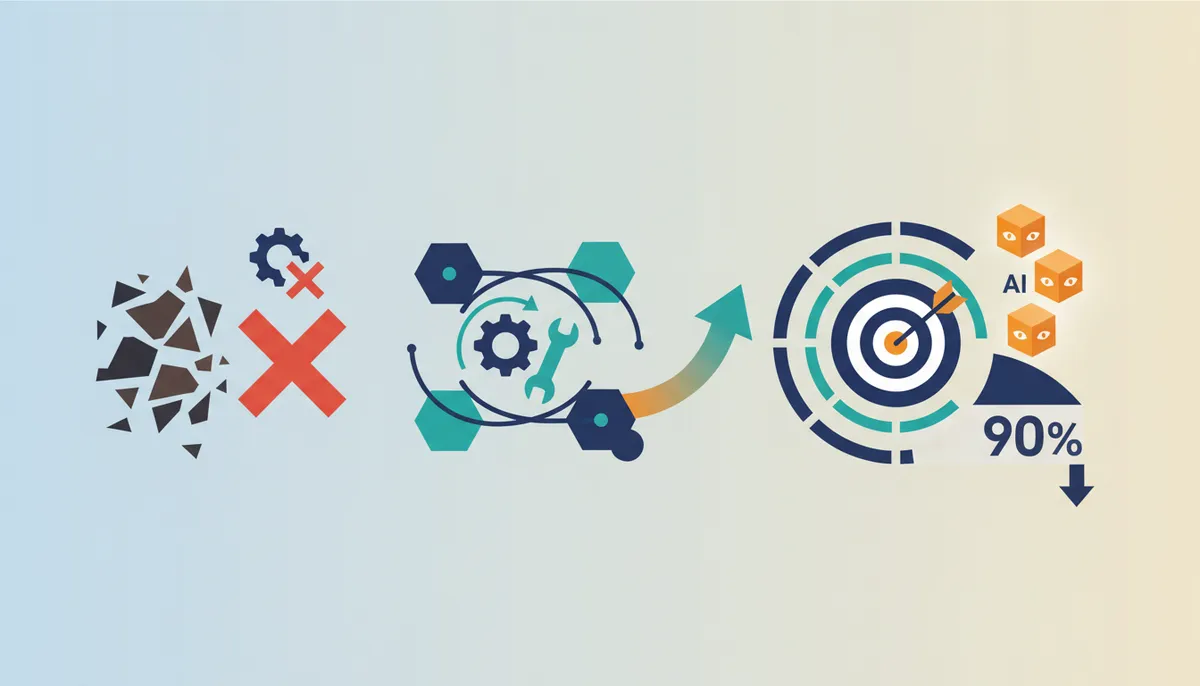
Zero-signup data access eliminates per-service credential management by shifting trust to the network layer. Unlike Scraping, which returns raw HTML prone to breakage during site redesigns, or a Keyed API that halts execution when secrets expire, Overlay specialist agents exchange structured JSON immediately upon connection. This architecture removes the cold-start bottleneck where autonomous processes stall waiting for human email verification or OAuth consent. In this model, a single network identity grants access to a directory of pre-authorized specialists serving live weather, transit, and financial data.
The operational consequence is significant: agents can provision themselves on new infrastructure without manual intervention for every external data source. This shift allows builders to bypass the fragility of static credentials entirely. However, reliance on network-level trust introduces a dependency on the availability of specialist nodes rather than just endpoint uptime. For enterprises, the strategic value lies in deploying agents that require zero manual provisioning to access diverse data types.
Application: Deploying Autonomous Agents for Live Crypto and Weather Data
An agent requiring Bitcoin prices, Berlin weather, and transit schedules spins up instantly by querying the directory for specialist agents rather than waiting for human credential provisioning. This architectural shift eliminates the cold-start latency where autonomous processes stall during email verification or OAuth consent flows. Instead of parsing fragile HTML from scraping or managing rotating secrets for keyed APIs, the agent retrieves structured JSON payloads through pre-authorized network channels. Technical implementations now use real-time WebSocket connections to maintain persistent data streams, removing the polling overhead inherent in legacy REST-based retrieval methods.
Operationalizing this pattern often involves defining role-based teams, such as a documented "Market Research Crew" where specific entities are tasked to collect and analyze facts without manual intervention. The critical distinction lies in the trust boundary; authentication occurs at the network layer via virtual addresses, meaning a single identity grants access to diverse data types including financial indices and environmental sensors.
However, this model introduces a dependency on the continuous availability of external specialist nodes within the overlay. If a specific weather or crypto specialist goes offline, the requesting agent cannot fall back to a secondary endpoint without explicit logic to query the directory again for a replacement. Builders must design retry mechanisms that detect these specific network-level absences rather than standard HTTP timeout errors. For organizations evaluating deployment strategies, AI Agents News recommends focusing on these network-level trust architectures to achieve true autonomy. The trade-off is a shift from managing individual API contracts to monitoring the health of the peer-to-peer directory itself.
Scraping vs Keyed APIs vs Overlay Networks for Agent Reliability
Scraping fails silently on site redesigns, keyed APIs halt when secrets expire, while Overlay specialist agents break only if a node leaves the network. Traditional Scraping returns raw HTML requiring brittle parsers that collapse under minor DOM shifts or aggressive bot detection. Keyed API implementations deliver structured JSON but introduce single points of failure where rate limits or rotation deadlines stall autonomous workflows. In contrast, Overlay specialist agents maintain structured output by shifting trust to the network layer, eliminating per-service credential management entirely.
| Approach | Auth Method | Data Shape | Failure Trigger | Operational Overhead |
|---|---|---|---|---|
| Scraping | None (fragile) | Raw HTML | Site redesign | High (parsing logic) |
| Keyed API | Per-service key | Structured JSON | Key expiry | Medium (secret rotation) |
| Overlay Agents | Network handshake | Structured JSON | Node offline | Low (network trust) |
The critical distinction lies in failure propagation: a scraped page yields garbage data without error flags, whereas a missing overlay node simply returns no route. Enterprises deploying autonomous agents must weigh the cost of human-in-the-loop onboarding against the risk of silent data corruption. While Keyed API systems suit stable, long-lived services with dedicated owners, they struggle in flexible environments requiring rapid agent provisioning. Overlay routing lets builders construct systems where ground truth arrives via verified channels rather than fragile HTML snapshots.
About
Diego Alvarez, Developer Advocate at AI Agents News, specializes in constructing end-to-end autonomous systems using frameworks like CrewAI and LangGraph. His daily work involves rigorously testing agent reliability, where he frequently encounters this exact friction point: autonomous processes stalling at human-centric authentication barriers. As engineers building multi-agent systems know, an agent requiring manual OAuth consent at 3 AM is fundamentally broken. Diego's hands-on experience benchmarking coding agents and designing tool-use patterns provides the practical foundation for analyzing overlay networks as a critical infrastructure layer. At AI Agents News, the team focuses on solving these specific engineering bottlenecks for builders. This analysis connects Diego's direct observations of agent failure modes with the technical necessity of smooth data access, offering a factual perspective on how to achieve true autonomy without relying on fragile scraping or manual intervention.
Conclusion
Scaling autonomous operations reveals that silent data corruption from brittle scrapers creates a hidden liability far costlier than explicit node failures. As basic agentic tools commoditize in 2026, the operational bottleneck shifts from acquiring access to verifying the integrity of the data stream itself. Relying on keyed APIs introduces unavoidable single points of failure where secret rotation deadlines stall entire workflows, whereas shifting trust to the overlay network distributes this risk across a resilient mesh. Organizations must stop treating credential management as a solved problem and instead architect for environments where authentication is intrinsic to the routing logic.
Deployments should prioritize orchestration layer designs that tolerate missing routes over those risking garbage output from stale parsers. This transition requires moving away from per-service account creation toward architectures where container isolation ensures that a single compromised node cannot poison the broader dataset. Start by mapping your current agent dependencies to identify which workflows rely on static keys that expire versus those capable of using flexible routing. Only by isolating these fragile links can teams build systems that remain reliable as the underlying web infrastructure evolves.
Frequently Asked Questions
Agents stall because they cannot solve email verification or CAPTCHA challenges alone. This forces reliance on human intervention for every new data source the agent needs to reach.
Scraping breaks silently when HTML structures change, returning stale data without errors. Unlike keyed APIs, this method lacks explicit timeout signals to alert the orchestration layer of invalid content.
Overlay networks replace per-service account signups with network-level trust handshakes. This allows agents to join a network infrastructure and access ground truth data immediately without storing secrets.
Most free tools still require initial human clicks for API keys or dashboard access. True autonomy needs a container setup that inherently trusts the network connection.
Pilot Protocol provides permanent virtual addresses and encrypted tunnels for direct service discovery. Agents use these pre-authorized network channels to fetch live data without managing rotating tokens.
References