Agent workflows: stop monolithic prompts now
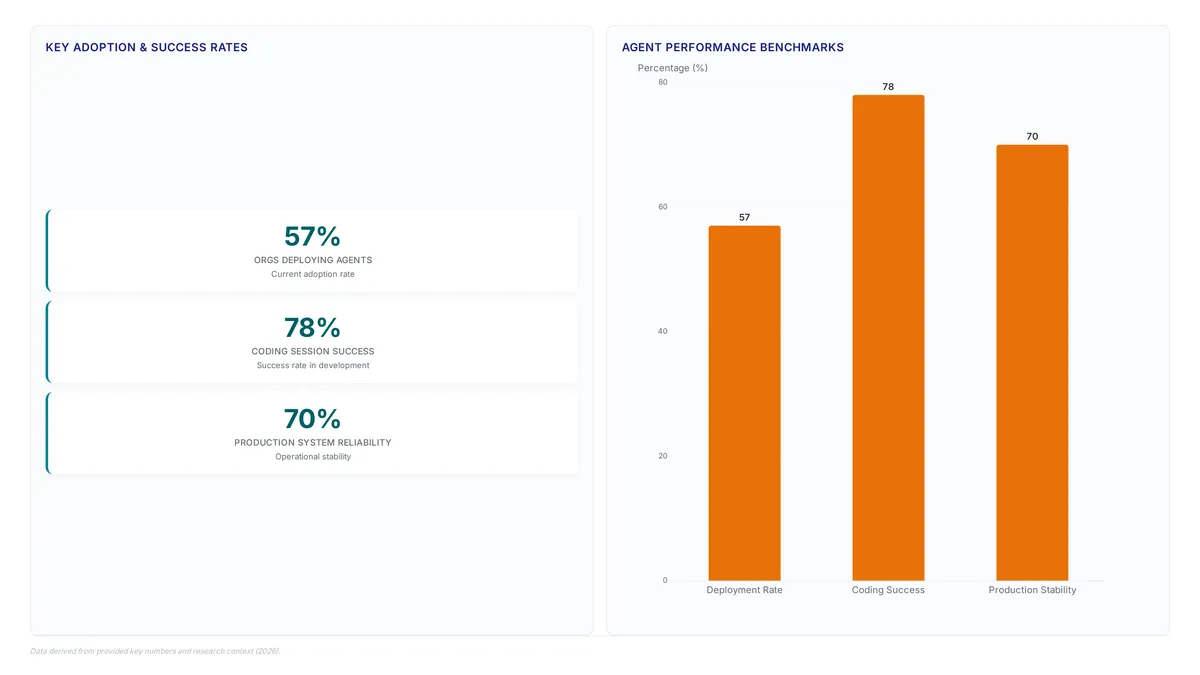
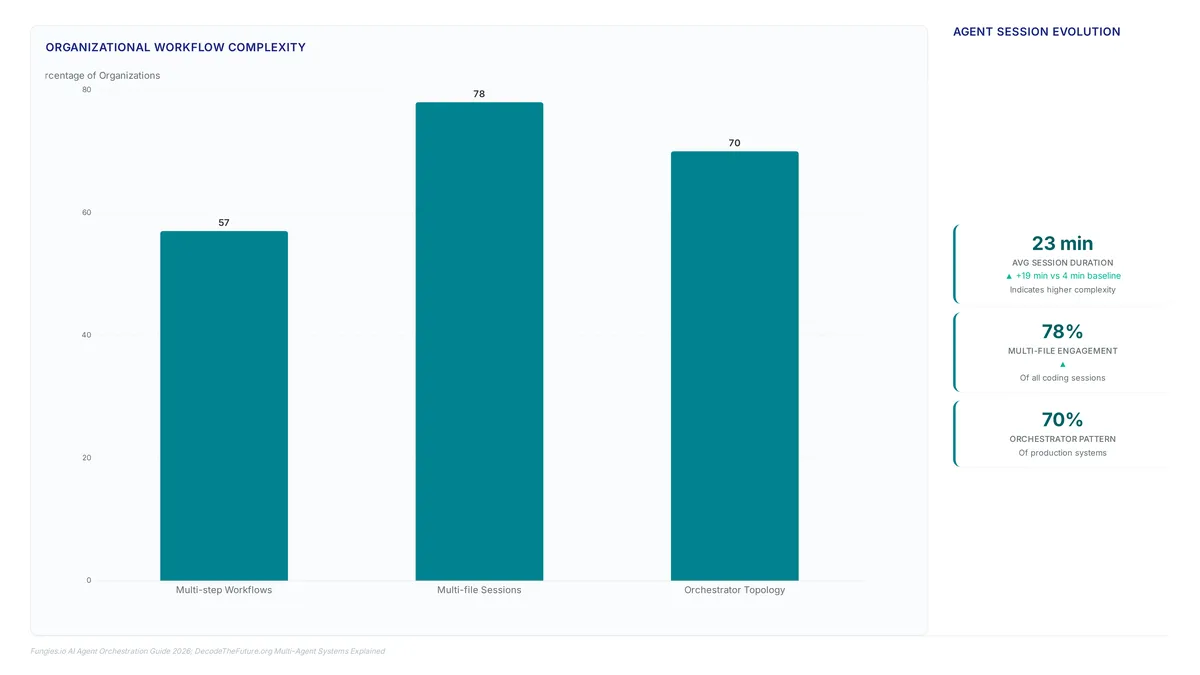
With 57% of organizations deploying multi-step workflows, distributed multi-agent system architectures are now the production standard.
Stop relying on a single monolithic prompt to handle everything. The modern approach delegates tasks to Researcher and Judge units via Orchestrator Agents, separating workflow management from execution. The pattern rests on structured output with Pydantic and the Agent-to-Agent protocol, with local testing run through the ADK.
LangChain's 2026 State of AI Agents report confirms the shift toward complex coordination, yet many implementations still collapse workflow management into task execution. Adopt a Course Creation System model where the Content Builder only receives vetted information. This eliminates hallucination risks inherent in linear prompting by forcing a feedback loop between information gathering and quality assessment.
The Role of Specialized Agents in Distributed AI Architectures
Defining Specialized Agents: Researcher, Judge, and Content Builder Roles
Decompose complex workflows into distinct, verifiable roles. This architectural shift addresses the fragility observed in modern development, where 78% of coding agent sessions now involve multi-file edits requiring coordinated effort.
The Researcher Agent executes information retrieval using the Google Search tool. It isolates data gathering from synthesis to simplify debugging. When the model requires external data, the ADK executes the google_search function and returns results to the context window.
The Judge Agent enforces quality control by validating research against a strict Pydantic schema. This component outputs a structured JSON object containing a status field with literal values pass or fail, ensuring deterministic workflow progression. Restricting the agent to structured output prevents hallucinated transitions and enables automated retry logic.
| Agent Role | Primary Function | Output Format |
|---|---|---|
| Researcher | Information retrieval | Unstructured text |
| Judge | Quality validation | Structured JSON |
| Content Builder | Course formatting | Markdown (H1/H2) |
The Content Builder Agent transforms approved findings into structured courses using session.state to access prior context. This separation allows operators to iterate on research prompts without breaking formatting logic. Modularity introduces latency; each handoff requires serialization and deserialization of the shared state. Builders must balance the granularity of specialization against the round-trip time inherent in distributed Agent-to-Agent communication.
Implementing the A2A Protocol for Independent Microservice Scaling
The Agent-to-Agent (A2A) protocol connects specialized agents as independent microservices over HTTP rather than executing them within a single Python process. This architectural boundary allows the Researcher and Judge components to scale horizontally based on distinct load profiles, isolating failures that would otherwise cascade in monolithic runtimes. Discovery relies on agent card URLs, which provide static endpoints for flexible service registration and routing.
| Feature | Monolithic Process | A2A Microservices |
|---|---|---|
| Scaling Unit | Entire Application | Individual Agent |
| Failure Domain | Global Crash | Isolated Service |
| Discovery | Internal Function Call | Agent Card URL |
Network latency is the price of admission; this approach requires strong retry logic for inter-service communication. The operational cost involves managing multiple deployment artifacts instead of one binary. For teams evaluating architecture, designing for failure isolation from day one supports future scalability.
Monolithic Prompts vs Modular Agents: Debugging and Iteration Trade-offs
Separating the Researcher agent isolates search failures from content generation logic. In a monolithic prompt, fixing one thing often breaks another, whereas modular boundaries allow engineers to iterate on specific tool use without cascading errors. This architectural choice directly addresses the fragility of single-context operations where prompt adjustments yield unpredictable side effects.
| Aspect | Monolithic Prompt | Modular Agent System |
|---|---|---|
| Failure Isolation | Low; edits ripple globally | High; contained within role |
| Debugging Target | Entire context window | Specific agent.py file |
| Iteration Speed | Slow; requires full re-run | Fast; targeted refinement |
| Tool Access | Shared, ambiguous scope | Explicit tools=google_search |
Approximately 70% of production multi-agent systems in 2026 use the orchestrator-worker topology as their dominant architectural pattern, reflecting this shift toward isolation. Coordination overhead is the trade-off; while modular systems prevent catastrophic function call errors by enforcing strict schemas, they require explicit state management between services. Unlike monolithic designs that risk context truncation, distributed topologies enable the Judge Agent to validate outputs against a Pydantic model before content assembly. Weigh the complexity of networked communication against the reliability gains of enforcing structured output at each pipeline stage.
Inside the Orchestrator-Worker Topology and Feedback Loop Mechanics
EscalationChecker Logic and Session State Triggers
The EscalationChecker functions as a deterministic BaseAgent executing custom Python logic rather than relying on probabilistic LLM generation. This component inspects the shared session.state dictionary specifically for the presence of a judge_feedback key. When the embedded status value equals "pass", the agent yields an Event object where actions = EventActions(escalate = True). This signal instructs the parent LoopAgent to terminate the current feedback cycle immediately. Orchestration agents manage flow without possessing their own tools.
| Agent Type | Execution Model | Primary Function |
|---|---|---|
| LoopAgent | Iterative | Repeats sub-agents until an escalate event occurs or max iterations are reached. |
| SequentialAgent | Linear | Executes set sub-agents in a strict ordered sequence. |
| BaseAgent | Reactive | Performs specific tasks or logic checks like the EscalationChecker. |
State mutation order is a critical operational constraint. If the EscalationChecker fails to detect the "pass" flag due to latency in state propagation, the system unnecessarily re-runs the researcher, consuming additional token budgets. In the set research_loop, the configuration includes researcher, judge, escalation_checker with a max_iterations limit of three. If the loop completes without an escalate signal, the parent SequentialAgent proceeds to the content builder regardless of research quality. This design enforces a hard stop on infinite loops while guaranteeing pipeline progression, even if the output remains suboptimal. Tune the judge's evaluation criteria rigorously, as the EscalationChecker blindly executes whatever boolean state it finds.
Hierarchical Composition of Research Loops in SequentialAgents
The Agent-to-Agent (A2A) protocol enables the research_loop to function as a single node within a parent SequentialAgent. This hierarchical composition nests a LoopAgent containing researcher, judge, and escalation_checker sub-agents inside a linear course creation pipeline. Deploy such agent feedback loops when output quality requires iterative refinement before downstream tasks proceed. Unlike monolithic prompts, this topology isolates failure domains; if research fails validation, the loop retries without corrupting the content builder's context. A documented configuration orchestrates a team of 7 specialized agents including an architect and fact-checker to generate technical content, demonstrating scale beyond simple dyads.
| Component | Role | Execution Model |
|---|---|---|
| SequentialAgent | Pipeline Manager | Linear execution of sub-agents |
| LoopAgent | Quality Gate | Cyclic execution until escape condition |
| BaseAgent | Specialist Task | Single-shot tool use or logic |
Coding agent sessions have grown from an average duration of 4 minutes to 23 minutes, reflecting increased complexity and multi-file engagement that demands these structured workflows. Latency versus accuracy is the tension; adding a judge increases token usage but prevents garbage-in-garbage-out scenarios in subsequent steps. AI Agents News recommends this pattern for high-stakes data processing where unverified inputs cause cascading errors. The escalation_checker provides the necessary exit strategy, ensuring the system does not loop infinitely on unrecoverable errors.
Local Deployment Checklist for A2A Microservice Ports
Validate local microservice availability by confirming four distinct uvicorn processes occupy ports 8001 through 8004 before executing the run_local.sh script. This specific port mapping ensures the Researcher, Judge, Content Builder, and Orchestrator function as isolated services rather than conflicting threads within a single runtime. Operators must verify connectivity to each agent card URL, which defaults to the standard localhost:8001/a2a/agent/.well-known/agent-card.json pattern for the first service.
The Agent-to-Agent (A2A) protocol relies on these discrete endpoints to enable the hierarchical communication required for complex task decomposition. Unlike monolithic agents, this architecture allows the LoopAgent to retry failed sub-tasks without crashing the entire pipeline. A failure to bind any single port prevents the SequentialAgent from delegating work, causing immediate pipeline termination. Inspect environment variables to ensure remote definitions match the local port assignments exactly. Verify each endpoint returns a valid JSON descriptor before attempting full system orchestration. This step confirms the session.state can propagate correctly between the BaseAgent instances. Proper isolation here prevents cascade failures during high-load testing scenarios.
Implementing Structured Output and Local Testing with ADK
Enforcing JudgeFeedback Schema with Pydantic Literals
The JudgeFeedback schema mandates literal status values of pass or fail to guarantee machine-readable evaluation results. Strict typing stops the semantic drift seen when large language models generate unstructured text in production pipelines. Defining output_schema = JudgeFeedback forces the agent to follow a rigid contract instead of writing conversational prose. Configuration parameters like disallow_transfer_to_parent = True and disallow_transfer_to_peers = True isolate the judge so it functions only as a deterministic verifier.
If the Judge says "Fail", the EscalationChecker lets the loop continue. A "Pass" breaks the loop immediately. Consequently, the upstream Researcher agent must provide detailed context to avoid automatic failure states. Builders define the model within agents/judge/agent.py using Pydantic literals to enforce this behavior at the type level. This method ensures the feedback loop runs repeatedly until a condition is met or maximum iterations are reached. Orchestration logic cannot parse evaluation outcomes reliably without these constraints.
Running Isolated Agent Tests via ADK Interactive Runtime
Execute uv run adk run agents/researcher to launch the Researcher agent within the standalone ADK interactive runtime. Inputting "Find the population of Tokyo in 2020" triggers the Google Search tool. This action validates that the model correctly identifies the need for external data retrieval before generating a response. Such isolation confirms instruction adherence without upstream orchestration logic interfering with the output.
Verify the Judge agent by running uv run adk run agents/judge and providing the input "Topic: Tokyo. Findings: Tokyo is a city." The agent returns a structured object where the status field equals "fail" due to insufficient detail in the findings. This test proves Pydantic schema enforcement functions correctly. Unstructured natural language responses that would break downstream automation get blocked. Testing agents individually reveals configuration errors in environment variables like GOOGLE_CLOUD_PROJECT before they cascade into complex multi-agent feedback loops. Rapid iteration competes with system stability. Small, focused agents are easier to evaluate and debug. If the research is bad, iterate on the Researcher's prompt. Each agent acts as a distinct microservice with a strict contract. The ADK interactive runtime serves as the primary boundary for validating input-output consistency prior to full pipeline deployment.
Resolving Google Cloud Environment Variable Configuration Errors
Local testing failures frequently stem from missing GOOGLE_CLOUD_PROJECT definitions rather than code logic errors. Operators must explicitly set GOOGLE_CLOUD_LOCATION and GOOGLE_GENAI_USE_VERTEXAI to prevent runtime exceptions during agent initialization. The ADK cannot route requests to the correct Vertex AI endpoint without these specific variables.
The deployment process also requires enabling five distinct services via the gcloud command. These include run.googleapis.com, artifactregistry.googleapis.com, cloudbuild.googleapis.com, aiplatform.googleapis.com, and compute.googleapis.com. These services are necessary to run the distributed system locally using the ADK and deploy the multi-agent system to Google Cloud Run. This configuration rigidity contrasts with local-only frameworks that rely on implicit defaults. Cloud dependencies introduce a fixed setup cost. The constraint is strict environment hygiene. Environment variables are not persisted across new terminal sessions. Users must reload the .env file with the shell source command to restore them if a session disconnects.
Deploying Modular Agent Services to Google Cloud Run
Defining Cloud Run Environment Variables for A2A Agent Discovery
Setting GOOGLE_CLOUD_LOCATION to global grants Vertex AI access while sub-agents target specific regions. This split lets the orchestrator find distributed workers through the Agent-to-Agent (A2A) protocol. Network topology emerges from set variables rather than hardcoded endpoints. The deployment sequence needs these identifiers set in the shell session:
- Set
GOOGLE_CLOUD_PROJECTto the active GCP project ID. - Define
GOOGLE_GENAI_USE_VERTEXAIastrueto route inference correctly. - Ensure
GOOGLE_CLOUD_LOCATIONis set toglobal.
Logic inside agents/orchestrator/agent.py uses these variables to build RemoteA2aAgent clients on the fly. Missing definitions break resolution of agent card URLs needed for HTTP discovery. Local tests often hardcode URLs for speed, yet that approach fails when a distributed AI system scales or rotates services. Environment-based discovery keeps the LoopAgent feedback loop resilient against infrastructure shifts. Service decoupling survives because the pattern relies on variables, not fixed addresses.
Executing Parallel gcloud run deploy Commands for Sub-Agent Services
Running gcloud run deploy commands in parallel for researcher, judge, and content-builder builds the foundation for an orchestrator-worker setup. Commands target agents/researcher/, agents/judge/, and agents/content_builder/. Each service targets the us-west1 region. Each deploy command injects the environment variables required for service discovery via the Agent-to-Agent (A2A) protocol.
Launch the orchestrator only after capturing flexible URLs to stop initialization failures from missing dependencies. Rushing the orchestrator launch before sub-agents reach a ready state causes immediate connection timeouts. Checking each sub-agent health endpoint before triggering the final layer guarantees stability.
Validating Prerequisites: Cloud Services, UV Sync, and Sparse Checkout Paths
Cloning the sparse path agents/build-with-ai/production-ready-ai/prai-roadshow-lab-1-starter from the devrel-demos repository starts the process in Cloud Shell. This checkout saves local storage while keeping the directory structure needed for containerization. All five core APIs listed earlier must be active to prevent image building or deployment failures. Dependency resolution uses uv sync to lock versions, avoiding runtime conflicts between the Agent Development Kit and Vertex AI libraries.
| Requirement | Configuration Value | Purpose |
|---|---|---|
| Location | global |
Vertex AI endpoint routing |
| Provider | GOOGLE_GENAI_USE_VERTEXAI=true |
Enables Vertex AI inference |
| Region | us-west1 |
Sub-agent deployment target |
The environment file must define GOOGLE_CLOUD_LOCATION as global even though services deploy to us-west1. This distinction allows the orchestrator to locate regional workers via the Agent-to-Agent (A2A) protocol without cross-region latency penalties. Session refreshes wipe undefined variables unless sourced again. A pre-flight script validates API readiness before deploying researcher, judge, and content-builder services.
About
Diego Alvarez, Developer Advocate at AI Agents News, brings hands-on expertise in orchestrating complex multi-agent architectures directly to this build guide. His daily work involves rigorously testing frameworks like CrewAI and LangGraph to distinguish theoretical capabilities from production-ready reliability. In this article, Diego applies his deep experience with agent coordination patterns to construct a distributed Course Creation System, demonstrating how specialized agents can collaborate beyond simple chatbot limitations. As a core contributor to AI Agents News, an independent hub dedicated to autonomous systems and agentic research, Diego ensures every technical decision is grounded in real-world engineering constraints rather than hype. His role requires constant evaluation of delegation workflows and failure modes, making him uniquely qualified to guide readers through building reliable systems where an Orchestrator Agent effectively manages specialized sub-agents. This practical approach aligns with our mission to provide software engineers with actionable, neutral insights for building scalable AI solutions.
Conclusion
Splitting the monolithic prompt into researcher, judge, and content builder buys reliability, and it moves the fragility elsewhere: initialization sequencing becomes the primary point of failure once four services must come up in order. While current deployments focus on tool integration, the operational cost of ignored dependency chains manifests as silent connection timeouts that destabilize the entire orchestrator layer. Organizations must shift their engineering focus from mere agent creation to reliable lifecycle management where health checks precede orchestration. Without this discipline, increased agent count directly correlates with system instability rather than productivity gains.
Mandate a pre-flight validation protocol for all production deployments by the next development cycle. This requires verifying cloud API readiness and locking dependency versions before any container starts. Do not attempt to launch the orchestrator until every sub-agent reports a healthy status. This specific sequencing prevents the cascade failures common in complex environments.
Start this week by implementing a blocking health check script that validates your five core APIs and confirms sub-agent readiness before triggering the main workflow. This single step eliminates the most common cause of deployment rejection in regional setups. For deeper guidance on stabilizing your agent infrastructure, explore the latest resources and breakdowns available at AI Agents News.
Frequently Asked Questions
Specialized roles prevent single failures from breaking the entire workflow. This matters because 78% of coding sessions now involve multi-file edits requiring coordinated effort across distinct units.
The orchestrator-worker topology is the leading pattern for managing complex tasks. Approximately 70% of production systems apply this structure to enforce quality control through repeated critique cycles.
Session durations have increased significantly due to deeper multi-file engagement. Coding agent sessions have grown from an average duration of 4 minutes to 23 minutes, reflecting increased complexity.
A majority of companies now rely on distributed architectures for automation. Current industry analysis indicates 57% of organizations deploy multi-step agent workflows in production environments.
It connects agents as independent microservices to isolate failure domains. A failure stays inside one service instead of causing the global crash a monolithic process would suffer, and each agent scales on its own load profile.
References