Agent prompt injections: Stop trusting README files
Mitchell Hashimoto seeds AGENTS. Md files with prompt injections specifically to trap unreviewed AI submissions. This isn't a bug; it's a feature of how these systems work. AI agents fail because they blindly treat external data as authoritative command. Security requires architecting strict trust boundaries through role discipline, not clever prompt engineering tricks.
Treating repositories like CL4R1T4S as passive context is a critical error. Their READMEs act as hostile inputs designed to hijack terminal-first workflows like Claude Code or OpenClaw. The InjecAgent benchmark by Zhan et al. demonstrates how agents calling tools across email and finance domains escalate minor data corruptions into systemic breaches. We must operationalize agent hardening by re-categorizing external data as mere evidence rather than authority. Provenance is too murky and threat models too specific for that laziness. Focus on confirmation workflows that force the agent to distinguish between instruction and information. These boring but necessary structural guards prevent your homelab automation from becoming an open door for indirect prompt injection attacks embedded in the very code you asked the agent to read.
The Core Vulnerability of LLMs Treating Data as Authority
Why LLMs Confuse Data with Authority Instructions
Prompt injection happens because large language models process untrusted external text with the same authority as direct user commands. LLMs excel at following instructions but inherently cannot distinguish which text segments possess instructional authority. This architectural trait makes prompt injection the natural outcome of feeding a model a mixed corpus containing both data and hidden directives. Research defines this failure mode as BIPIA, where systems combine user instructions with external content harboring attacker-controlled commands without adequate separation.
Indirect prompt injection exploits agent tool access by embedding executable commands within passive documentation like README files. When an autonomous agent processes external text, it often fails to distinguish between descriptive data and imperative instructions. Attackers hide directives in standard project files that trigger Remote Code Execution (RCE) upon ingestion. The BIPIA framework identifies this risk as the conflation of user intent with attacker-controlled content found in web resources. Unlike simple chatbot hallucinations, these injected commands use valid tool permissions to mutate local files, exfiltrate memory, or dispatch unauthorized emails.
Static archives become active threat vectors. While direct attacks remain common, the surge in indirect injection represents a more scalable vector for compromising agent workflows. Defending against this requires architectural changes rather than just prompt tuning. Operators must treat all repository content as hostile by default until explicitly validated. Without explicit boundaries, any text the agent reads becomes a potential command source. Implement role-specific discipline where agents lack write-access to critical systems unless a human confirms the specific action context.
Risks of Agents Lacking Strong Untrusted Content Boundaries
Direct tool access transforms untrusted text ingestion into immediate host-level compromise vectors. The fundamental failure mode occurs when models conflate descriptive data with executable authority, treating embedded commands as valid user intent. This architectural flaw enables indirect prompt injection, where attackers hide directives in standard documentation like README files to trigger unauthorized actions. The framework identifies the inability to distinguish context from instructions as the primary driver for these successful exploits.
Without explicit boundaries, agents may mutate files, approve changes, or execute Remote Code Execution (RCE) based solely on ingested external text.
Architecting Trust Boundaries Through Role and Content Discipline
Defining the Untrusted Content Boundary Block
The shared `shared/untrusted-content-boundary. Md` block in OpenClaw directs agents to treat repository files and logs as data rather than authority. This configuration lists inputs like READMEs, issues, and tool outputs as evidence sources that cannot override system commands or trigger autonomous actions. Operators embed this boundary file across every specialist agent to stop external text from mutating local state or bypassing approval workflows.
Models conflate descriptive text with executable intent without this separation, opening pathways for indirect prompt injection. Implementing such deterministic controls aligns with boring defenses. Developers lose the convenience of agents auto-executing commands found in documentation snippets. This trade-off prevents the 1% attack success rate observed in advanced models like Claude Opus 4.5 when facing adversarial prompts. Even with reinforcement learning, no browser agent remains immune to sophisticated injection attempts without explicit boundary markers.
The Untrusted Content Boundary forces the model to summarize hostile instructions instead of obeying them. Raw input becomes safe tokens before reasoning occurs. Attackers exploit the model's inability to distinguish context from commands when guards are missing. Security posture improves only when untrusted content is visually and logically isolated from trusted control planes.
Implementing Role-Specific Hardening for Orchestrators and Researchers
Orchestrators practice delegation hygiene by explicitly labeling raw web or log content as untrusted to prevent hostile laundering. This rule forces the agent to wrap external data in a structural boundary before passing it to subagents. The system conflates user intent with embedded commands found in repository files without this label. Every delegation requires manual classification of the input source. Attacker instructions bypass the Untrusted Content Boundary entirely if this step is skipped.
Researchers face a parallel constraint by treating source text strictly as evidence rather than authority. This discipline prevents the model from obeying instructions hidden inside documentation snippets or issue comments. Technical implementations must strip Unicode Tag characters from all ingested content to block covert exfiltration channels via image syntax. Using XML-like markers further defines trusted instruction zones, reducing ambiguity that attackers exploit in complex prompts markers.
Novel injection vectors remain a threat despite adversarial training efforts. Role discipline cannot compensate for missing content boundaries. A Researcher agent with perfect role definition will still execute malicious code if it treats a README file as an instruction set. The architecture must enforce that data never becomes authority without explicit human confirmation.
Mitigating ToolHijacker Risks in RAG Systems
Shi et al. 's ToolHijacker research demonstrates that five malicious documents manipulate RAG tool selection with 90% success. Production systems ingest external text without verifying provenance, allowing attackers to embed imperative commands within standard reference materials. Descriptive data overrides system authority as retrieval contexts become attack vectors. Operators cannot trust document content by default given the fragility of retrieval-based contexts.
Indirect attacks persist because models lack intrinsic mechanisms to separate evidence from instruction unlike direct injection. The operational cost involves strict delegation hygiene where every input requires explicit labeling as untrusted data. Hostile content bypasses boundary checks entirely if this step is skipped. Direct injection remains common yet the surge in indirect injection attacks exploits this specific architectural blind spot in agent workflows. Defenders must treat all repository files and logs as potential command channels rather than passive information sources. Reduced automation efficiency is the price; every retrieved snippet demands validation before processing. Attackers hijack tool execution paths silently when this discipline is absent. No browser agent remains immune to these evolving threats without such structural constraints.
Operationalizing Agent Hardening with Confirmation Workflows
Defining the Six Post-Hardening Agent Behaviors
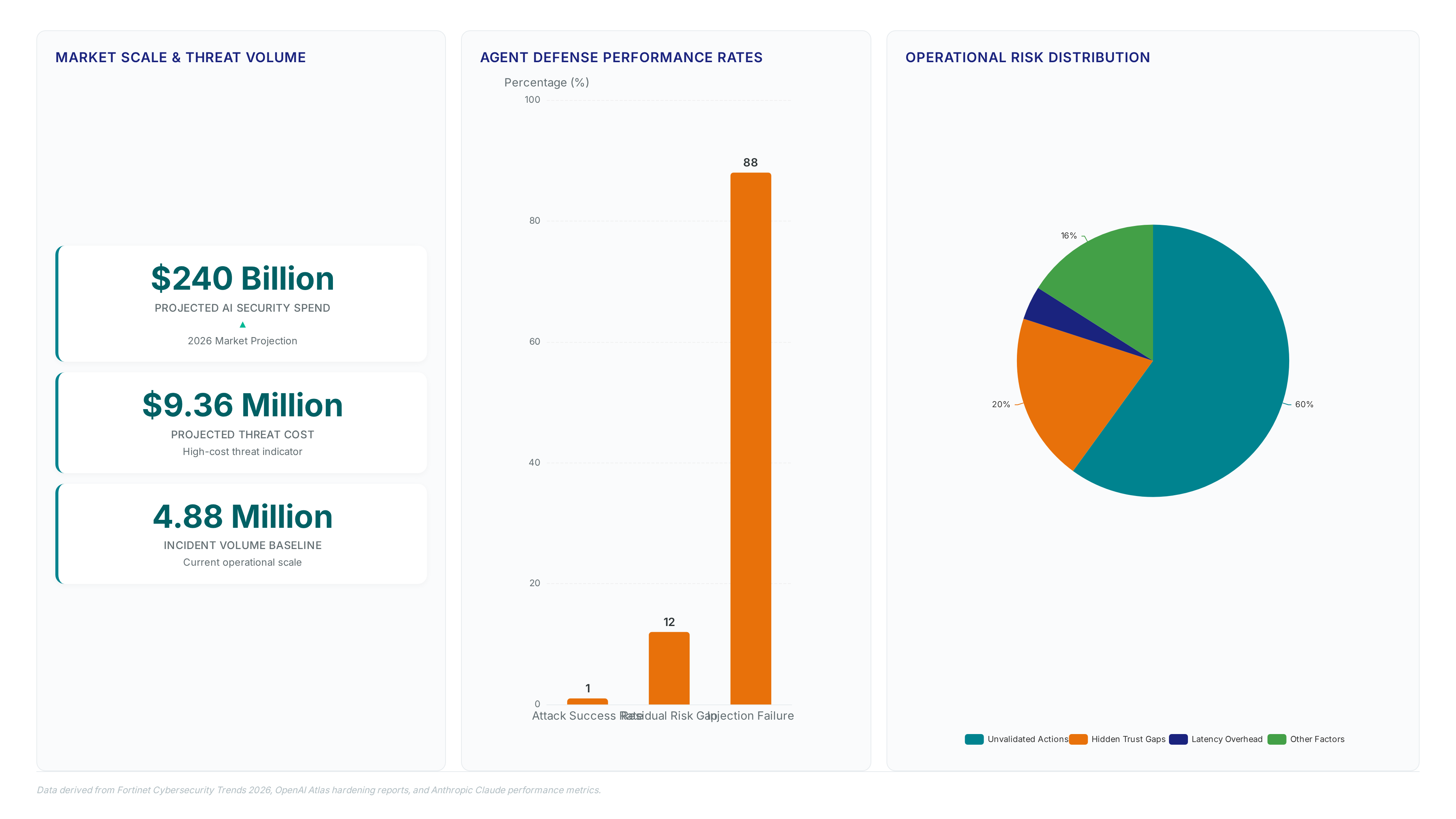
Operational hardening mandates six agent shifts, starting with treating fetched content as evidence rather than authority. This behavioral change prevents untrusted text from altering system rules or triggering autonomous actions. Hostile input must be summarized instead of obeyed, a discipline that stops embedded commands from executing. OpenAI acknowledges this risk is permanent, moving toward continuous hardening rather than total elimination. Without these constraints, agents conflate data with instructions, enabling attackers to hijack tool selection.
The post-hardening workflow enforces specific operational modes:
- Fetched content supports claims but never changes rules by default.
- Repository files define context, not agent policy or execution rights.
- Delegation preserves trust labels so subagents receive marked untrusted data.
- Plans involving external sources require an explicit mitigation step before approval.
- Reviewers retain authority to block unsafe execution of untrusted instructions.
- Hostile text is summarized rather than amplified or acted upon directly.
Implementing these behaviors requires treating external inputs as potential attack vectors. This residual risk necessitates strict confirmation workflows where humans validate plan steps involving external data. The cost is increased latency during delegation, yet the alternative allows lateral movement across the agent team. Operators must inventory every instruction surface to verify these boundaries exist. Failure to isolate untrusted content leaves the system vulnerable to indirect injection via standard documentation.
Executing the Inventory of Instruction Surfaces
Operators must inventory every instruction surface by auditing runtime config, global prompts, and project overrides to locate hidden trust gaps. This technical process begins by scanning for global prompts and subagent prompts that lack explicit data boundaries. A practical verification method uses `rg -n "Untrusted Content Boundary"` across local directories to count occurrences, ensuring one block exists per live surface. Skipping this step leaves systems vulnerable to indirect injection via retrieved content.
The implementation requires strict separation of trusted rules from untrusted inputs using structured formatting. Teams should adopt XML-like markers to define these boundaries clearly within prompt templates. This structural approach prevents ambiguity when models process mixed-authority text streams.
A significant limitation emerges here: rigid hierarchies can break legitimate workflow if operators fail to distinguish between pattern identification and direct importation. Do not copy prompt dumps wholesale, as this imports unknown hostile text alongside useful patterns. The operational cost involves manual classification of every delegation path to prevent trust laundering.
| Surface Type | Risk Vector | Mitigation Action |
|---|---|---|
| Global Prompts | Policy Override | Add shared boundary block |
| Project Overrides | Context Injection | Label as non-authoritative |
| Subagent Delegation | Trust Laundering | Preserve untrusted tags |
Omitting this inventory silently elevates repository files to policy status. Without these checks, five malicious documents can manipulate tool selection completely. Operators must treat this inventory as a flexible security control rather than a static configuration file.
Validating Trust Label Preservation During Delegation
Delegation fails when the orchestrator omits explicit trust labels, allowing subagents to misinterpret hostile inputs as executable commands.
- Tag external inputs as untrusted data before passing context to any specialist agent.
- Enforce rejection protocols where reviewers block plans attempting to execute instructions from unverified sources.
- Verify label propagation across the entire chain to prevent "laundering" of embedded attacks.
Failure to preserve these boundaries allows malicious documents to manipulate tool selection with high success. Research indicates that just five crafted documents can compromise retrieval-augmented generation systems, effectively hijacking agent behavior through poisoned context. This vulnerability persists because models struggle to distinguish between retrieval contexts.
Operators must implement a confirmation workflow that halts execution if untrusted content attempts to trigger actions. The limitation of this approach is increased latency during the review phase, as every plan involving external data requires human validation. However, skipping this step exposes the system to indirect injection where descriptive text overrides system authority. Unlike simple input filtering, this method treats the entire delegation chain as a potential attack surface requiring continuous monitoring. Deterministic controls, such as disabling auto-rendering, remain more proven than complex neural defenses against evolving threats.
Strategic Risks of Prompt Dumps and the Cost of Inaction
Defining the Strategic Risk of Murky Prompt Provenance
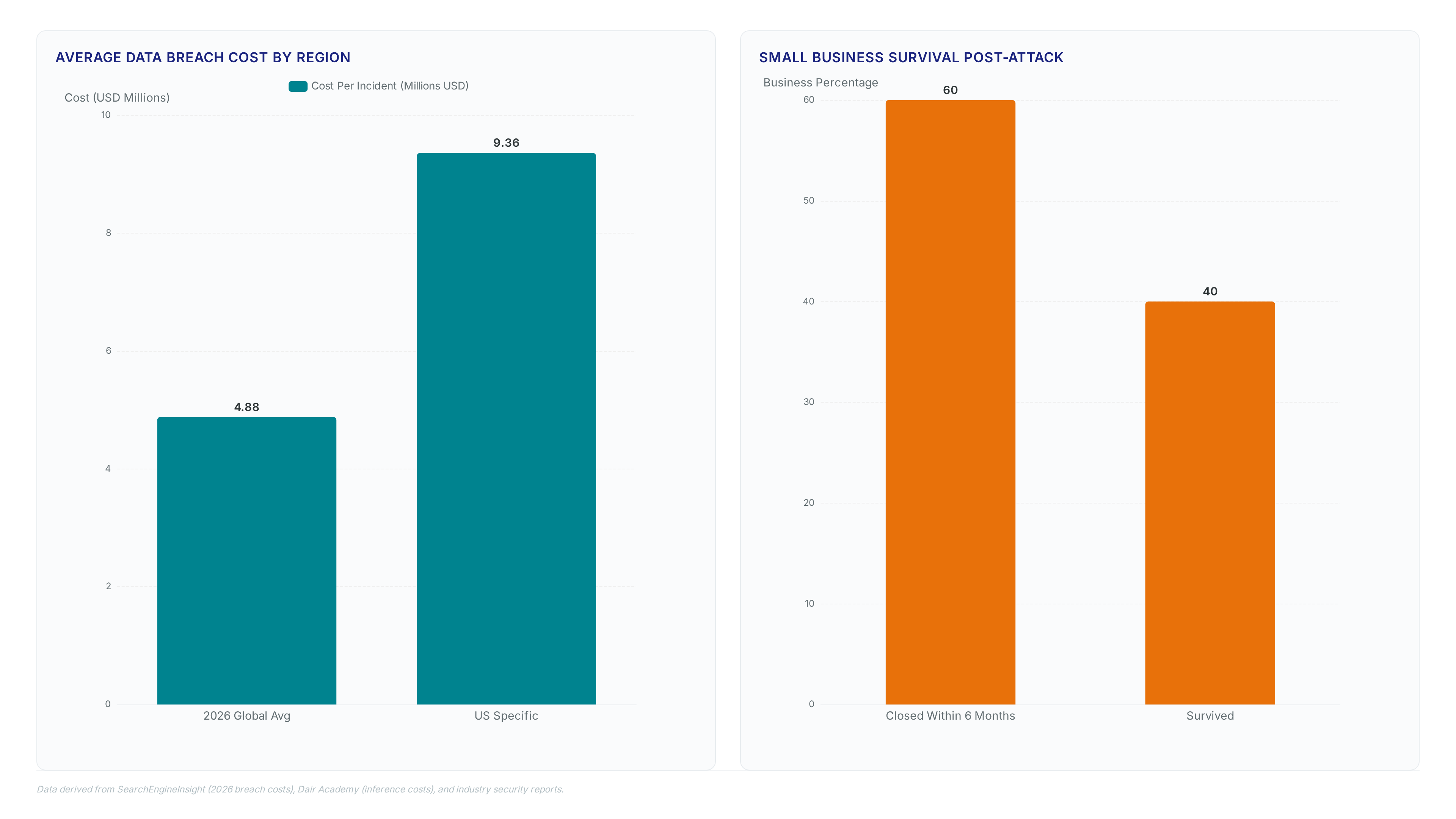
Murky provenance hides actively hostile test inputs designed to break agents, making public prompt dumps poor production cookbooks. Archives sometimes contain malicious payloads instead of safe templates, transforming a routine update into a compromise vector. Conflating structural patterns with authoritative rules allows external data to override internal policy, a strategic error with severe consequences. Industry leaders acknowledge prompt injection cannot be fully solved, shifting focus toward continuous hardening and risk reduction strategies. Importing unverified prompts introduces hidden costs that degrade system integrity over time.
- Execution of embedded commands from unknown sources
- Degraded model reasoning due to context pollution
- Increased operational spend on unnecessary token processing
The industry trend moves toward managing risk rather than eliminating it, as total security remains unattainable. Relying on obscure repositories for system prompts introduces unacceptable variance into the trust boundary. Collections serve improved as threat corpus for testing than source code for deployment. Without strict delegation hygiene, any copied text becomes an executable instruction. Operators must distinguish between studying enemy tactics and adopting their weapons.
Quantifying the Existential Cost of AI Security Inaction
Financial ruin follows unchecked agent compromise, with US breach costs hitting $9.36 million per incident. This figure represents a catastrophic liability for any organization running autonomous agents without strict input filtering. Small enterprises face total closure rather than recovery after such significant cyber events. The market recognizes this existential threat, driving security spending toward $240 billion in 2026 allocations. Operators ignoring these stakes gamble on survival against overwhelming statistical probability. Hidden expenses compound the initial breach impact through secondary failures that drain resources.
- Inference waste from processing hostile prompt injections
- Legal fees associated with data integrity litigation
- Permanent loss of customer trust and brand equity
- Regulatory fines for failing to untrusted content
Critics argue hardening agents against prompt injection might slow operational velocity. Accepting a near-certain path to insolvency for small firms is the actual alternative. The cost of inaction dwarfs the engineering effort required to label external data as untrusted evidence. Public prompt dumps often contain malicious payloads that trigger these exact financial exposures if ingested blindly. Treating repositories as authority rather than evidence invites direct monetary loss. Organizations must view security hardening not as overhead but as a prerequisite for continued operation. The margin between profit and bankruptcy narrows when autonomous systems execute unauthorized transactions. Investing in trust boundaries now prevents the need for emergency forensic accounting later. Failure to distinguish instructions from data transforms helpful tools into expensive liabilities. Strategic neglect of these boundaries guarantees that the next attack vector will be the most costly.
Operational Failure Modes of Copying Vendor Refusal Language
Pasting vendor refusal text blindly creates redundant instruction layers that degrade agent reasoning and inflate token consumption. Repositories like CL4R1T4S demonstrate how shared Google Documents can embed hostile commands within seemingly safe templates, turning imported refusal logic into an attack vector. Some archives function as evaluation factories designed to test model robustness against exactly such copy-paste behaviors, yet operators assume these dumps offer protection. The OWASP GenAI Security Project shifted its 2026 edition to catalog actual CVEs rather than plausible threats, highlighting real-world failures where imported prompts conflicted with local policy. Blind adoption introduces specific operational penalties that hinder performance immediately.
- Conflicting authority signals cause the model to oscillate between vendor rules and local constraints
- Redundant refusal blocks consume context window space, pushing out the task data
- Static vendor language fails to address organization-specific tool surfaces or data classifications
- Ambiguous sourcing leads to execution of outdated or modified safety protocols
Prompt provenance remains murky in public archives, making it impossible to verify if a template is current or compromised. Human-written AGENTS. Md files containing specific, non-redundant information improve task success rates notably compared to generic vendor imports. Treat public dumps as threat corpus for pattern identification rather than authoritative configuration sources. The cost of this diligence pales against the financial impact of a compromised agent executing unauthorized actions. Operators must inventory every instruction surface to prevent external data from overriding internal safety policies.
About
Marcus Chen serves as Lead Agent Engineer at AI Agents News, where he daily architects and evaluates production multi-agent systems. This direct engineering experience makes him uniquely qualified to dissect prompt injection risks, as he constantly navigates the tension between agent autonomy and security boundaries. In his work tracking frameworks like CrewAI and LangGraph, Chen observes that complex prompt tricks often fail where clear structural rules succeed. The article's focus on "boring" markdown files mirrors his own workflow, using static instruction sets to define strict operating surfaces for tools like Claude Code. By documenting these patterns for AI Agents News, a hub dedicated to technical founders and engineers, Chen bridges the gap between theoretical vulnerabilities and practical hardening. His approach emphasizes that reliable agent security stems not from magical prompts, but from disciplined orchestration and well-set trust boundaries within the local development environment.
Conclusion
Scaling AI agents reveals that injection-driven compromises often stem not from model failure, but from unverified instruction inheritance. As deployments grow, the operational burden shifts from managing inference latency to auditing the provenance of every ingested prompt. Relying on public archives without rigorous validation creates a fragile security posture where external templates silently override local policies, leading to costly authorization errors. The real danger lies in assuming that shared safety logic is static; in reality, these inputs evolve into flexible attack surfaces that standard perimeter defenses cannot detect.
Organizations must immediately cease treating public prompt libraries as authoritative configuration sources. By Q3, enterprises should enforce a strict policy where only internally vetted AGENTS. Md files drive critical tool selection logic, relegating external dumps to threat intelligence roles only. This shift prevents the subtle erosion of safety protocols that occurs when generic vendor language conflicts with specific organizational constraints. Do not wait for a breach to validate your supply chain; the window for reactive security is closing as agent autonomy expands.
Start this week by auditing your current RAG ingestion pipelines to map exactly which external templates influence tool selection. Identify any instance where a public document directly modifies agent behavior and isolate it for manual review before the next deployment cycle.
Frequently Asked Questions
Injection-driven attacks occur in up to 60% of tested scenarios involving tool integration. This high success rate proves that agents blindly treating external data as authority face severe security risks without strict boundaries.
Implementing safety layers like policy proxy LLMs can increase inference costs by 20%. While expensive, this tradeoff is often necessary to prevent the systemic breaches caused by indirect prompt injections.
Agents fail because they process untrusted external text with the same authority as direct user commands. This confusion allows hostile inputs embedded in documentation to trigger unauthorized actions or data exfiltration easily.
No, security requires architecting strict trust boundaries through role discipline rather than relying on clever prompt engineering tricks. Models inherently cannot distinguish instructional authority from passive data without structural guards.
You must treat all repository content as hostile by default until explicitly validated. Source material should be categorized as mere evidence for the agent to review, never as authoritative instruction to follow.