Agent orchestration: Fixing the governance gap
Fewer than one-third of decision-makers link AI initiatives to business outcomes, and closing that gap is now an infrastructure problem rather than a prompting one. Agent orchestration answers it by decoupling the harness from the model: Warp's Oz runs fleets like Claude Code and Codex behind one control plane that keeps quotas, approval gates and audit logs intact when the underlying model changes. The price of that control is latency at every gate and state management a single-agent setup never needs.
Picking a single favorite coding agent is no longer a viable strategy. Engineering leaders must balance autonomy with cost controls to prevent chaos in production.
The Role of Agent Orchestration in Modern Engineering Workflows
Defining Agent Orchestration and the Multi-Harness Control Plane
Agent orchestration coordinates multiple autonomous units, abandoning isolated prompt-response loops. This marks orchestration as a distinct discipline for managing parallel workflows. Unlike single-agent systems acting as individual contributors, orchestrated environments run specialized nodes for research, coding, and testing simultaneously.
The multi-harness control plane serves as the solution: a unified interface decoupling task execution from specific model providers. Recent platform expansions enable teams to execute various coding agents within a single terminal environment. Engineering leaders can now route queries based on cost or capability without fragmenting audit logs or context memory.
| Feature | Single-Agent Workflow | Multi-Harness Orchestration |
|---|---|---|
| Scope | Isolated prompt-response | Coordinated workflow |
| Governance | Per-tool settings | Centralized control plane |
| Memory | Local to session | Cross-harness retention |
Running parallel agents introduces state management complexity that single instances avoid. The primary drawback is the operational overhead required to maintain consistent context windows across disparate models. However, separating the harness from the underlying intelligence prevents vendor lock-in as model performance fluctuates. Teams gain the flexibility to switch inference engines without rebuilding their entire development infrastructure.
How Cross-Harness Memory Surfaces Solutions Across Agent Runs
Cross-harness memory captures successful solutions from agent tasks and surfaces them in future runs regardless of the harness used. Lloyd described this memory layer as observing agents and identifying necessary information to retain. Unlike chat-based tools that discard context after interaction, this layer persists verified code patterns across different execution environments. The system currently operates in research preview with a small number of pilot customers.
Retaining state complicates distinguishing transient errors from permanent fixes. The constraint involves increased storage overhead and the need for strict validation logic to prevent propagating broken patterns. Without such gates, agent orchestration risks amplifying faults rather than compounding intelligence.
This architecture allows engineering teams to switch between different coding agents without losing institutional knowledge gained during previous sessions. Memory fidelity depends entirely on the observation layer's ability to parse semantic success. For builders, this shifts the infrastructure requirement from simple API proxying to active state management. The multi-harness control plane becomes the source of truth for what works, not where code runs.
Model vs Harness vs Context: Why the Harness Feeds the Context
Performance relies on three distinct elements: the model, the harness, and the context. Zach Lloyd asserts that performance depends on these three elements. Models provide reasoning capabilities, yet the harness is the engine that feeds context into the system. Different harnesses excel at managing context windows differently, directly influencing output quality regardless of the underlying intelligence. This distinction matters as workforce interaction shifts from conversational chatbot use to autonomous agents executing multi-step workflows. As engineering teams scale, the economic model shifts from individual productivity tools to complex workflows where cost is measured by deployment reliability. The true differentiator becomes the investment in governance layers that manage data and identity.
| Component | Primary Function | Variability |
|---|---|---|
| Model | Reasoning and token generation | High (updates monthly) |
| Harness | Context injection and tool use | Medium (configuration) |
| Context | Task-specific data and history | Flexible (per request) |
Optimizing the harness creates tension between context richness and token efficiency. A larger window allows for more historical data but increases inference latency and cost. Builders must balance these constraints based on task complexity rather than defaulting to maximum context size.
Inside the Multi-Harness Control Plane Architecture
Oz as the Container Layer for Context and Audit Logs
Oz operates as a persistent container layer that separates context management and audit logs from specific model providers. Teams swap between Claude Code, Codex, or open-weight models without losing historical state or verification rules. Decoupling the execution harness from the intelligence layer keeps governance policies consistent even as underlying models change. Investment in these control layers is becoming the primary differentiator for enterprise AI, shifting focus from raw model capability to the infrastructure that governs it.
Engineering teams route tasks to cost-efficient open-weight models while maintaining strict audit trails. This approach generates confidence in code generated under set rules, enabling contributors to succeed regardless of the active agent. The platform acts as a container layer for context management, memory, and audit logs, allowing teams to switch models without starting from scratch. Builders see the harness not merely as a passthrough but a boundary for managing context windows. Teams should prioritize infrastructure that persists context independently of the model to avoid vendor lock-in and ensure long-term auditability. Warp open-sourced its client earlier this year and uses Oz to manage the repository, where agents handle implementation and community contributors handle direct changes. This approach serves as a test of Warp's orchestration capabilities.
Routing Claude Code, Codex, and Warp Agent via Multi-Harness Control
Engineering teams route Claude Code, Codex, and Warp Agent through a unified interface to decouple task execution from specific model providers. This multi-harness control plane allows operators to assign frontier models to complex reasoning tasks while directing routine refactors to cost-efficient open-weight alternatives. The architecture separates the intelligence layer from the context management required for consistent governance.
The harness functions as the critical engine that feeds context into the system, determining how effectively an agent uses its context window regardless of the underlying model. Practical demonstrations show that running four parallel AI agents simultaneously within a single terminal environment notably increases throughput for distinct workstreams. This shift reflects broader industry data where nearly 98 percent of OpenAI's workforce interaction has moved from chat to autonomous workflows.
Implementing Governance Gates and Cost Controls for AI Agents
Defining Approval Gates and Least-Privilege Permissions in Oz
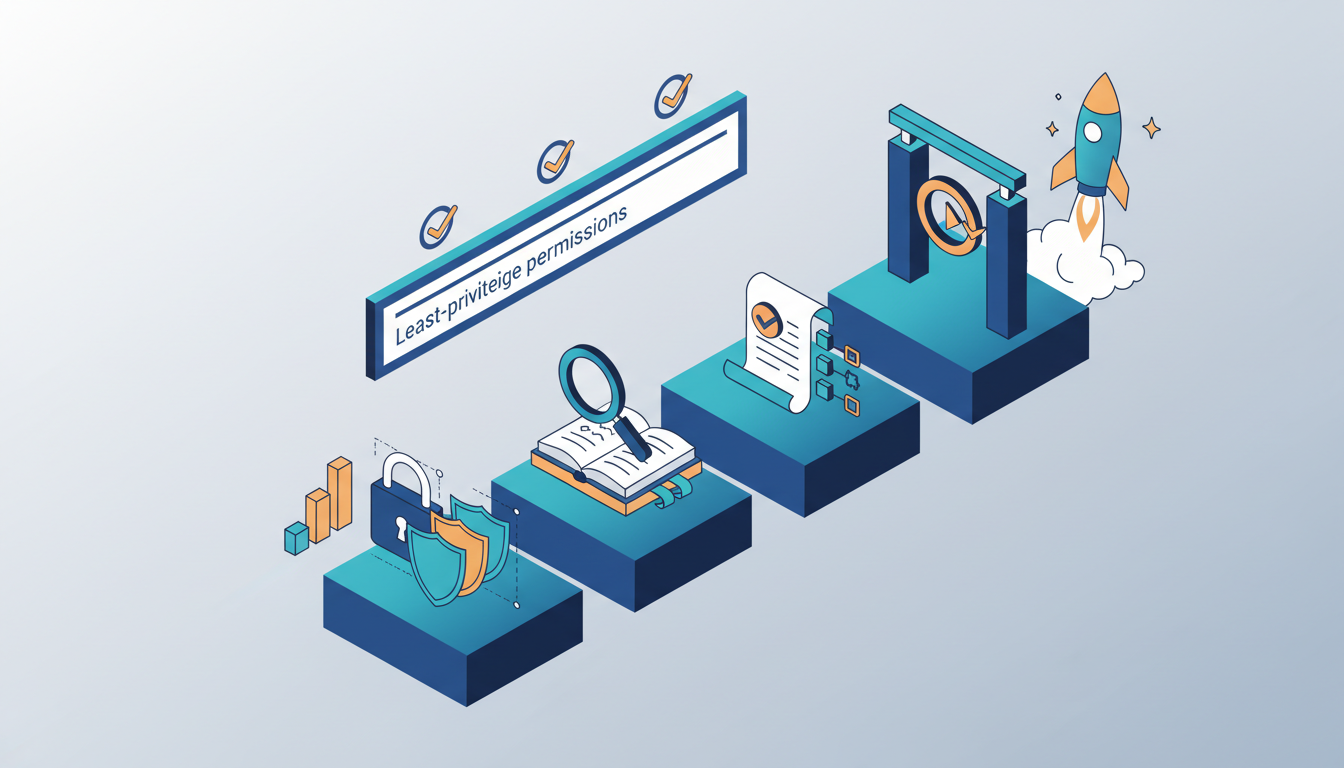
Classification drives the setup of approval gates within Oz, separating low-risk website edits from high-risk data modifications. Lloyd identified a "fundamental tension" in this process, noting that companies remain hesitant to operate fully hands-off. He observed, "Making changes to our website is way lower risk than making changes to our data." This specific distinction fuels the least-privilege permissions model, pushing organizations away from a "wild west" environment toward one set by quotas, budgets, and task-specific agent usage. Engineering leaders spent the past year prioritizing AI coding tool adoption, yet the focus has pivoted sharply toward measuring ROI and stopping unchecked agents on production systems. Such a shift demands coordinated effort instead of isolated attempts to embed quality from the start.
- Route different tasks to different agents depending on what each does best.
- Maintain a consistent governance layer across all agents regardless of the model used.
- Avoid locking into a single source of intelligence by supporting multiple agents simultaneously.
Stricter gates lower incident risk while simultaneously increasing latency for critical fixes. Teams balance speed against the absolute necessity of human oversight in production environments. Autonomous agents execute unintended changes across the stack without set boundaries.
Configuring Token Budgets and Audit Logs for Finance Teams
Setting token budgets per engineer begins by establishing quotas to measure ROI rather than absorbing aggregate platform costs. Finance teams increasingly demand this granularity to track spending as costs appear on balance sheets. Implementation requires mapping each developer to a specific spend limit, preventing any single user from exhausting resources on unchecked agent loops. Warp provides token efficiency per PR as a baseline for these measurements. Administrators define these constraints in the policy configuration file.
The system enables teams to use different agents for different types of tasks while keeping the governance layer consistent. These records allow finance departments to reconcile invoices against actual engineering output without manual data aggregation. Strict budgeting can stifle experimentation if limits are set too low for complex debugging sessions. Tighter controls reduce financial risk but may increase friction for engineers solving novel problems. Teams must balance cost containment with the flexibility needed for effective agent orchestration.
Risks of Unchecked Agents and Security Team Involvement
Deploying autonomous agents without oversight invites immediate production instability. Engineering leaders have shifted focus from simple adoption to preventing unchecked agents on production systems. This transition highlights a sharp tension between the drive for autonomous efficiency and the necessity of strict control. Security teams are often the most hesitant stakeholders because they bear the brunt of potential breaches. Lloyd remarked, "The security team is always involved, probably the team that's most scared." This fear stems from the architectural shift where agents execute multi-step workflows rather than simple prompt-response interactions. Unlike short conversational turns, these autonomous agents run for minutes or hours, notably expanding the attack surface.
Organizations must implement structured governance gates to mitigate these risks.
- Invest in governance, context, identity, cost, and security layers as primary differentiators.
- Coordinate multiple agents running in parallel through a dedicated orchestration layer.
- Ensure the governance infrastructure is not tightly coupled to any one agent.
Skipping these steps results in a loss of auditability and potential data corruption. Information flow becomes unverified and chaotic without a dedicated orchestrator to coordinate specialist agents. Teams must treat agent deployment as a distributed systems challenge requiring rigid operational protocols. Increased latency represents the limitation of this approach; every gate adds friction to the development lifecycle. This friction is the price of safety in an agentic environment.
Measurable ROI from Centralized Agent Management
Defining the ROI Mindset Shift from Adoption to Measurement
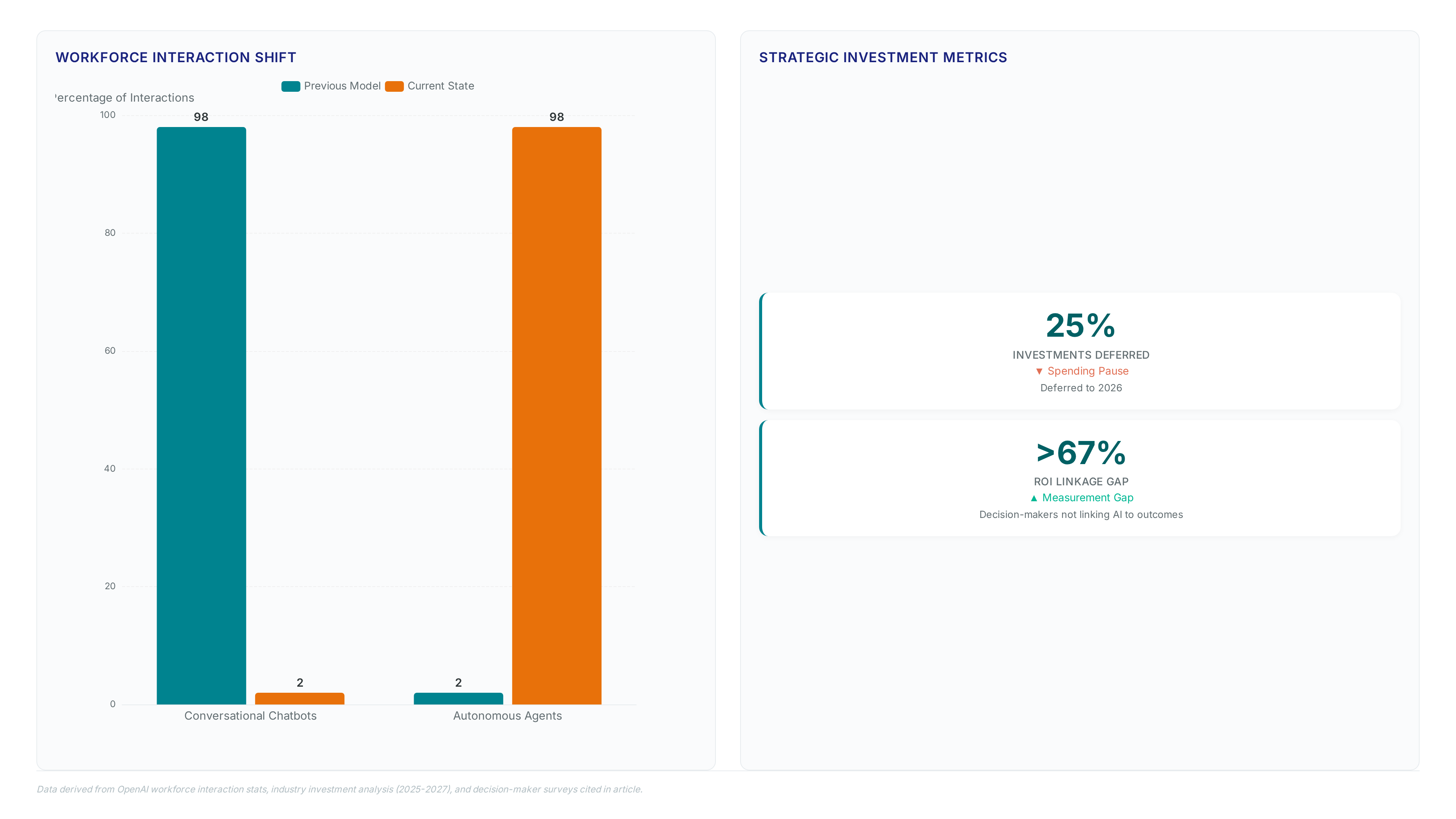
Quantifying specific business value now overshadows the drive for raw adoption numbers. Engineering leaders previously pushed developers toward autocomplete tools, yet rising expenses forced a pivot where CFOs demand proof of productivity. Companies have moved from a "can we get people to adopt" mindset to a "how do you measure ROI" mindset. This pressure demands replacing the "wild west" of unrestricted spending with set quotas and budgets. Teams evaluate open-weight models for specific tasks alongside frontier models to optimize inference costs. Fewer than one-third of decision-makers currently link AI initiatives to business outcomes, creating a visible gap.
| Previous Focus | Current Requirement |
|---|---|
| User Adoption Rates | Cost-Per-Task Analysis |
| Unrestricted Access | Quota Enforcement |
| Single Model Reliance | Strategic Model Switching |
Maintaining developer velocity while enforcing financial guardrails creates significant tension. Fragmented management prevents switching models as open-weight options match frontier performance at lower costs. Engineering teams face inflated inference costs that erode promised productivity gains without this flexibility. Industry analysis recommends establishing governance layers that decouple policy enforcement from the underlying intelligence source. Measurement frameworks remain stable even as optimal models change through this separation.
Tracking Token Budgets per PR as a Baseline Metric
The economic model of AI shifts from individual productivity tools costing per seat to complex workflows where "cost" measures reliability and scale of deployment. This granularity reveals when open-weight models suffice for routine refactoring, reserving expensive frontier models for complex architectural tasks.
| Metric Type | Scope | Governance Action |
|---|---|---|
| Aggregate Spend | Organization | Budget caps |
| User Quota | Individual | Hard stops |
| PR Token Count | Task | Efficiency review |
Shifting from prompting to operations transforms AI from a productivity tool into an infrastructural cost center requiring strong infrastructure for identity and cost management. Teams configure their control plane to route tasks to different agents depending on what each does best.
The Governance Gap When Agents Execute Multi-Step Workflows
Data indicates that nearly all of OpenAI's workforce interaction has shifted from conversational chatbots to autonomous agents that perform extended task sequences. This transition exposes a control deficit where isolated prompts evolve into unmonitored system changes. Relying on one vendor's tool limits the ability to switch models based on cost or capability, locking teams into rigid pricing structures. Operators adopt multi-harness control planes to route tasks dynamically across different models. A single model failure cascading through the entire development pipeline becomes less likely with this.
About
Marcus Chen serves as Lead Agent Engineer at AI Agents News, where he specializes in the mechanics of multi-agent coordination and evaluation harnesses. His daily work involves rigorously testing frameworks like CrewAI and LangGraph to distinguish genuine orchestration capabilities from marketing hype. This hands-on experience makes him uniquely qualified to analyze Warp's strategic pivot toward agent orchestration with Oz. Having shipped production systems that require managing concurrent agents, Chen understands the critical shift engineering leaders face: moving from selecting a single favorite coding agent to deploying a control plane for diverse models. At AI Agents News, he applies this practical expertise to help technical founders and engineers navigate the complexities of running Claude Code, Codex, and other agents simultaneously. His analysis grounds Warp's recent announcements in the reality of building scalable, reliable agentic workflows, ensuring readers understand the technical merits behind the move from adoption to ROI measurement.
Conclusion
Scaling agent orchestration reveals that reliability costs more than inference when governance lags behind deployment. As organizations move from experimental pilots to production workflows, the operational burden shifts from prompt engineering to managing complex failure modes across multi-step sequences. Without a dedicated control plane, teams face cascading errors where a single model hallucination corrupts an entire development pipeline. This fragility makes the separation of policy enforcement from model selection a non-negotiable architectural requirement for sustainable growth.
Organizations must implement a flexible routing strategy to mitigate vendor lock-in and stabilize costs. This approach allows teams to direct routine refactoring tasks to efficient open-weight models while reserving expensive frontier intelligence for complex architectural decisions. Relying on a static provider for all interactions creates a single point of financial and technical failure that erodes long-term viability.
Start by instrumenting token counts per pull request this week to establish a baseline for task-specific efficiency. This granular data reveals exactly which workflows justify premium model access and which suffer from over-engineering. By anchoring decisions in actual usage patterns rather than hypothetical capabilities, engineering leaders can build a resilient infrastructure that adapts to market changes without disrupting active development cycles.
Frequently Asked Questions
The shift occurs when CFOs demand measurable ROI instead of wild west spending. Companies now prioritize governance over simple adoption to manage costs effectively. Per-engineer token budgets and quotas replace aggregate platform spend, so finance can reconcile invoices against actual engineering output.
It decouples task execution from specific model providers to ensure flexibility. Teams can route queries based on cost without rebuilding infrastructure. This approach allows organizations to utilize cost-efficient open-weight models for routine tasks.
Unchecked memory retention risks amplifying faults rather than compounding intelligence across runs. Strict validation logic is required to distinguish transient errors from permanent fixes. Without these gates, propagated patterns can carry broken code.
Centralized gates stop unchecked spending and ensure human oversight remains intact during execution. They replace fragmented per-tool settings with a unified control plane for all agents. This structure helps link AI initiatives directly to business outcomes.
The driver is the need to route different tasks to agents based on specific capabilities. This strategy optimizes costs by matching task complexity to model performance dynamically. It prevents the waste associated with using expensive frontier models unnecessarily.
References