Agent skills: Migrate 4 rule files to one SKILL.md
With 16 major AI tools now adopting the standard, migrating to Agent Skills is the only viable strategy for scalable team conventions.
Stop maintaining duplicate, static rule files for every vendor. The new imperative is structured intelligence extracted directly from pull request evidence. As Digital Applied forecasts rapid market consolidation through 2027, enterprises cannot afford the fragmentation of housing Cursor rules in one tree, Copilot instructions in another, and Claude Code directives elsewhere. Instead, replace fragile manual markdown with a portable, evidence-ranked package that any compliant tool can discover automatically.
Hand-written conventions fail to scale. They cannot compete with PR-derived intelligence that updates dynamically with every merge. Below is a concrete five-step migration path to transition your team from legacy .cursorrules files to a unified SKILL.md architecture, ensuring your AI agents operate on verified data rather than outdated documentation.
Defining Agent Skills as the Portable Standard for AI Team Conventions
The SKILL.md Standard and PR-Derived Intelligence
Anthropic announced the Agent Skills specification on December 18, 2025, triggering a rapid convergence in how teams package instructions for AI coding tools. This open standard relies on the SKILL.md file to bundle metadata with structured directives, effectively replacing static markdown files that often go ignored. The mechanism enables PR-derived intelligence, extracting conventions directly from code review history rather than relying on aspirational documentation written months ago. By March 2026, at least 16 major AI tools adopted the format, including Claude Code and Cursor. Legacy rules stored in .cursor/rules lack the confidence scoring inherent to these evidence-backed skills.
Consolidating Four Rule Locations into One Portable Package
Rules currently fragment across Cursor's tree, .github/copilot-instructions.md, CLAUDE.md, and various static markdown files. Maintaining identical conventions in these four locations creates a workflow that does not scale. Agent Skills replace these silos with a single portable package discovered by any compliant tool, including Cursor, Claude Code, and others simultaneously. The SKILL.md format bundles metadata and instructions into a unit that travels with the repository. Evidence suggests urgency, as 91% of business leaders state that AI agent skills will be critical for competitive advantage within the next three years. Migrating requires auditing existing rules to separate evidence-backed patterns from aspirational wishes. Static files often contain directives never enforced in PR review, whereas the new standard prioritizes extracted intelligence. Operators must decide whether to keep legacy .cursorrules files active during the transition or deprecate them immediately to prevent conflict. Without consolidation, teams risk drifting into inconsistent AI behaviors across their engineering workforce. AI Agents News recommends committing the generated conventions.json to git to lock in the portable package.
Security Risks: 341 Malicious Skills and Tool Convergence
Researchers identified 341 malicious skills by February 2026, exposing the danger of importing unverified logic from community hubs. Unlike legacy Cursor rules confined to a single editor tree, the new Agent Skills standard enables rapid cross-platform execution. This portability accelerates attacks; a malicious definition written for one agent adapts to others in minutes due to emerging tool convergence. The system now supports at least 16 major AI tools. Legacy formats lack cryptographic signing, allowing attackers to inject commands that appear as standard team conventions. Migrating to structured SKILL.md files mitigates this risk by enforcing PR-derived evidence over static claims. The speed of adaptation creates a new vulnerability surface where validation lags behind deployment. Teams must treat skill definitions as executable code, not documentation. Unchecked skills bypass traditional perimeter defenses entirely. Operational security now requires auditing skill sources with the same rigor applied to binary dependencies.
The Mechanics of Auto-Generated Skills Versus Manual Rule Maintenance
Confidence Scoring Logic in Codehabits Agent Skills
Review frequency drives the confidence scoring found within Codehabits Agent Skills instead of relying on static assignment. Hand-written rules miss this flexible metric entirely, leaving them blind to how a team actually enforces patterns. The mechanism scans merged pull requests to calculate a specific reliability score for every convention. This approach stands in sharp contrast to legacy Cursor rules, which stay fixed until someone manually edits them.
| Feature | Hand-Written Rules | Codehabits Agent Skills |
|---|---|---|
| Scoring Method | None | Review frequency |
| Update Trigger | Manual edit | Merged PR |
| Portability | Single tool | Multi-tool via discovery mechanism |
| Evidence Base | Aspirational | Historical data |
System prompts receive enabled skill metadata at session start through smart loading mechanisms. An agent automatically appends input data if a skill invocation misses the $ARGUMENTS placeholder, preventing execution errors. High-confidence rules surface prominently while low-frequency patterns recede into the background. One constraint exists: rules absent from recent PR history might incorrectly appear unreliable even if they remain core to the system. Teams must manually flag these stable conventions to stop accidental deprecation. The Codehabits CLI helps by exporting current rule sets for audit before generation happens. Operators need to verify that necessary but infrequent constraints get manual confidence boosts.
Teams face a choice between manual maintenance for niche cases and auto-generation for core standards. Hand-written rules suit temporary project constraints, whereas PR-derived logic scales across the 16 major AI tools. The cost involves losing granular control over edge cases in favor of broad consistency. Validation logic can freeze a target model to execute the current skill while an optimizer proposes bounded edits for review. This validation logic ensures updates do not degrade performance before deployment.
| Aspect | Manual Rules | Auto-Generated Skills |
|---|---|---|
| Source | Human intent | PR evidence |
| Update Frequency | On demand | Per merge |
| Scope | Single tool | Multi-platform |
| Confidence | None | Ranked by frequency |
Operational drift occurs when written conventions diverge from reviewed code, creating a gap between policy and practice. Automated syncing eliminates this divergence by treating the git history as the single source of truth. Operators should configure CI pipelines to regenerate skills immediately following successful merges. For detailed implementation strategies, AI Agents News recommends reviewing the latest integration guides. The result is a living specification that evolves with the codebase.
Portability Trade-offs: Cursor-Only Rules vs 16+ Tool Support
Hand-written rules lock teams to a single editor, whereas the Agent Skills open standard travels with the repository. Legacy conventions.json files often stagnate because they lack automated triggers, forcing engineers to manually sync logic across disparate environments. This fragmentation creates operational drag as tool convergence accelerates. By May 2026, new entrants like Gemini 3.5 Flash will further fragment the environment if organizations rely on static, vendor-specific configurations.
Manual rules cannot scale with team velocity due to their architectural limitation. Codehabits Agent Skills resolve this by packaging team instructions into a portable format any compliant agent discovers automatically. However, migrating requires discarding aspirational rules that do not match actual code review patterns. The limitation is immediate loss of perceived control in exchange for evidence-based consistency. Teams maintaining four distinct rule sets face compounding maintenance costs that erode the value of AI assistance. AI Agents News recommends auditing existing cursorrules files to identify gaps between written policy and enforced behavior before migration.
Executing the Five-Step Migration Path from Legacy Cursor Rules
Mapping Legacy.cursor Files to SKILL.md Destinations
Exporting .cursor/rules/*.mdc files initiates the transfer of static instructions into structured, confidence-ranked intelligence. This process shifts logic from hand-written markdown to evidence-backed intelligence.
- Audit existing rules: Tag each legacy entry as "Evidence-backed" or "Aspirational" to separate enforced behavior from idealized constraints.
- Run Codehabits enable: Execute
npx @codehabits/cli loginandnpx @codehabits/cli enableto generate the initial skill package. - Commit intelligence to git: Add .codehabits/, .cursor/skills/, and AGENTS.md to version control for team-wide distribution.
- Deprecate duplicate rule files: Remove redundant .cursor/rules/ files to prevent conflicting directives during agent execution. Document the deprecation in team channels to enforce adoption of the single source of truth.
- Keep intelligence fresh: Configure CI auto-sync so merged pull requests automatically update conventions.
| Source Format | Destination File | Update Mechanism |
|---|---|---|
.cursor/rules/*.mdc |
.codehabits/conventions.json |
PR merge event |
| Chat instructions | AGENTS.md |
Manual override |
CONTRIBUTING.md |
SKILL.md |
Automated extraction |
Manual maintenance of hand-written rules creates fragmentation where Copilot and Claude Code read different instructions. The limitation of this migration is that aspirational rules lacking PR evidence require manual re-insertion into the final SKILL.md. Organizations ignoring this structural shift risk paying premium rates for request-based billing on queries that valid conventions would have prevented. AI Agents News recommends validating the generated conventions.json against the original audit before deprecating legacy files.
Git Commit Validation for Team Convention Migration
Finalizing the migration requires adding .codehabits/, .cursor/skills/, and AGENTS.md to version control with the exact commit message chore: migrate team conventions....
- Stage the generated directories and the fallback AGENTS.md file to capture the full intelligence package.
- Execute the commit using the prescribed chore prefix to trigger downstream CI auto-sync pipelines.
- Verify that the startup principal engineer scenario patterns for API design and testing are preserved in the new structure.
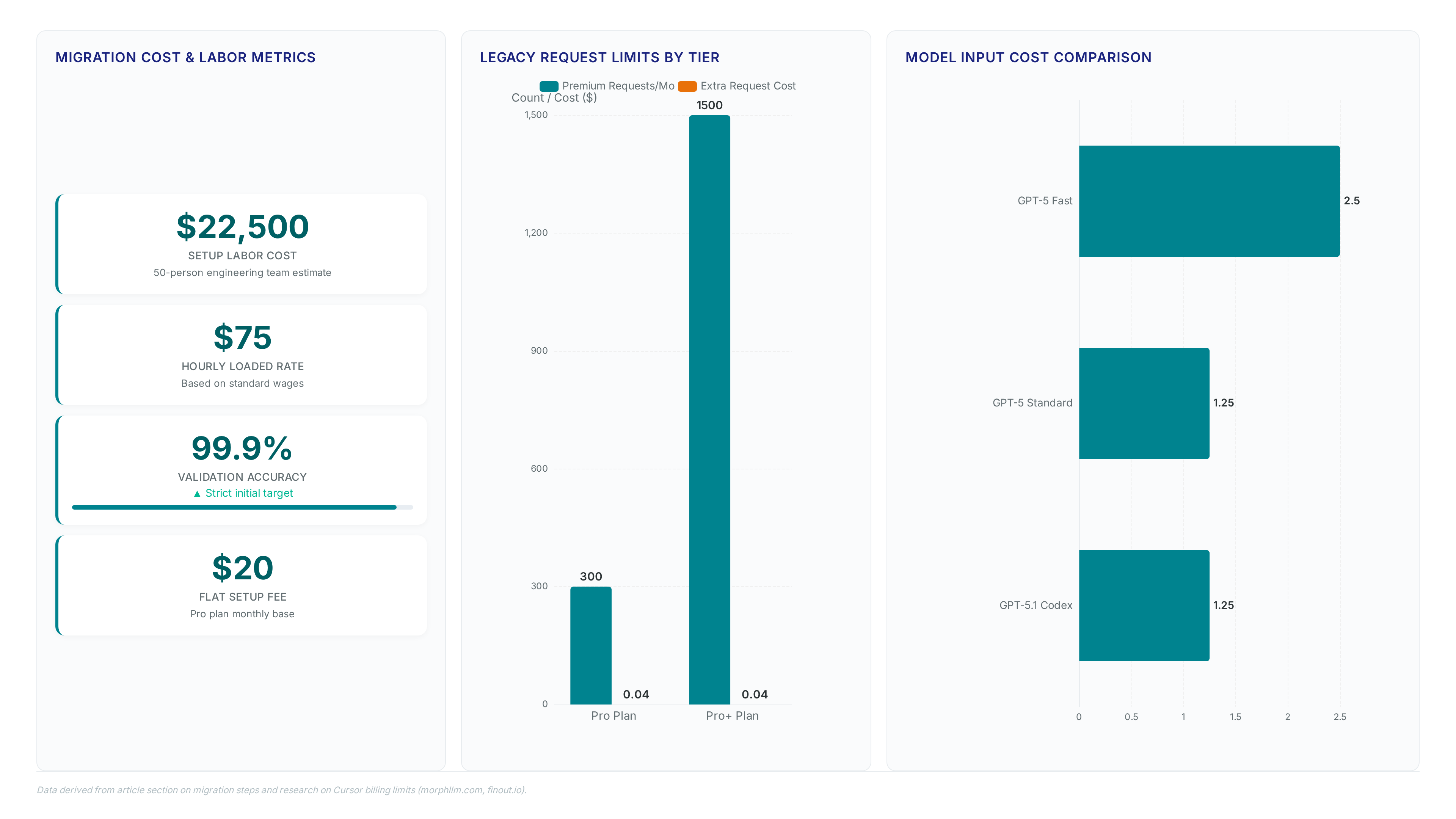
- Confirm CI readiness, as Rakuten demonstrated that accurate agent workflows require strict initial validation to maintain 99.9% accuracy.
Operators must compare generated conventions against their manual audit before pushing, often uncovering gaps where written rules diverged from PR reality. Skipping this comparison risks encoding undocumented behaviors into the shared skill set. The limitation lies in the static nature of hand-written rules; without this validation step, teams retain fragile configurations that fail to sync across the tool convergence environment. AI Agents News recommends treating this commit as a schema migration rather than a routine update.
Failure to use the specific commit message format prevents the automated regeneration of skills upon future merged requests. This break in the chain reverts the system to manual maintenance, reintroducing the drift the migration sought to eliminate.
Strategic Decisions on Deprecating Rules and Resolving Discovery Issues
When to Retire a Legacy Rule File

Legacy rules confined to Cursor's tree clash with .github/copilot-instructions.md requirements for Copilot. Spreading identical conventions across four locations generates unsustainable operational drag for engineering teams. Agent Skills resolve this fragmentation by packaging instructions into one portable standard. Immediate convenience conflicts with long-term maintainability when teams delay deprecation. Hand-written rules remain static until manually edited, whereas evidence-backed skills sync automatically after every merged pull request. Legacy configurations drift from actual team behavior documented in code reviews under this divergence. AI Agents News recommends retiring a legacy rule file only once its enforced patterns appear in the generated package.
Troubleshooting Missing Skill Discovery with 2% Context Limits
Only 2% of the context window allocates to skill discovery, forcing strict prioritization of injected instructions. Agents scan discovery tiers at session start. They inject only enabled skill names and descriptions into the system prompt to avoid crowding the primary task. Broad trigger descriptions like "Does cloud stuff" waste precious tokens compared to precise definitions such as "Provisions GCP G2 instances." The system enforces an 8,000 character ceiling when the context window size remains unknown, truncating any excess metadata silently. Operators observing missing skills should first audit their trigger precision. Descriptions must avoid ambiguity that consumes the limited context window allocation. Oversized SKILL.md files often exceed the hard character cap before injection occurs, creating root causes for failure. Teams must strip non-necessary comments from legacy Cursor rules before migration to fit within the discovery budget. Agents skip the scan entirely if the initial handshake exceeds the token threshold, a common failure mode. AI Agents News recommends disabling unused conventions to preserve space for critical team intelligence. Precision in definition directly correlates to successful discovery under these tight constraints.
About
Diego Alvarez serves as a Developer Advocate at AI Agents News, where he specializes in hands-on build guides and head-to-head comparisons of coding agents. This background makes him uniquely qualified to detail the migration from Cursor rules to Agent Skills, as his daily work involves rigorously testing how different tools interpret team instructions. Having benchmarked frameworks like CrewAI and LangGraph, Diego understands the critical shift from static markdown to structured, evidence-ranked intelligence that modern AI coding tools now require. His practical experience reveals exactly where legacy configurations fail and how the new open standard improves reliability across platforms like Claude Code and OpenAI Codex. At AI Agents News, an independent hub for engineers building autonomous systems, Diego translates these technical evolutions into actionable steps. This article reflects his commitment to providing runnable detail and clear recommendations, ensuring teams can adopt this emerging infrastructure without disrupting their existing workflows or compromising on code quality.
Conclusion
Four rule files describe what a team wishes it did. One SKILL.md describes what its pull requests actually show, and that gap is the whole argument for migrating: confidence comes from merged review history, and any compliant tool reads the same package instead of its own private tree.
The path is short and easy to botch. Export .cursor/rules, tag every entry as evidence-backed or aspirational, run the enable step, commit the generated package with the prescribed chore message, and wire CI to regenerate conventions on merge. Skip the commit convention and the chain reverts to manual maintenance, reintroducing exactly the drift the migration was meant to end.
Keep the payload lean, because discovery is budgeted. Only 2% of the context window carries skill names and descriptions, and metadata past the 8,000 character ceiling is truncated silently. Every aspirational rule a team refuses to drop is paid for twice, once in maintenance and once in the tokens an agent spends before it reaches the real task.
Frequently Asked Questions
Four copies drift apart. Cursor, Copilot, and Claude Code each read their own file, so the same convention quietly means different things in different tools until a review catches the divergence.
A skill carries a confidence score derived from how often the convention actually shows up in merged pull requests, and it regenerates on merge. A .cursorrules file holds whatever someone last typed and changes only when a human edits it.
They keep paying the four-location maintenance cost while their agents execute rules no reviewer enforces. Legacy formats also lack cryptographic signing, which is what lets an injected command pass as an ordinary team convention.
Because the manual update step is the one that never happens on time. Auto-generation moves it into CI on merge; the price is losing granular control over edge cases, so rare but load-bearing rules need a manual confidence boost.
A single portable package replaces fragmented files, allowing one definition to drive behavior across sixteen major AI tools.