Agent runtime beats clever prompt engineering
Most organizations aiming for agentic AI adoption by 2027 will fail. The culprit isn't the model; it's the architecture. Too many teams mistake extended prompts for functional agents. An Agent is not a cleverly worded instruction. It is a distinct runtime process. It demands a specific architecture to survive real-world execution.
A standard prompt dictates tone for a single query. It collapses when tasked with multi-step operations like debugging a codebase via Git or navigating complex filesystems. True agency emerges only when combining a model with an external loop, flexible tools, and persistent state, all orchestrated by a Harness that manages the gap between the model's static judgment and a changing environment. Unlike the model, which sees only the current input, this external runtime actually moves the task forward.
The cheapest way to see the difference is to build the smallest version of it: a CLI assistant that reads package.json, runs the test command, and writes the exit code back into its own state. Heavy frameworks like LangGraph or CrewAI can wait. The loop cannot, because it is the only part of the system that knows whether the test actually passed.
The Fundamental Distinction Between Static Prompts and Flexible Agents
An AI agent operates as a distinct runtime process where model, loop, tools, and state combine to execute flexible tasks. Static prompts fail here because the model judges only the current input while the external environment changes continuously. An external Harness bridges this gap by hosting the process and managing real-world interactions like file system access or terminal commands. This architecture separates model proposals from actual system actions, unlike a chatbot that merely generates text.
Production implementations reveal a counter-intuitive truth: removing 80% of available tools often improves performance more than model upgrades. Tool curation directly impacts loop stability. Restraint matters more than capability. The standard for connecting these components in 2026 is the Model Context Protocol, which enables smooth data source integration. Relying solely on prompt engineering ignores the necessity of state persistence across multiple execution cycles. A single call cannot verify if a test actually passes after code modification. Developers must build control systems that handle recovery, permission boundaries, and context compaction. AI Agents News recommends starting with minimal CLI scenarios before adopting complex orchestration frameworks.
Why Static Prompts Fail at Fixing Failing Tests
Complex debugging defeats static prompts because they cannot collect environmental evidence like project language, test commands, or failure logs. A primitive linear path suffices for summarization but collapses when tasks require verifying success through external observation. The model acts as a reasoning layer, deciding actions by evaluating inputs, yet it lacks direct access to filesystems or terminals without tool execution frameworks like ReAct. Without an external loop to execute tools and observe results, the system cannot claim an action occurred or distinguish hallucination from verified state changes. This separation defines the gap between generating text and executing tasks in a real environment.
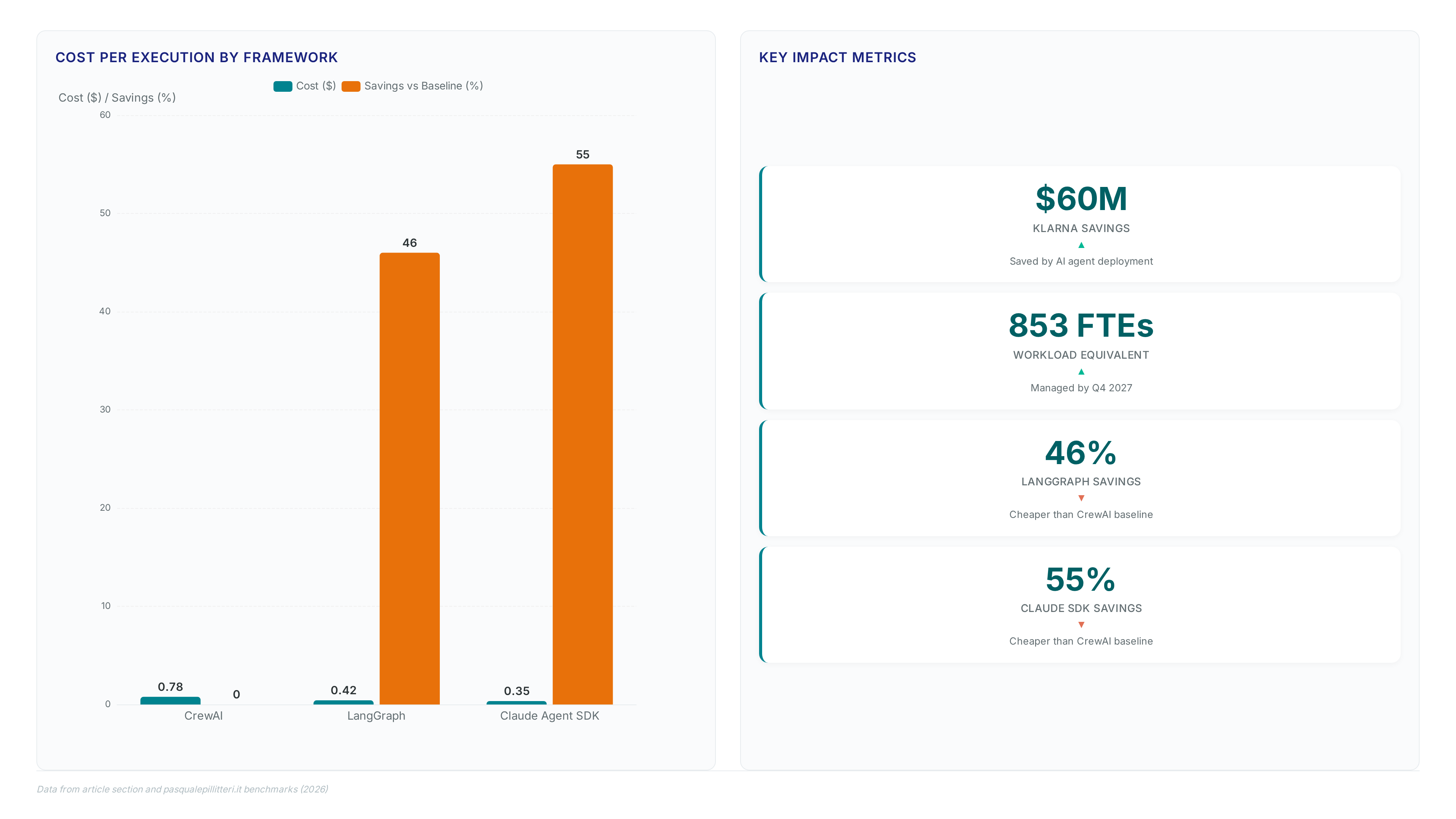
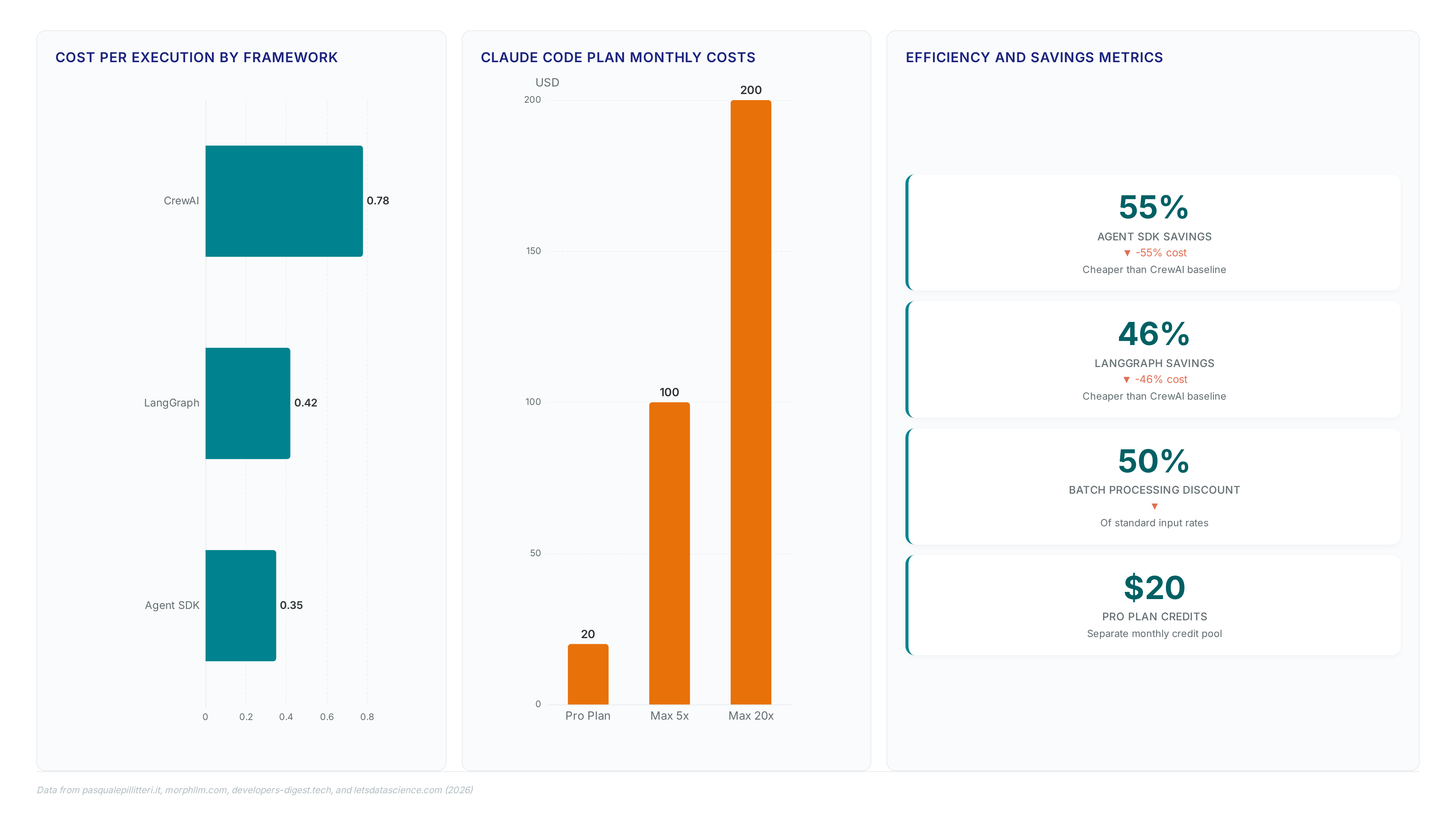
Cost variances further complicate high-volume deployments where agents must run repeatedly to fix failing tests. Benchmark tests show execution costs ranging from $0.35 for Claude Agent SDK to $0.78 for CrewAI, making inefficient prompt-only retries financially unsustainable at scale. Operators must choose between static prompts that guess or flexible agents that verify, as the latter requires hosting a runtime process outside the model. A prompt instructs, but only a Harness can host the process needed to move through Git, terminals, and permission boundaries. Tasks demanding multi-step evidence collection require this architectural shift from single-call output to controlled runtime processes.
Four Engineering Responsibilities Prompts Cannot Carry
Prompts solve generation constraints like role and tone but cannot handle four specific engineering responsibilities required for execution. The model lacks the source of truth identification needed to distinguish between its own output and verified environmental state. Static instructions also fail to separate guesses from observations, a gap that leads to compounding errors when the system acts on hallucinations.
| Responsibility | Prompt Capability | Agent Runtime Requirement |
|---|---|---|
| Truth Source | None | External Validation |
| Observation | None | Tool Feedback Loop |
| Verification | None | Success Criteria Check |
| Termination | None | Failure Count Limit |
Without an external loop, the system cannot perform result verification or enforce loop termination after repeated failures. This architectural missing piece means prompts cannot manage state changes across multiple steps. Generation does not equal action. Operators must deploy a runtime harness to bridge the gap between model judgment and real-world task completion. Relying on prompts for flexible tasks ignores the fundamental need for an execution environment that persists beyond a single token response.
Internal Architecture of the Agent Loop and Tool Integration
ReAct Pattern Mechanics: Reason, Act, Observe Cycle
The ReAct pattern structures the agent loop so the model proposes steps like reading package.json while the system executes them. This division separates judgment from action, making the LLM a reasoning layer that selects tools via frameworks like ReAct as the environment handles execution. The core architecture decomposes into four components: the agent core, memory module, tools, and planning module, each serving a distinct function in the cycle.
The operational sequence follows a strict logical flow:
- Model Event: The LLM generates a Tool Intent based on current state.
- Policy Decision: The harness validates the request against safety rules.
- Tool Execution: The system runs the command in the real environment.
- Observation: Results serialize back into the context for the next iteration.
Pseudocode logic relies on buildModelInput, parseResponse, runTool, and appendObservation to maintain continuity. Expanding tool availability often degrades loop stability. This counter-intuitive finding suggests that tool curation outweighs raw reasoning power in production systems.
| Component | Function | Failure Mode |
|---|---|---|
| Model Event | Proposes next step | Hallucinated arguments |
| Policy Decision | Validates intent | False positive rejection |
| Tool Execution | Runs external code | Timeout or crash |
| Observation | Feeds result back | Truncated output |
The State Update phase is where guesses become facts, anchoring the process in reality rather than hallucination.
CLI Assistant Workflow: From File Reading to Test Execution
A CLI assistant executes the ReAct pattern by cycling through file inspection and command invocation to resolve test failures. The model proposes reading package.json, but the Harness performs the actual read_file operation, returning structured content rather than raw text. This separation ensures the system distinguishes between a proposed action and a completed Tool Execution.
- The model analyzes the current state and outputs a request to read
package.json. - The harness executes the file read and returns the content as a structured Observation.
- The model parses the text, identifies
npm testas the target command, and requests execution. - The system runs the command, captures the exit code, and appends the log to the context window.
Standard production agents integrate between 10 and 50 distinct capabilities, ranging from database queries to browser automation. This breadth introduces complexity; independent benchmarks show that a single workflow execution using CrewAI costs $0.78. Failures often stem from uncurated toolsets.
| Failure Mode | Root Cause | Mitigation Strategy |
|---|---|---|
| Parsing Error | Malformed JSON in tool args | Strict schema validation |
| Policy Rejection | Unsafe command detected | Pre-execution allowlist |
| Execution Timeout | Infinite loop in script | Hard runtime limits |
| State Drift | Missing observation update | Mandatory append step |
Operators must verify agent actions by checking the Observation field for explicit success markers like exit code 0. Without this verification loop, the system cannot distinguish between a successful fix and a hallucinated confirmation. AI Agents News highlights that deterministic graph structures reduce context inflation, preventing the model from losing track of previous file states during long debugging sessions.
State Corruption Risks: Missing Budgets and Repeated Errors
Missing budget counters cause infinite loops where agents repeat failed actions indefinitely. Without explicit termination logic, a process cannot distinguish between a transient glitch and a permanent block, leading to runaway token consumption. The system must track exit codes like 0 for success, 1 for error, and 127 for missing commands to classify tool outcomes accurately. Failure to serialize these results into the State Update phase leaves the model blind to previous errors, forcing it to re-propose the same invalid Tool Intent. Memory serves as a first-class component in 2026, yet poor context management remains a primary driver of task drift and hallucination. Operators must enforce five distinct state shapes: workspace snapshot, action history, budget ledger, permission set, and error trace. Frameworks like LangGraph address this by minimizing token overhead through deterministic graph structures rather than linear context inflation.
| Failure Mode | Root Cause | Required State Field |
|---|---|---|
| Repeated Action | Missing error trace | Error Count |
| Budget Overrun | No remaining quota check | Token Ledger |
| Context Loss | Truncated history | Workspace Snapshot |
| Permission Loop | Unrecorded denial | Permission Set |
Neglecting these fields turns the Model Event cycle into a broken record. AI Agents News recommends implementing hard stops after three consecutive Policy Decision rejections to prevent resource exhaustion. The cost of ignoring state fidelity is a process that consumes resources without advancing the task toward resolution.
The Harness as the Critical Control System for Safe Execution
The Seven-Layer Harness Responsibility Model
Runtime conditions cause many agent failures, not a lack of intelligence. A distinct Harness layer separates from the Model layer to handle this gap. This external control system manages seven specific responsibilities: execution, tools, context, lifecycle, observability, verification, and governance. Static prompts cannot enforce boundaries where the model only judges input. Tool curation acts as a primary safety valve here. The harness separates the reasoning brain from the executing hands. A tool call remains a request until the system validates and runs.
State management serves as another differentiator. Frameworks like LangGraph explicitly control multi-step flow via directed graphs to prevent drift. Poor context management leads to hallucinations and task failures without this structure. Uncontrolled loops can escalate a single task from pennies to dollars rapidly. Implementing the seven-layer model prevents the agent from modifying unauthorized files or losing state during interruptions. AI Agents News recommends treating the harness as the source of truth for environmental changes. The model proposes the next step, but the harness makes the step actually happen within safe limits.
Real-World ROI: Klarna's $60M Efficiency Gain
Klarna's deployment of an AI agent saved the company $60 million by absorbing routine support workload. This scale requires a Harness layer to enforce governance boundaries that static prompts cannot support. The global market for these systems reached billions of dollars in 2025 and is projected to hit over ten billion dollars in 2026, signaling a shift toward enterprise deployment. High-volume operations demand strict cost controls because unit economics vary notably between frameworks. Benchmark data shows execution costs around $0.42 for LangGraph compared to higher rates for other orchestration tools, making framework selection a cost decision as much as a technical one. Operators must implement a harness when tasks require external tool interaction or state preservation across multiple steps. Agents risk infinite loops or unauthorized file modifications without this control system. Adding governance layers introduces latency, requiring operators to balance safety against speed. Organizations should deploy harness-style governance when API costs exceed manual review thresholds.
Token Explosion Risks: CrewAI vs LangGraph Efficiency
Unoptimized framework selection drives CrewAI workflows to consume triple the tokens of equivalent LangGraph architectures due to context inflation. This inefficiency stems from repeating role definitions and backstories in every API call rather than maintaining a persistent state vector. The economic impact scales linearly with volume, turning minor token variances into substantial operational deficits over time. Operators deploying high-frequency agents without checkpointing capabilities face compounding expenses that erode projected ROI margins. However, the cost is that CrewAI favors initial development phases where protocol support breadth accelerates feature validation. Production environments requiring strict cost controls must prioritize deterministic graph structures over flexible prototyping tools. Ignoring this distinction leads to runaway spending where the Harness layer fails to enforce economic boundaries alongside technical ones. Strategic deployment requires matching the framework's token profile to the task's complexity and frequency requirements.
Implementing a Strong Agent Loop with State and Tools
Validating Controlled Tool Capabilities: Schema, Permissions, and Audit Records
A production agent integrates 10 to 50 tools, demanding strict schema validation before any Tool Execution.
- Define Argument Schema: Enforce rigid types for every input to prevent injection attacks.
- Set Permission Rules: Limit scope to specific working directories and user confirmation needs.
- Configure Audit Records: Log name, result, error type, and truncation status for every call.
- Classify Failures: Distinguish between parsing errors, policy rejections, and runtime timeouts.
| Validation Layer | Function | Failure Signal |
|---|---|---|
| Schema Check | Verifies argument types | Parse Error |
| Policy Engine | Checks permissions | Access Denied |
| Runtime Guard | Enforces limits | Timeout/Truncation |
The system must treat tools as indirect capabilities rather than direct hands, requiring a separate Policy Decision step before action. Operators must curate available functions aggressively because uncontrolled breadth degrades reliability. Implementing these controls transforms raw API calls into governed engineering actions. This structured approach ensures the Harness maintains source-of-truth integrity. The agent loses context and repeats failed actions without explicit State Update mechanisms following each tool call. Failure happens by 2027 if teams ignore these constraints.
About
Diego Alvarez serves as Developer Advocate at AI Agents News, where he specializes in hands-on build guides and framework comparisons. This specific expertise makes him uniquely qualified to clarify the critical distinction between simple prompts and true autonomous agents. In his daily work benchmarking tools like CrewAI and LangGraph, Diego observes firsthand that extending a system prompt cannot replicate the runtime loop required for complex task execution. His practical experience reveals that while prompts define boundaries, only an external Harness can manage the persistent state and tool usage necessary for an agent to "keep working" until a goal is met. By connecting these engineering realities to real-world failure modes, Diego bridges the gap between theoretical definitions and the practical architecture needed for reliable autonomous systems. His analysis stems directly from testing these limits in production environments, ensuring readers understand why orchestration logic differs fundamentally from static instruction.
Conclusion
The dividing line runs through one question: after the model reports that the test passed, who checked? A prompt cannot check. A runtime can, because it owns the loop that ran the command, the exit code that came back, and the state where that result is written down.
Everything expensive about agents follows from the same seam. Uncurated tools inflate the context the loop carries; a missing budget counter lets a failed action repeat until the token ledger empties; absent state fields leave the model re-proposing an intent that was already rejected. Removing 80% of available tools beats a model upgrade for exactly this reason: reliability is won or lost in the harness, not in the model.
So start with the smallest runtime that does real work, the CLI assistant that reads package.json, runs the test command, and records the exit code, and only then reach for orchestration frameworks. If the system cannot show the observation that proves a step happened, it is not an agent yet.
Frequently Asked Questions
Static prompts cannot execute tools or verify environmental changes like test logs. They lack the external loop required to observe results and adjust actions dynamically based on actual system feedback.
A model, a loop, tools, and state, hosted as one runtime process. Drop any of the four and the failure mode is predictable: no loop means no observation, no state means the same failed action repeats, no tools means the model can only describe the fix it cannot apply.
Removing 80% of available tools often improves performance more than upgrading the model itself. Careful tool curation prevents confusion and ensures the agent focuses on relevant actions for task completion.
Benchmark tests show costs ranging from $0.35 for Claude Agent SDK to $0.78 for CrewAI. These variances make efficient architecture critical for sustaining high-volume deployments without excessive financial overhead.
It is the part that actually touches the machine: it validates a proposed tool call, runs it, and feeds the result back as an observation. Seven responsibilities live there, from execution and context to verification and governance, and none of them fit inside a prompt.