Modular AI agents: Why SkillasCode beats prompts
AI agent adoption is jumping from under 5% to 40% of enterprise apps by year-end. The era of monolithic prompts is dead. Survival now hinges on the Skill-as-Code model, replacing fragile, hardcoded logic with modular, version-controlled units. Without this structural shift, organizations face unmanageable sprawl of ungoverned AI capabilities.
Unlike public repositories prioritizing speed over security, this approach ensures data sovereignty within private networks.
Astron Agent orchestrates these modular skills into complex, multimodal workflows capable of processing voice, images, and documents simultaneously. Gartner data confirms the urgency: task-specific agents will dominate 40% of applications by late 2026, a massive leap from the negligible adoption rates of 2025. Developers must deploy governed AI workflows that satisfy compliance mandates while enabling the rapid iteration required in this "year of scale or fail."
The Strategic Shift to Modular Skill-as-Code Architectures
Defining Skill-as-Code and the Mattpocock Repository Shift
The mattpocock/skills repository, boasting 133k+ stars, defines the migration from monolithic prompts to modular, version-controlled capabilities. Skill-as-Code treats AI logic as discrete software artifacts rather than static text, enabling precise dependency management and rollback. In this architecture, a multimodal AI agent executes complex workflows by chaining these governed skills across voice, image, and text inputs.
Modularity introduces a steep talent gap constraint. Only 15% of IT professionals possess the skills to manage large language models effectively (360researchreports.com/market-reports/enterprise-ai-market-214006). Operators must weigh the flexibility of modular skills against the operational overhead of maintaining a skill registry. Fragmentation creates unmanageable sprawl without platforms like Astron Skillhub. Organizations failing to adopt Skill-as-Code architectures will face insurmountable maintenance debt as agent complexity scales.
Enterprise Governance Requirements for Astron Skillhub
Astron Skillhub functions as a self-hosted registry enforcing RBAC and audit logs for versioned AI capabilities. This architecture directly addresses a talent deficit where 3.5 million unfilled jobs in artificial intelligence and data science roles globally strain operational capacity. Without modular governance, 55% of enterprise initiatives face delays due to the talent gap, forcing teams to rebuild rather than integrate existing logic. The platform enables organizations to publish skill packages with strict access controls, ensuring only authorized personnel can modify production workflows. Unlike open registries, this model maintains data sovereignty by keeping assets within the private network boundary.
Static prompts fail to scale across diverse departments, requiring operators to deploy such governed systems. Unmanaged proliferation results in security drift and inconsistent agent behavior during execution. IFLYTEK Astron mitigates this through a commercial-friendly structure that balances open-source flexibility with enterprise-grade console backends. Strict auditing slows deployment velocity yet prevents unauthorized data exfiltration, creating tension between rapid iteration and compliance. Regulatory penalties outweigh speed gains from ungoverned experimentation when organizations ignore this cost. Scalable AI requires a centralized authority to validate every skill invocation.
2026 Scale or Fail Forecast for Enterprise AI Agents
Industry analysts designate 2026 as the definitive "scale or fail" deadline for enterprise AI production systems. Organizations relying on monolithic prompts face immediate obsolescence as adoption curves steepen dramatically. The transition from experimental pilots to governed deployment architectures distinguishes surviving entities from casualties.
Open-source AI tools enable rapid prototyping but lack the audit trails required for regulated industries. Teams debating modular versus monolithic AI designs must prioritize version control to manage complexity. The market shift toward agentic workflows demands infrastructure that supports discrete capability packaging rather than static text blocks. Failure to adopt Skill-as-Code principles results in unmanageable technical debt within months. Implementation expenses pale compared to the cost of delay as competitors automate core functions. Enterprises ignoring this architectural pivot risk losing operational relevance entirely. Late adopters struggle to integrate legacy systems with modern agent frameworks, according to AI Agents News. The window for strategic adjustment closes rapidly once production mandates solidify across the sector.
Inside Astron Skillhub and Agent Orchestration Mechanics
Astron Skillhub Architecture for Self-Hosted Versioning
Deploying the iflytek/skillhub registry as a self-hosted container on Docker or Kubernetes clusters enforces data sovereignty. This architecture isolates multi-tenant traffic within private networks, preventing cross-tenant leakage during skill invocation. Operators define RBAC Permissions to restrict skill publishing to specific service accounts, allowing only verified code into production. Immutable Audit Logs generate for every version bump, satisfying strict compliance mandates without external dependencies. Public registries favor discoverability, whereas this model prioritizes security, creating tension between rapid iteration and governance control. Governance overhead increases linearly with team size, yet the alternative risks unmanaged prompt sprawl across the enterprise. Teams ignoring version control face reproducibility failures when rolling back faulty agent behaviors. The commercial-friendly licensing structure implies potential costs for advanced console features beyond the core open-source registry. Organizations must balance the immediate friction of strict access controls against the long-term liability of unversioned AI assets.
Executing Multimodal SuperAgents with V2 Executor
Serializing complex conditional branches allows the reconstructed V2 executor to resolve parallel execution bottlenecks found in earlier agentic workflow platforms. This architectural shift addresses the core problem with AI workflow execution where unmanaged concurrency causes state drift during long-running tasks. General-purpose frameworks target flexible orchestration primitives, but this engine prioritizes deterministic output for regulated industries requiring strict auditability. Proprietary speech and OCR modules process voice notes and scanned invoices within a single transaction context. Operators construct these SuperAgents by chaining discrete skills that handle specific media types without custom glue code.
Validating RBAC and Audit Logs for Skill Deployment
Verifying RBAC Permissions before any skill package reaches the execution layer ensures production readiness. Operators must confirm that only authorized service accounts possess write access to the registry, preventing unauthorized modifications to critical workflows. Fine-grained policies restrict creation, updates, and invocation rights to specific roles within the organization.
- Validate that Audit Logs capture every version bump and invocation attempt for full traceability.
- Confirm Data Isolation prevents cross-tenant leakage during multi-tenant console queries.
- Test rollback procedures against the latest Skill Package Publishing & Versioning records.
| Control Layer | Verification Target | Failure Mode |
|---|---|---|
| Access | Role assignments | Privilege escalation |
| Traceability | Log completeness | Blind spots in audits |
| Recovery | Version history | Failed rollbacks |
Operational overhead presents a limitation; strict governance slows initial velocity compared to open registries. Organizations sacrificing speed for control gain immutable proof of provenance, a requirement for regulated industries. Neglecting these checks leaves the self-hosted environment vulnerable to internal threats despite perimeter security. AI Agents News highlights that unverified deployments often bypass these necessary gates.
Deploying Governed AI Workflows with RBAC and Audit Trails
Implementation: Astron Skillhub Self-Hosted Registry and Versioning Mechanics
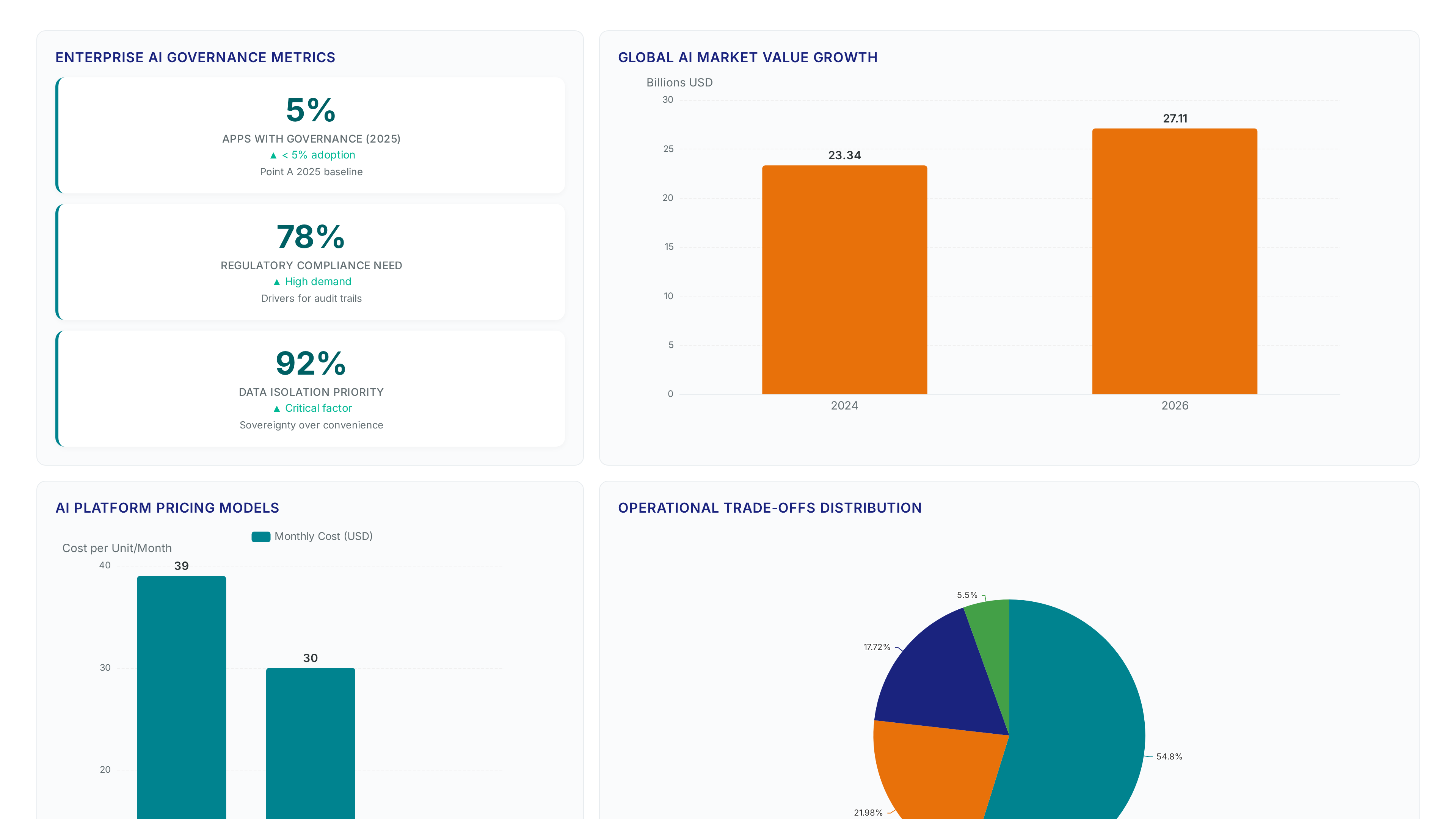
Deployment starts by pulling the iflytek/skillhub container image into a private Docker or Kubernetes cluster to establish immediate isolation. This Self-Hosted architecture keeps Data Isolation intact, stopping sensitive skill logic from crossing public network boundaries. Administrators control the lifecycle via Skill Package Publishing & Versioning, a process that attaches immutable tags to each update so reproducibility remains guaranteed.
- Initialize the registry service within the corporate firewall using the provided Helm chart.
- Configure RBAC Permissions to restrict write access to specific CI/CD service accounts only.
- Publish the initial skill manifest to establish the baseline version in the local index.
Every transaction triggers the generation of immutable Audit Logs, building the forensic trail that regulatory compliance demands. External registries introduce latency and leakage risks, while local execution removes these variables but adds manual maintenance. Operational complexity is the price paid here; teams handle their own backup strategies and high-availability setups without vendor assistance. Sovereignty takes precedence over convenience, a strict constraint for regulated industries managing proprietary data.
Configuring RBAC Permissions and Audit Trails for Compliance
Administrators define RBAC Permissions by linking creator, updater, and invoker roles to distinct service accounts prior to publishing any skill package. Such granular control stops unauthorized edits that might corrupt downstream agent behavior. The registry configuration must reject transactions missing explicit role assignments to enforce least-privilege principles strictly.
Enable Audit Logs for capturing every invocation attempt and version change, providing complete forensic traceability. Compliance units depend on these immutable records to rebuild event sequences during security incidents or regulatory audits. User identity, timestamp, and action type get recorded for every single interaction with the skill registry. This depth of detail supports the 78% of organizations already deploying AI who require verifiable governance frameworks.
Launch this setup using Docker or Kubernetes to keep Data Isolation inside private network perimeters. Rapid iteration often clashes with strict governance because verbose logging adds latency that high-frequency trading agents cannot absorb. Enterprise architects balance audit depth against execution speed according to specific workflow needs. AI Agents News suggests reviewing official Skillhub documentation for detailed deployment patterns.
Pre-Deployment Checklist for Multimodal SuperAgent Workflows
V2 executor validation demands confirming Multimodal Input parsers for voice and documents before orchestrating parallel steps. Operators verify that Complex Workflow Orchestration handles conditional branching without state drift during high-concurrency bursts. Silent failures often occur when image payloads exceed token limits in downstream models due to missing input validation.
- Enable RBAC Permissions to restrict skill invocation to authorized service accounts only.
- Configure Audit Logs to capture every parameter change and execution timestamp for forensics.
- Test Data Isolation boundaries to prevent cross-tenant leakage during multi-user scenarios.
- Validate RPA connectors against live enterprise endpoints before enabling agent autonomy.
| Component | Configuration Target | Risk Mitigation |
|---|---|---|
| Input Parser | Document & Voice | Prevents token overflow |
| Access Control | Role-Based Policies | Blocks unauthorized edits |
| Execution Log | Immutable Storage | Ensures compliance trace |
Skipping these checks invites chaos as agentic workflows mismatch. Discrepancies between Skill Package Publishing & Versioning tags and runtime expectations create irreproducible incidents. Teams targeting specific enterprise AI use cases must prioritize deterministic behavior over raw feature availability.
Astron Skillhub Versus General-Purpose AI Frameworks
Astron Skillhub Versus LangChain and LlamaIndex Registry Models
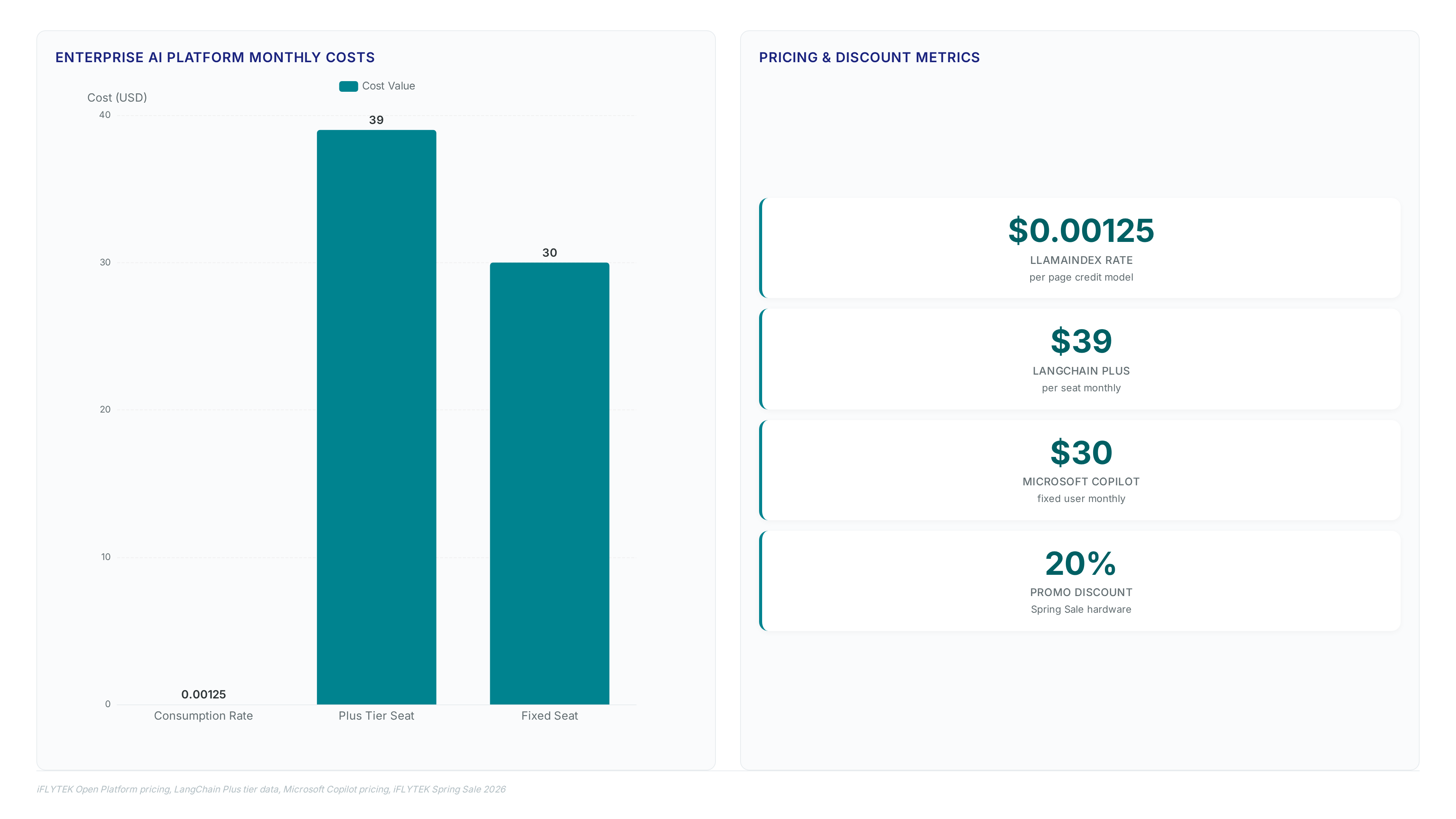
Self-hosted isolation defines the governance approach of Astron Skillhub, standing in contrast to the general-purpose orchestration favored by LangChain and LlamaIndex. Data sovereignty drives this architectural split; Astron retains assets within private networks while competing platforms often default to cloud-native settings that expose metadata. LangChain operates as a general-purpose LLM framework for chaining prompts but lacks native, fine-grained registry permissions out of the box. LlamaIndex specializes in data frameworks for RAG, yet its credit-based billing at $0.00125 per page reflects a consumption model rather than an asset governance model. LangChain's "Plus" tier costs $39 per seat monthly, a pricing structure that scales with users rather than secured skill artifacts. General frameworks accelerate prototyping but introduce risk when enterprise RAG implementation requires strict audit trails. Astron mandates upfront infrastructure investment to enable Audit Logs and RBAC Permissions, creating a barrier to entry that general tools avoid. This constraint ensures that only authorized personnel can modify Skill Packages, preventing unauthorized logic injection. Organizations face a choice between rapid iteration on shared clouds or governed autonomy on-premises. AI Agents News recommends the latter for regulated industries where data leakage carries existential risk.
Deploying One-Click On-Premises MaaS with Astron Skillhub
Operators gain strict data sovereignty through one-click on-premises MaaS deployment, a capability missing from SaaS-only registries. Installing the registry inside corporate firewalls prevents sensitive skill logic from traversing public networks. This architecture contrasts sharply with LangSmith and LlamaCloud, which rely primarily on SaaS-focused deployment models that expose metadata to third-party infrastructure. Initial infrastructure overhead is the cost, yet the benefit is absolute control over the execution environment. Enterprises facing the projected market expansion toward a substantial value by 2035 require such isolation to mitigate regulatory risk.
Pay-As-You-Go Billing Versus Fixed Seat Pricing in AI Frameworks
Daily consumption calculation defines iFLYTEK's billing, contrasting sharply with the fixed $30 per user monthly seats charged by Microsoft Copilot. This variable cost structure aligns expenditure directly with actual utility rather than theoretical capacity. Operators must link their financial planning to the Open Platform capabilities where charges accrue based on specific API invocations and model access events. Fixed pricing models often force enterprises to over-provision licenses to accommodate peak loads, leading to wasted capital during low-activity periods. Unpredictable traffic spikes create a limitation for pay-as-you-go models, where daily rates can exceed fixed seat economics if usage surges beyond break-even thresholds. A decision framework should prioritize fixed seats for stable, high-frequency user bases while reserving consumption billing for bursty, experimental workloads. The financial implication is clear: static licensing suits mature deployments, whereas variable billing optimizes costs for evolving agent fleets. Strategic adoption requires mapping usage patterns against these divergent pricing models to avoid budget overruns. AI Agents News recommends auditing current token consumption before migrating legacy prompts to new registries.
About
Marcus Chen, Lead Agent Engineer at AI Agents News, brings direct engineering rigor to the evolving environment of enterprise AI skills. Having shipped production multi-agent systems, Chen understands that moving from monolithic prompts to modular "Skill-as-Code" is not merely theoretical but a critical operational necessity. His daily work involves evaluating orchestration mechanics across frameworks like CrewAI and LangGraph, providing him with unique insight into why version-controlled skills demand reliable governance and security. At AI Agents News, Chen tracks these framework releases to guide technical founders and engineers who require precise, actionable intelligence rather than hype. This article connects his hands-on experience with iFLYTEK Astron's open-source solutions, demonstrating how tools like Astron Skillhub address the specific auditability challenges he encounters in real-world deployments. By bridging the gap between emerging GitHub trends and enterprise-grade requirements, Chen offers a factual roadmap for builders navigating the shift toward scalable, maintainable AI applications.
Conclusion
Scaling AI agents exposes a critical fracture in current operational models: the mismatch between modular architecture and monolithic talent pools. Variable billing models optimize for experimentation but create financial volatility that destabilizes long-term budgeting once usage patterns mature. Organizations relying solely on consumption pricing without strict quota enforcement will face unpredictable cost spikes that erode the efficiency gains of agentic workflows. The window to establish hybrid licensing strategies before the 2026 adoption surge closes rapidly.
Enterprises must mandate a transition to fixed-seat pricing for any workflow demonstrating consistent daily activity by Q4 2027. This approach stabilizes unit economics and allows teams to focus on skill acquisition rather than cost surveillance. Do not wait for budget overruns to trigger a policy change; proactive restructuring is the only viable path to sustainable scale.
Start by auditing your top five most-active agent workflows this week to calculate their break-even point between variable and fixed pricing tiers.
Frequently Asked Questions
Only 15% of IT professionals possess skills to manage large language models effectively. This severe gap causes 55% of enterprise initiatives to face delays due to teams rebuilding logic instead of integrating existing modules.
The steep talent gap forces many teams to rebuild rather than integrate, causing 55% of enterprise initiatives to face significant delays. Only 15% of professionals can currently manage these complex large language model systems.
By the end of 2026, 40% of enterprise applications are expected to embed task-specific AI agents. This massive shift from under 5% adoption requires moving away from monolithic prompts to modular architectures.
There are 3.5 million unfilled jobs in artificial intelligence and data science roles globally. This shortage strains operational capacity, making self-hosted registries like Astron Skillhub essential for governing limited expert resources.
AI agent adoption started under 5% before jumping to 40% of enterprise apps by year-end. This rapid scaling demands a shift from fragile hardcoded logic to version-controlled Skill-as-Code units immediately.