Eve agent channels: decouple logic from transport
Vercel's new Eve framework decouples agent logic from communication channels. This framework asserts that durable AI requires a strict separation where the reasoning core remains oblivious to the transport layer, managing state via a workflow engine rather than volatile memory.
Adding a Slack bot or a custom webhook stays a file operation: drop a new file into the agent/channels directory and the central agent code stays untouched. The default eve.ts channel turns HTTP requests into durable sessions that survive a server restart, because the workflow engine checkpoints progress at every step boundary. The cost lands on custom channels, which must budget context tokens and close their own event stream, since Eve sessions never close on their own.
The Core Separation of Agent Logic and Communication Channels
Vercel officially launched this open-source framework on June 17, 2026, separating logic from transport layers entirely. The Eve framework defines the reasoning core as a filesystem directory where instructions.md sets the prompt and TypeScript files declare tools. This architecture treats every AI agent as a collection of files on disk, compiled into a manifest for execution rather than relying on code-heavy orchestration. Channel adapters function as edge connectors that normalize inbound messages and manage the continuationToken for session resumption. Operators enable connectivity to platforms like Slack or Discord by simply adding files to a channels/ directory, which abstracts away specific protocol logic. This filesystem-first approach contrasts with legacy frameworks that embed transport handlers directly within the agent loop. A channel owns the conversation resume handle, allowing the reasoning core to remain unaware of whether a request originated from a CLI or a webhook. Updating a transport protocol never requires modifying the underlying agent definition files. Durability relies on the workflow engine checkpointing state at every step boundary using the provided token. This design prevents total turn loss during server restarts, as the system resumes from the last completed step instead of replaying the entire history.
Deploying Multi-Platform Agents via agent/channels Directory
Developers expose reasoning logic to Slack or HTTP by creating specific files within the agent/channels/ directory. This filesystem-first mechanism compiles TypeScript adapters that normalize inbound transport and manage session tokens without modifying the core agent code. The shopping assistant test case demonstrated this by handling catalog searches and order placement across surfaces using a single instruction set. The deployment model defaults to Vercel Functions, which may introduce latency for self-hosted enterprises requiring direct database access. Operators must weigh the speed of adding channel files against the operational overhead of managing multiple workflow backends.
| Component | Responsibility |
|---|---|
| Agent Core | Executes tools and maintains reasoning state |
| Channel File | Handles auth, formatting, and delivery |
| Workflow World | Persists runs and steps to storage |
Surface expansion becomes a file operation rather than a code refactor, yet each new channel increases the attack surface for inbound payload validation. AI Agents News highlights that this separation allows distinct teams to manage communication protocols independently from reasoning logic. Network architects face a clear trade-off between deployment velocity and security perimeter complexity.
Eve Filesystem-First Approach vs LangChain Code Orchestration
Eve enforces a filesystem-first architecture where the instructions.md file defines behavior, contrasting sharply with the code-heavy orchestration found in LangChain. This structural divergence means operators author a directory of files to manage state, whereas traditional frameworks often require complex, inline Python logic to maintain session durability. LlamaIndex targets data indexing pipelines for RAG workflows, while Eve treats the entire agent as a compiled manifest derived from disk contents.
| Feature | Eve Architecture | LangChain Orchestration |
|---|---|---|
| Definition Source | Filesystem directory | Python class objects |
| State Management | Durable workflow engine | In-memory or external DB |
| Deployment Target | Vercel Functions | Custom infrastructure |
| Primary Focus | Agent/Channel separation | General purpose chaining |
Runtime complexity drops for serverless environments because the deployment model defaults to Vercel Functions. This opinionated approach limits flexibility for teams needing non-standard execution environments outside the Vercel system. Enterprises can immediately integrate with tools like Snowflake using built-in connectors, bypassing the need for custom glue code. Adding a new communication surface never alters the core reasoning logic. AI Agents News identifies this shift as a move toward immutable agent definitions.
Durable Session Mechanics via Workflow Engine and Backends
Durable Workflows and Step Boundary Checkpointing in Eve
Every turn executes as a durable workflow, checkpointing state strictly at each step boundary comprising one model call and its tool invocations. This mechanism ensures that if a process crashes, the system resumes from the last completed step rather than replaying the entire conversation history. Durable execution allows agents to pause for external approvals or handle long-running tasks without losing context, a capability often absent in standard serverless functions. Precise recovery granularity defines the operational result. Operators can kill a server mid-turn using Ctrl+C, restart the instance, and continue the session at the exact event index using ?startIndex=N. While 79% of companies report agent usage, only 11% achieve full production deployment, often due to reliability gaps that step-wise checkpointing addresses. This durability introduces storage overhead; local runs generate multiple JSON files per session in the .workflow-data/ directory.
Switching from local filesystem backends to PostgreSQL via @workflow/world-postgres mitigates disk contention for high-throughput environments. The limitation is increased architectural complexity when migrating from development to production worlds. AI Agents News notes that without such rigid boundaries, state corruption during network partitions remains a primary failure mode for agentic systems.
Configuring Storage Backends via the World Abstraction
Developers select the production backend by assigning a specific world package string within the agent.ts configuration file. This single directive switches the persistence layer from the default local filesystem to a distributed system capable of handling concurrent load. The @workflow/world-local adapter writes JSON checkpoints to disk, which suffices for initial testing but lacks the concurrency controls required for live traffic.
Production deployments typically migrate to @workflow/world-postgres, which pairs a relational database with the graphile-worker library to manage job queues reliably. High-throughput scenarios demanding sub-millisecond latency often prefer the @workflow-worlds/redis package, using BullMQ to process event streams quicker than disk-bound alternatives. This architectural flexibility supports durable execution, allowing agents to pause for external approvals or long-running tasks without losing state even if the underlying infrastructure restarts.
| Backend Package | Storage Engine | Queue Mechanism | Ideal Scenario |
|---|---|---|---|
@workflow/world-local |
Filesystem (.workflow-data/) |
File locks | Local development |
@workflow/world-postgres |
PostgreSQL | graphile-worker |
Self-hosted production |
@workflow-worlds/redis |
Redis | BullMQ |
High-throughput streams |
@workflow-worlds/turso |
libSQL (SQLite) | Internal | Edge deployments |
Switching to a distributed world introduces network latency that the local filesystem abstraction hides completely. Operators must provision connection pools and manage migration scripts, adding operational overhead not present during local prototyping. The constraint is durability; a self-hosted Redis cluster prevents data loss during node failures that would otherwise corrupt local file states. Teams should validate queue depth limits before migrating from the default environment to avoid backpressure on the reasoning loop.
Addressing AI Agent Reliability Gaps with Event Streaming
Most AI initiatives stall before production because stateless architectures cannot survive process crashes without data loss. Eve resolves this by enforcing an append-only event log that decouples reasoning logic from transient execution environments.
The World interface manages three distinct responsibilities: storage via append-only logs, queueing with at-least-once delivery, and real-time streaming.
Relying solely on local filesystem backends introduces risk for multi-instance deployments where disk state is not shared. Operators must configure distributed backends like PostgreSQL or Redis to maintain consistency across replicas. Duplicate RUN_FINISHED events occur when non-durable queues retry failed steps unnecessarily.
| Failure Mode | Stateless Consequence | Eve Mitigation |
|---|---|---|
| Server Crash | Total session loss | Resume from last checkpoint |
| Network Partition | Duplicate tool execution | At-least-once delivery guarantee |
| Restart | Broken conversation flow | Reconnect via continuationToken |
Model resolution through the AI Gateway further reduces failure points by managing authentication tokens dynamically instead of relying on static secrets. This design choice eliminates a common vector for credential expiration errors during long-running workflows. AI Agents News identifies this separation of concerns as the primary differentiator for enterprise readiness.
Building a Multi-Channel Shopping Assistant with Custom Webhooks
What a Channel Adapter Does at the Edge
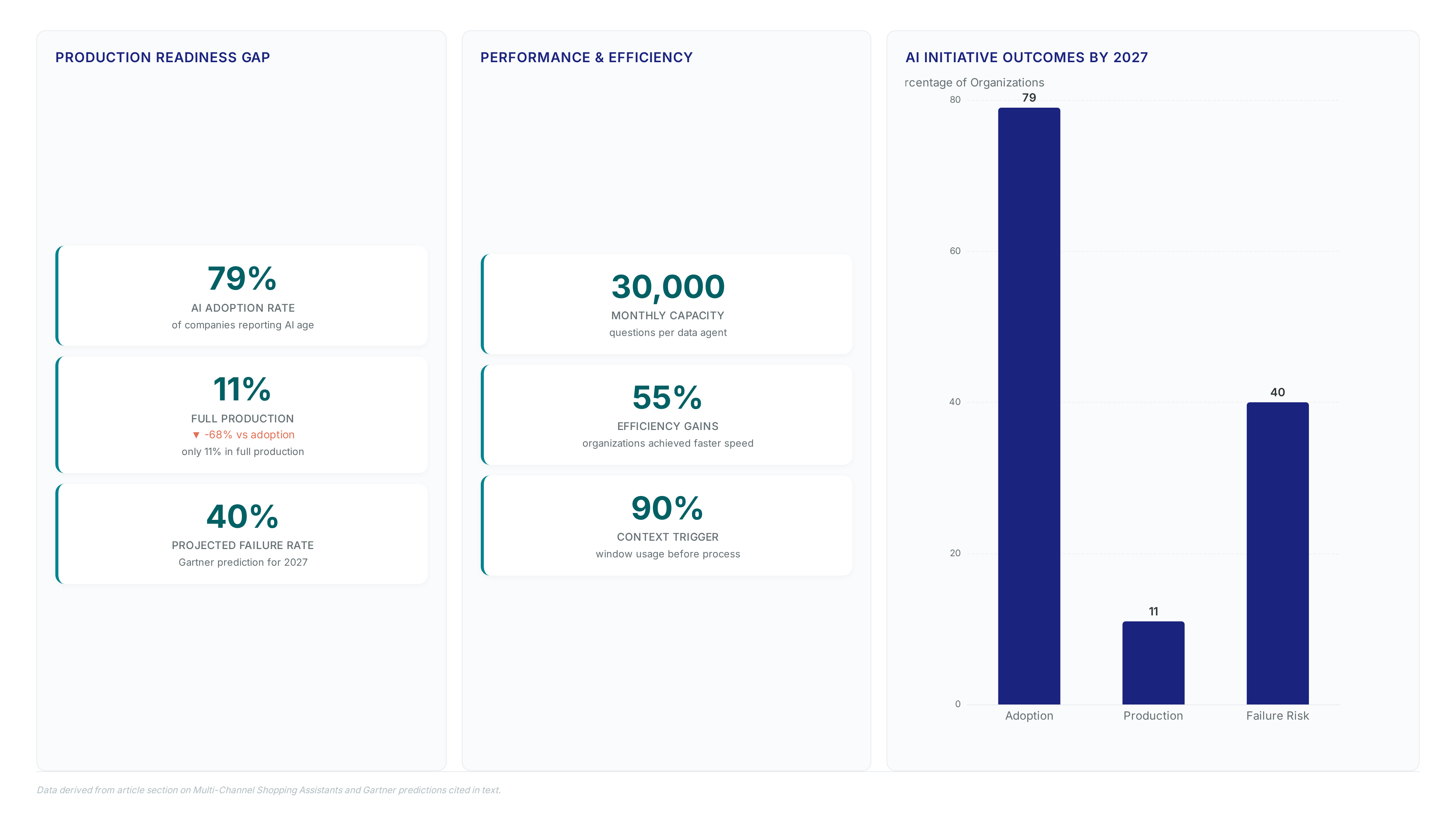
A channel serves as the edge adapter connecting a platform to the agent, normalizing inbound messages while managing the continuationToken for conversation resumption. The standard eve.ts channel provides an HTTP session API consumed by the dev TUI, browser clients, and curl. Operators link agents to diverse platforms like Slack, Discord, or Teams by placing files into a channels/ directory, effectively removing channel-specific logic from the core codebase. This separation keeps transport mechanics distinct from the reasoning engine, letting one agent definition power many interfaces without conditional branches. Strict separation defines the architecture; developers cannot reach session state directly inside a channel file, forcing all persistence through the durable workflows engine. Such constraints prevent race conditions yet demand that interactions be modeled as discrete events instead of mutable state. High-volume internal utilities prove this scalability, with one data agent handling 30,000 monthly questions by decoupling intake from execution.
Cost tension emerges when scaling past local development. A team with 500 daily active users on LangGraph Platform could encounter significant scaling costs due to per-node billing, whereas Eve uses function-based models on Vercel, where the Hobby tier is free and the Pro tier costs $20 per user per month. Edge normalization moves complexity from the application layer to the infrastructure boundary for network engineers, requiring strong event logging rather than complex connection pooling.
Preventing Build Failures with modelContextWindowTokens
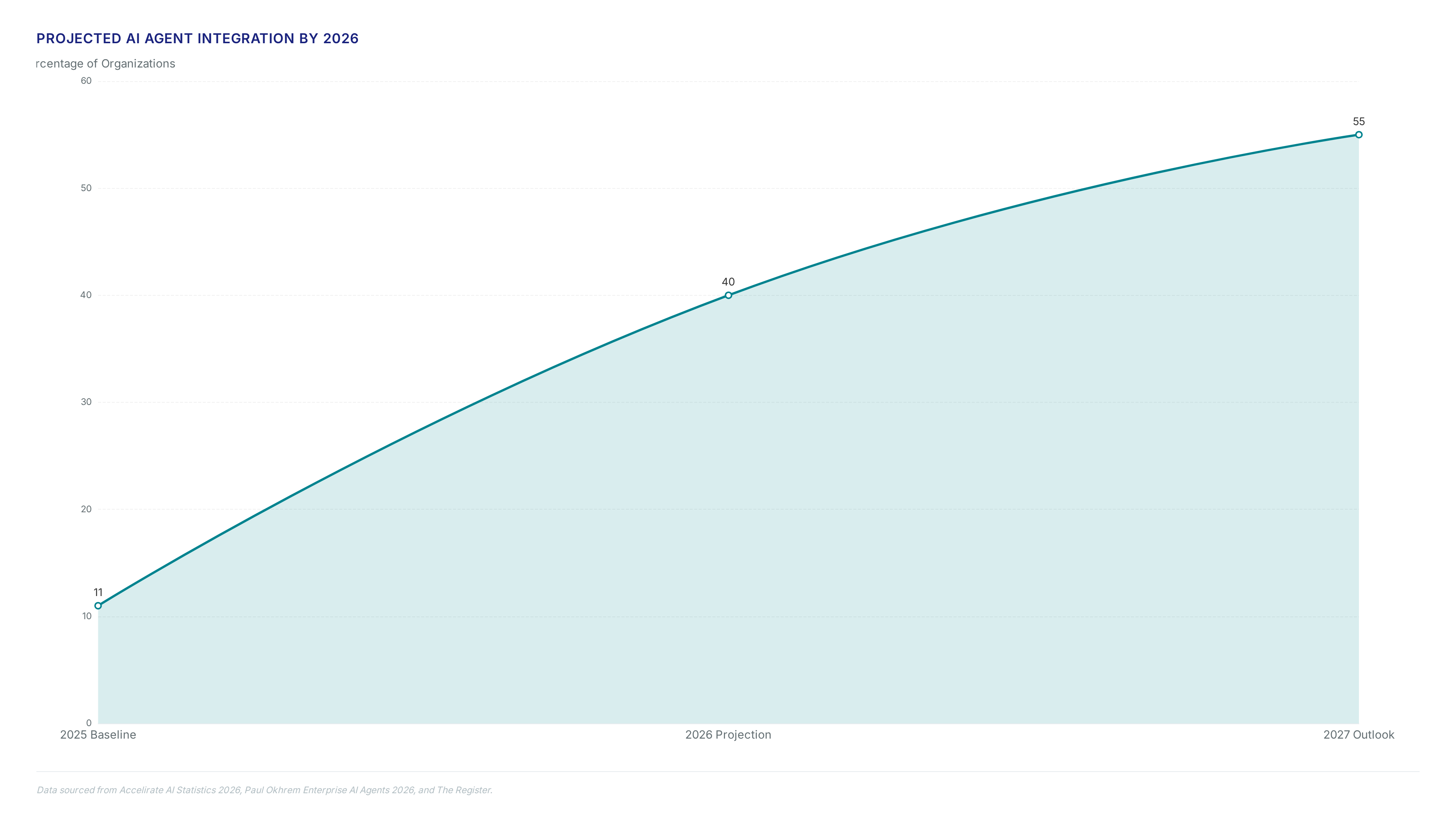
Non-gateway models require explicit definition of modelContextWindowTokens to prevent build failures tied to compaction metadata. The framework activates a compaction system to summarize older turns when a conversation reaches approximately 90% of the context window, a process that fails silently during the build phase if this limit remains undefined. The compiler rejects the agent definition when this configuration is missing, halting deployment of any shopping assistant before production release. Reliability gaps lead to project cancellation, a fate Gartner predicts for over 40% of agentic AI initiatives by 2027. The limitation is strict: custom channels need manual token budgeting to function while the default eve.ts channel handles many edge cases. Operators should verify their agent.ts configuration includes this integer value to bypass the metadata check. The continuationToken mechanism cannot calculate truncation points without this value, breaking session resumption.
Integrating Eve Agents with the AG-UI Protocol and SSE Streaming
AG-UI Protocol Event Vocabulary and Eve Stream Translation
Translating actions.requested into TOOL_CALL_START demands a custom channel file that bridges Eve's durable workflows with the stateless AG-UI vocabulary. This adapter converts internal TypeScript events into SSE-compatible strings for clients like CopilotKit. Developers implement four distinct translations to make the system function correctly. The message.appended event becomes TEXT_MESSAGE_CONTENT, while action.result maps directly to TOOL_CALL_RESULT. Splitting a single actions.requested event into three sequential AG-UI markers represents the most complex transformation. Start, arguments, and end markers must appear in strict order.
| Eve Internal Event | AG-UI Protocol Token | Translation Logic |
|---|---|---|
actions.requested |
TOOL_CALL_START |
Split into start/args/end sequence |
message.appended |
TEXT_MESSAGE_CONTENT |
Direct string passthrough |
turn.completed |
RUN_FINISHED |
Emit only once per run |
session.waiting |
(Ignore) | Do not emit to prevent errors |
- Initialize the SSE stream with the correct content-type header.
- Filter
actions.requestedbyaction.kind === "tool-call"so sub-agent calls are not processed as tool calls. - Set a flag on the first
turn.completedand suppresssession.waiting, so a secondRUN_FINISHEDcan never be emitted. - Manually close the HTTP connection after emitting
RUN_FINISHED.
The filesystem-first architecture ensures state persistence across restarts, yet the translation layer remains entirely stateless and must manage sequence integrity locally. Unlike the Model Context Protocol which standardizes tool definitions, this mapping handles real-time transport semantics exclusively. Operators must explicitly terminate the stream because Eve sessions do not auto-close. AI Agents News recommends validating event order in staging before production deployment.
About
Marcus Chen serves as Lead Agent Engineer at AI Agents News, where he daily evaluates the orchestration mechanics of frameworks like CrewAI, AutoGen, and LangGraph. This specific background makes him uniquely qualified to analyze Vercel's new Eve framework, as he constantly assesses how different systems handle tool use and session persistence for production environments. His work involves dissecting the shift from manual loop configuration to filesystem-first architectures, directly connecting his routine framework comparisons to Eve's novel approach. At AI Agents News, Chen tracks the evolution of autonomous agents to help engineering leaders make informed technology choices. By testing Eve's capabilities against established standards in multi-agent coordination, he provides the technical depth necessary for builders deciding whether to adopt this new durable agent solution. His analysis bridges the gap between theoretical framework features and the practical realities of shipping reliable AI agents in complex software ecosystems.
Conclusion
Eve's bet is narrow and testable: keep the reasoning core on disk and let files in agent/channels own the transport. Where that bet pays off is measurable. A new surface becomes a file rather than a refactor, and a killed process resumes at the last completed step instead of replaying the whole turn.
The bill arrives at the edge you now own. A custom channel has to declare modelContextWindowTokens, translate Eve's events into the client's vocabulary, and close a stream that a durable session will never close by itself. Before adding the second channel, verify that your own adapter meets all three obligations: the default eve.ts channel hides them, and a hand-written webhook will not.
Frequently Asked Questions
It resumes from the last completed step instead of replaying history. The workflow engine checkpoints progress at every step boundary to ensure durability. Killing the server mid-turn and restarting it continues the session at the exact event index instead of losing the turn.
The Hobby plan is free while Vercel's Pro plan costs $20 per user per month, which includes usage credits. This pricing structure supports personal projects before scaling to enterprise-grade durable sessions.
They simply add a new file to the agent channels directory. This filesystem-first approach allows surface expansion as a file operation rather than a code refactor. The central agent code remains untouched while new adapters normalize inbound messages.
Many initiatives lack durable session mechanics required for enterprise stability. Gartner predicts failure for over 40% of agentic AI initiatives by 2027 due to poor architecture. Only a small fraction achieves full production deployment without proper workflow engines.
Yes, decoupling intake from execution allows massive scalability for data agents. One data agent handled 30,000 monthly questions by separating the reasoning core from communication channels. This architecture ensures continuity even if the underlying infrastructure fails unexpectedly.