crewAI 1.14.7: Secure State and Pluggable Backends
CrewAI 1.14.7 resolves critical CVEs in aiohttp and docling dependencies while isolating runtime state per run to secure concurrent agent executions. This update fundamentally shifts the framework from a monolithic script runner to a modular platform capable of enterprise-grade deployment through strict state isolation and pluggable backends. By decoupling conversational logic from the core runtime, the release enables developers to build observable workflows that no longer suffer from unbounded memory growth or replay errors during restoration.
The mechanisms behind those gains are narrow. A restore flag now gates checkpoint recovery, so a live snapshot can no longer replay as a resumed session and corrupt the event log. OpenTelemetry integration adds granular visibility into LLM events, exposing real finish reasons and sampling parameters directly on the event stream.
Security remains a primary driver, with crewai-tools dependencies patched to address vulnerabilities identified by pip-audit. The release notes confirm that lazy-loading imports for docling have improved startup speeds, a necessary optimization given the framework's massive adoption indicated by 54.7k stars on GitHub. These changes collectively prepare crewAI for production environments where auditability and resource containment are non-negotiable requirements.
What Pluggable Backends Change in crewAI 1.14.7
Pluggable Default Backends for Memory and RAG in crewAI 1.14.7
Version 1.14.7 introduces pluggable default backends for memory, knowledge, RAG, and flow to decouple orchestration logic from storage implementation. This architectural shift allows engineers to swap underlying retrieval mechanisms without rewriting agent definitions. The update, published by greysonlalonde on 11 Jun at 17:13 under commit 21fa8e3, separates concerns by abstracting state management into interchangeable modules. Developers can now configure specific providers for knowledge retrieval while maintaining a consistent Flow DSL interface for pipeline definition. Distinct lifecycle management now governs context windows separately from long-term vector stores. The release adds a native Snowflake Cortex LLM provider and includes a dedicated Snowflake integration guide to support these new capabilities. Modularity means RAG pipelines evolve independently of agent reasoning loops. Building FlowDefinition from metadata supports deterministic pipelines where sequence integrity matters more than collaborative negotiation. This change enables rigorous testing of retrieval strategies without altering core agent behaviors. Wiring a custom backend takes three steps.
- Define the custom backend class implementing the required storage methods.
- Instantiate the crew with the
memory_backendargument pointing to the new class. - Initialize the flow using the
FlowDefinitionbuilder to parse DSL triggers.
Building Conversational Flows with Chat API and FlowDefinition Metadata
Decoupling convo logic from runtime enables structured dialogue management. Version 1.14.7 adds a chat API specifically designed for conversational flows, allowing operators to define interaction patterns without embedding state handling in agent code. This separation permits the system to treat dialogue history as a distinct, manageable resource rather than an implicit side effect of task execution. Builders construct a FlowDefinition directly from Flow DSL metadata, transforming static configuration into executable orchestration graphs. Such capability supports the industry shift toward combining collaborative crews with deterministic pipelines for production-ready workflows. Engineers use the new conversational_definition structure, which was added to decouple conversation logic from the runtime environment. This architectural update aims to improve clarity and separation of concerns within the framework's core execution paths. Conversational agents gain reliability through explicit state machines rather than heuristic retries. The release fixes issues where file inputs were not working reliably, ensuring smoother data ingestion for conversational agents.
Upgrade Requirements: Python 3.10-3.14 and CVE Fixes for aiohttp
Upgrading to crewAI 1.14.7 requires Python 3.10 or newer, strictly below 3.14. This constraint ensures compatibility with the updated dependency tree while resolving critical supply chain risks. The release explicitly addresses Common Vulnerabilities and Exposures for libraries including aiohttp, docling, and docling-core, closing the path where a compromised document parser hijacks the execution graph.
| Component | Previous State | 1.14.7 Requirement |
|---|---|---|
| Python Runtime | Unspecified lower bound | >= 3.10, < 3.14 |
| HTTP Library | Vulnerable to CVEs | Patched via pip-audit |
| Orchestration | Monolithic | Modular Flow DSL |
The update also restores project.scripts in the crewai package to enable uv tool installation, streamlining the setup process for developers managing their environments. AI Agents News recommends validating the dependency graph in a staging environment prior to production rollout.
Internal Architecture of Flow DSL and Runtime State Isolation
Runtime State Scoping and Concurrent Run Isolation Logic
Scoping runtime state per run bounds memory growth and isolates concurrent executions. This mechanism ensures that transient context from one flow instance does not bleed into another, a critical requirement for multi-tenant deployments. The architecture simplifies flow condition evaluation by rendering it stateless per event, reducing the computational overhead during high-concurrency scenarios.
| Feature | Mechanism | Operational Impact |
|---|---|---|
| State Scoping | Per-run boundary | Prevents cross-talk |
| Condition Logic | Stateless evaluation | Lowers CPU usage |
| Restore Gate | Flag-based check | Stops accidental replay |
While stateless conditions improve speed, the update supports production readiness by implementing runtime state checkpointing with SqliteProvider storage for reliability. Consequently, builders gain fine-grained control over persistence without sacrificing the modularity offered by pluggable backends.
Checkpoint Restoration and Custom BaseLLM Rebuilding Process
Restoring a checkpoint in crewAI 1.14.7 reconstructs the custom BaseLLM as a concrete instance to resolve incomplete tool histories. This mechanism ensures that agents retain full capability after interruption by fixing issues where serialized objects previously lost executable methods upon deserialization. The process specifically targets integrations where tool result histories were truncated during state recovery. By rebuilding the LLM wrapper dynamically, the system restores the complete context window required for accurate function calling.
Operators must enable a specific flag to activate this restore behavior, preventing live snapshots from replaying as resumed sessions accidentally. Without this gate, a running flow might ingest its own transient state as historical data, corrupting the event log. This configuration is necessary for maintaining data integrity when using runtime state checkpointing with persistent storage backends.
| Failure Mode | 1.14.6 Behavior | 1.14.7 Resolution |
| Custom LLM Restore | Abstract class loaded | Concrete BaseLLM rebuilt |
| Tool History | Incomplete results | Full history restored |
| Snapshot Replay | Allowed by default | Gated behind flag |
Restoration now requires explicit configuration; default behavior blocks resume operations to prevent state corruption. Engineers managing long-running Flow DSL pipelines must update deployment scripts to set the restore flag to enable recovery from checkpoints. This constraint ensures that state recovery remains a deliberate operational choice rather than an implicit side effect.
Lazy-Loading Docling Imports and Flow DSL Refactoring Steps
Import latency drops as the framework defers docling module loading until runtime invocation rather than initialization. This optimization removes heavy parsing dependencies from the critical path, accelerating cold starts for services that do not immediately require document conversion. Builders verifying this improvement can observe reduced import times as the library remains unloaded until explicitly needed.
Structural refactoring divides the monolithic flow.py into three distinct components: DSL, definition, and runtime. This separation isolates orchestration logic from state management, allowing independent evolution of the syntax and execution engine.
- Import the crewAI package and monitor memory usage before any flow instantiation.
- Trigger a specific flow that does not apply document parsing features.
- Confirm that docling processes do not appear in the system thread list until invoked.
| Component | Previous Architecture | Refactored Structure |
|---|---|---|
| Logic Location | Monolithic flow.py |
Split into DSL, definition, runtime |
| Import Behavior | Eager loading | Deferred until first use |
| State Handling | Coupled with syntax | Isolated in runtime module |
The decoupling introduces a transient compatibility risk where custom extensions referencing internal flow paths may break if they assume a flat module structure. This architectural shift prioritizes long-term maintainability over backward compatibility for deep integrations.
OpenTelemetry Collector Wiring in crewAI 1.14.7
The updated OpenTelemetry collector ingests agent span data through the new pluggable backend interfaces introduced in version 1.14.7. This architecture decouples telemetry export from the core runtime, allowing operators to route signals without modifying the flow definition. This separation ensures that telemetry setup changes do not destabilize concurrent run isolation mechanisms.
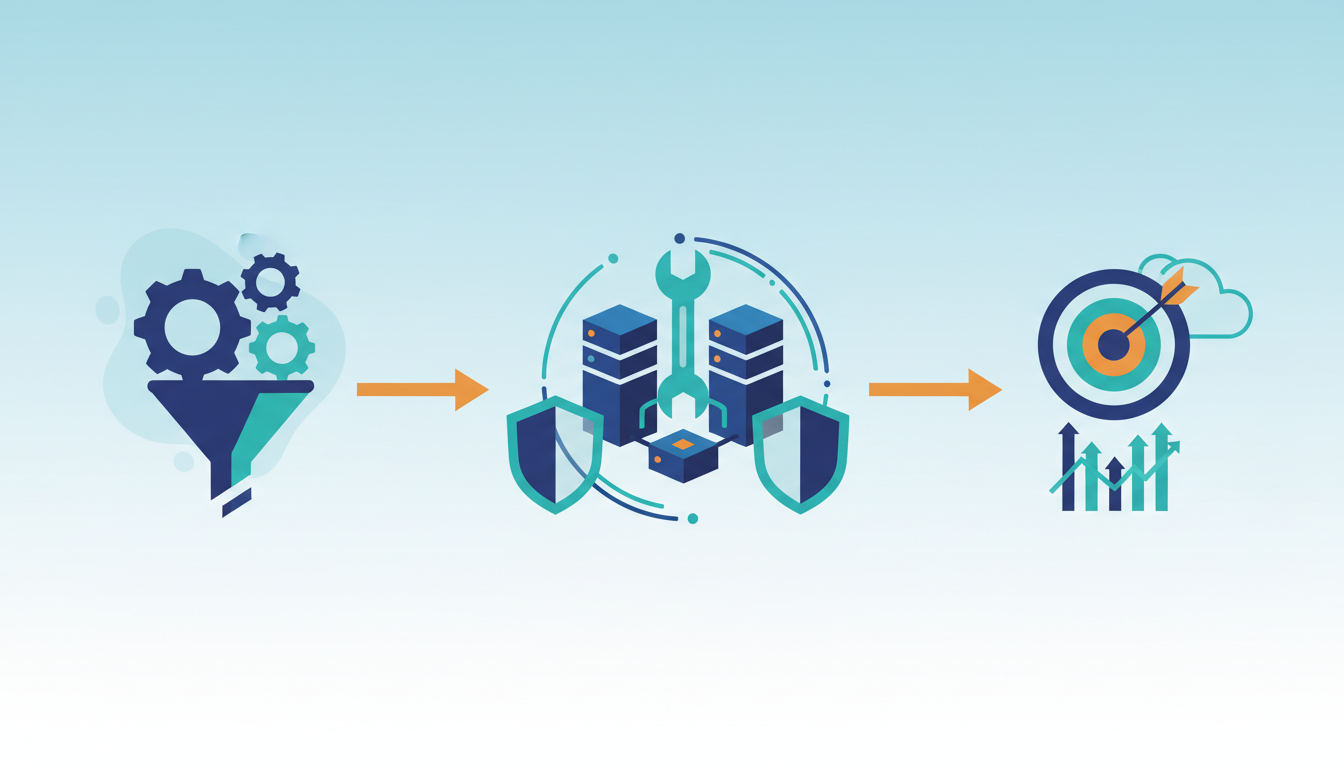
The release fixes telemetry initialization on login and ensures checkpoint functionality rebuilds custom BaseLLM instances as concrete LLMs on restore. Documentation updates now reflect these structural shifts, providing a clearer path for integrating with the broader Crews and Flows system.
crewAI Versus LangGraph for High-Speed LLM Workflow Automation
Native Snowflake Cortex Provider Replaces Generic API Wrappers
Release 1.14.7 delivers a native Snowflake Cortex LLM provider that replaces generic API wrappers with a dedicated backend built for enterprise data workflows. Agents execute function calls directly against Snowflake-hosted models, cutting latency in multi-agent coordination compared to round-trip external HTTP requests. The framework treats Cortex as a first-class citizen within its pluggable architecture, allowing smooth swaps between local and cloud-based inference engines.
| Feature | Native Cortex Provider | Generic API Connection |
|---|---|---|
| Authentication | Managed via Snowflake credentials | Requires manual token handling |
| Latency | Optimized internal routing | Subject to public network variance |
| Context | Direct access to Snowflake tables | Requires data movement or copying |
Builders route Flow DSL tasks through Cortex while maintaining strict isolation for concurrent runs. This update fixes incomplete tool result histories previously seen when pairing Snowflake with Claude models, ensuring reliable state restoration. Tight coupling requires operators to manage Snowflake-specific credentials inside the crew environment, adding a configuration step absent in stateless setups. Teams must weigh direct database access benefits against the operational overhead of securing additional identity tokens. Agent frameworks like crewAI now prioritize deep vertical integrations over horizontal compatibility.
Benchmarking crewAI 5.76x Speed Advantage in QA Workflows
Benchmarks show CrewAI executes certain Question-Answering tasks 5.76 times quicker than LangGraph. LangGraph provides strong visualization tools but lacks the deferred docling import that keeps crewAI off the parsing path at startup. Speed gains allow operators to scale multi-agent coordination without increasing cold-start latency, though the cost is a slightly more complex import hierarchy that can obscure static analysis.
Teams integrating with Databricks must configure these lazy-loaded paths explicitly to avoid race conditions during concurrent flow execution. The Databricks integration guide details necessary environment variable adjustments for cluster-wide deployment. One limitation persists: if a workflow requires immediate access to parsing schemas at startup, the lazy-load delay may introduce a minor, single-request latency spike before caching engages. Builders should validate this behavior against their specific Service Level Agreements before production rollout.
crewAI 1.14.7 Versus LangGraph: Dependency Security and Tooling
This patching cadence reflects a security-first development model where frameworks prioritize dependency management over feature velocity. Operators verifying their environment should confirm that pip-audit reports zero high-severity findings for these specific libraries before deploying agents to production. The framework relies on uv for package handling, which simplifies the installation workflow compared to traditional pip sequences. Conversely, the crewai-tools package introduces a rigid dependency tree requiring beautifulsoup4, pymupdf, python-docx, pytube, requests, tiktoken, and youtube-transcript-api. This broad toolset increases the attack surface relative to LangGraph's more modular approach to tool integration. While LangGraph offers visualization via LangSmith Studio, crewAI emphasizes state management through its Flow DSL for production readiness.
| Feature | crewAI 1.14.7 | LangGraph |
|---|---|---|
| Dependency Manager | uv (standardized) |
pip / poetry |
| Tool Dependencies | Fixed set (7 libs) | Modular / Optional |
| Security Focus | CVE resolution in core | Visualization focus |
The constraint for crewAI's bundled utility is reduced flexibility in minimizing the final container image size. Builders requiring strict minimalism may find the mandatory inclusion of document parsing libraries like pymupdf problematic for specialized microservices. AI Agents News recommends auditing the crewai-tools requirement list against actual workflow needs to avoid unnecessary bloat.
About
Sofia Berg serves as Research Editor at AI Agents News, where she specializes in translating complex multi-agent research and framework updates into actionable insights for engineers. Her deep familiarity with agentic orchestration and evaluation benchmarks makes her uniquely qualified to analyze the technical nuances of the crewAI 1.14.7 release. In her daily work, Berg dissects architectural changes in frameworks like crewAI to determine their impact on multi-agent coordination and reliability. This specific update, which introduces pluggable default backends for memory and RAG, aligns directly with her focus on how infrastructure improvements affect real-world builder decisions. By connecting these feature additions to broader trends in autonomous agent development, she provides the technical context necessary for software engineers evaluating orchestration tools. Her analysis grounds the release notes from crewAIInc in practical application, ensuring readers understand not just what shipped, but how these changes influence system design and tool-use capabilities in production environments.
Conclusion
Version 1.14.7 buys production readiness inside the runtime, with isolated runs, gated restores, and swappable backends, then spends part of it back at the dependency layer. The rigid inclusion of seven core libraries in crewai-tools creates a heavy baseline that inflates container images and expands the attack surface for every microservice deployed. While the shift to uv simplifies installation, operators must recognize that security hardening now demands active pruning rather than passive updates. The current architecture favors rapid prototyping over lean production efficiency, forcing teams to carry unused parsers and transcript APIs into environments where they introduce unnecessary risk.
Workflows that never parse documents or pull video transcripts should exclude those modules explicitly, so the operational cost of the bundled libraries stops being carried by services that never call them.
Frequently Asked Questions
You must use a Python version between 3.10 and 3.14 to ensure compatibility. This strict range prevents runtime errors caused by incompatible dependency trees in the updated framework.
Benchmarks show crewAI executes certain QA tasks 5.76 times quicker than LangGraph. This speed advantage allows developers to process high-volume queries with significantly reduced latency.
The update resolves CVEs in aiohttp, docling, and docling-core to secure your environment. These fixes eliminate known supply chain risks that could otherwise expose agent data to attacks.
Necessary tools depend on seven third-party libraries including beautifulsoup4 and requests. Installing these required dependencies ensures your agents can access web content and parse documents correctly.
Each run gets its own state boundary, so context from one flow instance cannot bleed into another and memory stays bounded per run. Restores are deliberate: a checkpoint replays only when the restore flag is set.