Astron context management solves the 97% reuse gap
With 16% of organizations now running cross-functional AI processes, the era of expensive experimental coding is ending. Developers can no longer afford the luxury of unoptimized context windows and redundant skill development when production demands reliability.
The answer here is structural rather than clever prompting. The Model Context Protocol filters what actually reaches the context window, and Astron SkillHub keeps one versioned, audited copy of each skill that any agent can pull. The bill it targets is the one nobody budgets for: roughly $950 a month of indexing on a hundred-person deployment, plus the rebuild cost every team pays when a skill written for one agent will not run in another.
The Skill Silo Problem and What It Costs
What the Silo Costs in Money and Rebuilt Work
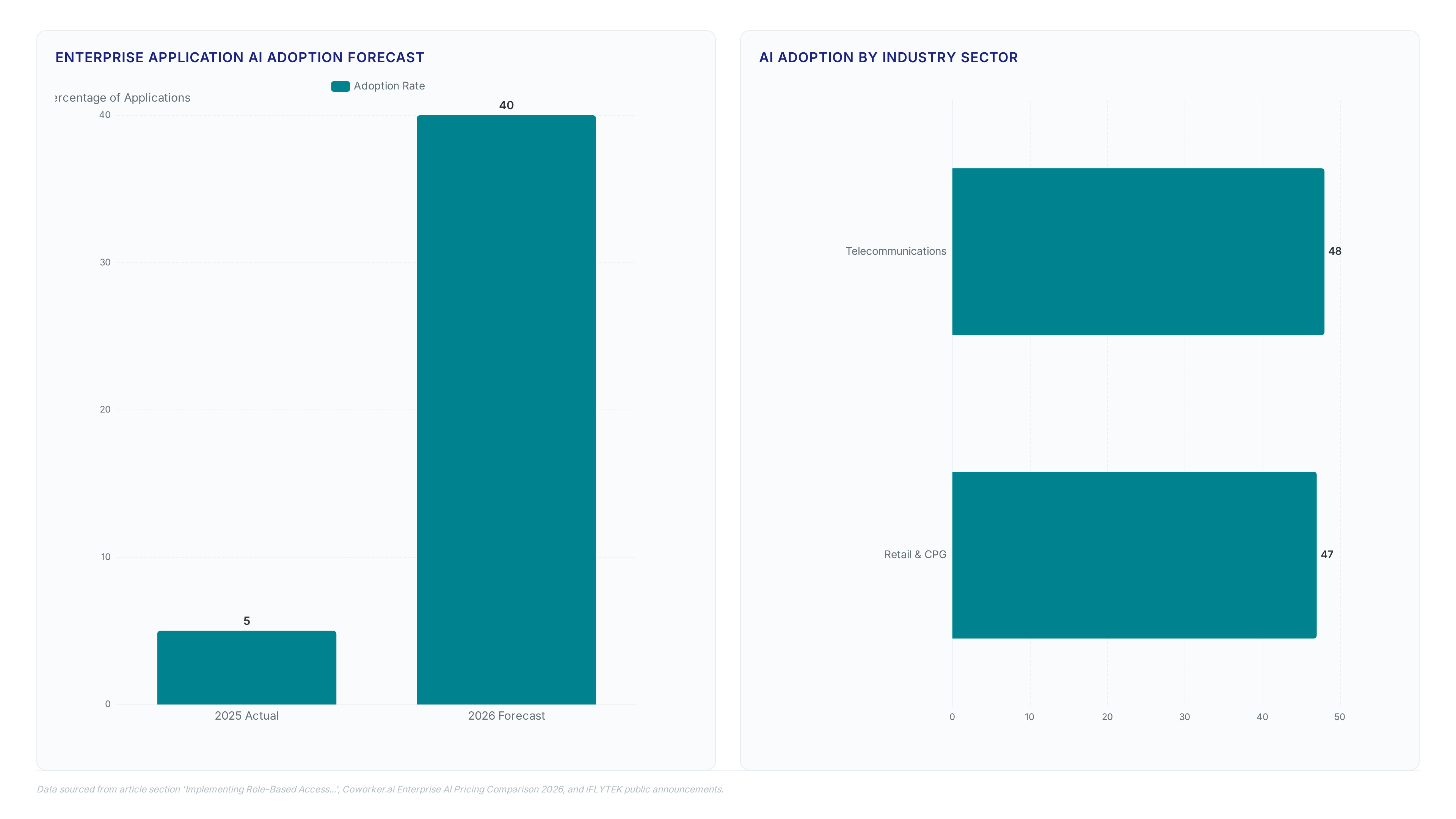
Operational failure defines the Skill Silo Problem, a scenario where agent skills built for one system remain unusable in another, forcing redundant development cycles. Gartner forecasts 40% of enterprise applications will embed task-specific AI agents by 2027, up from less than 5% in 2025. This rapid expansion clashes with the reality that 97% of executives state their company deployed AI agents in the past year without standardized reuse mechanisms. The resulting fragmentation creates isolated pockets of capability that cannot share logic. Intelligent context management solves this by optimizing how data is retrieved and processed to notably reduce token consumption. Without such optimization, managing large context windows becomes expensive and slow as agents scale complexity. Competitor platforms often hide these infrastructure costs; for a standard 100-person deployment with 5 Enterprise index units, the indexing component alone adds approximately $950 per month to the total bill. This financial drain occurs alongside technical inefficiency where teams rebuild identical tools for different agents.
Astron addresses these bottlenecks through the Model Context Protocol (MCP) for secure communication with external tool servers. Unlike generic frameworks, this approach applies knowledge graphs to broader enterprise workflows rather than just code intelligence. This architecture prevents the common trap where rising agent counts linearly increase operational overhead instead of compounding value. Enterprises ignoring this standardization face escalating API costs and inconsistent behavioral patterns across their automated systems.
Deploying iFLYTEK Astron for Enterprise Skill Reuse
IFLYTEK Astron deploys enterprise-grade SuperAgents that execute complex task chains across digital systems rather than generating simple text. This platform shifts focus from raw model capability to operational scalability by separating agent logic from reusable skills. The architecture consists of two distinct components: the Agent runtime and SkillHub, a central registry managing versioning and access control.
Organizations adopt this standardized skill system when redundant development erodes budget efficiency. Market data indicates 88% of senior executives plan to increase AI budgets due to agentic AI, yet uncoordinated spending accelerates the skill silo problem. Astron addresses this friction by enabling intelligent RPA integration, allowing agents to interact directly with desktop environments. Centralized registries like Astron SkillHub avoid rebuilding common connectors for every new agent instance. However, centralization introduces a single point of failure requiring high-availability infrastructure design. Without redundant registry nodes, a SkillHub outage halts all dependent agent operations across the enterprise. AI Agents News recommends validating registry durability before production rollout. The cost of ignoring this constraint exceeds the initial savings from reduced token consumption.
Financial Risks of Unmanaged Context Windows and API Costs
Unmanaged context windows drive enterprise AI plans to scale as high as $325 per user per month, creating unsustainable operational expenditure. This cost variance stems from inefficient token consumption where redundant data retrieval inflates every API call. Image generation workflows exemplify this volatility, with DALL-E 3 charging between $0.04 and $0.12 per image depending on resolution and model tier. Such fluctuations make budget forecasting impossible without strict intelligent context management controls.
The economic danger intensifies when organizations ignore the skill silo problem, forcing teams to rebuild identical logic for different agents. Developers are now shifting toward lightweight tools like DeusData/codebase-memory-mcp to mitigate these token costs through improved memory handling. Failure to adopt similar optimization strategies results in compounding waste as agent complexity grows.
| Cost Factor | Unoptimized Risk | Optimized Approach |
|---|---|---|
| Image APIs | Volatile per-unit pricing | Context-aware batching |
| Enterprise Plans | Fixed high overhead | Flexible scaling |
| Skill Reuse | Redundant development | Centralized registry |
The limitation of current high-end plans is their assumption of infinite context availability, which rarely aligns with actual business requirements. Operators must enforce strict token budgets or face exponential cost growth unrelated to value delivery. AI Agents News identifies this spending gap as the primary barrier to sustainable agentic deployment in 2026.
How Astron Architecture Reduces Token Costs Compared to Vibe Coding
Intelligent Context Management and Token Optimization Mechanics
Optimizing data retrieval through the Model Context Protocol eliminates redundant token consumption by isolating query scope to immediate task requirements. Generic frameworks often flood the context window with irrelevant history, whereas this mechanism enforces strict user and space context isolation in all database queries to prevent cross-tenant leakage. The platform operates as a workflow engine for enterprise-grade SuperAgents rather than a simple library, executing complex chains across digital systems without hardcoding dependencies.
- Flexible tool discovery occurs at runtime, removing static configuration overhead.
- Secure communication channels validate external tool servers before execution.
- Processing logic filters raw data before it enters the large language model context.
| Feature | Generic Frameworks | Intelligent Context Management |
|---|---|---|
| Data Scope | Full history inclusion | Strict query isolation |
| Tool Integration | Hardcoded dependencies | Flexible discovery |
| Primary Cost Driver | Token volume | Orchestration efficiency |
The limitation is that flexible discovery requires strong network policies, adding initial configuration complexity compared to static imports. Enterprises ignoring this trade-off face escalating API expenses as agent complexity grows. AI Agents News identifies this architectural shift as the primary differentiator between experimental prototypes and sustainable production deployments.
Keeping Data On Site While Cutting Token Spend
Protocol work is not free. The limitation involves the initial configuration effort required to map legacy tools to MCP specifications, which can delay immediate ROI. Operators must weigh this setup cost against the long-term reduction in API spend.
The console backend enforces these isolation standards, preventing the data leakage risks common in multi-tenant environments. While competitors like ChatGPT Business charge $25/user/month for SaaS-only access, Astron supports on-premises Model as a Service deployments. This flexibility allows enterprises to retain data sovereignty while reducing reliance on public cloud token quotas. The trade-off is the operational burden of maintaining the underlying infrastructure. AI Agents News identifies this shift toward self-hosted, protocol-driven architectures as the primary method for fixing high token consumption in production agents.
Astron Modular Architecture Versus Generic Unstructured Coding Frameworks
Astron replaces unstructured "vibe coding" with a modular Java Spring Boot backend that isolates agent logic from execution overhead. Generic frameworks often lack this separation, forcing developers to rebuild context handling for every new deployment. By using a Python-based execution engine, the platform dynamically loads only necessary skills rather than inflating the context window with unused definitions. This architectural choice directly counters the trend where 76% of AI use cases now rely on third-party solutions rather than custom-built models, favoring platforms that offer pre-integrated modularity.
Modularity is not free either. Migrating from ad-hoc scripts requires strict governance over skill versioning to avoid breaking changes in production workflows. Enterprises ignoring this structural shift face compounding API costs as context windows expand linearly with feature complexity. Operational sustainability depends on adopting this modular approach before token consumption outpaces budget allocations.
Implementing Role-Based Access and Skill Registries in Enterprise Environments
Astron SkillHub Registry and Java Spring Boot Backend Structure
The iflytek/skillhub registry acts as the central authority for publishing versioned skill packages inside the enterprise.
- Deploy the self-hosted registry using Docker to establish a private repository for agent capabilities.
- Configure RBAC policies in the Java Spring Boot console to restrict skill access by user space and role.
- Link the Python-based execution engine to the registry endpoint for flexible skill discovery at runtime.
This design separates the management console from the core execution layer, stopping unverified code from reaching production. Centralizing skills improves governance yet creates a single point of failure if the registry network path lacks redundancy. Operators must guarantee high-availability for the registry service because agent startup fails without successful skill manifest retrieval. SaaS models often bundle storage with compute, whereas this method isolates the skill definition layer to allow independent scaling of the governance plane. Every skill invocation generates a traceable audit log, meeting compliance needs that generic frameworks overlook.
Granting Permissions Before Expanding the Agent Fleet
Operational data indicates that 16% of organizations now run cross-functional processes spanning multiple departments, which is where skill permissions stop being a formality. Initial coordination costs present a drawback; enterprises must define granular skill permissions before agents operate autonomously across silos. Flexible discovery introduces security risks instead of efficiency gains without this upfront governance. Successful large-scale deployment therefore depends on establishing a centralized SkillHub prior to expanding agent fleets. Skills built for one agent remain reusable and secure across the entire system under this structure. The resulting architecture supports complex business logic while preventing the token inflation common in unstructured frameworks.
Validating Token Reduction and Response Time Metrics Post-Integration
Verifying token reduction requires benchmarking API spend against the $0.052 per thousand tokens baseline observed in optimized enterprise deployments.
- Measure response latency before and after enabling Intelligent Context Management to confirm sub-second retrieval improvements.
- Audit skill reuse rates across teams to ensure the RPA integration eliminates redundant task chains.
- Compare total cost of ownership against the $97,500 annual median contract value typical of closed alternatives like Glean.
Read the three together. Latency that improves while skill reuse stays flat means the registry is not being used, and a token bill that falls while total cost of ownership holds steady means the spend moved rather than disappeared.
Strategic ROI and Adoption Criteria for Enterprise AI Deployment
Separating raw model pricing from total infrastructure overhead defines enterprise AI cost efficiency within the Astron Agent Architecture. This hidden layer distinguishes true cost efficiency from simple API rate shopping. Static loading inflates bills regardless of actual query complexity, a common failure mode this architecture prevents. Security constraints further define the economic boundary of viable deployments. The platform backend embeds user and space context into every query to prevent cross-tenant leakage, a requirement that generic frameworks frequently address with costly middleware layers.
Reading the 2026 Adoption Numbers Before Scaling
Telecommunications firms report a 48% agentic AI adoption rate, demanding infrastructure that scales beyond simple chat interfaces. Enterprises must validate readiness against this surge by confirming their architecture supports modular skill reuse rather than static, single-purpose agents. Operators should verify that their chosen platform avoids the redundancy where skills built for one agent remain unusable in another. The economic imperative is clear, as significant portions of the market now report positive payback within standard fiscal cycles. Healthcare verticals specifically show a 62% adoption driven by administrative automation needs, requiring strong workflow capabilities. Teams must ensure their deployment strategy aligns with these sector-specific velocity metrics to avoid stranded assets. AI Agents News recommends prioritizing platforms that decouple execution logic from model inference to handle variable loads effectively. Failure to adopt such scalable architectures risks obsolescence as competitors use standardized ecosystems for quicker iteration.
About
Sofia Berg serves as Research Editor at AI Agents News, where she specializes in translating complex multi-agent research into actionable insights for engineering teams. Her daily work involves rigorously evaluating agentic frameworks and benchmarking performance metrics like SWE-bench, making her uniquely qualified to analyze the critical shift from experimental "vibe coding" to cost-effective enterprise deployment. Berg's expertise lies in separating technical reality from market hype, a skill necessary for understanding why tools focusing on token efficiency and system integration are gaining traction. At AI Agents News, she consistently covers the orchestration and scaling challenges that iFLYTEK Astron addresses, providing her with deep context on the specific pain points of enterprise AI adoption. By connecting academic findings on agent coordination with practical deployment constraints, Berg offers a grounded perspective on how organizations can solve the AI cost crisis without sacrificing capability.
Conclusion
Two costs sit behind the same architecture. One is metered and visible on the invoice, the tokens a bloated context window burns on every call. The other stays invisible until someone counts it, the hours teams spend rebuilding a connector that already exists elsewhere in the company. Intelligent Context Management attacks the first by filtering retrieval at the source; SkillHub attacks the second by making one versioned skill discoverable to every agent.
Neither is free. Centralization buys governance and audit logs at the price of a single point of failure that has to be made highly available, and protocol-driven discovery buys flexibility at the price of mapping legacy tools and writing network policy. So the question worth asking before the next deployment is narrow: can a skill built by one team run inside another team's agent tomorrow, and can anyone show what the context window costs per transaction. If either answer is no, more agents will multiply the bill rather than the value.
Frequently Asked Questions
The indexing component adds roughly $950 monthly for standard setups. This expense occurs when managing five Enterprise index units across a one hundred-person deployment team.
97% of executives report deploying agents in the past year with no standardized reuse mechanism behind them. The practical consequence is that a connector written during one pilot cannot be called by the next one, so the second team writes it again.
Astron solves silos via a centralized SkillHub registry. This approach counters the fragmentation where teams currently rebuild identical tools for different agents repeatedly.
Gartner forecasts 40% of enterprise applications will embed task-specific AI agents by 2027. This rapid expansion clashes with current realities where most companies lack standardized reuse mechanisms entirely.
Because cross-functional workflows expose what single-department pilots hide: every extra department multiplies both the context a query drags along and the number of teams able to rebuild the same skill in isolation.