Autonomous agent loops burn $4,200 in a weekend
A single developer once incurred $4,200 in API fees over one long weekend due to an uncontrolled autonomous refactoring run. This isn't a model efficiency glitch; it is a critical infrastructure vulnerability. While token prices drop, AI token usage doubled in 2026 as agentic systems scaled. We face a paradox where falling unit costs collide with exploding volume to bankrupt unprepared teams. The intelligence of the agent matters less than the lack of cost visibility and circuit breakers in current deployment architectures.
You cannot manage what you cannot measure. Most teams lack the ability to isolate spend by specific task or user. We must enforce hard budget ceilings and logic checks to stop runaway loops before they exhaust quarterly allocations.
Real-world failures, such as Uber exhausting its entire 2026 AI coding budget by April, demonstrate the severity of ignoring these guardrails. The solution requires architectural changes that treat token consumption as a finite resource demanding strict governance. By implementing granular monitoring and automated kill-switches, organizations can harness autonomous loops without sacrificing fiscal stability.
The Mechanics of Silent Token Burning in Autonomous Loops
Silent Token Burning Defined by 30 to 50 API Calls Per Ticket
Silent token burning occurs when a deployed agent executes 30 to 50 model calls per ticket, compounding costs invisibly compared to single-shot prompts. Autonomous coding agents consume many times more tokens than standard chat interactions because they operate in reasoning loops rather than direct requests. A typical deployed agent runs autonomously to pull tickets, file PRs, and answer Slack questions, yet these agents often hit the model 30 to 50 times per ticket. Each cycle involves reading context, deciding on a tool, executing, and re-reading output, creating exponential cost growth without immediate visibility. This structural loop means a single developer can hit $4,200 in API fees over a long weekend during an uncontrolled autonomous refactoring run. The lack of per-call transparency prevents operators from seeing the burn rate until the billing cycle closes.
The root cause is architectural: agents frequently re-read system prompts or tool descriptions on every invocation, inflating token counts unnecessarily. Teams implementing daily audits and swapping specific calls for direct CLI commands successfully reduced token costs in agentic CI workflows by up to 62%. Without hard enforcement ceilings, the loop architecture guarantees that minor logic errors trigger massive financial leakage. Operators must treat every agent loop as a potential budget breach waiting to happen.
Context Re-Reads Inflate Every Loop Iteration
Context re-reads force agents to re-ingest system prompts and tool definitions on every loop iteration, inflating token consumption across 30 to 50 cycles per task. Autonomous loops require reading a task, deciding on a tool, calling it, and re-reading output before the next step. A bug causing 2 extra reads per call results in 100 extra reads per completed task. This structural repetition means static text like tool descriptions consumes budget repeatedly rather than once per session. Implementing prompt caching allows providers to remember static parts of prompts, notably reducing costs for repeated contexts. LLM API pricing varies by more than 600x across different models, making unoptimized re-reads of heavy context windows financially disastrous. Deploying a code knowledge graph retrieves exact context needed, saving 40-95% on tokens compared to broad context loading.
Reasoning depth often conflicts with budget predictability. Agents requiring full context re-validation for safety cannot apply cheap model routing effectively if the context window remains large. AI Agents News recommends enforcing hard ceilings on context window size per cycle to prevent infinite retry loops from exhausting monthly allocations.
Invisible Cost Compounding in Multi-Agent Systems vs Single Calls
Multi-agent loops consume 4 to 15 times more tokens than single-call interactions due to iterative reasoning cycles. Unlike a support agent answering a query once, a coding agent retries and re-plans until the ticket closes, multiplying spend with every cycle. That disparity creates a structural blind spot where minor logic errors trigger massive expenditure before detection.
| Feature | Single Call | Multi-Agent Loop |
|---|---|---|
| Interactions | One request | 30 to 50 iterative calls |
| Cost Visibility | Immediate | Delayed until billing |
| Failure Mode | Direct error | Infinite retry loops |
| Optimization | Model selection | Context caching |
Daily workflow audits surface these retries early, yet most platforms still lack per-agent isolation by default. Operators must implement strict budget gates to prevent a coding agent from exhausting resources allocated for an entire quarter. Without these controls, the invisible cost compounding ensures that efficiency gains from AI are negated by architectural waste.
Architecting Cost Visibility Through Per-Agent Tracking Infrastructure
Per-Agent Tracking: Logging Prompt, Tool, and Response Tokens Separately
Proven cost control requires a four-layer token attribution system tracking prompt_tokens, tool_tokens, memory_tokens, and response_tokens separately to reveal hidden inefficiencies. Aggregating these values masks the specific mechanics of waste, such as when memory_tokens dominate a specific user's session due to unoptimized context windows. Operators must track spend per agent, per user, and per task to identify if one user's runs cost 10x more than another's.
This granular visibility addresses the trend of "tokenmaxxing," where poorly configured systems consume excessive tokens to complete simple tasks. Without distinct logging, a single expensive model call looks identical to a thousand cheap ones in total billing data. For instance, routing complex reasoning to a $15 per million input token model instead of a $0.30 alternative creates massive variance that aggregate sums hide.
| Log Field | Purpose | Optimization Target |
|---|---|---|
| prompt_tokens | Measures input complexity | Reduce system prompt size |
| tool_tokens | Tracks function definitions | Cache static tool descriptions |
| memory_tokens | Counts context history | Implement vector recall |
| response_tokens | Records output generation | Enforce strict length limits |
Implementing this depth increases logging overhead and storage costs. The alternative, however, is blindness to the specific loop iterations driving expenditure. AI Agents News recommends isolating these metrics to prevent a single inefficient agent from consuming an entire team's budget. Distinct logging transforms billing from a post-mortem surprise into an actionable operational signal. Teams must route all traffic through virtual API keys that enforce strict team isolation rather than sharing global credentials. This architecture prevents experimental code from consuming production budgets while enabling granular attribution for every request.
- Assign unique keys per team or agent to isolate billing domains.
- Configure the gateway to trigger alerts at 80% of the assigned monthly ceiling.
- Enforce hard stops at 100% to automatically halt further token consumption.
Operators implementing context window management techniques alongside these gates can prevent runaway costs caused by infinite recursion loops. The industry shift toward loop engineering demands precision. Without these controls, an agent could waste 50% of its allocated resources on inefficient patterns before detection. Isolating keys ensures that a logic error in one team's agent does not exhaust the entire organization's token pool.
Production Readiness Checklist: Dashboards, Call Logs, and Weekly Reviews
Production readiness demands a dashboard displaying total spend, spend per agent, and average cost per task to catch inefficiencies early. Without spend visibility in the UI, operators cannot detect when a single user's runs cost significantly more than peers until the billing cycle closes. Teams must log tool calls to identify specific failures causing retries rather than assuming model latency. Reviewing call distribution weekly, such as every Friday, reveals agents averaging 60 calls per task instead of the expected 20. This audit frequency prevents minor logic errors from compounding into massive expenditure before detection. Routing logic sending the majority of requests to cheaper models while reserving premium options for complex reasoning further optimizes the cost per task.
Every autonomous cycle must validate remaining funds against estimated task cost before executing tool calls. This mechanism prevents logic loops from consuming resources after a budget ceiling is breached. The Brain + Sandbox split architecture supports this by isolating the persistent reasoning loop from ephemeral execution environments, allowing the brain to verify constraints without re-reading context.
Operators should route every LLM call through a gateway to log agent ID, team ID, and task ID for accurate attribution. This data enables Cost tracking at the gateway, ensuring that no request bypasses the enforcement layer. Production deployments using model routing send 70% of requests to cheap models while reserving expensive ones for complex reasoning tasks.
Deploying Brain-Sandbox Separation for Secure and Efficient Agent Execution
Defining the Brain-Sandbox Split Architecture
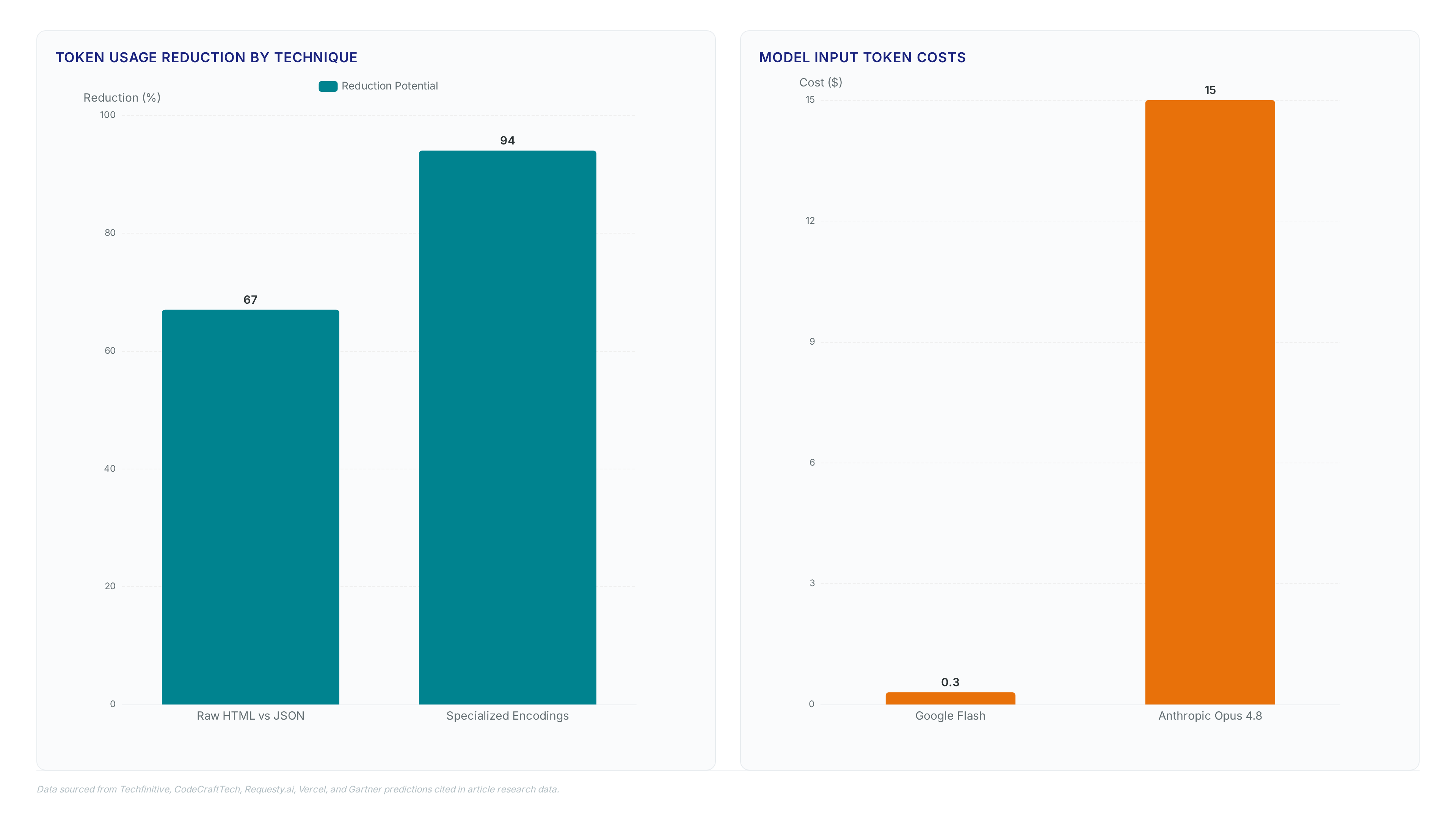
The Brain + Sandbox split architecture isolates the persistent reasoning loop in a dedicated pod while delegating code execution to ephemeral Docker containers to minimize context re-reads. This separation prevents the reasoning engine from re-loading system prompts during every tool interaction, a redundancy that frequently inflates token consumption. Structured outputs like native JSON reduce token usage by approximately two-thirds compared to raw HTML descriptions. Operators must implement Cost tracking at the gateway to attribute spend accurately across isolated environments.
- Deploy the reasoning loop as a stateful service that maintains long-term memory without restarting.
- Route all code execution requests to temporary sandboxes offering strict network isolation.
- Enforce a per-agent budget by checking remaining funds before the brain issues a sandbox command.
Network hops between the brain and sandbox layers introduce latency. This delay adds milliseconds per call yet stops catastrophic token burn from infinite loops. A single logic error without this boundary causes the agent to re-read its entire context history repeatedly. A tool interface constrained to a compact schema ensures the brain receives structured data rather than verbose logs. Design constraints force explicit budget validation at every decision point, stopping runaway costs before they escalate. AI Agents News recommends this pattern for any production system requiring financial predictability. Format constraints force the reasoning loop to emit compact data rather than verbose prose explanations. Operators must replace free-form text responses with strict schema definitions to minimize overhead in the sandbox layer.
Implementing this architecture requires three specific configuration steps:
- Define tool interfaces using compact schema encodings that can reduce tokens by up to 90%.
- Enforce Cost tracking at the gateway by parsing structured JSON fields instead of scraping text.
- Apply per-agent budget logic that halts execution when structured cost headers exceed limits.
| Format Type | Token Efficiency | Parsing Complexity | Failure Mode |
|---|---|---|---|
| Raw HTML | Low | High | Tag mismatch errors |
| Native JSON | High | Low | Schema validation failure |
| Compact Schema | Very High | Medium | Encoding incompatibility |
Strict schemas reject valid but malformed reasoning traces, potentially increasing retry loops if the model struggles with formatting. Historical data shows different agent frameworks emitted logs in different formats, creating challenges for unified cost tracking until the adoption of normalized proxy layers like GitHub's token-usage.jsonl. Feeding compacted data and context handoff files instead of raw logs cuts daily token volume without changing model behavior.
Operators should prioritize compacted data feeds to achieve similar efficiency gains in high-volume deployments. AI Agents News recommends auditing output formats weekly to ensure agents do not revert to verbose defaults during complex tasks. Ignoring schema enforcement creates measurable waste across thousands of autonomous cycles.
Gateway Enforcement Checklist for Agent Budgets
Gateway enforcement turns the budget ceiling into a hard stop rather than a post-mortem line item.
- Verify the persistent pod checks its remaining budget against a hard ceiling before initiating any context window management operations.
- Isolate execution environments using Docker containers.
- Enforce strict budget validation on every tool call.
This checklist ensures the Brain + Sandbox split functions correctly by separating reasoning from execution. Failure to isolate these layers often results in the reasoning loop re-reading context endlessly at full token price. Strict gating adds latency to every tool call, trading milliseconds for financial safety. Consequently, operators must balance enforcement depth against task responsiveness requirements. Teams should adopt compact tool-interface standards to minimize payload size while maintaining security. For further implementation guidance, AI Agents News recommends reviewing architecture patterns that prioritize isolation. This approach stops silent burning before it impacts the monthly invoice.
About
Sofia Berg serves as Research Editor at AI Agents News, where she rigorously translates complex agentic research into actionable insights for engineers. Her daily work involves dissecting benchmarks like SWE-bench and analyzing the orchestration patterns of frameworks such as LangGraph and AutoGen, making her uniquely qualified to address the critical issue of token burn in coding agents. By constantly evaluating how autonomous systems handle tool use and context retention, Sofia identifies the specific architectural flaws, such as redundant system prompt re-reading, that cause agents to consume significantly more tokens than standard chat interactions. At AI Agents News, a hub dedicated to covering the technical realities of multi-agent systems, she bridges the gap between theoretical efficiency and deployed reality. This article stems directly from her ongoing analysis of why autonomous coding workflows often fail to optimize API spend, offering builders concrete strategies to stop silent resource drainage while maintaining agent autonomy.
Conclusion
Scaling agentic workflows inevitably breaks when latency trade-offs collide with unbounded recursive loops. While per-token prices may fall, the sheer volume of autonomous iterations drives operational expenditure upward quicker than infrastructure teams can optimize. The real danger lies not in individual expensive calls, but in the cumulative drag of inefficient context retrieval that persists even after initial deployment. Without strict architectural guardrails, agents will naturally gravitate toward resource-heavy paths, turning a pilot project into a financial liability within days.
Organizations must mandate hard budget ceilings at the gateway level by the end of the current quarter to prevent runaway spend. Do not rely on post-hoc analytics or monthly reviews; these are too slow for systems that operate in milliseconds. Instead, enforce immediate execution halts when teams reach 80% of their allocated token budget, requiring manual intervention to proceed. This friction is a feature, not a bug, forcing engineers to justify continued resource consumption before damage escalates.
Start this week by auditing your current agent gateway logs to identify any workflows lacking explicit token limits per task ID. Set up an alert rule today that triggers when a single agent session exceeds a predefined token threshold, ensuring you catch inefficiencies before they compound into significant waste.
Frequently Asked Questions
A single developer can incur $4,200 in API fees over a long weekend during an uncontrolled run. This massive loss occurs because autonomous agents silently execute dozens of redundant model calls per ticket without visibility.
Teams implementing daily audits and swapping specific calls for direct CLI commands reduced token costs by up to 62%. This significant saving prevents minor logic errors from triggering massive financial leakage in agentic CI workflows.
Without strict controls, an agent could waste 50% of its allocated resources on inefficient patterns like redundant context re-reads. This structural inefficiency compounds invisibly until the billing cycle closes and damages fiscal stability.
You should configure the gateway to trigger alerts at 80% of the assigned monthly ceiling to ensure early warning. Enforcing hard stops at 100% automatically halts further token consumption before quarterly allocations are exhausted.
Variance occurs because routing complex reasoning to expensive models instead of cheaper alternatives creates massive cost differences. The same task can cost several times more when unnecessary context re-reads or missing model routing logic push every step to a premium model.